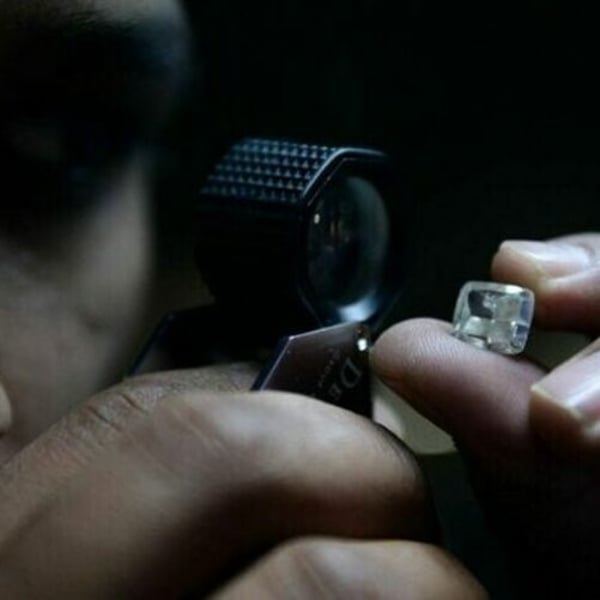
Botswana and southern African peers that built much of their prosperity on diamonds are scrambling for alternatives as cheaper, lab-grown stones threaten their economies.
AFP
Diamond-dependent Botswana is leading the way and launched a sovereign wealth fund this week to lay the “foundation for a more resilient, sustainable and diversified future beyond diamonds”.
It is exploring other avenues too, like boosting luxury wildlife tourism, launching into the medicinal cannabis market and exploiting its abundant sunshine for solar power.
President Duma Boko has even mooted taking a majority stake in industry giant De Beers and selling Botswana’s diamonds independently.
“Countries such as Angola, Namibia and South Africa are all exposed but not to the same degree as Botswana,” economist Brendon Verster at the Oxford Economics Africa think tank told AFP.
The stones are the country’s main source of income and account for about 30 percent of its gross domestic product (GDP) and 80 percent of its exports, according to the International Monetary Fund.
But, as consumers turn to cheaper diamonds created in China and India, the average price of a one-carat natural diamond is falling.
The price dropped from a peak of $6,819 in May 2022 to $4,997 by December 2024, according to the World Diamond Council.
Botswana, which is 70 percent desert, was lifted from poverty by the discovery of diamonds in the 1960s. It is already feeling the effects of the lab-grown competition.
– ‘Risks of economic collapse’ –
As its foreign reserves deplete, the government has turned to debt to fill the public coffers.
Government funds ran so low that the health system teetered on the verge of collapse in August, leading Boko to declare a state of emergency.
“If left unaddressed, there is a real risk of the situation becoming not just an economic challenge but a social time bomb,” he said in July.
Highlighting the fears, global ratings agency S&P on Friday dropped its long-term ratings on Botswana one notch to “BBB” and declared a negative outlook, citing the rapid expansion of the lab-diamond market.
Synthetic stones had captured “approximately 20 percent of the global market by value and up to 50 percent by volume in the US engagement ring segment in 2025,” it said in a statement.
Diversification is “essentially now or never”, Verster said.
“We don’t really see anything that would cause a monumental shift back in favour of natural diamonds to curb the rising popularity of synthetic diamonds.”
Also suffering is tiny Lesotho, where diamonds contribute up to 10 percent of its $2 billion GDP and the larger, vital textile market has been hit by US tariffs.
This month its biggest diamond mine, Letseng, said it would lay off a fifth of its workforce, citing “sustained pricing pressure” and “softer demand in key markets”.
The mine closures “could heighten risks of economic collapse”, independent economic analyst Thabo Qhesi told AFP, stressing an urgent need to explore other options, such as rare-earth resources.
In a bid to keep the sparkle alive, Angola, Botswana, Namibia, South Africa and the Democratic Republic of Congo pledged in June to allocate one percent of their annual diamond revenues to marketing natural diamonds.
The campaign would need to reframe their value as a coveted “luxury product”, former Bank of Botswana deputy governor Keith Jefferis told AFP.
“We see a significant opportunity to engage consumers in the story of responsibly sourced diamonds from Botswana,” De Beers, also taking part, told AFP.
The South Africa-British firm is meanwhile exploring the potential of synthetic diamonds in high-tech fields like quantum networks and semiconductors, as prices fall below $100 per carat.
For Botswanan ministry of minerals official Jacob Thamage, natural and lab-made diamonds “offer different value propositions to different consumers and therefore can and will coexist”.
In an upscale Johannesburg mall, behind fortified steel gates, a natural yellow diamond priced at over $50,000 stood as a symbol of exclusivity.
Just steps away, a lab-grown diamond valued at $115 was unguarded.
“We each have our target,” one jeweller said. “So long as everyone is happy.”
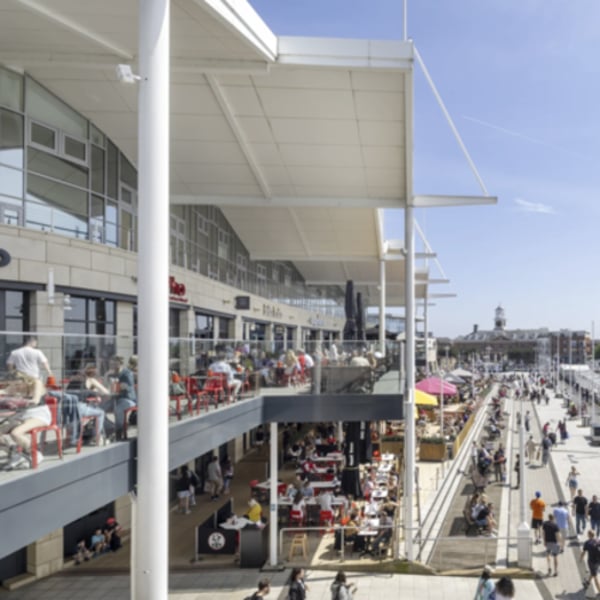
Outlet destinations have been among the most buoyant retail centres in recent years and on Wednesday, retail property giant Landsec provided yet more evidence of that trend.
Gunwharf Quays
It said it recorded 8.1% year-on-year sales growth across its outlets during Black Friday week, continuing a year of sustained growth across its outlet portfolio, which also reported a record-breaking year in 2024.
Its outlet trio, Gunwharf Quays, Braintree Village and Clarks Village, generated a combined spend of £16.3 million across the week, with footfall up 8.6% year on year, “demonstrating the continued strength of in-person retail during key calendar moments”. But it also demonstrated just how much consumers are focused on discounts given that they visited destinations already offering discounts for the even greater markdowns available during that week.
Landsec said this “builds on a consistently strong trading performance across the outlet portfolio and follows a record-breaking year for spend across major Landsec retail destinations during the last financial year”.
Braintree Village enjoyed a record-breaking week, with Saturday seeing its highest single day of footfall since the pandemic. Clarks Village recorded its highest-ever sales day. And Gunwharf Quays saw its biggest-ever sales week, building on last year’s record. The outlet also recorded its highest-ever single-day revenue and footfall up 9.8% year on year.
The landlord added that individual store success was strong, with 25 brands achieving record sales weeks at Gunwharf Quays alone, while a further nine brands set new records on Saturday.
And what were consumers buying? Across the outlet portfolio, shoppers spent the most on health & beauty (+46% week on week), gifts, cards, toys and books (+43%), and accessories (+40%). These categories have continued to show strong momentum in 2025 across Landsec’s outlet destinations.
Ann Summers has filed its accounts to the end of June 2025 and it’s certainly encouraging to see that the lingerie specialist — which has struggled in recent periods — looks to be heading towards a recovery despite still posting losses.
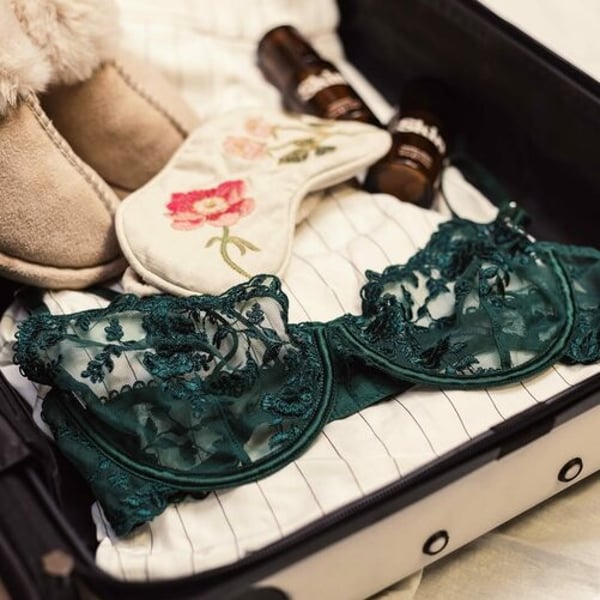
Knickerbox.com
The company said that its 2024/25 financial year was one of “resilience and strategic adaptation”.
Turnover was “stable”, although it actually increased slightly but not enough to make up for the impact of inflation. It rose to £93.4 million from £93 million, although the cost of sales also edged up slightly.
The business remained loss-making, as mentioned, but the operating loss before tax and exceptional expenses narrowed to £5 million from £9.8 million a year earlier. The loss on ordinary activities before tax, as well as the net loss, showed an even greater decline at £3 million compared to £13 million12 months before.
So what happened in the 12-month period? Against the backdrop of persistent economic uncertainty, rising inflation and the ongoing cost of living crisis, Ann Summers said it managed to overcome major retail headwinds.
Trading conditions stayed tough with discretionary spend under pressure but it optimised its store estate while maintaining a strong presence physically with 75 locations. It also continued its expansion through third-party partnerships including its collaboration with LIWA, which has opened new opportunities in the Middle East
Its web channel remained a key part of its omnichannel strategy for both the UK and abroad. But during the year it made the strategic decision to close Connect, its direct selling channel. That ceased trading after the financial year ended, in October 2025.
A milestone was the launch of knickerbox.com in July 2024, so that came right at the start of the financial year in question. That brand is well known so should be a source of future growth.
Alongside the launch it also introduced KBX, its new in-house brand that claims to offer “stylish, effortlessly sexy, everyday lingerie”. The company said this strategic move allows it to connect with the border audience and strengthen its digital presence.
The company hasn’t posted a profit since the year to June 2021 and its losses have added up to £40 million since then. But this latest set of numbers, along with the new developments and strategic closures, suggests that the picture could change soon.
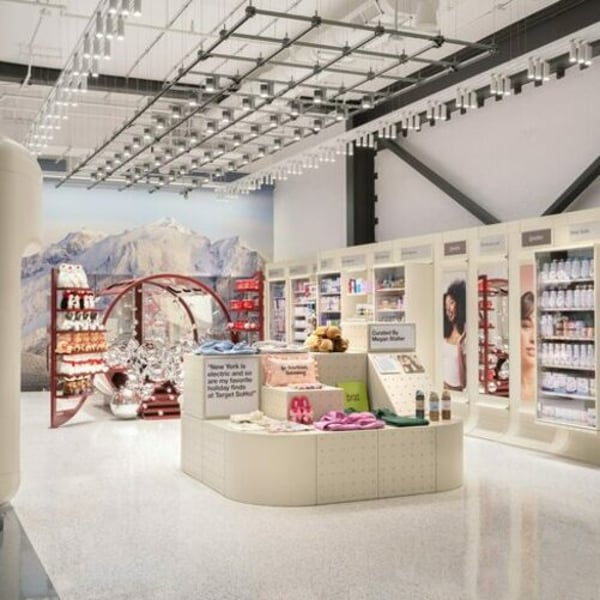
Target Corporation has opened a new concept store in New York’s SoHo district, introducing an experiential retail format.
Target opens new concept store in SoHo, New York. – Target
The location at 600 Broadway marks the debut of Target SoHo, a format the company describes as a “living, breathing style experience.”
It features curated zones built for product discovery. “Curated By”, a seasonal edit created in partnership with New York tastemakers, launches with actress and comedian Megan Stalter highlighting her Target picks across fashion, beauty and home. Meanwhile, “The Drop @ Target SoHo”, located on the first floor, will serve as a rotating showcase for monthly style collections.
The store also opens with the Broadway Beauty Bar, where celebrity makeup artist Katie Jane Hughes is curating her must-have Target beauty picks, and offering a social-driven space where guests can test products and create content.
Timed for the holiday season, Target is also introducing the “Gifting Gondola”, a photo-ready installation featuring exclusive merchandise, and a “Selfie Checkout” moment designed for social sharing.
“Style and design are part of Target’s DNA, and there’s no better place for us to showcase what’s next for our brand than in one of the style capitals of the world,” said Cara Sylvester, executive vice president and chief guest experience officer, Target.
“With Target SoHo, we’re bringing together the best of Target and the best of New York — elevated products, immersive storytelling and an experience that invites guests to explore, express and get inspired. This store is a bold reflection of our commitment to style, and it’s just one part of our larger investment in Target’s design-driven future that grows our roots even deeper in New York City.”
The company plans to continue evolving the location over the next year as part of a phased rollout. Target said the store will add new experiential zones, seasonal activations, and café and event programming through 2026.
The SoHo opening comes as Target increases its investment in New York, including a new headquarters space, partnerships tied to New York Fashion Week and now Target SoHo.





 Politics8 years ago