I love markets. I also love diamonds. This helps explain why I am experiencing a kind of existential crisis: The popularity of lab-grown diamonds is making me question the beauty of markets, which is their ability to place a value on pretty much anything.
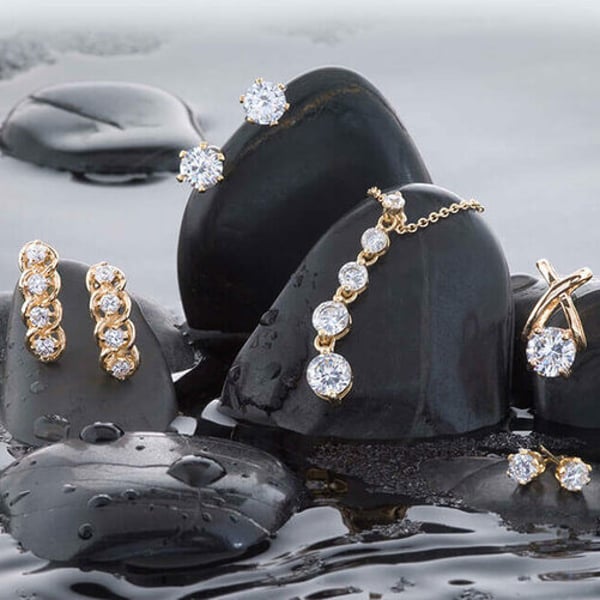
Diamond jewellery by Mini Diamonds – Mini Diamonds India Ltd
And it is not just diamonds. Everything in the economy whose value is predicated on scarcity is suddenly abundant: luxury handbags, music, even currency itself. Why is anything worth anything anymore?
Diamonds hold a special place in my heart, not just as fan of jewellery but also as an economist. When young economists first start to ponder the concept of value and why things cost what they do, we inevitably turn to the OG, Adam Smith. It is remarkable, he observed, that diamonds cost more than water. “Nothing is more useful than water; but it will purchase scarce any thing,” he wrote. “A diamond, on the contrary, has scarce any value in use; but a very great quantity of other goods may frequently be had in exchange for it.”
It is the diamond’s scarcity (as well as some good marketing) that made the market large and valuable. In time, this rare bit of carbon, which takes the earth millions of years to create, came to symbolise eternal love and commitment.
Now diamonds can be made in a lab in not too much time, in just about any quantity. They have no resale value, nor do they signify eternal love.(1) But try telling that to someone who just got (or gave) a perfect 3-carat engagement ring that is 90% cheaper than the “real thing.” Meanwhile, the price of natural diamonds — which always promised to hold their value — is down as much as 40%.
Again, the questions present themselves: If the supply of diamonds is unlimited, what is their value? Can the market put a price on them? More generally, how will markets deal with this crisis of abundance?
After all, pretty much everything in the US (except for housing) is available and on demand in any quantity. Almost all music ever made is available on demand on your phone, for the monthly price of what a single album once cost. Information once available from only a handful of media companies is now virtually everywhere from any source you want, with whatever spin you want. And just as in music, in media no one knows what business model works, because what is valuable seems to change by the minute.
Even the most valuable and scarce commodity of all — intelligence — is becoming abundant. Chess players and finance gurus (some version of them, anyway), can be conjured through the magic of AI, and their talents dispensed for free. What does this mean for the value of human thought, knowledge and discernment?
The markets will eventually sort it all out. At least that’s what I tell myself. After all, food and many now-disposable consumer goods were once scarce too. Now that they no longer are, look how much better off we are. Yes, the process was messy, but in the end the market made the goods that people wanted more abundant. Whether you prefer gourmet potato chips or dinner at a gourmet restaurant, they are available for a price, one of which may actually be worth it.
Consumer goods are also segmented by quality. That may be the future of diamonds. There is an abundance of fake Birkin bags, for example, which can now be bought at Walmart (along with lab-grown diamonds). To an untrained eye these bags are indistinguishable from the real thing — also leather, also look nice, also carry your things — and yet people still desire a real Birkin, for which there is a yearslong waitlist. It could be the mystique, or the valuable resale market, but there are people willing to spend 15,000 dollars on an authentic Birkin.
What Hermes has managed to do is create scarcity out of abundance. It controls the supply of Birkins, and won’t sell that many bags. Not only does this keep demand high, but it diverts demand to other Hermes goods. Other luxury designers battling fakes are less discerning: They sell more bags and are experiencing a fall in demand.
De Beers, one of the world’s largest diamond dealers, faces a difficult problem: The diamond market is too large for De Beers to use the Hermes strategy. It needs diamonds to be rare and special — but also on every engagement ring in America.
This may not be realistic anymore. A likely alternative is a world where natural diamonds are still coveted — they hold their value and have special symbolism — and, like the Birkin, are mainly consumed by an elite segment of the market. The market for smaller, lower quality natural diamonds may well disappear.
If that happens, my faith in both a diamond’s value and the market’s forces will be restored. Which is good, because both things — more beauty and more commerce — make everyone better off. This column reflects the personal views of the author and does not necessarily reflect the opinion of the editorial board or Bloomberg LP and its owners.
Allison Schrager is a Bloomberg Opinion columnist covering economics. A senior fellow at the Manhattan Institute, she is author of “An Economist Walks Into a Brothel: And Other Unexpected Places to Understand Risk.”