Connect with us

Business

Kushner suddenly enters the Paramount–Netflix fight with Saudi billions and a fresh mega-deal

Published

on


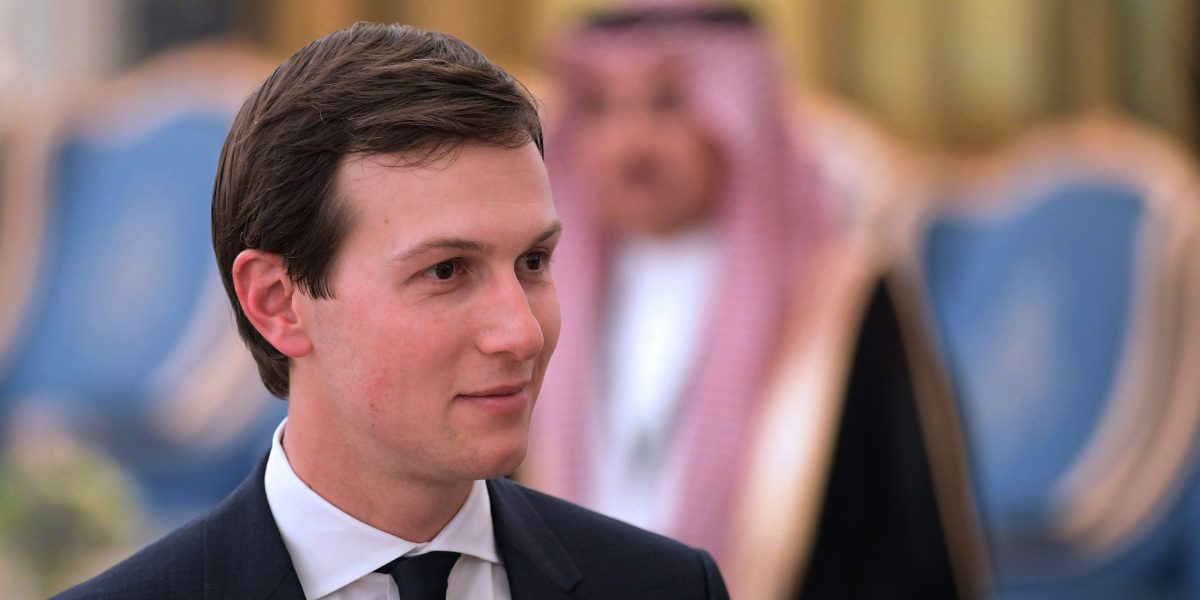
Jared Kushner has quietly reemerged as a player in one of the biggest takeover fights in modern Hollywood. Paramount’s audacious, all-cash $108 billion hostile bid for Warner Bros. Discovery, announced Monday, names Kushner’s fully owned private equity firm, Affinity Partners, as one of four outside financing partners backing the offer, alongside the sovereign wealth funds of Saudi Arabia, Abu Dhabi, and Qatar.

Axios first reported the involvement of Saudi and Gulf investment.

The detail is buried in Paramount’s tender offer, with Paramount listing “the Public Investment Fund (Kingdom of Saudi Arabia), L’imad Holding Company PJSC (Abu Dhabi), Qatar Investment Authority (Qatar) and Affinity Partners (Jared Kushner)” as investors who would, under a successful deal scenario, hold non-voting equity and forgo governance rights, including board seats. 

The filing also states that because these investors are structured without such rights, “the Transaction will not be within CFIUS’s jurisdiction,” referring to the Committee on Foreign Investment in the United States. Reports have suggested that WBD’s board opted for Netflix’s deal as it lacked any foreign financing components and therefore faced no issues with CFIUS, a notably opaque and powerful antitrust tool that the government can employ to block controversial mergers.

Both Paramount and Netflix are likely to increase their offers. David Ellison said on CNBC that he told the CEO of Warner Bro’s, David Zaslav, that $30 per share wasn’t the company’s best and final offer.

Kushner’s Middle Eastern ties

Kushner’s inclusion reflects a broader fact pattern: since leaving government, his firm has raised several billion dollars from Gulf investors and has participated in large private transactions involving capital from the same region. In September, his firm joined Silver Lake and Saudi Arabia’s Public Investment Fund in the $55 billion agreement to take Electronic Arts private, the largest private-equity buyout in history. 

WSJ reporting shows Kushner helped connect Silver Lake with PIF leadership earlier in the year as discussions around an EA buyout accelerated. Affinity Partners ultimately took a roughly 5% stake in the transaction, alongside Silver Lake and PIF, which financed the majority of the equity. The EA deal marked the first time Kushner’s fund appeared in a major global technology buyout of that scale, and it involved the same Gulf investors who now appear in Paramount’s financing package.

Kushner has also remained active in Middle East political diplomacy, not just financial. He played a meaningful role in the administration’s recent Israel-Gaza peace effort, brought in because of his involvement in negotiating the Abraham Accords during Trump’s first term, which established diplomatic ties between Israel and several Gulf states including Saudi Arabia. The Gulf state is increasingly opening up, especially with regard to western businesses, as highlighted by Barclays’ confirmation in late October at the Fortune Global Forum in Riyadh that it was relocating its regional headquarters there. Separately at the Fortune Global Forum, Saudi Investment Minister Khalid A. Al-Falih described the breakthroughs occurring under Vision 2030, the kingdom’s economic transformation plan that is roughly nine years old. He said he saw 2025 as a “pivotal moment,” when “the very foundations of global business are being shaken, in a way, and being rewritten before our own eyes.”

The deal took on new political dimensions over the weekend, with President Donald Trump publicly weighing in on Netflix’s agreement to acquire WBD’s studio and streaming assets. Speaking to reporters on Sunday, Trump said the Netflix–WBD deal “could be a problem” because of the combined businesses’ market share, and noted that he expects to be involved in the review process. He also confirmed meeting with Netflix co-CEO Ted Sarandos in the Oval Office shortly before the deal was announced by Netflix, saying Sarandos had made “no guarantees” about the transaction. 

Trump did not confirm the scoop by Bloomberg’s Lucas Shaw, who wrote in his influential entertainment newsletter that Sarandos has been wooing Trump since late November, when he visited Mar-A-Lago. Trump did indicate, however, that he has a good relationship with the Netflix leader, calling Sarandos a “fantastic man” who had played a major role in building Netflix into such a great company. Netflix executives expressed great confidence in regulatory approval on Friday’s call with analysts about their deal, worth $72 billion in equity and about $83 billion including the assumption of debt.

The political plot thickens

The political overtones of the wrangling here are at least worth noting. Paramount was recently acquired by David Ellison, son of longtime Republican donor Larry Ellison, who Trump named as one of several U.S. billionaires to take control of the U.S. assets of TikTok. (Bloomberg’s Shaw reported that Sarandos was interested in the Paramount studio before Ellison acquired it.) Meanwhile, Sarandos is married to Nicole Avant, who was ambassador to the Bahamas during the Obama administration. Netflix co-founder Reed Hastings is a prominent and longtime Democratic donor, although Hastings is now non-executive chairman at Netflix and has been focused on his Powder Mountain resort in Utah, acquired shortly after Fortune’s profile of the resort in 2023.

Paramount explicitly argued that its own proposal carries fewer regulatory risks than Netflix’s. In its filing, the company contends that the Netflix agreement faces significant antitrust hurdles, including a long potential review timeline. Paramount also emphasizes that its outside financing—because it is non-voting—does not trigger CFIUS review, eliminating one additional hurdle of national-security scrutiny.

Trump’s posture toward Paramount, however, has been mixed. Roughly 20 minutes after Paramount launched its hostile offer, Trump explicitly criticized Paramount management over a 60 Minutes segment featuring Rep. Marjorie Taylor Greene, writing on Truth Social that it was “NO BETTER THAN THE OLD OWNERSHIP.” Trump added that “since they [Paramount] bought it, 60 Minutes has actually gotten WORSE!” CBS News and 60 Minutes, as is customary with news organizations, maintain that they have editorial independence from their ownership. Paramount settled a lawsuit brought by Trump over a certain 60 Minutes episode during the 2024 election, paying $16 million in July 2025, shortly before Ellison’s takeover won regulator approval.

Separately on Monday, Larry Ellisontold CNBC that he has had “great conversations” with Trump about the WBD bid, without elaborating. 

Nidhi Hegde, executive director of the American Economic Liberties Project, wrote on X in response to Ellison’s remarks that “the correct option is neither Paramount nor Netflix buy Warner.”

“The president inserting himself in the deal is obviously problematic, regardless of the parties involved,” said Hegde. 

[Disclosure: one of the author’s worked at Netflix from June 2024 through July 2025.]


Source link

Continue Reading

Business

Robinhood launches staking for Ethereum and Solana in ongoing crypto expansion

Published

on


Robinhood is doubling down on crypto offerings. The trading app will launch staking for Ethereum and Solana in New York starting on Tuesday, according to the company, allowing customers to earn yield on cryptocurrency. 

The company will let customers stake in New York and plans to expand across the country. “We’re proud of the momentum we’ve seen with staking and especially excited that staking is now available to customers in New York, which has one of the most rigorous regulatory frameworks in the country,” wrote Johann Kerbrat, senior vice president and general manager of Robinhood Crypto, in a note to Fortune

Staking has been part of the crypto universe for nearly a decade, rewarding users who lock up a stash of tokens in order to help operate a blockchain network. But uncertainty over its legal status has meant it has been mostly experienced crypto users who have engaged in it using their own wallets.

In 2023, the exchange Kraken agreed to pay $30 million to settle allegations that it broke the Securities and Exchange Commission’s rules by offering staking. Robinhood’s launching of crypto stakes reflects a looser regulatory environment under President Donald Trump’s administration. 

“These crypto enhancements are strategic chess moves positioning Robinhood for the anticipated transformation of financial infrastructure through blockchain technology and tokenization—particularly with the regulatory clarity we expect under the current administration,” said Caydee Blankenship, senior equity research analyst at CFRA Research. 

Robinhood also announced a push into global crypto markets. In Europe, it will add perpetual futures contracts on several coins, and it will also enter the Indonesian market, as it agreed to buy a brokerage and crypto platform in the country. 

Robinhood is not new to crypto, as users on the platform have been able to trade Bitcoin and Ethereum since 2018. However, the company has beefed up its crypto arm this year. In June, Robinhood completed a $200 million acquisition of Bitstamp, the world’s longest-running crypto exchange. Crypto transactions accounted for more than 21% of the company’s revenue, as of last month’s earnings report. 

Robinhood’s expansion of their digital assets could help them challenge other crypto exchanges, according to Romeo Alvarez, research analyst at William O’Neil. “Robinhood is stepping up its efforts to compete on a global basis with larger trading platforms like Coinbase, Binance, OKX, and Kraken,” he said.  

The last few days have seen other big banks vie for staking. On Friday, BlackRock filed for a stake Ethereum ETF, the iShares Ethereum Staking Trust (ETHB). The Wall Street giant already has an Ethereum ETF (ETHA), but that one does not have staking components. 


Source link

Continue Reading

Business

Amazon robotaxi service Zoox to charge for rides in 2026, with ‘laser-focus’ on transporting people, not deliveries, says cofounder

Published

on


Amazon’s self-driving robotaxi subsidiary, Zoox, expects to start charging passengers for rides in Las Vegas in early 2026, with paid rides in the San Francisco Bay Area coming later next year, a company executive said Monday.

The move, which would represent a key milestone for Zoox as it seeks to catch up with Alphabet’s Waymo, depends on obtaining federal regulatory and state approvals, Zoox Co-founder and chief technology officer Jesse Levinson told the audience at Fortune’s Brainstorm AI event in San Francisco on Monday.

And while robotaxi rival Waymo recently partnered with DoorDash to test food deliveries with driverless cars, Levinson said that Zoox is “laser focused” on moving people around cities, an addressable market he sees as being “just profoundly huge.” That directive has come “all the way from the very top” at Amazon, he added, despite the retailer’s significant interest in driverless package delivery.

“It’s harder to move people around than packages in terms of what you have to do with your vehicle,” Levinson said. On the other hand, automating package delivery is rife with its own challenge because the boxes have to get in and out of the vehicle, which isn’t as straightforward as people who can move themselves, he added.

Zoox crossed the 1 million mile technical threshold for autonomous rides just last week, Levinson said. The company’s distinct, carriage-seated vehicles, which have no steering wheels or manual controls, currently provide rides to passengers free of charge in portions of Las Vegas and Zoox is slowly opening up the waitlist to use the service in San Francisco.

Despite the progress and the plans to start charging fares, Zoox won’t generate revenues that are meaningful to Amazon, its $2.4 trillion parent company, for at least several more years, Levinson said. 

“This is pretty expensive,” said Levinson. “Over the next few years, it will start to be a really interesting business because the revenue you can generate from the robotaxi is quite a bit more than the expense to run robotaxi.”

That’s the point at which the business will become more “financially interesting,” he added.

Building cars without human drivers in mind

While creating a driverless robotaxi service comes with various challenge, Levinson believes it will ultimately be a key method for moving people around dense urban areas.

“Our view is that people aren’t doing this, not because it’s not a good idea, but because it’s just really hard,” said Levinson. “It takes a lot of time, it’s very cross functional, and it’s expensive. But I do think over time this is going to be a much more popular way of human transportation”

One of the gaps between a driverless robotaxi service like Zoox and Waymo, said Levinson, is in the way the cars are built. Rather than retrofitted vehicles that were manufactured with a human driver in mind, Zoox cars were built to be driverless. Levinson said the four-passenger cabins have carriage seating, active suspension, individual screens for each seat, and four-zone climate control. 

“The cars that have been designed over the last 100 years are for humans,” Levinson said. “All the choices, their shape, their architecture, what components they have in them—they were all designed for human drivers.” Levinson said Zoox offers a more cushy, social rider experience that he thinks will be a differentiator among competitors like Waymo and potentially Tesla’s robotaxi fleet. 

Another competitive element for Zoox is its battery, said Levinson. The bigger battery is more environmentally and economically friendly because it requires less charging.

“The economic opportunity and the opportunity for customers [as we] create this whole new category of transportation is actually much more exciting and even more financially compelling than simply taking something they do today and saving a bit of money,” he said.


Source link

Continue Reading

Business

What’s the top concern among billionaires? Not a financial crash or debt crisis. It’s tariffs

Published

on


Money can’t buy you love, but surely billions of dollars ought to be enough to insulate you from global uncertainty and provide some peace of mind, right? Maybe not.

According to the latest UBS Billionaire Ambitions Report, which surveyed superrich clients around the world, only 1% said, “I am not worried about any economic, market, or policy factors negatively impacting the market environment over the next 12 months.”

Meanwhile, the most widely cited concern by billionaires was tariffs, with 66% saying it will most likely harm market conditions over the coming year. Close behind was “major geopolitical conflict” at 63% and policy uncertainty at 59%.

And while Wall Street is worried about soaring U.S. debt, other sovereign borrowers, and AI hyperscalers issuing more bonds, a comparatively low 34% of billionaires flagged a debt crisis as the biggest thing keeping them up at night.

Other risks that are top-of-mind elsewhere but were lower on the list for billionaires were global recession (27%), a financial market crisis (16%), and climate change (14%).

To be sure, UBS pointed out there are regional differences in what billionaires are worried about. For example, 75% of billionaires in the Asia-Pacific region cited tariffs, compared with 70% in the Americas citing higher inflation or major geopolitical conflict.

That’s as President Donald Trump’s trade war has hit China and Southeast Asia with steep duties, while Japan and South Korea face lower but still historically high tariffs.

On the other end of the trade war, importers in the U.S. are passing along some tariff costs to American consumers, who are increasingly anxious about high prices and affordability.

In fact, Trump’s tariffs may actually cool inflation for the rest of the global economy while keeping price pressures sticky at home.

The president and the White House insist costs are lower, but the consumer price index has seen its annual rate accelerate steadily since Trump’s “Liberation Day” shocker in April.

Of course, billionaires are not as bound by international borders as most, making any regional differences among them more fluid.

The UBS report found 36% have relocated at least once, with another 9% saying they are considering it. The top reasons given were seeking a better quality of life (36%), geopolitical concerns (36%), and the ability to organize tax affairs more efficiently (35%).


Source link

Continue Reading

Trending

Copyright © Miami Select.