Connect with us

Business

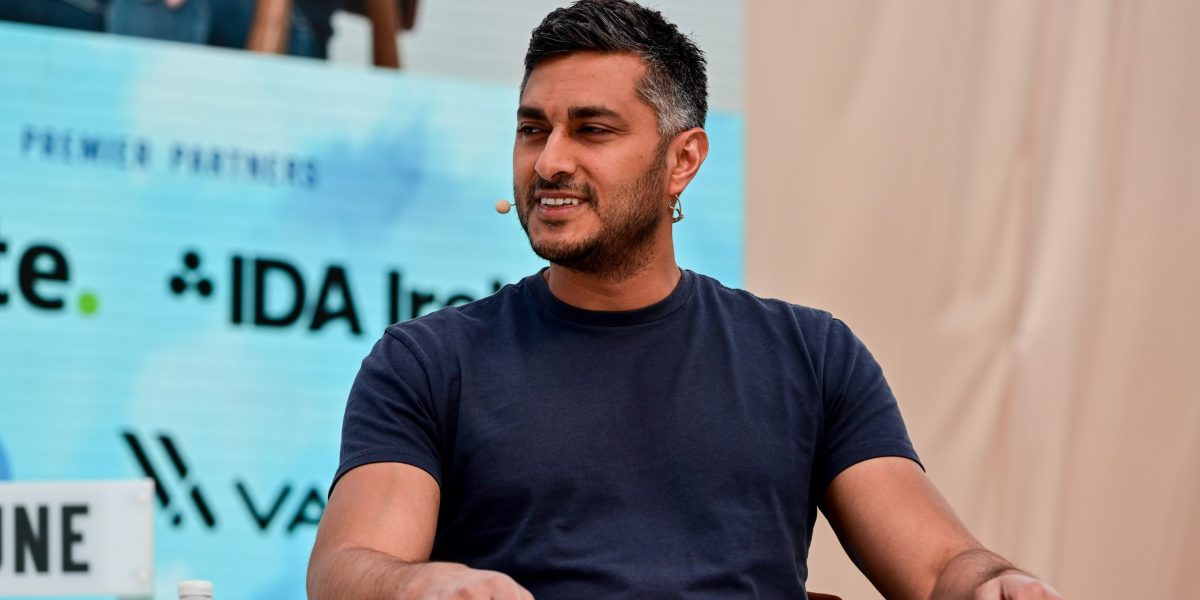
Kraken co-CEO Arjun Sethi preparing firm for an IPO
Published

on


“My neighbors think I’m under house arrest,” observes Arjun Sethi. It’s not hard to see why. On the driveway of Sethi’s comfortable Menlo Park home, located a few miles from Stanford University, sits a black Cybertruck that rarely leaves. Meanwhile, various figures stream in and out of a wide open garage anchored by a table littered with electronics. Inside, there are no pictures on the walls and the domicile’s only personality is supplied by a large German shepherd patrolling the backyard.

Sethi is no criminal, though, and the house is not just his home. It is also the prime outpost for Kraken, the longtime cryptocurrency exchange where Sethi, who draws few lines between his personal and professional life, is co-CEO. The gray-flecked 42-year-old, who favors plain T-shirts, may not be concerned about what his neighbors think of him. But he does have to care about the opinions of another group: Kraken’s investors, who are expecting big things in the near future.

Founded in 2011, Kraken has long flown under the radar compared with its bigger competitor Coinbase, but has always commanded the respect of traders and crypto veterans. In the past year, the company has reached for a bigger share of the spotlight with high-profile acquisitions and product launches ahead of an IPO planned for next year. All of this will test whether Kraken can meet the lofty $15 billion valuation that came with a new funding round it closed this month.

Meeting that challenge will fall to Sethi who, despite an official title of co-CEO, is very much calling the shots at Kraken. An executive whose experience lies primarily in venture capital, he is an unusual choice to lead a company on the cusp of going public, but one very much in keeping with Kraken’s history as an unconventional company.

Building the future of trading

Sitting at a large desk plunked in the center of his sparse living room one August afternoon, Sethi patiently replies to my questions as random figures pop in and out of the garage. He has a wide range of intellectual interests—he dabbled in journalism in college and has read extensively on major religions—but for Sethi nearly everything comes down to data.

After founding a pair of startups and working as a senior product manager at Yahoo, Sethi cofounded the venture capital firm Tribe Capital. Even more than its peer VC firms, Tribe has a reputation for data-based decision-making, which led to bets on Kraken, as well as on Carta, which makes cap-management software, and the cloud computing firm Docker, among others.

If the unsentimental Sethi has a passion, it is the idea of using blockchain technology to fix obstacles in the financial system that prevent people from tapping into collateral they own. He cites, for instance, the common conundrum faced by employees who leave a startup and must exercise their stock options and pay related tax within 90 days—resulting in many of them simply walking away from their equity. The solution, Sethi says, is tapping into the modular stack of services offered by decentralized finance (DeFi), which promises to give consumers an unprecedented degree of control over their assets, and let them lend or securitize them like never before.

“My hope with crypto is to distribute those benefits more evenly. We’re not all the way there, but the first steps are happening—stablecoins, then tokenized assets, and now tokenized equities,” said Sethi.

His vision is for Kraken to be a hub for all of these things, bringing the best elements of crypto and the traditional financial stack under one umbrella. To that end, the company spent $1.5 billion this spring to buy NinjaTrader, a platform for professional asset traders, in a move that boosted Kraken’s customer base by 2 million and represented, in Sethi’s words, the “largest-ever deal combining TradFi and crypto.”

Coinbase is the dominant player in retail crypto, but Kraken’s bread-and-butter has always been professional and institutional customers. Lately, though, Kraken has been pushing to expand its presence in retail, including with the launch of xStocks, which are shares of popular companies like Apple and Tesla, wrapped in crypto and tradable on blockchains.

The concept of blockchain-based stocks may seem exotic or downright unnecessary, but look closer and the early response to xStocks appears to validate Sethi’s views on where finance is going. He notes that xStocks, which the company hopes to offer in the U.S. next year, are taking off in markets like South Africa where the fees to purchase traditional stocks from brokerages can still be over 10%. By offering shares on a decentralized blockchain platform—xStocks can even be traded outside of Kraken’s exchange—there is less opportunity for middlemen like brokerages to exact high fees.

Kraken is one of a handful of trading firms, including Robinhood, that are offering tokenized assets, and some big Wall Street names like BlackRock are doing the same. If this is indeed where the world is heading, it will be the latest instance of Kraken being ahead of the curve; previous examples include the exchange being one of the first to list Ethereum and to offer crypto derivatives.

Unlike most startups, Kraken made it this far with very little in venture capital funding, raising only $27 million from its founding until this year. That recently changed, however, as the company decided to raise a $500 million round as part of its final gear-up for an IPO. The Information reported in July that the company was seeking to raise that amount; this week Fortune learned, from a person who was not authorized to discuss the matter publicly, that it successfully closed the round this month. The round featured no primary investor with Kraken itself setting the terms, including the $15 billion valuation, said the person. Contributors included investment managers and venture capitalists, as well as Sethi’s Tribe Capital and Sethi in a personal capacity.

The investors are pouring money into a thriving business that pulled in nearly $80 million in post-Ebitda earnings, and over $411 million in revenue in the second quarter, according to figures published by Kraken. Those numbers, along with the firm’s longevity and strong reputation in the industry, put it in position to be one of the strongest of the crypto firms entering, or on the cusp of entering, public markets. If there is a wild card, though, it may be the firm’s senior leadership.

Executive turnover at Kraken

Following our sit-down interview, Sethi and I take a turn around his Menlo Park neighborhood, and return to his house for dinner with a member of his team and a cousin who has turned up. The meal is delicious but unusual.

The cousin has arrived with coolers full of stone crabs, which he and Sethi scatter on plates of ice around the kitchen. There is a shortage of crab utensils, but since this is Silicon Valley, Sethi punches an order into an app and more appear at the door in a matter of minutes—a trick he performs several times over the course of my visit.

The main course comes in the form of thin, marinated fillets of something (Sethi won’t say what) that have arrived in a same-day delivery from Wyoming. Sethi artfully grills the stack of fillets in his backyard, serving them with a nice California red, and that’s all.

The dinner was par for the course for how Kraken operates more broadly.

For its first decade, Kraken was defined by its cofounder Jesse Powell. A soft-spoken philosophy major and self-described introvert, Powell steered the company through various crises that buffeted the crypto industry. At some point along the way, he took on a more abrasive persona on X, posting comments on topics like gender and pronouns that made him a villain among certain mainstream media outlets. A working-class kid from Sacramento, Powell has also been game to spar with San Francisco liberals, including by suing a co-op he says denied his bid to buy a unit on grounds of his politics. (The case is ongoing.)

In 2022, Powell stepped down as CEO amid a federal investigation into his role at a Sacramento arts nonprofit he had founded. The probe created a multiyear legal ordeal for Powell, including an FBI raid of his house that was leaked to the New York Times.

The Justice Department this summer acknowledged Powell had done nothing wrong, but the three-year legal cloud resulted in tumult at the top of Kraken. On stepping down, Powell named longtime lieutenant Dave Ripley as CEO, but last year the company announced Sethi had taken on the role of co-CEO.

A co-CEO arrangement is unusual at the best of times, and according to multiple people with ties to the company, it is basically a fiction in the case of Kraken. One former executive, who asked not to be named in order to speak candidly, said that on a Zoom call shortly after the co-CEO announcement, an employee asked Powell who would be making decisions; the founder stated definitely that Sethi would decide everything—even as Ripley, the now co-CEO, sat nearby.

That same person praised Sethi’s command of product, but also complained that the new leader appeared indifferent to staff morale, and has run Kraken more like a venture capital firm than a company, relying on outside associates more than longtime staff. The person added that Sethi’s ongoing ties to Tribe Capital, where he is chairman, pose a conflict of interest.

“Arjun is chairman of Tribe Capital, but doesn’t run [Tribe’s] business day to day. This arrangement was approved by both the Kraken board and his LPAC [limited partner advisory committee] at Tribe,” said a Kraken spokesperson.

Sethi’s arrival also roughly coincided with the departure of a number of senior executives, including Kraken’s CTO, COO, senior sales staff, and longtime lawyer. While executive turnover occurs at every organization, the scope of change at Kraken has likely contributed to the company’s IPO bid getting pushed to 2026 even as a spate of other crypto firms have gone public this year.

The Kraken spokesperson addressed the turnover by pointing to an October blog post by Sethi and Ripley titled “A New Day,” which notes: “We made a number of changes to the organization to eliminate layers and make the organization leaner and faster.” She acknowledged the shake-up had affected morale, but added that employees are now “energized and excited” as Kraken’s pace of shipping products picks up.

Another former executive contacted by Fortune, who asked not to be identified owing to legal constraints, also made the case that Sethi’s disruptive management style was necessary to prepare the company for its IPO push. The person added that Kraken’s many years in business had resulted in more pre-IPO regulatory and operational issues than other firms, and added that the co-CEO role has served the company well, with Ripley excelling at internal operational issues and Sethi handling sales and public-facing roles.

For his part, Sethi described his co-CEO as a “multiplier of the strategy because Kraken has so many products” and said he is seeking to build a management structure similar to what Mark Zuckerberg has done at Meta, where dedicated teams serve each of the company’s discrete brands.

IPO clock is ticking

Following a period of investor exuberance that peaked in 2021, the window for new companies to go public all but closed as investors came to see startup valuations as overly inflated. That finally changed this year, and for crypto companies, a new appetite for public companies combined with regulatory tailwinds has led to an IPO bonanza.

In the past few months, stablecoin issuer Circle enjoyed one of the biggest same-day IPO pops in corporate history, while lesser lights of the crypto scene like Gemini and Bullish also made successful public debuts. For Kraken’s investors, the company’s decision to wait until 2026 to list publicly is likely a source of frustration and anxiety. Will the market still be eager for another crypto IPO?

There is cause for concern on this front. There are a growing number of indicators that current stock prices are overvalued, and in the case of the newly listed crypto firms, their business prospects appear tenuous. In Circle’s case, declining interest rates are a direct drag on the firm’s stablecoin revenue, while both Bullish and Gemini have far fewer customers than the likes of Kraken and Coinbase. If the current crypto bull run is followed by a crash, as has happened in numerous previous cycles, these firms’ share prices risk being clobbered.

All of this increases the pressure on Kraken to hasten its IPO. But if the bottom falls out of the market before it has time to list, Kraken investors can take comfort that—far more than most other crypto firms—it has a sound business model and multiple revenue streams. The company is also seeing growth in numerous key markets outside of its longtime strongholds of Europe and the U.K.

This means Kraken, regardless of how its IPO plans shake out, is built to play the long game.

“Our model’s built around pro traders and institutions,” says Sethi. “Features like Kraken Pro, our robust API, and advanced interfaces make us a destination for funds and high-volume clients—they use our exchange not because it’s flashy, but because it works and the liquidity is deep.”

In the future, Kraken will be in an even better position if Sethi’s vision of a total convergence of traditional finance and crypto comes to pass. If it does, the company’s investors and executives—especially Sethi—stand to make a tidy bundle. So much so that Sethi will have the resources to easily fund a charm offensive to win over his suspicious neighbors—provided, of course, that he cares about such things.


Source link

Continue Reading

Business

Trump tones down escalating Greenland rhetoric in Davos

Published

on


President Donald Trump, in his own inimitable way, struck a bellicose and yet conciliatory tone with European leaders in Davos, Switzerland, on Wednesday, somewhat tempering rising trans-Atlantic tensions and stock market jitters over concerns the U.S. is considering a takeover of Greenland. 

The nearly 90-minute speech, in which Trump lectured and hectored the tech executives and government officials in the audience, many from Europe, before clarifying that he didn’t want to use force and ultimately wanted peace, could be summed up by Trump ribbing French President Emmanuel Macron, seemingly unaware of his eye injury. “I watched him yesterday with his beautiful sunglasses. I said, ‘What the hell happened?’” Trump later added, “I actually like him. I do.” 

And while the president ruled out using military force to acquire the Danish territory of Greenland, he did not back down from antagonistic rhetoric while repeating his contested claim of having stopped eight wars around the world. (Trump’s desire for a Nobel Peace Prize, one measure of his competitiveness with predecessor Barack Obama, has hung on this eight-war figure, which some countries such as India and Pakistan reject.)

Trump used his highly anticipated address at the World Economic Forum as a platform to reaffirm his critique of European nations and of the U.S.’s status as a global superpower, but clarified that he prefers a peaceful resolution to the question over Greenland’s ownership that has threatened to kneecap the 76-year-old NATO alliance.

“I don’t have to use force. I don’t want to use force. I won’t use force,” he said.

Trump’s statement on having resolved multiple conflicts first emerged in a leaked text message the president sent to Norwegian prime minister Jonas Gahr Støre over the weekend in which he said, ominously, that he was no longer obliged to “think purely of Peace.” In that message, Trump linked his Greenland bombast to the Nobel committee deciding not to award him a Peace Prize last October, despite having “stopped 8 wars PLUS.” The committee that awards Nobel Prizes is based in Norway, although the Norwegian government does not have a say in allocating the prizes. 

Sigh of relief in the mountains

The statement assuaged the concerns of some European leaders about a possible military confrontation with the U.S. and seemed to reassure markets jittery about the onset of a new trade war, or the end of the western alliance. 

Markets responded positively after their big Tuesday sell-off. As of late morning, both the S&P 500 and the Dow Jones Industrial Average had risen over 1%, while the Nasdaq Composite index had advanced 1.3%. The 10-year Treasury yield turned lower, and the U.S. dollar stabilized after big losses Tuesday.

But Trump’s comments were an olive branch in text only, not in tone. Speaking for over an hour, the president reiterated his desire for Greenland, stating “that’s our territory” with regards to the island, while claiming he had “stopped eight wars.” (India has repeatedly rejected Trump’s claim that he stopped a war between the countries, while Pakistan has welcomed his involvement, nominating him for a Nobel.)

And while Trump toned down aggressive rhetoric of an impending military takeover of Greenland, he made clear to foreign leaders that it was a choice, even a favor: “We probably won’t get anything unless I decide to use excessive strength and force, where we would be, frankly, unstoppable, but I won’t do that,” he said.

Trump’s claim has been disputed. While the president did not specify which wars he was referring to, the U.S. has been involved in six ceasefires, although tensions have occasionally flared between Israel and Hamas and India and Pakistan. He may also be referring to agreements brokered during his first term.

Trump’s ruling out of military force on Wednesday soothed some European officials. Rasmus Jarlov, who chairs the defense committee in Denmark’s parliament, told The New York Times he “wasn’t too upset” with the president’s comments.

Lars Lokke Rasmussen, Denmark’s foreign minister, was encouraged as well: “It is positive that it is being said that military force will not be used,” he told local reporters Wednesday. “But that will not make this case go away,” he added.

While Trump reiterated his desire for a peaceful resolution during his speech, he challenged European leaders to remain opposed to him.

“You can say yes and we will be very appreciative, or you can say no and we will remember,” he said.


Source link

Continue Reading

Business

One Trump proposal meant to prevent ‘nation of renters’ may make homeownership harder, experts say

Published

on


President Donald Trump said he is reestablishing the American dream of homeownership, but one of his most recent housing policy proposals may put the dream even more out of reach, experts say.

Speaking Wednesday at the World Economic Forum in Davos, Switzerland, Trump touted his barrage of recent housing policy executive orders, including preventing institutional investors from buying single-family homes and attempting to lower mortgage rates by directing government-controlled mortgage finance firms Fannie Mae and Freddie Mac to purchase $200 billion in mortgage-backed securities.

“It’s just not fair to the public [that] they’re not able to buy a house,” Trump said Wednesday of institutional homebuying. “And I’m calling on Congress to pass that ban into permanent law, and I think they will.” Trump has also asked Congress to cap credit-card interest rates at 10%, which he claimed Wednesday “will help millions of Americans save for a home.” 

Trump also spoke directly to Wall Street giants and institutional homebuyers at Davos, saying that “many of you are good friends of mine [and] many of you are supporters,” but “you’ve driven up housing prices by purchasing hundreds of thousands of single family homes.” 

“It’s been a great investment for them, often as much as 10% of houses on the market,” Trump said. “You know, the crazy thing is, a person can’t get depreciation on a house, but when a corporation buys it, they get depreciation.” 

One policy that went unmentioned during Trump’s Wednesday speech in Davos, and one experts say could carry potentially big risks and do little to address the root causes of high housing costs, is his proposal that would allow Americans tap their 401(k) savings for mortgage down payments, which now averages 19% of a home’s price. The current U.S. median home price is about $428,000, according to Redfin, meaning a down payment could amount to a whopping $81,000. Trump hasn’t put a dollar or percentage figure on the cap for the amount Americans could pull from their 401(k)s to use toward a down payment.

Trump’s final plan on allowing Americans to use their retirement savings for down payments would likely require congressional approval because it may involve changing the tax code. The proposal, announced Friday by Kevin Hassett, director of the National Economic Council, is Trump’s latest attempt to address growing concerns about affordability across the U.S. economy, especially in the housing market, and prevent America from becoming “a nation of renters,” as he said in his address at the World Economic Forum Wednesday.

Benefits of using 401(k) funds for a down payment

Trump’s idea has some benefits. The number of first time homebuyers has fallen to half of what it was about a decade ago, according to data from the National Association of Realtors. In addition, 22% of those who are able to buy their first home are already using either borrowed money or a gift from a friend or relative for their downpayment, according to the NAR.

While Americans can already withdraw up to $10,000 to pay for a home from individual retirement accounts (IRAs) without repaying it before age 59 ½ , this rule doesn’t apply to employer-sponsored 401(k)s, the most common retirement account, unless account holders pay a 10% penalty. 

Americans can withdraw money without a penalty from their retirement plans for some exempted purposes such as recovering from a natural disaster and some medical expenses, but still have to pay income taxes on their tax-deferred accounts. These “hardship withdrawals” increased to 4.8% of participants in Vanguard retirement plans in 2024, up from 3.6% in 2023.

Most employer-sponsored 401(k)s also allow Americans to borrow for a limited time from their retirement savings penalty-free before 59 ½, including for a home purchase, as long as they repay the amount borrowed to the account with interest.

Given the limited options for accessing retirement accounts, the president’s proposal could help Americans in need of cash to unlock liquidity for a down payment. This could be especially helpful for those who may struggle to repay an IRA loan, Robert Goldberg, a finance professor at Adelphi University in Garden City, N.Y., told Fortune.

Drawbacks of using 401(k) funds for a down payment

Still, Goldberg warned swapping out the diversified investments of a 401(k) and concentrating a large chunk of their investment into one asset is risky. While some believe home prices always go up, the housing market collapse of 2008 showed this isn’t always the case.

“Imagine home prices drop so much that the home price goes not just down to the mortgage level, but to below the mortgage level, wipes out your equity position,” he said. “You would have lost your equity, your 401(k) equity. Bad outcome.” 

Experts say Trump’s proposal also does little to address the supply side of the housing market, which has been largely frozen as homebuyers who bought in at lower interest rates prior to the pandemic have been hesitant to sell, Goldberg said. Giving more people the means to buy homes without adding more supply may inadvertently increase prices and lock more people out of the housing market, instead of making it more affordable, he argued. 

“Some people will benefit from [Trump’s plan], but overall it will just be more competition for homes,” Goldberg said. 

Yet, Trump’s proposal dealing with retirement savings is especially risky because it makes it easier for Americans to use crucial retirement savings meant for the future for non-retirement uses, said Jake Falcon, a chartered retirement planning counselor and the CEO of Falcon Wealth Advisors.

The median retirement savings for an American between the ages of 45 and 55 was $115,000 as of 2022, according to the Federal Reserve. Yet, this amount may not suffice for everyone, as some experts suggest the average person needs to have saved eight to 10 times their annual salary to retire comfortably.  

“People, generally speaking, are more than likely behind, and this will just make them further behind,” Falcon said.

Given the bleak data on American retirement savings, Falcon said the government should make dipping into a retirement account for other uses harder instead of easier.

“Allowing people to raid their 401(k) doesn’t solve the problem,” he said.


Source link

Continue Reading

Business

‘Let’s not be naive’: Ray Dalio warns the global rule-based order is already ‘gone,’ toppled by America’s debt crisis and raw power

Published

on


Bridgewater Associates founder Ray Dalio, speaking to Fortune‘s Kamal Ahmed at the World Economic Forum in Davos, Switzerland, issued a stark warning to global leaders and business executives: Stop pretending the old rules still apply. In a candid assessment of the current geopolitical landscape, Dalio argued the fate of the post-World War II global order—much debated amid President Donald Trump’s pursuit of Greenland and unsettling of the NATO alliance—is a moot point.

“Let’s not be naive and say, ‘Oh, we’re breaking the rule-based system,’” Dalio said. “It’s gone.”

The billionaire founder of the largest hedge fund in history added that as a student of financial history, he pays close attention to the economic cycles of the last 500 years and sees cycles repeat themselves over time.

“And what I learned through that exercise is the same thing happens over and over again,” he said. “And it’s like a movie for me. It’s like watching the same movie happen.”

According to Dalio, five specific forces interact to drive the movie plot forward, with the “money-debt cycle” serving as the MacGuffin that kicks things off. The roots of the current instability, Dalio explained, lie in the monetary decisions made during the past several decades. Since 1971, when the U.S. under President Richard Nixon broke the dollar’s link to gold, Dalio notes, governments have consistently chosen to “print money” rather than allow debt crises to naturally play out. This behavior occurs when debt-service payments rise faster than incomes, squeezing spending. After more than half a century of this, he argued, repeating a consistent warning in his public remarks on the subject, the world is now witnessing a “breakdown of the monetary order,” evidenced by central banks altering their reserves and buying gold.

The previous day, Dalio had said in an appearance on CNBC’s “Squawk Box,” from the sidelines of the annual meeting in Davos, fiat currencies and debt as a storehouse of wealth were “not being held by central banks in the same way” anymore. He pointed to a decoupling in which the U.S. markets have underperformed foreign markets in specific metrics, a trend visible in the changing balance sheets of global central banks.

The core of Dalio’s concern lies in the transition from trade disputes to what he terms “capital wars.” He alluded to how U.S. Treasury bonds were the bedrock of global reserves for decades, but now, Dalio said the sheer supply of debt being produced by the U.S. is colliding with a shrinking global appetite to hold it.

“There’s a supply-demand issue,” Dalio noted, adding “you can’t ignore the possibility that … maybe there’s not the same inclination to buy U.S. debt.”

This reluctance is driven by geopolitical friction. According to Dalio, in times of international conflict, “even allies do not want to hold each other’s debt,” preferring instead to move capital into hard currencies. This shift forces the issuer of the debt to monetize it, a phenomenon Dalio summarized bluntly: “We’re increasingly buying our own money. That’s… the lesson of all this.”

As Dalio was speaking on Monday, markets weathered a global selloff as they digested the revelation that President Donald Trump was demanding U.S. possession of Greenland in revenge for not getting the Nobel Peace Prize in 2025. He had texted the Prime Minister of Norway Jonas Gahr Støre in anger about this, according to confirmed reports over the weekend, even though the Nobel Prize committee is separately operated from the government of Norway. But Dalio’s Tuesday remarks came amid calmer markets, as Trump reiterated his request for Greenland but clarified he would not authorize use of force to acquire it.

This economic instability feeds directly into the collapse of political norms, Dalio told Fortune on Wednesday. He argued the multilateral world order established in 1945—characterized by institutions such as the United Nations and the World Trade Organization—was arguably a “naive system” from the start, as it relied on representation without guaranteed enforcement.

“What happens when the leading power doesn’t want to abide by the vote?” Dalio asked. “Do you really expect that there’s going to be a United Nations vote or a World Court that’s going to resolve these things?”

The result, he argued, is a definitive shift from a multilateral system to a unilateral one. Dalio posited the central question of our time has become: “Who makes the rules, who enforces the rules, and how are you going to deal with that?”

Perhaps the most chilling aspect of Dalio’s analysis is the erosion of legal authority in favor of brute force. “Power matters more” than the law, he told Fortune, noting conflicts are increasingly decided by who controls the military, the police, and the National Guard. This trend is visible not only internationally but within nations, where democracy is threatened by populism and a growing belief the system is corrupt.

When asked if this rupture should strike fear into corporate boards and CEOs who have long relied on stable global rules, Dalio responded ignoring the truth is far more dangerous.

“I think what always scares me is the lack of realism,” he said.

Dalio advised leaders to stop relying on a dissolving rule-based system and instead focus on “jurisdiction questions,” seeking out places where people are “like-minded” and mutually supportive. Whether dealing with international boundaries or domestic regulations, Dalio insists businesses must now face the hard reality the era of assured legal protection is ending.

“Will law prevail?” Dalio asked. “Internationally, everybody is having to deal with that question.”

As confidence in institutions, the law itself, and fiat-denominated debt erodes, Dalio highlighted to CNBC the quiet but significant resurgence of gold. He emphasized gold should not be viewed merely as a speculative asset but as “the second-largest reserve currency” in the world. He noted in the previous year, gold was the “biggest market to move,” and it performed far better than tech stocks as central banks diversified their holdings. JPMorgan CEO Jamie Dimon had similar remarks in an interview with Fortune at the Most Powerful Women conference in October, when he said for the first time in his life, it had become “semi-rational” to have gold in your portfolio.

However, Dalio’s outlook was not entirely defensive. He said he sees the current era as a bifurcation between the decaying monetary order and a “wonderful technological revolution,” echoing Trump’s remarks onstage earlier that day about the “economic miracle” taking place. In that regard, at least, might may end up making right.

This story was originally featured on Fortune.com


Source link

Continue Reading

Trending

Copyright © Miami Select.