Connect with us

Fashion

Keeling launches seasonless collection, steps up commitment to environmental responsibility
Published

on


Published


January 16, 2026

On the occasion of Pitti Uomo 109, at the Sala della Scherma at the Fortezza da Basso, the international menswear and womenswear brand Keeling, designed in Tuscany and aesthetically inspired by the world of the seas and oceans, with a strong focus on the environment, launched its first seasonless collection and organised a panel discussion entitled: “Keeling – Wear the Nature. Responsibility As a Raw Material, Style and Colour As a Language,” conceived as a forum for discussion and reflection on responsibility, sustainability and the socio-cultural value of fashion products, regarded as true raw materials of the contemporary creative process.

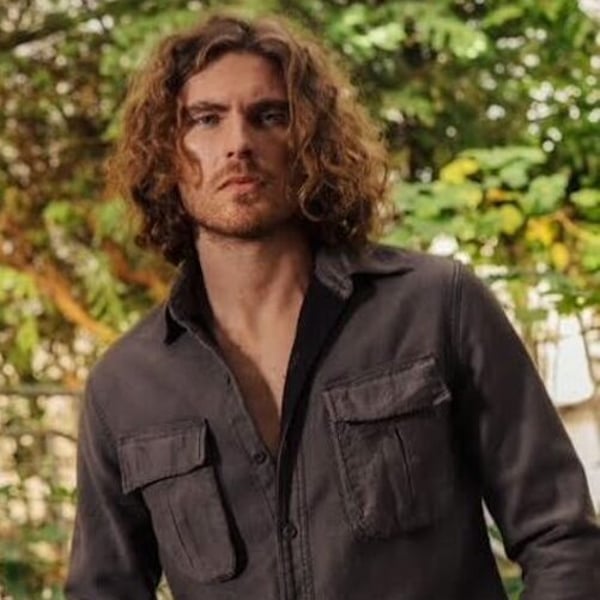
Keeling, Autumn–Winter 2026/27 – Courtesy

“From the outset, Keeling has pursued a concrete path towards sustainability, adopting solutions such as low-impact dyes, water recycling and purification systems, as well as ‘Clean Color’ dyeing processes that drastically reduce the water and energy consumption of one of the most critical phases of production. According to industry studies, a significant percentage of industrial water pollution is attributable precisely to the chemical treatments and dyes used in textile processing. Keeling’s patented technology can be applied either to piece-dyed fabric or to finished garments (garment-dyed),” noted Andrea Galluzzo, CEO of Keeling.

“In both cases, the process guarantees deep colour, a unique finish and a drastically reduced environmental impact. Conscious choices by companies and the evolution of production processes, particularly at the dyeing stage, are fundamental steps in reducing the sector’s environmental impact and building a more responsible future for the fashion industry.”

“Keeling is a brand born of nature and it remains deeply faithful to it in every aspect: from the choice of materials, to colours, to designs inspired by landscapes, natural harmonies and functions,” continued the brand’s Florentine CEO. “A hallmark of this commitment is the focus on water, a primary and fragile resource, safeguarded precisely through our unique and highly efficient dyeing system. In this way, Keeling not only draws inspiration from nature, but takes concrete responsibility to protect it, transforming sustainability into a real, measurable value consistent with its identity.”

Keeling, Autumn–Winter 2026/27
Keeling, Autumn–Winter 2026/27 – Courtesy

In parallel, Keeling has intensified its focus on raw material traceability and supply chain transparency. The brand has chosen to go against the grain, using mostly natural fibres, such as cotton and linen, which do not release microplastics during washing, and employing selected technical nylon, always with high percentages of recycled yarn, thus reducing the introduction of new plastic into the production cycle and synthetic microfibres into the marine ecosystem.

Meanwhile, the B-Corp, founded in 2020 by pooling capital and human resources from the United Arab Emirates, the United States, China and Italy (the design office and logistics are located in Campi Bisenzio), has created its first non-season collection, that is, not based on seasons.

“We decided to introduce it because the market asked for it, so we can frequently restock certain products and materials. Since we do our own garment dyeing, we will have, for part of the collection, a permanent, open stock, which we called ‘365’, like the days of the year,” the CEO explained to FashionNetwork.com.

Meanwhile, Keeling’s customer base in 18 countries has increased to 300, mainly thanks to the addition of the women’s collection, which debuts in stores for Spring/Summer 2026.

“It received an immediate positive response,” said Galluzzo. “Plus, we were often told that we weren’t very wintry, so I wanted to act on that, and thus the Autumn/Winter 2026/27 collection becomes more substantial, with a greater number of garments, tripled padding, and the addition of various materials.”

Keeling, Autumn–Winter 2026/27
Keeling, Autumn–Winter 2026/27 – Courtesy

Thanks to distribution expansion and the inclusion of the women’s apparel collection, Keeling’s turnover rose significantly in 2025, by as much as 60 per cent. Its leading market is the United States.

“Why? The truth is this: we bring an Italian sensibility to the brand, but we are an international company, with an aesthetic, a fit, a kind of comfort, even a ‘lower’ shoulder point, which are elements more appreciated in the Anglo-Saxon world,” the CEO replied. “Even our colours, mainly as a result of the characteristics of the exclusive Clean Color Tech dyeing process (which ensures an 84 per cent saving in electricity consumption and 93 per cent in water when dyeing linen and cotton garments, ed.), are ‘dusty’; a style less appreciated in Italy or France, for example.”

Also new is Keeling’s entry into Greece, with 30 clients.

The brand, whose name is inspired by the Keeling Islands, an archipelago of 27 unspoiled islands (plus 2 atolls) in the Indian Ocean, halfway between Australia and Sri Lanka, also called Cocos, features in its logo two of the stars of the Southern Cross constellation (the 5- and 7-pointed ones), which appears on the flags of Australia, New Zealand and the Cocos.

This article is an automatic translation.
Click here to read the original article.

Copyright © 2026 FashionNetwork.com All rights reserved.


Source link

Continue Reading

Fashion

Woolrich looks to its past

Published

on


Published


January 16, 2026

Just two months ago, the Turin-based BasicNet group, owner of the Kappa, Robe di Kappa, K-Way, Superga, Sebago and Briko brands, announced it had reached an agreement to acquire the Europe operations of Woolrich, the historic American brand founded in 1830. Last week also saw the announcement of the suspension of the transfer of the 139 employees currently based at the Bologna headquarters. In short, much has been written in recent months, and the Woolrich name has been at the centre of many conversations in the fashion industry. The Pitti Uomo appearance was highly anticipated.

Lorenzo Boglione, CEO of BasicNet, accompanied by brand director Marco Tamponi, who joined the company in 2017 to oversee Sebago (from both a commercial and creative standpoint), met with the press and outlined the first steps under the new ownership at the Florentine event.

The approach is one of great pride and deep respect for the brand’s DNA: for Boglione, it is “about being custodians of 200 years of history and having the ability and vision to evolve the brand into the contemporary era.”

The first step, then, is study: not only of the garment archive (over 15,000 pieces), but also of the fabrics (over 12,000 samples), which represent a significant part of Woolrich’s heritage. Boglione recalls that the American company was founded in Pennsylvania by John Rich and Daniel McCormick to manufacture fabrics for clothing worn by hunters, lumberjacks and trappers.

“Workwear and outerwear are deeply rooted in American culture, which makes it fascinating to explore their history,” the CEO commented.

The words “time” and “patience” surfaced repeatedly during the press conference. Boglione spoke in measured tones and was keen to emphasise that each step will be taken slowly, in a considered and structured way.

“We bought a brand that had a turnover of 90 million but was in great financial difficulty. Fortunately, we are not chasing immediate results or easy turnover. We all tend to remember Woolrich today for a single jacket style, whereas the brand is much more than a product that was immensely successful 20 years ago. We will not repeat the mistake of lacking a 360-degree vision. We will return to its past and its archive for this very reason: to be able to tell the incredible story of this brand,” he said.

These first weeks have therefore been used to study the current market, define the next steps, and begin work on a collection (both men’s and women’s, a segment that currently accounts for 30 per cent) that will need to be broad and well-structured. The path envisaged by the Boglione-Tamponi duo recalls what was done with Sebago and champions a slow business approach.

Only on one thing did we work in great haste with a sense of urgency: we had a beautiful space in Turin, our city, and we raced to open a flagship in time for Christmas. For everything else, we don’t have to rush,” they explained with a smile.

“Italy and Germany today are the two main markets (they account for 80 per cent) with high brand awareness. Surely we could start here, but we will not hesitate to look wherever the collection can meet the tastes of new consumers,” Boglione stressed.

On the production side, Woolrich will be able to rely on BasicNet’s highly structured and diversified supply chain, international in scope, with many product categories produced in Italy.

Drawing on his experience with Sebago, Tamponi will lead creative development and commercial strategy together with a team that is taking shape, with every decision carefully considered and made collectively.

For Pitti, Boglione and Tamponi conceived the Woolrich space as a themed room in which the buffalo check motif covers the surfaces and creates a warm, deeply American atmosphere. Archival catalogues, historical images and tangible evidence of the brand’s long history—original spools of yarn, portraits of founder John Rich and his family—line the walls. Objects that speak of an age-old craft, one that survived the 1903 fire that destroyed part of the archives but not the company’s identity. And it is from that identity that everything is now ready to start again.

This article is an automatic translation.
Click here to read the original article.

Copyright © 2026 FashionNetwork.com All rights reserved.


Source link

Continue Reading

Fashion

Vivaia changes gear and prepares for the next chapter

Published

on


Published


January 16, 2026

Vivaia is moving quickly. Following the recent opening of its second Paris boutique in late 2025, the footwear brand, known for its responsible approach, has announced a key new milestone in its development: the appointment of Alan Buanne as creative director.

Alan Buanne – DR

A strategic move as Vivaia looks ahead to 2026 with a clear ambition: to strengthen its global presence and shape its creative identity at scale.

In just a few years, the brand has made its mark on the footwear landscape, and its strategy appears to be paying off. In 2025, the label had more than 75 boutiques worldwide and recorded striking growth across its physical retail network, with year-on-year retail performance up 100%. In New York, the SoHo boutique even posted record footfall.

To support this momentum, Buanne brings a strong track record. Trained at Polimoda in Florence, he worked for renowned names such as Nicholas Kirkwood and Bottega Veneta before co-founding Neous, a footwear brand known for its refined, considered take on luxury.

Buanne also intends to evolve the brand’s visual language while staying true to its DNA.

“My aim is to build on what already clearly resonates and to guide Vivaia into its next phase with the same determination,” he stated, in a press release.

That vision involves more inclusive silhouettes, greater attention to skin tones, and clearer communication around innovative materials and environmental commitments, notably the recycling of ocean plastic.

DR

At the same time, Vivaia is preparing a major expansion of its boutique network. By 2026, the brand aims to have 130 points of sale worldwide. In the United States, ten new openings are planned, including in New York, California and Florida. These stores will adopt a new concept designed for wellbeing: soft lines, warm materials and welcoming spaces, reflecting the brand universe it aims to build. This rollout will complement established partnerships with retailers such as Nordstrom and Von Maur, with further collaborations to come, including Macy’s.

The first collection shaped by Buanne’s vision will debut in Autumn/Winter 2026.

This article is an automatic translation.
Click here to read the original article.

Copyright © 2026 FashionNetwork.com All rights reserved.


Source link

Continue Reading

Fashion

Rails launches first handbag collection, steps up diversification

Published

on


Published


January 16, 2026

Rails has unveiled its first-ever handbag collection. Based in Los Angeles, the brand continues to evolve, expanding into leather goods in keeping with its focus on premium essentials that combine comfort, softness and refined cuts.

The debut collection comprises four styles: the oversized Torino bucket bag, the supple Siena hobo, the Como mini barrel top-handle bag and the Lucca mini shoulder bag, each designed as a durable piece to slot into the everyday wardrobe.

DR

Crafted in suede, premium leather or pony-effect leather, the bags emphasise the quality of materials and finishes, with signature buckles, braiding and artisanal details that reinterpret classic lines. Priced between 268 and 368 euros, the collection sits within the accessible premium segment, with designs intended to be worn season after season.

The brand does not use any licences: all handbags are designed in-house by a dedicated team that oversees the entire design and production process end to end. Rails works with specialised factories in Italy, Spain, Portugal and India, with all leather bags sold in Europe made in Italy. This strategy aims to control the entire value chain, from design through to sales. In the same spirit of diversification, Rails also plans to launch its first footwear styles this spring, manufactured in Spain and Portugal.

Founded in 2008 by Jeff Abrams, CEO and creative director, Rails has grown from a project launched with an initial $5,000 investment and a single product into an international womenswear and menswear brand. Now distributed in 30 countries, the brand collaborates with around 1,200 retailers and operates a network of 21 bricks-and-mortar boutiques, including six in Europe: two in London, one in Paris, one in Berlin, one in Amsterdam and one in Antwerp. Further openings are planned across Europe. Rails has flagship stores in New York, San Francisco, Newport Beach, Paris, London and Amsterdam.

The company reported revenues of over 125 million euros. Direct-to-consumer sales, including retail and e-commerce, represent around 50% of the overall business, with a balanced split between online and in-store, while wholesale remains a key pillar of the business model.

This article is an automatic translation.
Click here to read the original article.

Copyright © 2026 FashionNetwork.com All rights reserved.


Source link

Continue Reading

Trending

Copyright © Miami Select.