Connect with us

Politics

Kathy Castor slams end of public broadcasting grant program for emergency warning systems
Published

on


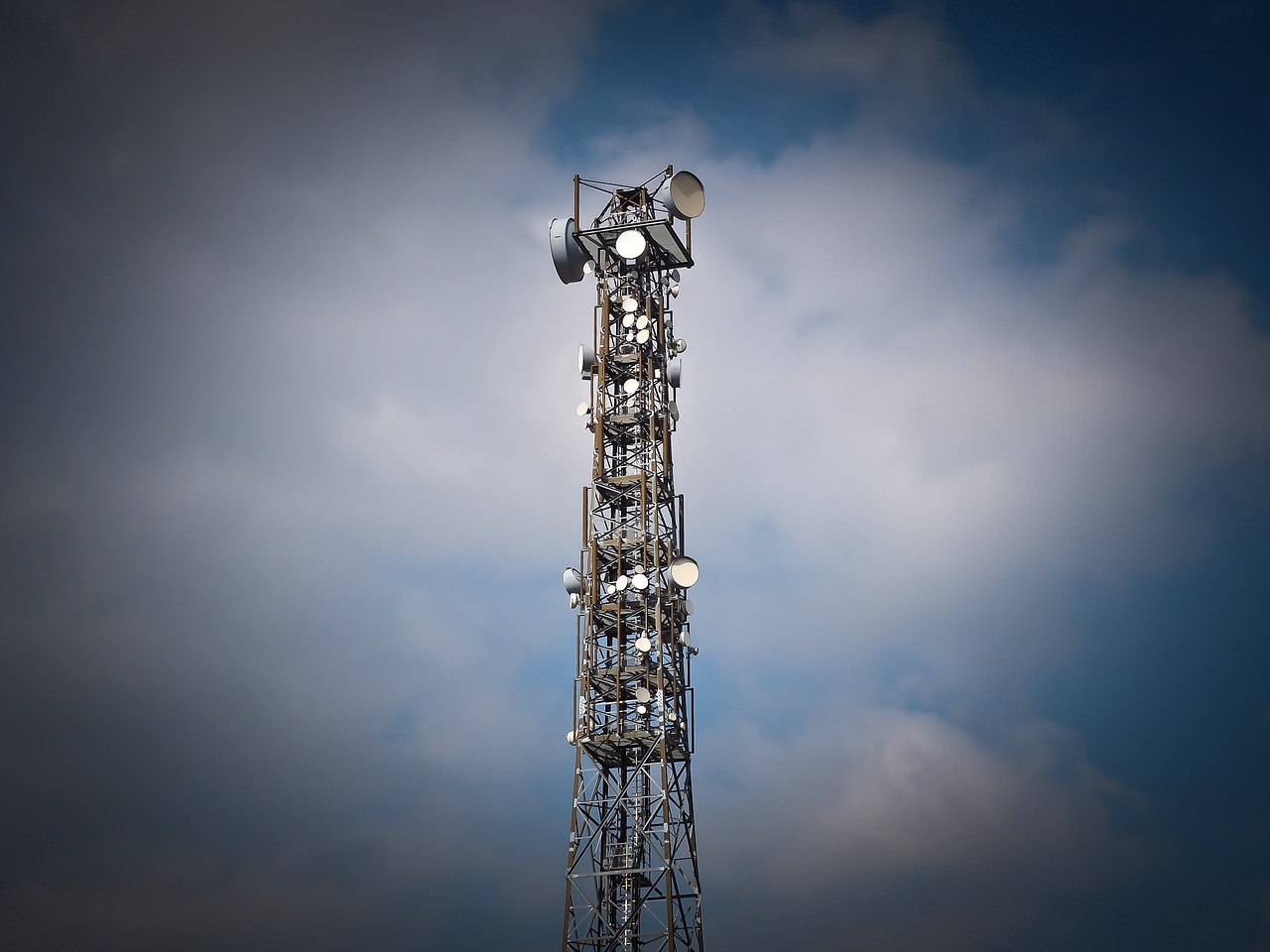
The Corporation for Public Broadcasting (CPB) has abandoned its grant program for the Next Generation Warning System. The move came after Congress passed a federal rescissions package that massively defunded public media.

That has Florida elected officials alarmed about whether local public broadcast outlets will be able to warn citizens about the next hurricane.

“My colleagues across the State of Florida should be outraged and immediately join me to demand President (Donald) Trump reinstate funding to this Warning System,” U.S. Rep. Kathy Castor, a Tampa Democrat, posted on X.

The warning system was originally funded in 2022, when $136 million was budgeted over three years for the Federal Emergency Management Agency (FEMA) to partner with CPB on the program. Since then, CPB led the hiring process for the effort and solicited requests for applications from local stations.

CBP was established as a private nonprofit in 1967 to manage funding to public broadcasting outlets across the country. But funding for the Public Broadcasting System and National Public Radio stations came under fire from the Republican-controlled Congress this year. Conservatives in the body for years have complained about subsidizing media, particularly those with a perceived liberal bias.

U.S. Rep. Aaron Bean, a Fernandina Beach Republican, cheered passage of a rescissions package in June that cut $9.4 billion in spending, including the public broadcasting money.

“Taxpayers deserve an efficient, accountable government. H.R. 4, the Rescissions Act of 2025, cuts reckless, politically biased spending identified by DOGE (the Department of Government Efficiency) and takes a critical step toward fiscal health,” he said on the House floor.

In Florida, Gov. Ron DeSantis this year also vetoed $1.3 million in funding for public radio and $4.4 million for TV stations, so there’s no reprieve coming in state dollars either.

Notably, CBP said it has prioritized sending grants to rural and disaster-prone areas, such as coastal Florida markets. The program issued $21.6 million in 2022 across 44 grants. But the program saw $110 million requested from 175 more stations nationwide.

“CPB has been fully invested in the NGWS program and its mission to protect the American public,” said Patricia Harrison, CPB President and CEO. “This is one more example of rescission consequences impacting local public media stations and the communities they serve — in this case, weakening the capacity of local public media stations to support the safety and preparedness of their communities.”

CPB officials said FEMA should take over the responsibility of distributing funds. Otherwise, the money will go unused.


Post Views: 0


Source link

Continue Reading

Politics

Gov. DeSantis now says poorer counties will ‘eventually’ be on their own to deal without property taxes

Published

on


What once was framed as “budget dust” could eventually be gone with the wind, leaving local politicians in small towns with tough decisions in the coming years.

Gov. Ron DeSantis is reiterating his promise to give fiscally constrained counties money in his new budget proposal to replace potentially property tax revenues should they be phased out. But DeSantis is now saying those cash-strapped jurisdictions will have to do without supplementary funds down the road.

“I’m not saying it’s even going to be necessary, but I put in the budget enough money to completely, 100% reimburse any homestead property tax reduction for those fiscally constrained counties,” DeSantis said in Orlando.

“There’s some people that say you shouldn’t do that. But my view is it’s a little more difficult maybe for some of them. And now, eventually they’re going to have to figure it out.”

DeSantis rolled out the budget proposal to aid smaller counties during a cable news hit last week, but did not say there would eventually be an end to state-level generosity despite touting a “big surplus” to a national audience.

“We have 32 fiscally constrained counties. You know, Miami-Dade, Palm Beach, these are powerhouses. I’m putting in my budget the revenue to totally backfill every one of those rural counties. So they’re not going to miss a single thing,” the Governor said on “Fox & Friends.”

However, he first teased the idea in October.

“I can fund all that. I can take all 32 fiscally constrained counties, I could fund 100% of tax revenue that would be derived from a homestead Florida residence, property taxes. And it’s like budget dust for us,” DeSantis said in Panama City.

A total of 32 of Florida’s 67 counties are designated as fiscally constrained.

Typically lower in population and property value, they include Baker, Bradford, Calhoun, Columbia, DeSoto, Dixie, Franklin, Gadsden, Gilchrist, Glades, Gulf, Hamilton, Hardee, Hendry, Highlands, Holmes, Jackson, Jefferson, Lafayette, Levy, Liberty, Madison, Okeechobee, Putnam, Suwannee, Taylor, Union, Wakulla and Washington counties.

DeSantis has been leaning on lawmakers in the supermajority Republican Legislature to put a measure eliminating homestead property taxes on the ballot, even teasing a Special Session during the Summer if they don’t ratify something during the Regular Session.

That ballot measure would need 60% support should it be presented to voters.


Source link

Continue Reading

Politics

Stan McClain, Lauren Melo push for ‘Blue Ribbon’ projects to boost land preservation

Published

on


State lawmakers are considering a proposal aimed at encouraging Florida’s largest private landowners to serve as long-term stewards of both the natural and built environments, offering a framework supporters say better aligns growth, conservation and infrastructure planning.

Sen. Stan McClain and Rep. Lauren Melo have each filed bills (SB 354, HB 299) establishing “Blue Ribbon” projects, which would apply to landowners who control or own at least 10,000 or more contiguous acres. The measures would require participating landowners to conserve at least 60% of the property.

Under the bill, the plan must prescribe the development property over a 50-year planning period by meeting strict statutory requirements. Landowners would still have to earn approval from local governments based on compliance with the statutes, including development orders, and concurrency. 

“HB 299 creates a framework that secures large-scale private land conservation for the long term — without requiring state purchase or taxpayer subsidies,” Melo said.

“The legislation not only fosters responsible growth, it also expands the availability of attainable housing for Florida families. The Blue Ribbon Projects bill strikes a balance that will be good for our communities, while protecting natural spaces, wildlife corridors and critical water recharge areas.” 

The stated Blue Ribbon project goals are to protect wildlife and natural areas; limit urban sprawl; provide a range of housing options including missing middle and affordable housing; create quality communities designed to reduce vehicle trips and promote mobility options; and enhance local economic development objectives and job creation.

The proposal is born of a desire to implement smart growth strategies by ensuring growth occurs only where it can be supported. The proposal requires phased planning for water, wastewater, transportation, schools and utilities.

It also emphasizes sustainability beyond just conservation lands, by ensuring new development supports population density in compact communities that are mobility focused.

The measure also seeks to ensure the state is a good steward of taxpayer dollars, by allowing conservation lands to be secured without public dollars. 

Still in its early phases, the bill has some early detractors, such as the Sierra Club, worried the proposal constitutes a local government preemption. But Audubon Florida’s Beth Alvi has not taken a direct position and remains hopeful, telling POLITICO that Melo “has always been solutions-oriented and is a devoted advocate for her community.”

Supporters, meanwhile, argue the process actually gives local residents more say in development in or near their communities through a real remedy process for landowners or anyone who objects to the project proposal.

“These bills are about the Florida we leave behind. They secure meaningful land conservation at no cost to taxpayers, while giving our state a responsible way to plan for future growth. SB 354 and HB 299 also bring fairness and predictability to the review process and support sustainable development that pays its own way — providing the long-term certainty communities and local governments need to plan wisely,” McClain said.

The House version of the bill will be heard in its first committee, the Intergovernmental Affairs Subcommittee, Thursday at 9 a.m.


Source link

Continue Reading

Politics

First Coast manufacturing was generally flat in November, with signs of improvement

Published

on


First Coast manufacturers put the brakes on contraction for the first time in months in November, though the general industrial picture was flat.

The University of North Florida (UNF) Jacksonville Economic Monitoring Survey (JEMS) shows several sectors of the manufacturing elements expanded in November, the most upbeat turnaround on the First Coast in several months. Seven out of the 12 elements of the UNF survey showed the Purchase Managers Index (PMI) expanded last month. That’s a big change from October, when only two sectors showed expansion.

“Jacksonville’s headline PMI of 50 in November indicates that local manufacturing activity was essentially flat. This stands in contrast to the national PMI of 48.2, which shows that U.S. manufacturing continued to contract at a faster pace,” said Albert Loh, Interim Dean of the UNF Coggin College of Business who oversees the JEMS survey.

“Still, a flat PMI is relatively positive when compared with deeper national declines and highlights Jacksonville’s resilience heading toward 2026.”

UNF researchers from the JEMS project reach out to First Coast manufacturing companies each month to see where they stand on production and several other factors.

One of the key factors that showed expansion for North Florida manufacturers in October was output, which jumped from a 49 figure in October to 53 in November.

“A reading of 53 suggests a modest but meaningful pickup in business activity in the region. While not signaling a boom, it reflects resilience and indicates that local firms are navigating cost pressures, supply chain adjustments, and mixed demand with cautious optimism,” the JEMS report concluded.

New orders, another high-profile manufacturing element, also showed a substantial uptick increasing from a figure of 49 in October to 52 in November.

“New orders are a leading indicator, so this improvement points to potentially stronger production, hiring, and inventory activity ahead,” the JEMS report said.

Other factors that showed expansion in North Florida last month included output prices, average input prices, quantity of input purchased, inventory of input purchased and business activity outlook over the next year.

Key elements that are still sluggish with contraction included employment, backlogs of work, finished goods inventory and suppliers’ delivery times. New export orders were unchanged.


Source link

Continue Reading

Trending

Copyright © Miami Select.