Connect with us

Business

Justice Department investigates Minnesota’s Walz and Frey, who call it a bullying tactic

Published

on


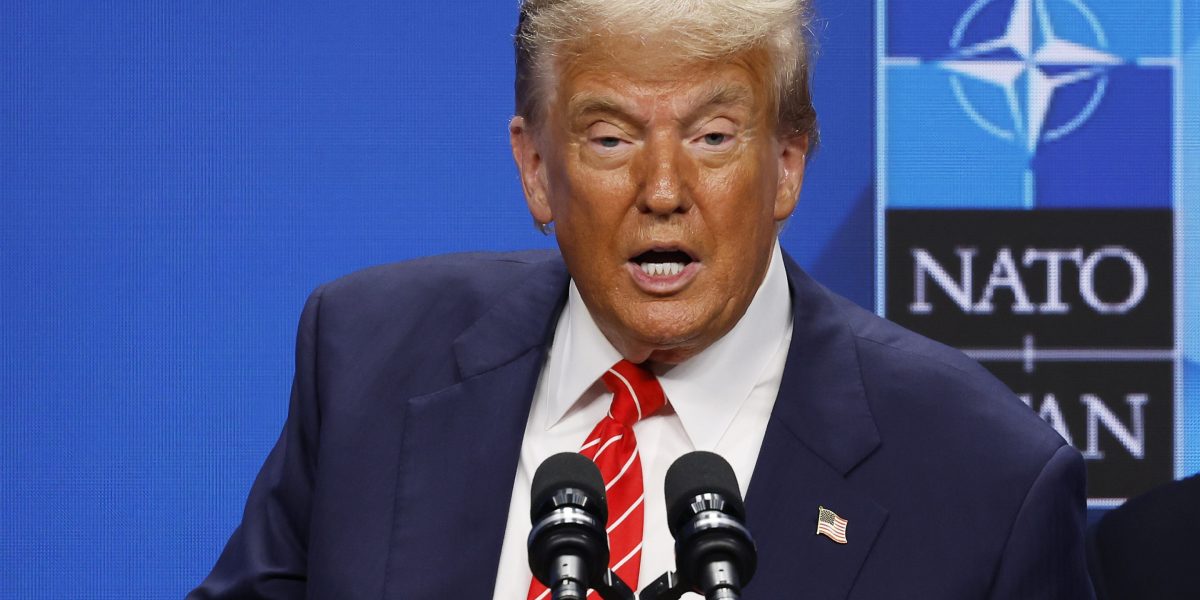
The Justice Department is investigating whether Minnesota Gov. Tim Walz and Minneapolis Mayor Jacob Frey have impeded federal immigration enforcement through public statements they have made, two people familiar with the matter said Friday.

The investigation, which both Walz and Frey said was a bullying tactic meant to threaten political opposition, focused on potential violation of a conspiracy statute, the people said.

The people spoke to The Associated Press on condition of anonymity because they were not authorized to discuss a pending investigation by name.

CBS News first reported the investigation.

The investigation comes during a weekslong immigration crackdown in Minneapolis and St. Paul that the Department of Homeland Security has called its largest recent immigration enforcement operation, resulting in more than 2,500 arrests.

The operation has become more confrontational since the fatal shooting of Renee Good on Jan. 7, with agents pulling people from cars and homes and frequently being confronted by angry bystanders demanding they leave. State and local officials have repeatedly told protesters to remain peaceful.

In response to reports of the investigation, Walz said in a statement: “Two days ago it was Elissa Slotkin. Last week it was Jerome Powell. Before that, Mark Kelly. Weaponizing the justice system and threatening political opponents is a dangerous, authoritarian tactic.”

U.S. senators Kelly, from Arizona, and Slotkin, from Michigan, are under investigation from the President Donald Trump administration after appearing with other Democratic lawmakers in a video urging members of the military to resist “illegal orders.” The administration has also launched a criminal investigation of Powell, a first for a sitting federal reserve chair.

Walz’s office said it has not received any notice of an investigation.

Frey described the investigation as an attempt to intimidate him for “standing up for Minneapolis, our local law enforcement, and our residents against the chaos and danger this Administration has brought to our streets.”

The U.S. attorney’s office in Minneapolis did not immediately comment.

In a post on the social media platform X following reports of the investigation, Attorney General Pam Bondi said: “A reminder to all those in Minnesota: No one is above the law.” She did not specifically mention the investigation.

State calls for peaceful protests

With more protests expected in the Twin Cities this weekend, state authorities urged demonstrators to avoid confrontation.

“While peaceful expression is protected, any actions that harm people, destroy property or jeopardize public safety will not be tolerated,” said Commissioner Bob Jacobson of the Minnesota Department of Public Safety.

His comments came after Trump backed off a bit from his threat a day earlier to invoke an 1807 law, the Insurrection Act, to send troops to suppress demonstrations.

“I don’t think there’s any reason right now to use it, but if I needed it, I’d use it,” Trump told reporters outside the White House.

U.S. judge in Minnesota ruled on Friday that the federal officers working in the Minneapolis-area enforcement operation can’t detain or tear gas peaceful protesters who aren’t obstructing authorities, including when they’re observing agents.

The case was filed before Good’s shooting on behalf of six Minnesota activists represented by the American Civil Liberties Union of Minnesota.

Government attorneys had argued that the officers have been acting within their legal authority to enforce immigration laws and protect themselves. But the ACLU has said government officers are violating the constitutional rights of Twin Cities residents.

Detention whiplash

A Liberian man who has been shuttled in and out of custody since immigration agents broke down his door with a battering ram was released again Friday, hours after a routine check-in with authorities led to his second arrest.

The dramatic initial arrest of Garrison Gibson last weekend was captured on video. U.S. District Judge Jeffrey Bryan ruled the arrest unlawful Thursday and freed him, but Gibson was detained again Friday when he appeared at an immigration office.

A few hours later, Gibson was free again, attorney Marc Prokosch said.

Gibson, 37, who fled the civil war in his West African home country as a child, had been ordered removed from the U.S., apparently because of a 2008 drug conviction that was later dismissed. He has remained in the country legally under what’s known as an order of supervision, Prokosch said, and complied with the requirement that he meet regularly with immigration authorities.

In his Thursday order, the judge agreed that officials violated regulations by not giving Gibson enough notice that his supervision status had been revoked. Prokosch said he was told by ICE that they are “now going through their proper channels” to revoke the order.

911 caller: Good was shot ‘point blank’

Minneapolis authorities released police and fire dispatch logs and transcripts of 911 calls related to the fatal shooting of Good. Firefighters found what appeared to be two gunshot wounds in her right chest, one in her left forearm and a possible gunshot wound on the left side of her head, records show.

“They shot her, like, cause she wouldn’t open her car door,” a caller said. “Point blank range in her car.”

Good, 37, was at the wheel of her Honda Pilot, which was partially blocking a street. Video showed an officer approached the SUV, demanded that she open the door and grabbed the handle.

Good began to pull forward and turned the vehicle’s wheel to the right. Another ICE officer, Jonathan Ross, pulled his gun and fired at close range, jumping back as the SUV moved past him. DHS claims the agent shot Good in self-defense.



Source link

Continue Reading

Business

Just when Wall Street and Corporate America were looking forward to a year without trade fears, the ‘Tariff King’ strikes again

Published

on


After a turbulent 2025 that shocked global trade and financial markets, 2026 was shaping up to be a time for the U.S. economy to look past President Donald Trump’s tariffs.

Not so fast.

Tariffs are back on the agenda again only a few weeks into the new year. On Saturday, Trump announced eight NATO allies would be hit with 10% tariffs next month that will rise to 25% by June until a “Deal is reached for the Complete and Total purchase of Greenland.”

While not all the targeted countries are members of the European Union, the new levies come despite a trade deal reached in July that set a 15% tariff on most EU products and obligated it to invest hundreds of billions of dollars in the U.S.

And on Monday, Trump said countries that do business with Iran would be hit with a 25% duty on trade with the U.S., threatening to blow up a fragile tariff cease-fire with China, which is a top importer of Iranian oil.

Now, the U.S. faces the prospect of a new cycle of retaliation and escalation. On Saturday, French President Emmanuel Macron hinted at what comes next.

“Tariff threats are unacceptable and have no place in this context. Europeans will respond in a united and coordinated manner should they be confirmed,” he posted on X. “We will ensure that European sovereignty is upheld.”

It wasn’t supposed to be like this. Wall Street, Corporate America, and consumers were looking ahead to an economic boost from tax cuts in Trump’s One Big Beautiful Bill Act as well as more calm on the trade front.

On Friday, analysts at Bank of America highlighted an exceptionally upbeat forecast for 2026 GDP growth, putting it a 2.8%—well ahead of the consensus for 2.1%.

“The key drivers are easier fiscal and monetary policy, and our expectation of more growth-friendly trade policy,” BofA said in a note.

Meanwhile, the Federal Reserve was also anticipating continued moderation in inflation this year as policymakers assumed that tariffs would deliver a one-time jolt to prices instead of sustained upward pressure.

A new flurry of import taxes could put that expectation at risk and jeopardize future rate cuts if inflation remains stubbornly above the Fed’s 2% target.

The Fed’s most recent Beige Book survey of economic and business conditions around the country was also filled with hope that tariff anxiety was finally easing:

  • “The outlook improved on balance, with more optimism and a bit less caution than in the last report, boosted in part by reduced uncertainty from tariffs.”
  • “Retail and tourism contacts were cautiously optimistic heading into 2026, based on recent stability in consumer spending, greater clarity on tariffs, and Boston’s 2026 World Cup soccer events.”
  • “Firms reported an abatement of tariff-related uncertainty from a combination of stabilized tariff policy and their own adjustments, such as the completion of a new production facility by a frozen foods manufacturer.”

Trump’s new tariffs represent a sharp reversal from late last year, when the administration rolled back some levies on food imports and delayed hikes on furniture as voters demanded more affordability and relief from higher prices.

Trade-exposed sectors of the economy have already suffered a heavy toll from the tariffs. For example, manufacturers have shed 70,000 jobs since Trump unveiled his “Liberation Day” duties in April 2025.

And the Institute for Supply Management’s manufacturing index has been in negative territory for 10 consecutive months, meaning activity has been contracting.

Some relief might be ahead. The Supreme Court is due to issue a ruling soon on Trump’s ability to impose tariffs under the International Emergency Economic Powers Act.

A decision against the administration could limit his powers on trade. But depending on how nuanced a ruling is, Trump could retain some leeway. He also has vowed to use other laws to invoke fresh tariffs if he loses in court.

That shouldn’t be a surprise given that Trump based his re-election campaign on tariffs and has called himself “Tariff King,” “Tariff Man” and “Mr. Tariff” over the years.

Considering his instincts to quickly pull the trigger on tariffs across a broad range of situations, Wall Street may need a new playbook.

“Most economic models don’t quantify the geopolitical and relational damage caused by erratic tariffs on allies,” Erica York, vice president of tax policy at the Tax Foundation, said on X. “Trump’s tariff policies impose real costs that go far beyond higher taxes and slower GDP growth.”

This story was originally featured on Fortune.com


Source link

Continue Reading

Business

EU and Mercosur bloc of South American nations sign trade deal to end quarter-century of talks

Published

on


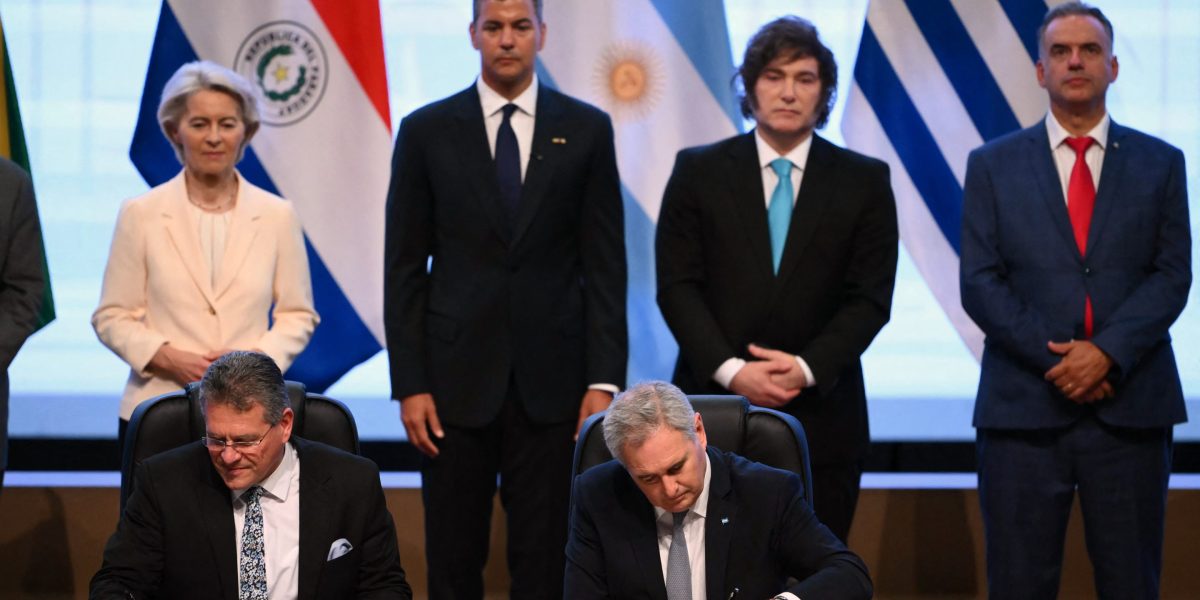
The European Union and the Mercosur bloc of South American countries formally signed a long-sought landmark free trade agreement on Saturday, capping more than a quarter-century of torturous negotiations to strengthen commercial ties in the face of rising protectionism and trade tensions around the world.

The signing ceremony in Paraguay’s capital, Asunción, marks a major geopolitical victory for the EU in an age of American tariffs and surging Chinese exports, expanding the bloc’s foothold in a resource-rich region increasingly contested by Washington and Beijing.

It also sends a message that South America keeps diverse trade and diplomatic relations even as U.S. President Donald Trump makes an aggressive push for geopolitical dominance across the Western Hemisphere.

Mercosur consists of the region’s two biggest economies, Argentina and Brazil, as well as Paraguay and Uruguay. Bolivia, the bloc’s newest member, can join the trade deal in the coming years. Venezuela has been suspended from the bloc and isn’t included in the agreement.

Promoted by South America’s renowned grass-fed cattle-raising countries and Europe’s industrial interests, the accord’s gradual elimination of more than 90% of tariffs creates one of the world’s largest free trade zones and makes shopping cheaper for more than 700 million consumers.

Geopolitical undertones

European Commission President Ursula von der Leyen, who heads the EU’s executive branch, portrayed the deal as a bulwark against the disruptive policies of the Trump administration.

“It reflects a clear and deliberate choice: We choose fair trade over tariffs. We choose a productive long-term partnership over isolation,” von der Leyen declared in an veiled rebuke to Trump’s trade policies at the ceremony, which got underway as Trump announced 10% tariffs on eight European nations over their opposition to American control of Greenland.

“We will join forces like never before, because we believe that this is the best way to make our people and our countries prosper.”

Brazilian President Luiz Inácio Lula da Silva, a long-time advocate for the EU-Mercocsur deal as negotiations lumbered through his three nonconsecutive presidential terms, hailed the agreement as symbol of global cooperation.

“At a time when unilateralism isolates markets and protectionism inhibits global growth, two regions that share democratic values and a commitment to multilateralism choose a different path,” Lula said in an X post.

Lula’s decision to skip the ceremony signaled that tensions simmered between the trading blocs.

European farmers

Brazil, which held the rotating presidency of Mercosur last year, had been gearing up to host the signing ceremony in the country’s capital, Brasília, last month, when European countries called it off, demanding more concessions to farmers scared of the possible dumping of cheap South American agricultural imports.

Lula, robbed of his spotlight, was outraged at what was widely seen in South America as the latest example of the EU’s bureaucratic intrusiveness. One of the main reasons the deal took so long to clinch was Brussels’ attempts to manage South America’s agricultural production processes, from standards on plastic packaging to deforestation regulation.

“The EU’s maximalist wish lists of demands from developing economies willing to sign free trade agreements are often perceived as patronizing,” said Agathe Demarais, a senior policy fellow with the European Council on Foreign Relations.

After imposing environmental and animal welfare regulations, strict quotas on farm products like beef and sugar and staggered timelines for tariff reductions, the EU sweetened the deal even more for its farmers with a promise of hefty subsidies. That pushed agricultural powerhouse Italy across the line earlier this month.

But even as the ink dried on Saturday, powerful protectionist lobbies in Europe were still hoping to prevent the agreement from clearing its one final hurdle: ratification by the European Parliament.

France remains opposed to the accord, with President Emmanuel Macron worrying that farmers’ frustration with the EU could drive more voters to the country’s far right in the 2027 presidential election.

“Everything will depend on the political appetite of the European Parliament,” said João Paulo Cavalcanti, a Brazilian lawyer specializing in international trade. “That could clearly create an obstacle to approval.”


Source link

Continue Reading

Business

EU set to halt U.S. trade deal over Trump’s latest tariff threat

Published

on


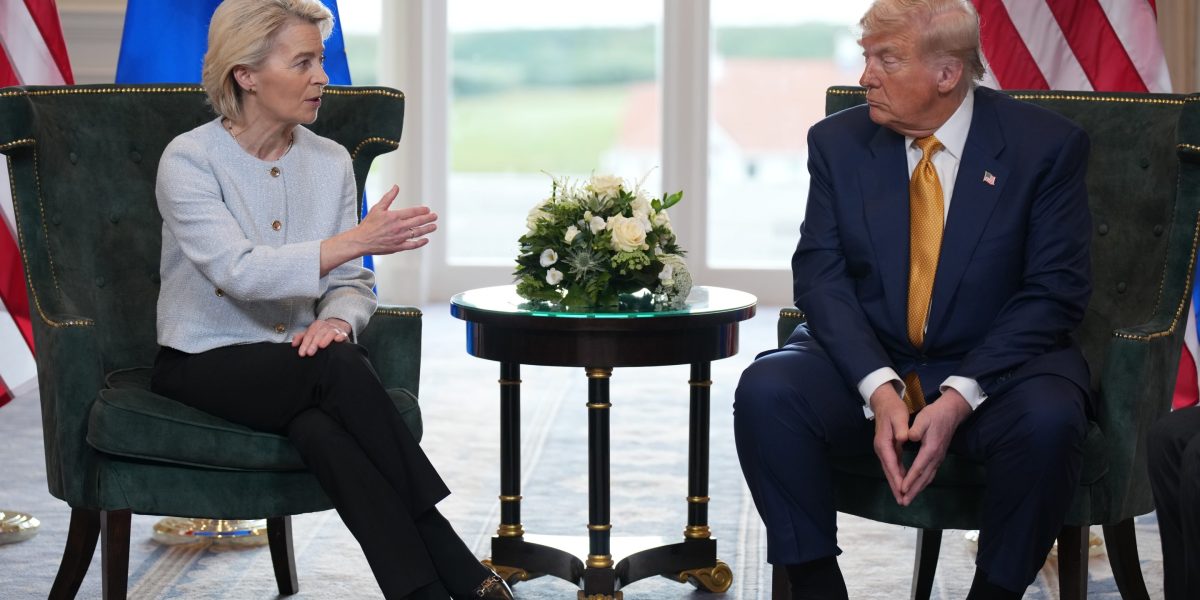
European Union lawmakers are poised to block approval of the EU’s trade deal with the US over President Donald Trump’s vow to impose tariffs on countries that supported Greenland in the face of American threats.  

Manfred Weber, president of the European People’s Party, the largest political group in the European Parliament, said on Saturday that agreement with the US is no longer possible.

“The EPP is in favor of the EU-US trade deal, but given Donald Trump’s threats regarding Greenland, approval is not possible at this stage,” Weber posted on social media. He added that the EU agreement to lower tariffs on “US products must be put on hold.” 

The EU-US trade agreement, which European Commission President Ursula von der Leyen struck with Trump last summer, has already been implemented but still needs a nod from parliament. If EPP lawmakers join left-leaning political groups, it’s likely they’ll have enough votes to delay or block approval.  

Read More: Trump to Impose Tariffs on 8 European Nations Over Greenland

The trade agreement set a 15% US tariff for most EU goods in exchange for a pledge by the EU to eliminate duties on US industrial goods and some agricultural products. Von der Leyen, who oversees trade negotiations for the EU, made the deal in the hopes of avoiding a full-blown trade war with Trump.

A vocal faction of EU lawmakers have long railed against the agreement, arguing it was too lopsided in favor of the US. That anger has deepened as the US expanded a 50% tariff on steel and aluminum to hundreds of additional EU products after the July accord.

This story was originally featured on Fortune.com


Source link

Continue Reading

Trending

Copyright © Miami Select.