Connect with us

Business

Just 1% of health R&D targets women. The Gates Foundation aims to change that with $2.5 billion push

Published

on


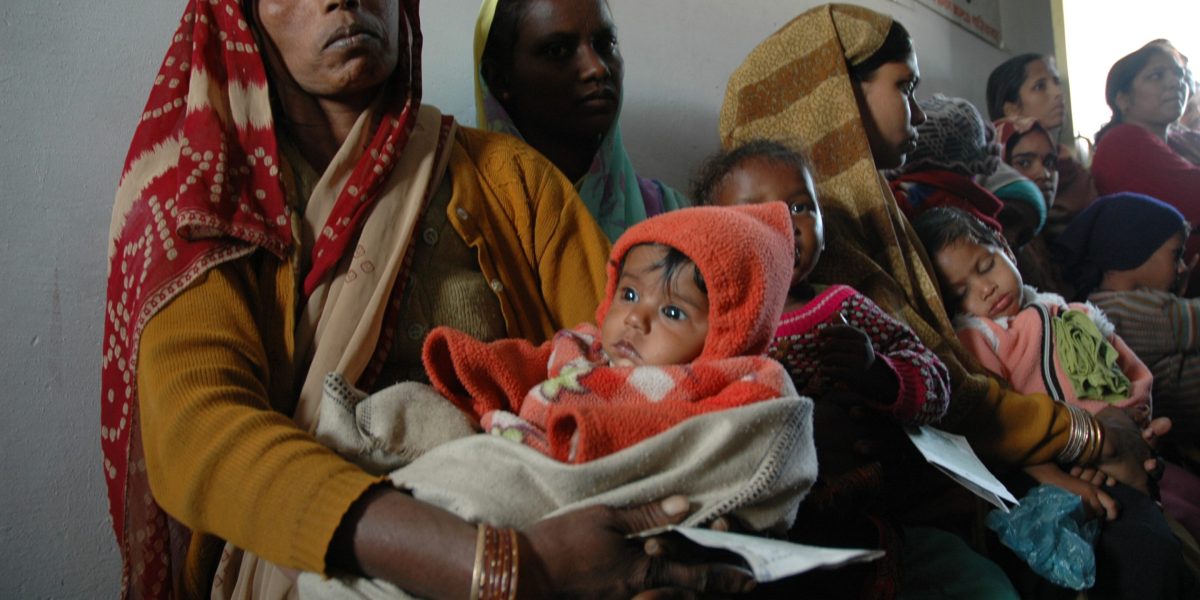
Globally, women live an average of three-and-a-half years longer than men, for a variety of genetic, hormonal, and societal reasons. But women tend to have shorter “health spans”—years of living in good health. Partly due to the perils they face in pregnancy and childbirth, they spend more of their lives unwell, and in poor countries millions of women and children die from preventable causes. 

Addressing that disparity is the focus of the first major tranche of the $200 billion that Bill Gates has committed to improving global health via his Gates Foundation over the next two decades. The Microsoft co-founder announced in May that he would deploy most of the remainder of his massive wealth in an all-out effort to eradicate a slew of diseases that threaten the world’s poorest. Then, he said, the foundation that he began in 2000 with his then-wife, Melinda French Gates, will shut down

At an event with STAT News in Cambridge, Mass., to announce the initiative, Gates pointed to successes that the foundation has pulled off reducing child mortality with vaccinations, and reducing maternal mortality with simple and cheap devices to measure blood loss. “The progress on childhood death has been pretty phenomenal; maternal deaths have not gone down as quickly,” he said. “We said, ‘We really need to go after these things.’”

Dr. Anita Zaidi, president of the Gender Equality Division at the Gates Foundation, pointed to 2021 research from McKinsey which found that, excluding cancer research, just 1% of healthcare R&D is invested in female-specific conditions. And as Zaidi wrote in a commentary for Fortune today, “for conditions that affect women and men, women are severely underrepresented in clinical trials, so we’ve barely scratched the surface of understanding how women experience common conditions like cardiovascular diseases.”

The foundation aims to pull off moonshot innovations using AI to diagnose and treat women, and also to expand the use of existing technology. Technology that’s widely available in wealthier countries—like an ultrasound to determine how a pregnancy is progressing—remains out of reach for many women in poorer countries. “In fact,” Zaidi said as she announced the Foundation’s investment, globally “70% of women do not have access to a simple ultrasound at pregnancy.”

Even in wealthy countries like the U.S., Zaidi wrote, there are major gaps in women’s healthcare. In North Dakota, for example, one in four women must drive over an hour to reach the nearest birthing hospital. “In 2022, about 2.3 million U.S. women of child-bearing age lived in ‘maternity deserts,’ defined as counties without a hospital, birth center, and doctors and nurse midwives with experience delivering babies,” she wrote.

The $2.5 billion in funding for research and development will focus on five areas: obstetrics and maternal immunization; maternal health and nutrition; gynecological and menstrual health; contraceptive innovation; and sexually transmitted infections. Among the areas the foundation hopes to make progress are research into the vaginal microbiome, therapeutics for preeclampsia, and non-hormonal contraception. 

The work to be funded has economic and business dimensions too, Zaidi emphasized: The foundation cites research showing that every $1 invested in women’s health yields $3 in economic growth. “Women’s health is not just a philanthropic cause,” Zaidi said. “it’s an investable opportunity with immense potential for scientific breakthroughs that could help millions of women.” 

Zaidi emphasized that the foundation’s $2.5 billion commitment, while enormous, “is just a drop in the bucket.” It covers only a part of the battle ahead to protect women and their children from dying of preventable causes. The funding is earmarked for research and development. Delivering actual solutions to women around the world is a complicated process that requires collaborations with governments, other philanthropies, and companies. 

“It is truly a big task,” said Dr. Ru-fong Joanne Cheng, the foundation’s director of Women’s Health Innovations. “We need everyone to join in, raise the visibility of these issues, raise the fact that so little attention has been paid toward the health of over half the population of the globe… It’s not going to happen spontaneously; it has to be intentional. It has to be deliberate.”


Source link

Continue Reading

Business

Kimberly-Clark exec says old bosses would compare her to their daughters when she got promoted

Published

on


Women have their own unique set of challenges in the workforce; the “motherhood penalty” can set them back $500,000, their C-suite representation is waning, and the gender pay gap has widened again. One senior executive from $36 billion manufacturing giant Kimberly-Clark knows the tribulations all too well—after all, she’s one of few women in the Fortune 500 who holds the coveted role. 

Tamera Fenske is the chief supply chain officer (CSCO) for Kimberly-Clark, who oversees a massive global team of 22,665 employees—around 58% of the global CPG manufacturer’s workforce. She’s in charge of optimizing the company’s entire supply chain, from sourcing raw materials for Kimberly-Clark products including Kleenex and Huggies, to delivering the final product into customers’ shopping carts. 

It’s a job that’s essential to most top businesses operating at such a massive scale; around 422 of the Fortune 500 have chief supply chain officers, according to a 2025 Spencer Stuart analysis. However, most of these slots are awarded to white men; only about 18% of executives in this position are women, and 12% come from underrepresented racial and ethnic backgrounds. It’s one of the C-suite roles with the least female representation, right next to chief financial officers, chief operating officers, and CEOs. 

In fact, Fenske is one of just 76 Fortune 500 female executives who have “chief supply chain officer” on their resumes. However, the executive tells Fortune it’s an unfortunate fact she “doesn’t think about” too often—if anything, it motivates her further.

“Anytime someone tells me I can’t do something, it makes me want to work that much harder to prove them wrong,” Fenske says. 

The first time Fenske noticed she was one of few women in the room

Fenske has spent her entire life navigating subjects dominated by men—something she didn’t even consider until college. 

Her father, aunts, uncles, and grandfather all worked for Dow Chemical, so she grew up in a STEM-heavy household. Naturally, she leaned into math and science as well, eventually pursuing a bachelor’s in environmental chemical engineering at Michigan Technological University. It was there that her eyes first opened to the reality that she was one of few women in the room. 

“It definitely was going to Michigan Tech, where I first realized the disparity,” Fenske said, adding that there was around an eight-to-one male-to-female ratio. “As you continue through the higher levels and the grades, it becomes even more tighter, especially as you get into your specialized engineering.” 

Once joining the world of work, it wasn’t only Fenske who noticed the lack of women in senior roles—some bosses would even point it out. 

The Fortune 500 boss is paying it forward—for both men and women

After Fenske graduated from Michigan Tech, she got her start at $91 billion manufacturer 3M: a multinational conglomerate producing everything from pads of Post-It notes to rolls of Scotch tape. Fenske was first hired as an environmental engineer in 2000. Promotion after promotion came, but all people could seem to focus on was her gender.

“It would come to light when I moved relatively quickly through the ranks. Some of my bosses would say, ‘You’re the age of my daughter,’ and different things like that. ‘You’re the first woman that’s had this role at this plant or in this division,’” Fenske recalls. Over the course of 2 decades, she rose through the company’s ranks to the SVP of 3M’s U.S. and Canada manufacturing and supply chain. 

And anytime she was asked about her gender? She’d flip the questions back at them while standing her ground. “I would always try to spin it a little bit and ask them questions like, ‘Okay, so what is your daughter doing?’…I always try to seek to understand where they are coming from, but then also reinforce what brought me to where I am.”

Now, three years into her current stint as Kimberly-Clark’s CSCO, the 47-year-old is paying it back—but not just to the women following in her footsteps.

“I never saw myself as necessarily a big, ground-breaker pioneer, even though the statistics would tell you I was,” Fenske says. “I tried to give back to women and men, to be honest. Because I think men [are] one of the strongest advocates for women as well. So I think we have to teach both how to have that equal lens and diverse perspective.”


Source link

Continue Reading

Business

SpaceX to offer insider shares at record-setting $800 billion valuation

Published

on


SpaceX is preparing to sell insider shares in a transaction that would value Elon Musk’s rocket and satellite maker at as much as $800 billion, people familiar with the matter said, reclaiming the title of the world’s most valuable private company. 

The details, discussed by SpaceX’s board of directors on Thursday at its Starbase hub in Texas, could change based on interest from insider sellers and buyers or other factors, said some of the people, who asked not to be identified as the information isn’t public. SpaceX is also exploring a possible initial public offering as soon as late next year, one of the people said. 

Another person briefed on the matter said that the price under discussion for the sale of some employees and investors’ shares is higher than $400 apiece, which would value SpaceX at between $750 billion and $800 billion. The company wouldn’t raise any funds though this planned sale, though a successful offering at such levels would catapult it past the record of $500 billion valuation achieved by OpenAI in October.

Elon Musk on Saturday denied that SpaceX is raising money at a $800 billion valuation without addressing Bloomberg’s reporting on the planned offering of insiders’ shares. 

“SpaceX has been cash flow positive for many years and does periodic stock buybacks twice a year to provide liquidity for employees and investors,” Musk said in a post on his social media platform X. 

The share sale price under discussion would be a substantial increase from the $212 a share set in July, when the company raised money and sold shares at a valuation of $400 billion. The Wall Street Journal and Financial Times earlier reported the $800 billion valuation target.

News of SpaceX’s valuation sent shares of EchoStar Corp., a satellite TV and wireless company, up as much as 18%. Last month, EchoStar had agreed to sell spectrum licenses to SpaceX for $2.6 billion, adding to an earlier agreement to sell about $17 billion in wireless spectrum to Musk’s company.

Subscribe Now: The Business of Space newsletter covers NASA, key industry events and trends.

The world’s most prolific rocket launcher, SpaceX dominates the space industry with its Falcon 9 rocket that lifts satellites and people to orbit.

SpaceX is also the industry leader in providing internet services from low-Earth orbit through Starlink, a system of more than 9,000 satellites that is far ahead of competitors including Amazon.com Inc.’s Amazon Leo.

Elite Group

SpaceX is among an elite group of companies that have the ability to raise funds at $100 billion-plus valuations while delaying or denying they have any plan to go public. 

An IPO of the company at an $800 billion value would vault SpaceX into another rarefied group — the 20 largest public companies, a few notches below Musk’s Tesla Inc. 

If SpaceX sold 5% of the company at that valuation, it would have to sell $40 billion of stock — making it the biggest IPO of all time, well above Saudi Aramco’s $29 billion listing in 2019. The firm sold just 1.5% of the company in that offering, a much smaller slice than the majority of publicly traded firms make available.

A listing would also subject SpaceX to the volatility of being a public company, versus private firms whose valuations are closely guarded secrets. Space and defense company IPOs have had a mixed reception in 2025. Karman Holdings Inc.’s stock has nearly tripled since its debut, while Firefly Aerospace Inc. and Voyager Technologies Inc. have plunged by double-digit percentages since their debuts.

SpaceX executives have repeatedly floated the idea of spinning off SpaceX’s Starlink business into a separate, publicly traded company — a concept President Gwynne Shotwell first suggested in 2020. 

However, Musk cast doubt on the prospect publicly over the years and Chief Financial Officer Bret Johnsen said in 2024 that a Starlink IPO would be something that would take place more likely “in the years to come.”

The Information, citing people familiar with the discussions, separately reported on Friday that SpaceX has told investors and financial institution representatives that it’s aiming for an IPO of the entire company in the second half of next year.

Read More: How to Buy SpaceX: A Guide for the Eager, Pre-IPO

A so-called tender or secondary offering, through which employees and some early shareholders can sell shares, provides investors in closely held companies such as SpaceX a way to generate liquidity.

SpaceX is working to develop its new Starship vehicle, advertised as the most powerful rocket ever developed to loft huge numbers of Starlink satellites as well as carry cargo and people to moon and, eventually, Mars.


Source link

Continue Reading

Business

National Park Service drops free admission on MLK Day and Juneteenth while adding Trump’s birthday

Published

on


The National Park Service will offer free admission to U.S. residents on President Donald Trump’s birthday next year — which also happens to be Flag Day — but is eliminating the benefit for Martin Luther King Jr. Day and Juneteenth.

The new list of free admission days for Americans is the latest example of the Trump administration downplaying America’s civil rights history while also promoting the president’s image, name and legacy.

Last year, the list of free days included Martin Luther King Jr Day and Juneteenth — which is June 19 — but not June 14, Trump’s birthday.

The new free-admission policy takes effect Jan. 1 and was one of several changes announced by the Park Service late last month, including higher admission fees for international visitors.

The other days of free park admission in 2026 are Presidents Day, Memorial Day, Independence Day, Constitution Day, Veterans Day, President Theodore Roosevelt’s birthday (Oct. 27) and the anniversary of the creation of the Park Service (Aug. 25).

Eliminating Martin Luther King Jr. Day and Juneteenth, which commemorates the day in 1865 when the last enslaved Americans were emancipated, removes two of the nation’s most prominent civil rights holidays.

Some civil rights leaders voiced opposition to the change after news about it began spreading over the weekend.

“The raw & rank racism here stinks to high heaven,” Harvard Kennedy School professor Cornell William Brooks, a former president of the NAACP, wrote on social media about the new policy.

Kristen Brengel, a spokesperson for the National Parks Conservation Association, said that while presidential administrations have tweaked the free days in the past, the elimination of Martin Luther King Jr. Day is particularly concerning. For one, the day has become a popular day of service for community groups that use the free day to perform volunteer projects at parks.

That will now be much more expensive, said Brengel, whose organization is a nonprofit that advocates for the park system.

“Not only does it recognize an American hero, it’s also a day when people go into parks to clean them up,” Brengel said. “Martin Luther King Jr. deserves a day of recognition … For some reason, Black history has repeatedly been targeted by this administration, and it shouldn’t be.”

Some Democratic lawmakers also weighed in to object to the new policy.

“The President didn’t just add his own birthday to the list, he removed both of these holidays that mark Black Americans’ struggle for civil rights and freedom,” said Democratic Sen. Catherine Cortez Masto of Nevada. “Our country deserves better.”

A spokesperson for the National Park Service did not immediately respond to questions on Saturday seeking information about the reasons behind the changes.

Since taking office, Trump has sought to eliminate programs seen as promoting diversity across the federal government, actions that have erased or downplayed America’s history of racism as well as the civil rights victories of Black Americans.

Self-promotion is an old habit of the president’s and one he has continued in his second term. He unsuccessfully put himself forwardfor the Nobel Peace Prize, renamed the U.S. Institute of Peace after himself, sought to put his name on the planned NFL stadium in the nation’s capital and had a new children’s savings program named after him.

Some Republican lawmakers have suggested putting his visage on Mount Rushmore and the $100 bill.


Source link

Continue Reading

Trending

Copyright © Miami Select.