Connect with us

Business

Judges who rule against Trump are getting ‘pizza doxings,’ an ominous gesture that often comes with death threats

Published

on


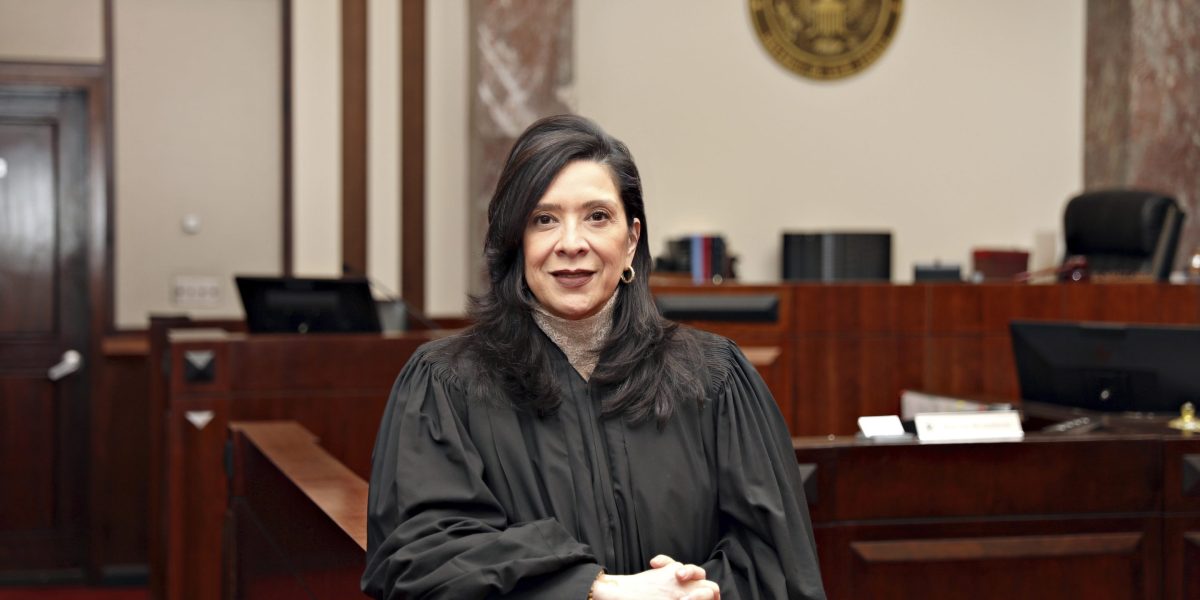
In 2020, a disgruntled litigant posing as a deliveryman opened fire at the New Jersey home of District Judge Esther Salas, killing her 20-year-old son Daniel Anderl. Five years later, as President Donald Trump steps up hiscriticism of federal judges who have blocked some of his agenda, dozens of judges have had unsolicited pizzas delivered to their homes, often in Daniel Anderl’s name.

District Judge John J. McConnell, Jr. of Rhode Island, who stalled Trump’s initial round of across-the-board spending cuts, is among those who received pizzas in Anderl’s name. His courtroom also has been flooded by threatening calls, including one profanity-laced one that called for his assassination.

McConnell, Jr. played a recording of the call during an unusual discussion Thursday where multiple federal judges discussed threats they have received — a notable conversation because judges usually only speak publicly from the bench and through their rulings, and rarely if ever, about personal threats and attacks. Salas and others said the number of attacks has escalated in recent months.

Without using his name, Salas called on Trump and his allies to tone down the rhetoric and stop demonizing the judiciary, for fear of what more could happen.

“We’re used to being appealed. But keep it on the merits, stop demonizing us,” Salas said. “They’re inviting people to do us harm.”

Thursday’s event was sponsored by Speak up for Justice, a nonpartisan group supporting an independent judiciary. District Judge John C. Coughenour of Washington recalled having a police SWAT team called to his home to respond to a false report of an attack after Coughenour in January halted Trump’s executive order ending birthright citizenship for children of people in the country illegally.

District Judge Robert S. Lasnik of Washington also had pizzas delivered in Anderl’s name to both his home and those of his two adult children, each in different cities, after an article in which he was quoted as being critical of attacks on judges was picked up by a television station in the Pacific Northwest, where he hears cases.

“The message to me was ‘we know where you live, we know where your kids live, and they could end up dead like Daniel Anderl did,’” Lasnik said in an interview.

Salas says U.S. Marshals have told her of more than 100 cases of so-called “pizza doxings,” unwanted deliveries to the homes of federal judges and their families, since 2024, with most occurring this year. Salas added that she’s heard of additional cases targeting state judges in states ranging from Colorado to Florida, incidents that wouldn’t be tracked by Marshals, who protect federal judges.

“This is not some random, silly act, this is a targeted, concentrated, coordinated attack on judges,” Salas said in an interview, “and yet we don’t hear any condemnation from Washington.”

Salas, nominated by Democratic President Barack Obama, in 2022 was critical of protests at the homes of Republican-nominated Supreme Court justices who revoked women’s right to have an abortion, which were followed by the arrest of a man at the home of Justice Brett Kavanaugh who said he was there to assassinate the justice. Salas said both sides of the political aisle have used worrying rhetoric about judges, but it’s reached a new peak since Trump took office.

“I’ve often referred to it as a bonfire that I believe the current administration is throwing accelerants on,” Salas said.

Trump himself has led the charge against judges, often going after them by name on social media. He’s said judges who’ve ruled against his administration are “sick,” “very dangerous” and “lunatic.” Trump’s allies have amplified his rhetoric and called for impeaching judges who rule against the president or simply disobeying their rulings. Earlier this year, several judges at the panel noted, Rep. Andy Ogles of Tennessee had a “wanted” poster of judges who’d crossed the president hanging outside his congressional office.

Lasnik said many judges appointed by presidents of both parties have told him of concerns but are nervous about discussing the issue openly.

“A lot of them don’t know how to speak up and are afraid of crossing a line somewhere where they would get a judicial complaint like judge Boasberg did,” Lasnik said, referring to District Judge James E. Boasberg of D.C., who infuriated the Trump administration by finding they likely committed criminal contempt by disobeying his order to turn around a deportation flight to El Salvador.

Though Chief Justice John Roberts has come to Boasberg’s defense, Trump’s Department of Justice this week filed a complaint against Boasberg over comments he made at a judicial conference that other judges worry the Trump administration won’t obey their orders. Last month, Trump’s Justice Department took the extraordinary step of suing every federal judge in Maryland over rules governing how they handle immigration cases.

More than five dozen judges who’ve ruled against Trump are receiving enhanced online protection, including scrubbing their identifying information from websites, according to two Trump-appointed judges who wrote Congress urging more funding for judicial security. In 2022, Congress passed a law named after Daniel Anderl allowing judges to sue internet sites to take down identifying information.


Source link

Continue Reading

Business

Elon Musk says Tesla owners will soon be able to text while driving

Published

on


Elon Musk has given the thumbs up to some Tesla drivers texting behind the wheel.

The EV maker recently introduced a 30-day free trial of its Full Self-Driving (Supervised) (FSD) features on its North American cars, which has traffic-aware cruise control, autosteer, and autopark. To the Tesla CEO, the automated features in place are enough to condone texting while driving. According to safety experts, Musk’s suggestion is actually plain illegal.

In response to an X user’s question on Thursday about being able to text and drive while a Tesla is operating FSD v14.2.1, its latest full self-driving capabilities, Musk responded: “Depending on context of surrounding traffic, yes.”

Musk’s response mirrors his comments at Tesla’s annual shareholder meeting last month, where he said the company would soon feel comfortable with a multitasking driver.

“We’re actually getting to the point where we almost feel comfortable allowing people to text and drive, which is kind of the killer [application] because that’s really what people want to do,” Musk said. “Actually right now, the car is a little strict about keeping eyes on the road, but I’m confident that in the next month or two—we’re going to look closely at the safety statistics—but we will allow you to text and drive essentially.”

With a $1 trillion pay package on the line, Musk has worked to jumpstart Tesla after continued lagging sales. His lofty automation goals tied to the compensation plan include delivering 20 million vehicles and having 10 million active FSD subscriptions, as well as 1 million robotaxis on the commercially operational.

FSD roadbumps 

Tesla’s FSD rollout, much like its other automated technologies, has hit snags. In October, the U.S. Department of Transportation-run National Highway Traffic Safety Administration (NHTSA) opened an investigation into the EV maker, alleging its FSD software violated traffic laws and led to six crashes, four of which resulted in injuries. It cited data from 18 complaints from Tesla users claiming the FSD-equipped cars ran red lights or swerved into other lanes, including into oncoming traffic.

There is another complication for Musk’s vision of a Tesla owner typing away behind the wheel: Texting and driving is illegal in nearly the entire country, barring Montana, according to the U.S. Bureau of Transportation Statistics. According to the NHTSA, distracted driving resulted in 3,275 deaths in 2023.

Even Tesla has warned owners against texting while driving, even with some automated features in place: Tesla’s Model Y Owner’s Manual asks drivers not to use their phones while driving with Autopilot software enabled. (Autopilot refers to Tesla’s basic driver assistance features requiring hands on the steering wheel, while FSD is a paid subscription package with enhanced automated features and does not require a driver to have hands on the steering wheel.)

“Do not use handheld devices while using Autopilot features,” the manual said. “If the cabin camera detects a handheld device while Autopilot is engaged, the touchscreen displays a message reminding you to pay attention.”

Tesla did not respond to Fortune’s request for comment.

What experts are saying

Alexandra Mueller, senior research scientist for Insurance Institute for Highway Safety, told Fortune condoning texting while behind the wheel completely undermines the purpose of Tesla’s current automated features Tesla, which are a level 2 on the five-point automation scale, meaning the models require the driver to still be fully in control of the vehicle.

“Having partial automation support doesn’t mean that you suddenly can kick back and text and not worry about driving,” Mueller said, “because that’s just not how these systems are designed to be used—and that’s also not the responsibility that the driver has when using these systems, and that’s by design.”

She said automated systems like Tesla’s are not designed to replace the driver and work because they are “human-in-the-loop” and were designed to support the driver’s discretion behind the wheel. Beeps and notifications from the vehicle if a driver changes lanes without signalling can help shape good behaviors, Mueller noted. Encouraging multitasking behind the wheel turns these features into convenience factors, rather than the safety precautions they were intended to be.

“Suddenly all your safety assessments on the technology don’t apply anymore, because you’ve changed the very nature of how the technology is supporting human-in-the-loop behavior,” Mueller concluded.


Source link

Continue Reading

Business

Analyst says Netflix’s $72B bet on Warner Bros. isn’t about ‘Death of Hollywood.’ It’s about Google

Published

on


Netflix’s $72 billion play for Warner Bros. is as much a bet on the future of artificial intelligence (AI) and chips as it is on movies and shows, according to a top Wall Street analyst, who said in an interview with Fortune the deal cannot be understood without looking at Google’s technology ambitions.

Amid cries from the jilted Ellison family about a “tainted” sale process and indie producers and theater owners of the “death of Hollywood,” Melissa Otto, Head of Research at S&P Global Visible Alpha, sees a different game being played. Otto said she thinks the tech angle of the industry is being overlooked.

“I think there’s this much bigger conversation that is being missed,” she said: Google and its TPU chips.

A key question for the future of entertainment, Otto told Fortune, is control over premium video at massive scale in an era when generative AI will increasingly create, remix, and personalize moving images.​ (Otto called it the “video corpus” that will train and power the next generation of AI models.)​ Over the long term, Otto added, that is a key part of the mystery behind why Netflix, long a builder rather than a buyer, would make Hollywood history by taking out one of its biggest rivals and one of the town’s prestige legacy studios.

Co-CEO Greg Peters was asked a blunt question about that same thing this morning on the call with analysts about the historic merger. Rich Greenfield of LightShed Partners cited Peters’ own previous statement at a Bloomberg conference about how there’s a long history of failed media mega-mergers, so he questioned: “Why is this going to end differently than every other media transaction essentially of this scale and history?”

Peters, while clarifying his remarks at the conference were a bit more nuanced, acknowledged “historically, many of these mergers haven’t worked, some have, but you really got to take a look at this on a case by case basis.” Still, Peters argued most previous big deals showed a lack of understanding about the underlying business, and Netflix understands these assets and has a “clear thesis about how the critical parts of Warner Brothers accelerate our progress.” He also acknowledged Netflix isn’t expert at doing large-scale M&A.

After all, this is expensive. “We are surprised that Netflix felt the need to spend $80bn+ and pay a premium for something Netflix disrupted,” Barclays analysts wrote in reaction to the deal, “and it is not clear what problem or opportunity Netflix is solving for that couldn’t have been achieved organically.”

In a statement emailed to Fortune, Dave Novosel, a Gimme Credit senior bond analyst, said the deal looks expensive to him as well, with Netflix assuming nearly $11 billion of debt.

“While the WBD assets bring an amazing amount of attractive content, NFLX is paying a steep EBITDA multiple of more than 25x, which seems extravagant,” Novosel wrote. Once it reaches the advertised synergies, he added, the resulting multiple of closer to 15x seems more reasonable. While those are pending, “the huge amount of debt that Netflix will need to raise to fund the deal will take leverage to well more than 4x initially.” Novosel wrote investors may need to be patient. Bloomberg’s credit team, meanwhile, reported the $59 billion bridge loan being taken out to finance this deal is among the biggest in corporate history.

Here’s what Otto sees happening in Northern California, far from Tinseltown, where the Warner deal is all anybody can talk about, and why Netflix took such a big swing.

Is the future of entertainment Northern or Southern California?

Part of Netflix’s thesis, according to Otto, is that it’s a tech company at heart and it recognizes Google’s rapid advancements in AI, particularly its advancements in TPU chips.

“What TPU chips do really, really well is in the modality of video in generative AI,” Otto said, as they essentially turn mathematical representations into moving pictures in much the same way GPUs revolutionized natural language AI by tokenizing and modeling text. Instead of ChatGPT and text, think Gemini 3 and YouTube videos.

Netflix already trails YouTube in total share of streaming time, with Bank of America Research recently citing Nielsen data showing YouTube held 28% of U.S. streaming, versus Netflix’s 18%. Otto said this threatens to go up another notch when and if Google’s TPU chips turbocharge content made with generative AI.

“I’m sure that it’s feeding into the strategy,” Otto said. “If I were Netflix and I knew that Google, one of their formidable competitors, had this chip technology and was essentially plowing billions and billions of dollars into developing the infrastructure so that they could carve out the corpus of the video modality in generative AI, I would want to build a moat around my business.”

On the surface, Netflix is buying a legacy studio with a deep library, beloved franchises, and a global brand—and paying up to do it. The combined streaming and studio business generates about $25 billion in revenue and roughly $4 billion to $5 billion in EBITDA, but margins on streaming remain thin, making the economics of the deal look tough in the near term. Executives have emphasized overlapping subscribers, obvious cost cuts and an expected $5.5 billion in efficiencies, the kind of “low‑hanging fruit” that can occupy management for the next 12 to 24 months, Otto said.

But in a world where TPUs can make high‑quality video “basically for free,” any player lacking both the chips and the content could find itself outgunned as AI reshapes how entertainment is produced and consumed.​ That makes Netflix’s big splash for Batman, Harry Potter, and the like a different kind of moat, and a different kind of game than the classic Hollywood rivalries of yore. Otto said it was plausible generative AI entertainment could be seen as an extension of the recent IP wars that saw Hollywood deluged by floods of superhero movies and sequels, with Disney’s Marvel Studios ushering in a computer generated revolution in the 21st century. “I think that’s not an outrageous assumption.”

By absorbing Warner Bros., Netflix increases the volume and diversity of content it can feed into recommendation systems, experimentation and, eventually, its own AI‑driven video tools. Otto also noted the deal potentially gives Netflix more exposure to advertising, an area in which Alphabet has dominated and where Warner Bros. still generates $6 billion–$7 billion in ad revenue. While the ultimate destination of that ad talent remains unclear, as they may go to the spinco that includes WBD’s cable assets such as CNN and TNT. (Netflix has only been active in ads since 2022, having been a premium subscription service since it pivoted from DVD rentals to streaming in the late 2000s.)

Imagine a world, Otto said, where you could create your own versions of the crime classic Columbo starring an AI-generated version of legendary actor Peter Falk, who died in 2011. (Columbo had several homes on TV on neither Warner Bros. nor Netflix, as it was first an NBC property in the 1970s, and then an ABC property from the late ’80s onward.) “In this day and age, boy, wouldn’t it be interesting?” Otto asked rhetorically.

In many ways, she added, this moment is remarkable because Netflix may end up neither a subscription nor an advertising business, but an AI-based one that doesn’t quite exist yet. “It’s kind of exciting because it means that it’s anybody’s game,” Otto said.

Otto also raised the spectre of TikTok, the social media giant partially under the control of Larry Ellison.

“They’re a formidable competitor as well,” she said. What’s likely, she added, is the future will be unpredictable. The rise of AI “could provide some really amazing innovation over the next couple of years.” She agreed it could create a bonanza for show business lawyers who wrangle over the rights of things like the likeness of Falk, which was a major issue in the recent Hollywood strikes.

“That may be the real story,” she said.

[Disclosure: The author worked internally at Netflix from June 2024 through July 2025.]


Source link

Continue Reading

Business

Netflix to buy Warner Bros. in $72 billion cash, stock deal

Published

on


Netflix Inc. agreed to buy Warner Bros. Discovery Inc., marking a seismic shift in the entertainment business as a Silicon Valley-bred streaming giant tries to swallow one of Hollywood’s oldest and most revered studios.

Under terms of the deal announced Friday, Warner Bros. shareholders will receive $27.75 a share in cash and stock in Netflix, valuing the business at $82.7 billion including debt. The total equity value of the deal is $72 billion. Warner Bros. will spin off cable networks such as CNN and TNT into a separate company before concluding the sale of its studio and HBO to Netflix. 

Media mergers of this scale have a rocky history and this one is expected to bring intense regulatory scrutiny in the US and Europe. The deal combines two of the world’s biggest streaming providers with some 450 million subscribers. Warner Bros.’ deep library of programming gives Netflix content to sustain its lead over challengers like Walt Disney Co. and Paramount Skydance Corp. 

The acquisition, which confirmed a Bloomberg report Thursday, presents a strategic pivot for Netflix, which has never made a deal of this scope in its 28-year history. With the purchase, Netflix becomes owner of the HBO network, along with its library of hit shows like The Sopranos and TheWhite Lotus. Warner Bros. assets also include its sprawling studios in Burbank, California, along with a vast film and TV archive that includes Harry Potter and Friends. 

“I know some of you are surprised we are making this acquisition,” Netflix co-Chief Executive Officer Ted Sarandos said on a call with analysts Friday. He noted that Netflix has traditionally been known to be builders, not buyers. “But this is a rare opportunity that will help us achieve our mission to entertain the world.”

Netflix shares were down 3.5% Friday afternoon in New York. They have declined about 17% since the streaming leader emerged as an interested party in October. Some investors and analysts have interpreted this deal to mean Netflix was worried it couldn’t expand its current business, a theory co-CEO Greg Peters dismissed.

Warner Bros. stock was up about 5.2% midday in New York. It has almost doubled since reports of deal talks with Paramount emerged in September. Play Video

The news concludes a flurry of dealmaking over the past few months that began with a series of bids by Paramount. That prompted interest from Comcast Corp. and Netflix, who were both chasing just the studios and streaming business. All three submitted sweetened bids earlier this week, with Paramount ultimately offering $30 a share for all of Warner Bros. Discovery, arguing that its proposal offered a smoother path to regulatory approval. Netflix won out in the end although significant hurdles remain before the deal can close, which the company expects it can do in the next 18 months.

Paramount could still try to raise its bid, take its offer directly to shareholders or sue to try and block the Netflix deal. The company had no comment.

California Republican Darrell Issa wrote a note to US regulators objecting to any potential Netflix deal, saying it could result in harm to consumers. Netflix has argued that one of its biggest competitors, however, is Alphabet Inc.’s YouTube, and that bundling offerings could lower prices for subscribers. Netflix accounts for between 8% and 9% of TV viewing in the US each month, according to Nielsen. It accounts for closer to 20% or 25% of streaming consumption.

Analysts at Oppenheimer said platforms such as Reels, TikTok and YouTube competing for viewers’ time should help the deal pass antitrust review. 

It was 15 years ago that Time Warner CEO Jeff Bewkes, who oversaw Warner Bros. and HBO, shrugged off the threat posed by Netflix, comparing the then fledgling company to the Albanian Army. As Netflix began to invest in original programming, Sarandos declared that Netflix wanted to become HBO before HBO figured out streaming.

Sarandos succeeded and Netflix led the streaming takeover of Hollywood while HBO struggled to respond to the rise of on demand viewing and the decline of cable. Bewkes agreed to sell Time Warner to AT&T in 2016, the beginning of a decade of turmoil for HBO and Warner Bros., storied brands that are about to have their fourth owner in a decade.

Warner Bros. put itself up for sale in October after receiving three acquisition offers from Paramount, which were rejected, opening the door for Netflix and Comcast. Peters said he didn’t see the logic of these big transactions at Bloomberg’s Screentime conference in October, but Sarandos privately pushed for the deal.

The bidding got contentious, with Paramount accusing Warner Bros. of operating an unfair process that favored Netflix. The Netflix offer topped Paramount’s when combining the money for the studio and streaming business with the estimated value of the networks. The two sides agreed to the deal Thursday night. 

Under terms of the agreement, Warner Bros. shareholders will receive $23.25 in cash and $4.50 in Netflix common stock. Moelis & Co. is Netflix’s financial adviser. Wells Fargo is acting as an additional financial advisor and, along with BNP Paribas and HSBC Holdings, is providing $59 billion in debt financing, according to a regulatory filing, one of the largest ever loans of its kind. Allen & Co., JPMorgan Chase & Co. and Evercore are serving as financial advisers to Warner Bros. Discovery.

Netflix agreed to pay Warner Bros. a termination fee of $5.8 billion if the deal falls apart or fails to get regulatory approval. “We’re highly confident in the regulatory process,” Sarandos said Friday.

In addition to streaming overlap, regulators will also likely look at the impact on theatrical releases, which Netflix has traditionally eschewed in favor of prioritizing content on its platform.

Netflix said it will continue to release Warner Bros. movies in theaters and produce the studio’s TV shows for third parties — two major changes in how it does business. The company was a little short on details of exactly how it will integrate the different businesses, but Netflix said it expects to maintain Warner Bros.’ current operations and build on its strengths.

The deal will allow Netflix to “significantly expand” US production capacity and invest in original content, which will create jobs and strengthen the entertainment industry, the company said. The combination is also expected to create “at least $2 billion to $3 billion” in cost savings per year by the third year.

Warner Bros. Discovery CEO David Zaslav was the architect of combining Warner Bros. and Discovery in 2022, a deal he hoped would create a viable competitor to Netflix. But the company’s share price tanked in response to a series of public miscues and the continued decline of the cable network business. 

While performance rebounded a bit over the last year, the company never quite became the streaming dynamo Zaslav envisioned. He’ll continue to run the company through its spinoff and sale. The two companies haven’t yet agreed on him having any role at Netflix.

The traditional TV business is in the midst of a major contraction as viewers shift to streaming, the world that Netflix dominates. In the most recent quarter, Warner Bros. cable TV networks division reported a 23% decline in revenue, as customers canceled their subscriptions and advertisers moved elsewhere.


Source link

Continue Reading

Trending

Copyright © Miami Select.