Connect with us

Politics

Judge’s Florida book ban decision is a ‘total knockout’ in censorship fight, lawyer says
Published

on


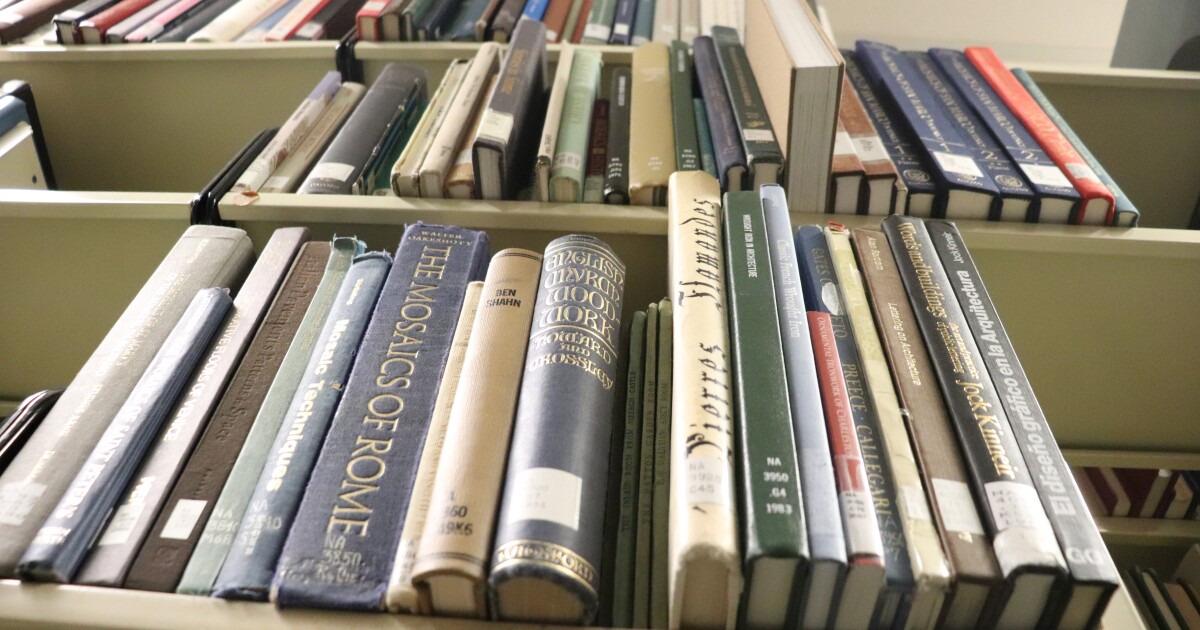
A legal victory to overturn a Florida book-banning law won’t instantly return books on the shelves, but it will help shift the momentum to fight censorship, according to a publishing company attorney.

“If a district did not put the books back, then they are risking a lawsuit,” said Dan Novack, a vice president and associate general counsel for Penguin Random House. “If you don’t do the right thing, a student or a parent or an author or publisher or an educator can vindicate their rights now.”

A federal judge ruled earlier this week that the state’s 2023 law on banning pornographic books is too broad and violates the First Amendment.

The world’s biggest publishers — as well as several bestselling young adult authors and two parents from Florida — united to file a federal lawsuit last year in the U.S. District Court and argued that part of HB 1069 is unconstitutional. They sued state officials as well as the School Boards in Orange and Volusia counties.

“Many non-obscene books have been removed from public school libraries to the dismay of students that deeply identify with these books,” Judge Carlos Mendoza wrote in a 50-page order.

Court records listed several beloved classics getting pulled from the shelves, including “Slaughterhouse-Five” by Kurt Vonnegut, Jr., “The Color Purple” by Alice Walker, “The Bluest Eye” by Toni Morrison and “The Handmaid’s Tale” by Margaret Atwood.

“None of these books are obscene,” Mendoza wrote.

The judge noted that some books are removed because of a single sentence without considering the context of the entire work.

“Authors frequently employ literary devices like symbolism and metaphors to convey messages or themes or to advance the plot of the work,” Mendoza wrote. “Given those literary devices, it’s not clear how the State expects Educational Media Specialists, educators, or other school officials to know exactly what crosses the line in the State’s eyes. The vagueness of the provisions only serves to expand their sweep.”

“The Florida Department of Education also directs educators to ‘err on the side of caution,’ which has led many Educational Media Specialists and other educators and school officials to err on the side of removing books based on fear that they and their school districts will be punished. … And the harms extend beyond that of chilling of speech.”

Novack called the ruling “a total knockout,” although he expects the state to appeal, so the litigation will continue.

When reached for comment, Florida Department of Education spokesperson Nathalia Medina said, “We remain unwavering in our commitment to defending parental rights and protecting children from exposure to inappropriate content. This is a fight we are determined to win, no matter how hard the activists work to try to stop us.”

Novack said the publishers did not sue for damages, nor did their lawsuit seek to challenge a harmful to minors standard in Florida law, which already outlaws obscene books.

The goal of our litigation here was always to take that (HB 1069) off the table and get back to a place where we have to talk to the districts about what an appropriate collections policy looks like,” Novack said. “There’s an opening here to educate the Legislature that truly pornographic material is not allowed in libraries. It’s not something that we would ever seek to publish for young people, nor that librarians would seek to bring in.”

Even as the publishers and authors filed their lawsuit in 2024, Florida lawmakers continued to raise concerns over inappropriate books in schools and proposed new legislation during this Legislative Session.

Complaining about graphic books this year, Rep. Doug Bankson said, “If I took a picture of one of these pages and sent it to a minor, I would go to federal prison.”

The Apopka Republican filed a bill that would forbid School Districts from considering the literary, artistic, political, or scientific value as a basis for keeping books that were deemed harmful to minors. The bill passed the House this year, but failed to clear the Senate.

Novack scoffed at the debate. Kids today aren’t going into the library to get sexually titillating material. They are just going on their smartphones, he said.

The six publishing companies that sued are Penguin Random House, Simon & Schuster, HarperCollins Publishers, Macmillan Publishers, Hachette Book Group and Sourcebooks, as well as Orlando native John Green, author of “Paper Towns” and Laurie Halse Anderson, author of “Speak,” and others.

“We’ve shown that we can be successful in the courts,” Novak said after the publishers won a similar lawsuit in Iowa and are awaiting a decision in Idaho.


Post Views: 0


Source link

Continue Reading

Politics

How much sense would a David Jolly-Gwen Graham ticket make for Governor?

Published

on


Could Gwen Graham add heft to David Jolly’s candidacy for Governor by becoming his running mate in Florida next year?

That question occurred when the former Tallahassee-based U.S. Representative appeared with Jolly last week during a political rally in Pinellas County that drew 400-plus attendees.

Jolly has been crisscrossing the Sunshine State since entering the Democratic race for Governor in June, and the event at 535 Nova — a wedding venue — was his 130th public gathering since he entered the contest, but the first time he appeared with Graham, the closest thing to Florida Democratic Party royalty. She’s a daughter of Bob Graham, the former Florida Governor and U.S. Senator who died last year at 87.

In an interview before the Thursday event, Gwen Graham, who served in Congress with Jolly from 2015-2017, said it was a “no-brainer” that she would support the former Republican for Governor.

“I would not be standing here if I didn’t know he could win,” she said. “This election is too important. We’ve got to have a candidate in November who can win so we can start reversing the damage that has been done to the state that I love and my father loved, and David can win. So, I’m going to do whatever I can to help him do that.”

Many political analysts considered Graham the favorite to capture the Democratic nomination for Governor in 2018, but she ended up losing to then Tallahassee Mayor Andrew Gillum by 3 percentage points in that year’s Primary. She went on to serve in President Joe Biden’s administration as assistant secretary for legislation and congressional affairs at the U.S. Department of Education from 2021 to 2025.

In introducing Jolly to the audience in St. Petersburg last week, Graham said she was nervous because it was her first public appearance since the death of her father, who served as Florida’s 38th Governor from 1979 to 1987 and in the U.S. Senate from 1987 to 2005.

“I hear my dad’s voice in David’s commitment to the values that I have grown up with and lived,” she said in her speech.

“I hear David’s voice talking about what he cares about for the future of this state. So, while David knows this race will be difficult, the moment is too important. We must all stand together and do our part to define what Florida will look like as a state for the next century.”

Jolly deflected when asked before the event whether he was considering Graham to serve as his running mate, but did say, “We’re going to name a Lieutenant Governor candidate very early. We’re not going to wait until the Primary. And I hope we see Gwen Graham in office again in the state of Florida.”

Considering a Jolly-Graham ticket

Longtime Hillsborough County Democratic strategist Victor DiMaio served at one time as a Press Secretary for Bob Graham. Having Gwen Graham on Jolly’s ticket makes sense on several levels, he said.

“Gwen would be an excellent choice if that’s what (Jolly) decides to do,” he said. “It didn’t hurt other Governors who have selected women as Lieutenant Governors.”

Angela Birdsong, President of the Hillsborough County Democratic Black Caucus, believes Gillum would have defeated Ron DeSantis in 2018 if he had selected Graham, instead of Chris King, to serve as his running mate.

“She would bring in more conservative Democrats, and independents would love her,” Birdsong said of Graham’s appeal in 2026. When asked if that ticket might prove to be too moderate for Florida Democrats, Birdsong disagreed. “I’m with Jasmine Crockett — I think that we’re going to have to run some vanilla candidates for a while.”

(Crockett. a progressive Democratic member of Congress from Texas, said in an interview on Sirius/XM radio in May that, following the Democratic Party’s losses to Donald Trump with Kamala Harris and Hillary Clinton, “we just want to win.”

(She added, “So, there’s a lot of people that are like, ‘You know what? Like, let’s go find the safest White boy we can find.’ I mean, I’m just saying.”)

Some political consultants believe a Democratic gubernatorial ticket consisting of Jolly, a former Republican, and Graham, a political moderate, may offer a General Election appeal to a Florida electorate that has moved considerably to the political right during the past eight years.

But it might be a dead letter within the more progressive precincts of the Florida Democratic Party.

Carolina Ampudia is a former Chair of the Democratic Progressive Caucus in Florida. She sees a Jolly-Graham ticket as “a pathetic retreat, not a step forward.”

“Jolly has a Republican record and ties to Scientology. Graham voted to fast-track the Keystone pipeline and built her career on centrism. Neither of them represents the communities that have been fighting on the frontlines for labor rights, racial justice, LGBTQ+ protections, public education, or environmental survival,” she said in a text message.

“Florida doesn’t need a rebranded Republican and a legacy name,” she continued. “We need leadership that reflects the courage and clarity of the people — not the fears of consultants and donors.”

Florida’s last two elected Governors, DeSantis and Rick Scott, both named women as their running mates (DeSantis selected Jeanette Nuñez in 2018 and Scott picked Jennifer Carroll in 2010). Charlie Crist selected female running mates in his two unsuccessful bids as a Democrat for Governor in 2014 and 2022 (Annette Taddeo in ’14 and Karla Hernández-Mats in ’22).

Meanwhile, discussion about a potential running mate for Jolly comes amid a challenge for the Democratic nomination by Orange County Mayor Jerry Demings, who announced his candidacy a month ago. No major polls comparing the two Democrats have been published since his entry.

Uphill climb

On the GOP side, Southwest Florida U.S. Rep. Byron Donalds is dominating in the polling. According to a survey of 800 likely Republican voters conducted by Florida pollster Ryan Tyson for the American Promise last month, Donalds, who has been endorsed by President Trump, received 43% support while a majority of the electorate (51%) remained unsure. Former House Speaker Paul Renner received 2% of the vote. Lt. Gov. Jay Collins, who has not formally entered the race, received 1%.

A poll conducted by the University of North Florida’s Public Opinion Research Lab of 728 likely voters between Donalds and Jolly in October (before Demings entered the contest) showed Donalds leading both Jolly and Demings by double digits.

The eventual Democratic nominee will be a decided underdog. Florida has not elected a Democrat to lead the state since Lawton Chiles in 1994.

Even before he entered the race for Governor in June, Jolly had been talking about affordability, which has emerged as a buzzword in U.S. politics following Zohran Mamdani’s victory in the New York City Mayor’s race last month.

Thursday night, Jolly said concerns about the quality of life for everyday Floridians encompasses “more than affordability.”

“Affordability is, ‘Am I going to be able to afford rent or housing this week or this month.’ That is real. That’s a crisis. But we’re at a generational inflection point,” he said.

“I think that if Republicans continue with their policies, we’re going to lose the middle in the state of Florida and people are going to begin leaving at a quicker rate than we’re already seeing.”

Among the issues he addressed during his 50-minute-plus speech was the state’s universal school choice program, which expanded significantly in 2023 and was found by a state audit to feature “a myriad of accountability problems.”

“They don’t have to provide an individual education program,” Jolly said of private schools that accept state tuition subsidies.

“They don’t have to provide excellence in academics. Trigonometry in the 10th grade. Access to the trades. Access to the arts. They don’t have to provide any of that because there’s no standards on our choice schools. And so, just like Jeb Bush 25 years ago made the argument that he’s siding with Florida’s kids and families, guess what? Now we are. Because he used to say that public schools were leaving the kids behind. Now are choice schools leaving your kids behind? That’s what’s happening in the state of Florida.”

A plan to add funding for public education

Jolly has proposed a “10-year renaissance” in public education, advocating for a proposed constitutional amendment that would steer a portion of tourist development tax receipts into public education to pay teachers 30% more.

Tourist development taxes are levied in 62 of Florida’s 67 counties with rates ranging from 2% to 6% on sales. State law requires at least 40% of all tourist development tax revenues collected in a county to be spent to promote and advertise tourism.

“We build convention centers with it. We advertise beaches on the Chicago ‘L’ in January. … But guess what? We don’t have a crisis of convention centers in the state of Florida, we have a crisis in education,” Jolly said.

___

Reporting by Mitch Perry. Florida Phoenix is part of States Newsroom, a nonprofit news network supported by grants and a coalition of donors as a 501c(3) public charity. Florida Phoenix maintains editorial independence. Contact Editor Michael Moline for questions: [email protected].


Source link

Continue Reading

Politics

Ron DeSantis ‘most electable’ in 2028 GOP poll, but not first choice

Published

on


Republicans don’t want to vote for Gov. Ron DeSantis.

But they think others might.

That’s the takeaway from the latest Yale Youth Poll, which shows both Gov. Ron DeSantis and Secretary of State Marco Rubio mired in the mid single digits at 6% and 5%, respectively, far behind the 51% backing Vice President JD Vance for first-choice support.

But when the survey asked respondents who is more “electable,” the Governor and the nation’s leading diplomat are in better shape.

“In a MaxDiff test, Republicans viewed DeSantis (79%) and Vance (75%) as the most electable against a hypothetical Democrat in a General Election, followed by Rubio (71%) and Donald Trump Jr. (67%); results did not differ significantly between younger Republicans and all Republicans,” Yale notes.

The result here, particularly for DeSantis, could bolster the hopes of those who want him to run to succeed term-limited Donald Trump in 2028.

The Governor keeps getting that question from reporters but tells them he’s not looking, saying he has his “hands full” and that he’s “not thinking about anything” regarding his next political move.

Rubio is also an also-ran in the polls, compared to Vance.

However, President Donald Trump seems to think Rubio and Vance would be a functional ticket, one that could clear the still-evolving field of his potential successors.

“I’m not sure if anybody would run against those two. I think if they formed a group, it would be unstoppable,” the President said, according to POLITICO Playbook.


Source link

Continue Reading

Politics

Disney World is suing over its property tax bills for Magic Kingdom, Star Wars hotel, more

Published

on


Disney is suing over what it calls “excessive” property tax assessments for its four theme parks, the failed Star Wars hotel and a slew of other properties from the company’s vast real estate portfolio in Orange County.

The multibillion-dollar entertainment giant filed about 15 lawsuits late last week in Orange Circuit Court.

Disney wants to cancel the original 2025 tax bills, be issued new ones for reassessed amounts, then get reimbursed for its legal fees for contesting the property taxes. The Mouse is also asking the court to award “general relief as may be just and equitable,” according to the complaints.

The lawsuits accused Orange County Property Appraiser Amy Mercado’s Office of failing to use “professionally accepted appraisal practices,” although Disney’s complaints don’t provide details about its allegations.

“The assessments do not represent the just value of the Subject Property as of the lien date because they exceed the market value and therefore violates article VII, section 4 of the Florida Constitution,” the lawsuits said.

Disney has sued regularly over its property taxes for years. This time, however, the lawsuits come as state leaders are actively pushing to repeal or lower property taxes for residents.

Some state lawmakers are concerned about senior citizens and average Floridians struggling to afford their property taxes — although so far, officials aren’t specifically advocating for Disney to save money on its property tax bills in the ongoing debate for property tax relief.

The Walt Disney Co. is the most successful theme park operator in the world. Orlando’s Magic Kingdom is the crown jewel as the No. 1 most popular theme park on the planet, with an estimated 17.8 million visitors last year.

The Orange County Tax Collector did not immediately respond to questions from Florida Politics about how much Disney pays in property taxes or provide a breakdown of how much of that money funds local government, schools and the library system.

Disney said Magic Kingdom’s assessed value was at about $622 million, with Epcot at $795 million, Hollywood Studios at $639 million and Animal Kingdom at $495 million.

The site of the ill-fated Star Wars: Galactic Cruiser hotel was assessed at $38 million this year. Disney plans to turn the property into offices for Imagineers after the company shut down the hotel in 2023.

Other hotels being litigated over include the Grand Floridian Resort, accessed at $333 million, the Contemporary, at $243 million, and Coronado Springs, at $350 million.

Disney also did not immediately respond to requests for comment Monday for this story.


Source link

Continue Reading

Trending

Copyright © Miami Select.