
Politics
Judge hears arguments over UF law student’s expulsion

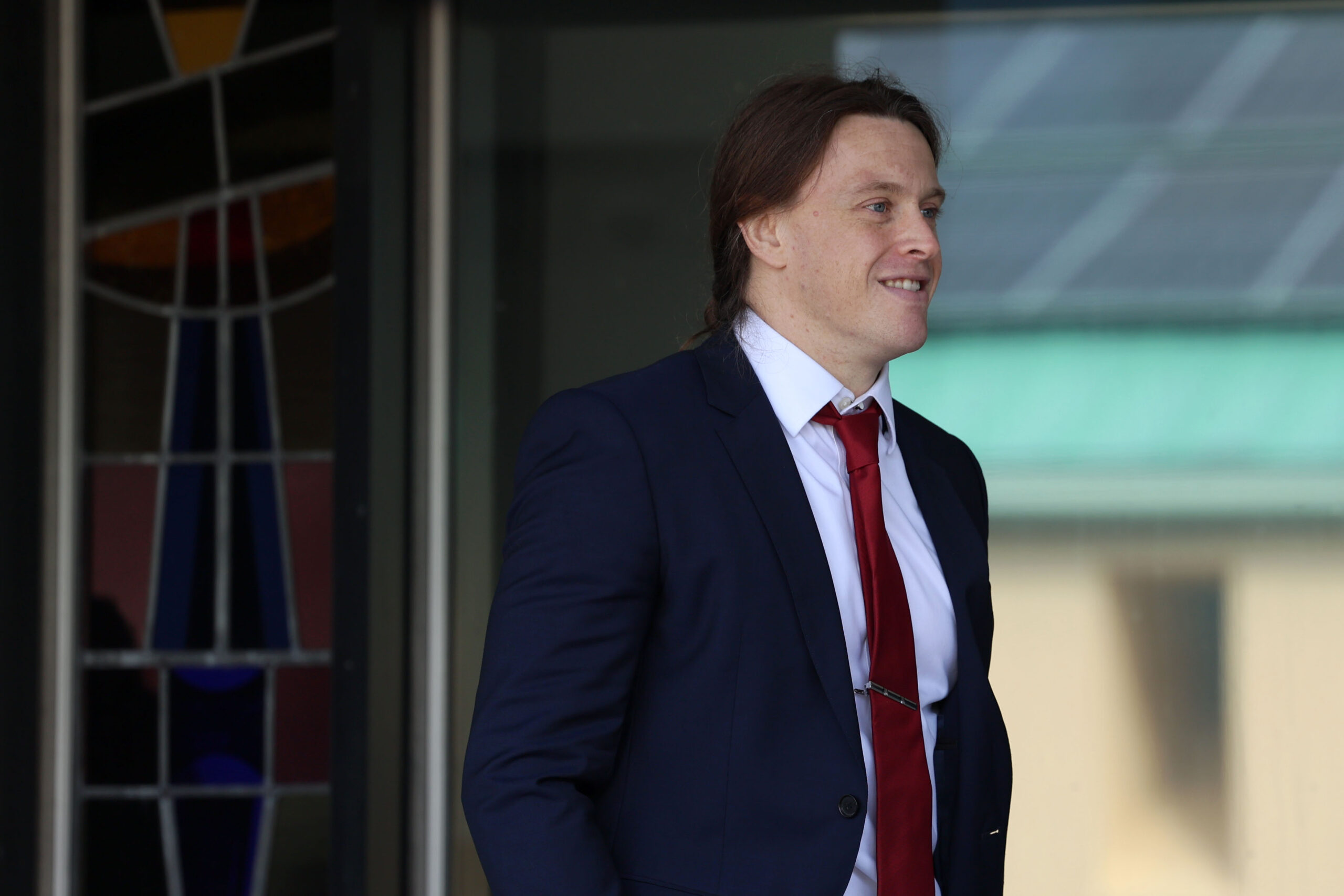
A federal Judge heard arguments in the case of a University of Florida law student expelled for antisemitic tweets. The student’s lawyer said he was being wrongly punished for views the school simply didn’t like, while UF responded it has every right to remove anyone threatening violence.
The university is “a nursery of democracy,” and it does not have the right to limit free speech off campus grounds, said Anthony Sabatini, the attorney for student Preston Damsky, who is suing UF.
Christopher Bartolomucci, representing UF Dean of Students Chris Summerlin, emphasized that the university has the right to protect its students and faculty from perceived threats.
After the 90-minute hearing, U.S. District Judge Allen Winsor, who was appointed by President Donald Trump, said he would rule in the coming weeks narrowly on whether Damsky should be allowed to return to campus. A broader lawsuit seeking sanctions against UF over its actions toward the student continues in federal court.
At a time when Gov. Ron DeSantis has praised Florida universities as being champions of free speech, Damsky, 29, sued Summerlin for what he described as violating his First Amendment rights. The former UF law student found himself at the center of a free speech fight after drawing national attention for a series of antisemitic tweets and his award-winning seminar paper with White nationalist themes.
In August, Damsky was notified of his expulsion after UF banned him from campus in April. He appealed the expulsion from Summerlin. A UF appeal panel denied the appeal. Damsky took his case to the federal courts, saying his free speech rights were violated.
Sabatini said Damsky’s statements were not literal or targeted. “It was basically trolling,” he said. Damsky tweeted that Jews should be abolished to around 25 followers. It wasn’t until a UF law professor responded, asking if Damsky would murder her and her family, that the tweet raised broad concerns among UF law students and faculty.
Damsky’s claims were made off-campus, Sabatini said. He didn’t directly target or insinuate that a violent action would take place, and as a result, his actions should not be perceived as a threat under the First Amendment.
Winsor questioned whether the situation would change if Damsky had exchanged messages with a professor from a different university than UF. The Judge said plenty of threats have been considered in criminal and civil cases without targeting a specific individual.
Bartolomucci argued that the university has the authority to act against a student who threatens violence. While the tweet was made from off-campus, Damsky connected to the university as soon as he responded to the law professor.

UF’s lawyer said Damsky’s tweet targeted a large population of UF’s campus, home to the largest Jewish student population of any public university in the United States, disrupting campus and engaging recklessly with the professor.
According to Bartolomucci and court records, the law professor began sleeping with a baseball bat within arm’s reach. Students refused to enroll in classes they shared with Damsky. The university heightened its police presence near the law school following his posts.
The university argued that Damsky initiated the threat, not the professor, when he decided to publish on a public-facing social media account.
“A school like UF has to have the power to take action against a student’s speech they see as a threat,” Bartolomucci said.
The context of Damsky’s seminar papers, which promoted white supremacist values, heightened students’ concerns of a perceived threat, Bartolomucci said. However, the content of the seminar was not subject to the hearing, Winsor said.
Sabatini said Damsky’s expulsion would cause him irreparable harm by delaying his opportunity to become a lawyer.
UF made it clear that before Oct. 9 — when Damsky’s expulsion went into effect after his unsuccessful appeal — Damsky had access to his courses, lectures and exams as a remote student.
“He was unknown on campus,” Sabatini said. “Reasonable people would see (his response to the professor) as a denial.”
Damsky is no stranger to being at the center of controversy. In one of his seminar papers titled “National Constitutionalism,” he argued the Constitution only applies to White people. His seminar received a book award, an honor given to the highest-scoring student in a UF law course taught by Trump-nominated federal Judge, John L. Badalamenti. While Badalamenti did not agree with Damsky’s views, he felt Damsky posed no threat to the university, according to court records.
UF College of Law Interim Dean Merritt McAlister initially defended the seminar, stating Damsky’s opinions were protected by the First Amendment in an email in February 2025.
It wasn’t until Damsky took to X that his future at the University of Florida was put into question. In March 2025, following a series of antisemitic tweets, Damsky wrote, “Jews must be abolished by any means necessary.”
Damsky argued his posts didn’t incite violence or pose a threat.
On the steps of the federal courthouse, Sabatini stood with his client and said, “The defense arguments were bad, respectfully.” Damsky did not say anything and did not answer any questions.
If Damsky loses, Sabatini promised they will appeal.
___
This story was produced by Fresh Take Florida, a news service of the University of Florida College of Journalism and Communications. The reporter can be reached at [email protected]. You can donate to support our students here.

Florida lawmakers are once again being asked to expand unsupervised anesthesia practice, this time under the familiar banner of “access,” “cost savings,” and “modernization.” We are told this is inevitable — that “48 states already have similar laws,” and Florida is simply behind the curve.
That claim collapses under even minimal scrutiny.
Let’s be clear about what is being proposed: allowing Certified Registered Nurse Anesthetists to practice independently, without physician anesthesiologist supervision, in all settings. This is not a minor regulatory tweak. It is a fundamental change in how anesthesia care — one of the riskiest aspects of modern medicine — is delivered.
If lawmakers want to make policy based on evidence rather than talking points, three facts matter most.
Physician-led anesthesia care is the safest model.
Anesthesia is not just about “putting patients to sleep.” It involves managing complex physiology, responding to sudden, life-threatening emergencies, and caring for patients with multiple comorbidities — often when things go wrong quickly. Physicians who practice anesthesiology complete four years of medical school, four years of residency, and often additional fellowship training. That depth of training matters when seconds count.
The safest anesthesia outcomes consistently occur in physician-led teams, where anesthesiologists work alongside Certified Registered Nurse Anesthetists. Team-based care maximizes patient safety by matching expertise to the complexity of each patient’s care. Eliminating physician oversight does not improve safety; it removes a critical layer of protection.
Florida should be strengthening team-based care — not dismantling it.
Unsupervised anesthesia is not more cost-effective.
Proponents often claim that removing physician supervision lowers costs. The data do not support this. Medicare pays the same for anesthesia services regardless of whether a physician anesthesiologist is involved. Further, having an anesthesiologist present to manage complications helps control costs by reducing hospital stays and downstream medical expenses.

The cheapest anesthesia is the one that goes right the first time — and the safest model is also the most cost-effective in the long run.
These laws do not help rural communities.
This is where rhetoric diverges most sharply from reality. State “opt-out” laws allowing unsupervised anesthesia have been studied for more than a decade. The conclusion is consistent: they do not increase access to anesthesia services in rural or underserved areas.
Certified Registered Nurse Anesthetists, like all health care professionals, tend to practice where hospitals are well-resourced and professionally supportive. Opt-out states did not see a meaningful expansion of anesthesia services in rural hospitals. Workforce shortages remained unchanged.
If unsupervised practice were the solution, rural access problems would already be solved. They are not.
Supporters now claim that nearly every state has “similar” laws — a creative redefinition that lumps together wildly different regulatory frameworks. Supervised practice, delegated authority, limited opt-outs, and emergency exceptions are being counted as “unsupervised care.” Florida should not make major patient-safety decisions based on inflated numbers and fuzzy definitions.
This proposal is not about modernization. It is not about rural access. And it is not about saving money. It is about replacing the safest, most cost-effective anesthesia model with one that offers no proven benefit — and real risk.
Florida’s patients deserve policies grounded in evidence, not exaggeration. Lawmakers should reject unsupervised anesthesia and instead invest in physician-led, team-based care that puts safety first — every time.
___
Rebekah Bernard, M.D., is a family physician in Fort Myers and a Board member of Physicians for Patient Protection.
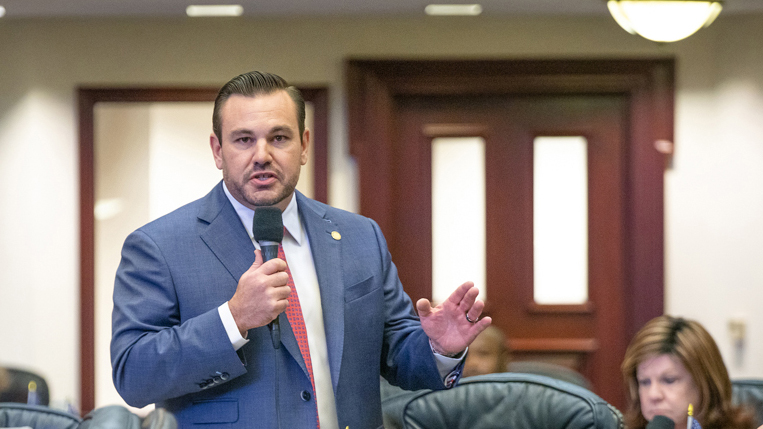
Rep. Adam Anderson has successfully ushered through its first committee stop legislation that would address a shortage of genetic counselors and strengthen the state’s capacity for advanced medical care and genetic research.
Anderson’s bill (HB 1115) cleared the Careers and Workforce Subcommittee. It would establish the Genetic Counseling Education Enhancement Grant Program within Florida’s State University System to support the development of American Board of Genetic Counseling-accredited graduate-level genetic counseling programs to eliminate Florida’s status as a genetic counseling desert.
“The need for health care professionals in the Sunshine State cannot be understated,” Anderson said.
“But specialization is the true hurdle for families praying for the next innovation that will help their child. Genetic counselors guiding difficult diagnoses are in short supply. However, Florida aims to right-set our specialization efforts at the intersection between education and employment. We’re standing by Florida families and those students willing to take the next step.”
With just 179 licensed genetic counselors in the state, patient demand is not being met. Genetic counselors guide families facing complex genetic diagnoses, and they serve as essential partners in research, innovation and precision medicine.
Sen. Danny Burgess is sponsoring an identical measure (SB 1376) in the upper chamber, though it has not yet been heard in committee. Still, he celebrated initial support for the measure in the House.
“This is legislation every Floridian can get behind,” Burgess said. “Developing our workforce is step one, but retaining specialized genetic counselors in the State of Florida to help Floridians is the entire picture. Aid shouldn’t be a state away. This grant program realizes that comfort and care for Florida families should be available within Florida.”
The bill would allow grant funds to be used to recruit and retain qualified faculty, provide financial aid to students, and establish or expand clinical rotations required to obtain a master’s degree in genetic counseling. The funds would be barred from use for general administrative costs, new facility construction and non-program-related activities.
Participating universities under the bill would be required to maintain detailed compliance records and submit annual reports on expenditures and program outcomes. The state Board of Governors would then compile the information from reports into a statewide submission.
“The progress Representative Anderson has ignited is contagious. Florida is on the cusp of developing a genetic counseling workforce that meets a crucial need for families facing uncertainty,” said Dr. Pradeep Bhide, Director of the Florida State University Institute for Pediatric Rare Diseases. “FSU is all for it.”

Under Bhide’s leadership, the Institute is developing a new master’s degree program in genetic counseling.
Currently, the University of South Florida is the only state school with an active genetic counseling program, with FSU’s program awaiting approval.
“New education programs are what drive the innovations and patient care required to address complex genetic issues. Rep. Anderson and the State of Florida have time and time again seen the value in the educational framework that leads to great progress,” said Charles J. Lockwood, executive vice president at USF Health and dean of the USF Health Morsani College of Medicine.
“USF Health has long understood the need for genetic counselors in Florida, and we are excited at the prospect of further collaboration with Florida’s other universities.”
Anderson’s bill heads next to the Higher Education Budget Subcommittee. If approved by the full Legislature and signed by Gov. Ron DeSantis, the measure would take effect July 1.


Florida shouldn’t gamble with patient safety on false promises

Gen Z’s nostalgia for ‘2016 vibes’ reveals something deeper: a protest against the world and economy they inherited

L.A. County Cop Car Slams Into Pedestrian in Crosswalk in Shocking Video
-

 Politics8 years ago
Congress rolls out ‘Better Deal,’ new economic agenda
-
Entertainment9 years ago
New Season 8 Walking Dead trailer flashes forward in time
-
Politics9 years ago
Poll: Virginia governor’s race in dead heat
-
Politics8 years ago
Illinois’ financial crisis could bring the state to a halt
-
Entertainment8 years ago
The final 6 ‘Game of Thrones’ episodes might feel like a full season
-
Entertainment9 years ago
Meet Superman’s grandfather in new trailer for Krypton
-
Business9 years ago
6 Stunning new co-working spaces around the globe
-
Tech8 years ago
Hulu hires Google marketing veteran Kelly Campbell as CMO