
Politics
Judge hears arguments over UF law student’s expulsion


A federal Judge heard arguments in the case of a University of Florida law student expelled for antisemitic tweets. The student’s lawyer said he was being wrongly punished for views the school simply didn’t like, while UF responded it has every right to remove anyone threatening violence.
The university is “a nursery of democracy,” and it does not have the right to limit free speech off campus grounds, said Anthony Sabatini, the attorney for student Preston Damsky, who is suing UF.
Christopher Bartolomucci, representing UF Dean of Students Chris Summerlin, emphasized that the university has the right to protect its students and faculty from perceived threats.
After the 90-minute hearing, U.S. District Judge Allen Winsor, who was appointed by President Donald Trump, said he would rule in the coming weeks narrowly on whether Damsky should be allowed to return to campus. A broader lawsuit seeking sanctions against UF over its actions toward the student continues in federal court.
At a time when Gov. Ron DeSantis has praised Florida universities as being champions of free speech, Damsky, 29, sued Summerlin for what he described as violating his First Amendment rights. The former UF law student found himself at the center of a free speech fight after drawing national attention for a series of antisemitic tweets and his award-winning seminar paper with White nationalist themes.
In August, Damsky was notified of his expulsion after UF banned him from campus in April. He appealed the expulsion from Summerlin. A UF appeal panel denied the appeal. Damsky took his case to the federal courts, saying his free speech rights were violated.
Sabatini said Damsky’s statements were not literal or targeted. “It was basically trolling,” he said. Damsky tweeted that Jews should be abolished to around 25 followers. It wasn’t until a UF law professor responded, asking if Damsky would murder her and her family, that the tweet raised broad concerns among UF law students and faculty.
Damsky’s claims were made off-campus, Sabatini said. He didn’t directly target or insinuate that a violent action would take place, and as a result, his actions should not be perceived as a threat under the First Amendment.
Winsor questioned whether the situation would change if Damsky had exchanged messages with a professor from a different university than UF. The Judge said plenty of threats have been considered in criminal and civil cases without targeting a specific individual.
Bartolomucci argued that the university has the authority to act against a student who threatens violence. While the tweet was made from off-campus, Damsky connected to the university as soon as he responded to the law professor.

UF’s lawyer said Damsky’s tweet targeted a large population of UF’s campus, home to the largest Jewish student population of any public university in the United States, disrupting campus and engaging recklessly with the professor.
According to Bartolomucci and court records, the law professor began sleeping with a baseball bat within arm’s reach. Students refused to enroll in classes they shared with Damsky. The university heightened its police presence near the law school following his posts.
The university argued that Damsky initiated the threat, not the professor, when he decided to publish on a public-facing social media account.
“A school like UF has to have the power to take action against a student’s speech they see as a threat,” Bartolomucci said.
The context of Damsky’s seminar papers, which promoted white supremacist values, heightened students’ concerns of a perceived threat, Bartolomucci said. However, the content of the seminar was not subject to the hearing, Winsor said.
Sabatini said Damsky’s expulsion would cause him irreparable harm by delaying his opportunity to become a lawyer.
UF made it clear that before Oct. 9 — when Damsky’s expulsion went into effect after his unsuccessful appeal — Damsky had access to his courses, lectures and exams as a remote student.
“He was unknown on campus,” Sabatini said. “Reasonable people would see (his response to the professor) as a denial.”
Damsky is no stranger to being at the center of controversy. In one of his seminar papers titled “National Constitutionalism,” he argued the Constitution only applies to White people. His seminar received a book award, an honor given to the highest-scoring student in a UF law course taught by Trump-nominated federal Judge, John L. Badalamenti. While Badalamenti did not agree with Damsky’s views, he felt Damsky posed no threat to the university, according to court records.
UF College of Law Interim Dean Merritt McAlister initially defended the seminar, stating Damsky’s opinions were protected by the First Amendment in an email in February 2025.
It wasn’t until Damsky took to X that his future at the University of Florida was put into question. In March 2025, following a series of antisemitic tweets, Damsky wrote, “Jews must be abolished by any means necessary.”
Damsky argued his posts didn’t incite violence or pose a threat.
On the steps of the federal courthouse, Sabatini stood with his client and said, “The defense arguments were bad, respectfully.” Damsky did not say anything and did not answer any questions.
If Damsky loses, Sabatini promised they will appeal.
___
This story was produced by Fresh Take Florida, a news service of the University of Florida College of Journalism and Communications. The reporter can be reached at [email protected]. You can donate to support our students here.
As data centers fuel the digital economy, powering everything from artificial intelligence to cloud storage, states across the country are grappling with an uncomfortable question: who pays for the massive energy demands these facilities bring with them?
In several markets across the U.S., consumer advocates and regulators have warned that the rapid growth of large-scale data centers can drive up electricity costs for everyday customers, forcing households and small businesses alike to subsidize large-scale industrial users. Those concerns have become more pressing as utilities face decisions about new generation, transmission upgrades, and long-term system planning.
Florida has so far avoided the data center boom seen elsewhere, but that may not last. With population growth continuing and interest in Florida-based projects increasing, Florida Power & Light Company says it has used the benefit of time — and lessons learned in other states — to put guardrails in place before high-load customers arrive.
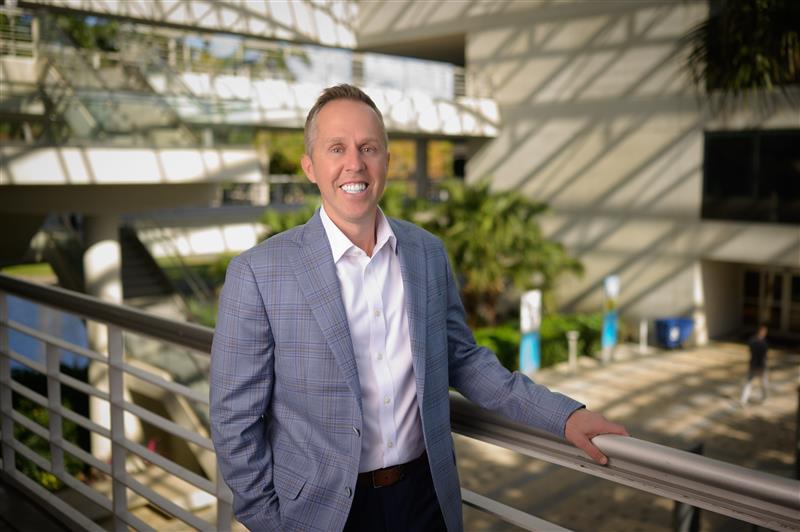
Scott Bores serves as president of Florida Power & Light Co., the prime subsidiary of multistate operator NextEra Energy, which supplies power to more than half of Florida’s population. Florida Politics sat down with Bores to discuss how FPL plans to protect its customers from rising costs if data centers take off in Florida.
We’ve seen countless reports in other states claiming that data centers raise power bills for everyday consumers. Will that happen here?
No. Last year, FPL proposed, and the Florida Public Service Commission (PSC) approved, the most forward-looking and strict consumer protections in America to ensure what you just described does not happen here.
Thanks to the PSC’s approval, we now have special rates that will apply to any large-load customer who requests service from FPL. Those rates are designed to ensure that data centers pay their own way — and Florida’s households do not subsidize the energy needs of these power-intensive projects.
When designing these protections, how did FPL approach the problem?
These big data centers haven’t yet made it to Florida. So, we fortunately have the benefit of time to learn from the experiences of other utilities who have seen heavy data center growth.
We all know data centers are energy-intensive. To serve them, FPL will need to build new power generation — power generation we wouldn’t otherwise need to build.

There’s a simple principle in utility ratemaking, which is that the cost-causer (or the data center in this case) should be the cost payer. So, for example, one of the protections we put in place is called an incremental generation charge. That charge requires the data centers to fund 100% of the cost of new power generation needed to serve their project.
But will FPL be spending to upgrade its system to accommodate these data centers?
We can keep system network upgrades to a minimum by steering data center projects toward areas that are already near our large (500 kV) transmission facilities and have land suitable for incremental generation capacity. We have already identified the first of three geographic zones that fit this description. These locations would allow the data center facilities to be built with minimal impact to infrastructure.
What other protections are in place?
We’ve also established requirements on the front-end designed to ensure the only data center projects that move forward are from mature, creditworthy companies that intend to stay in Florida. For example, if one of these large load customers wants FPL to serve their data center, they have to fund an engineering study to evaluate, among other things, the project’s feasibility and how much it would cost to connect to the grid. They have to pay the project cost to connect to our system. If they want to reserve capacity on FPL’s system, they must be able to meet strict collateral requirements tied to their credit. Not to mention, they also must be willing to agree to a minimum contract term of 20 years and be willing to pay the incremental generation charge we discussed earlier.
What about once the project is in service?
Once in service, the data center is subject to a minimum bill to ensure they pay for the capacity they reserve — even if they don’t end up needing all of it — as well as an exit fee for early termination. That exit fee would amount to an accelerated payment of the remaining 20-year incremental generation charge.
So they have to stand by their commitments, right?
Right – if they leave early, they’re still on the hook. So, we have protections on the front end to weed out bad projects before they move forward. We have protections during the planning phase that will keep network upgrades to a minimum. We have protections that keep the cost-causer — the data center — the cost payer. And once in service, we have protections to ensure data centers pay for the capacity they reserved and also ensure no one can cut and run without paying their fair share.
All of these combine to make up the strictest consumer protections in America as far as data centers are concerned.
FPL has an obligation to serve all customers, including any data centers that request our service. But we have designed these rates to ensure we can serve data centers in a responsible and thoughtful manner, and in a way that protects our existing customers.

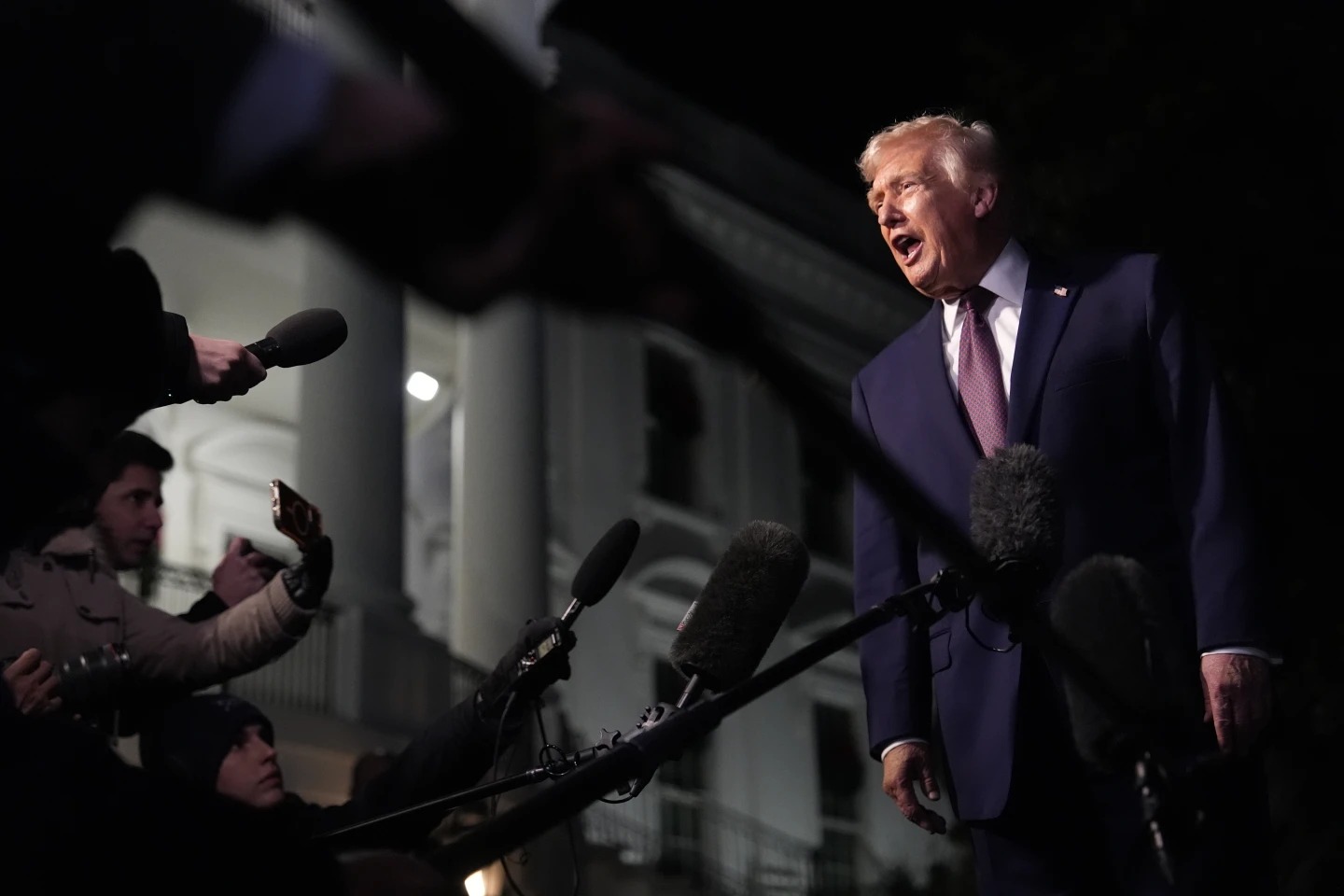
Exactly one year ago, Donald Trump was sworn in for his second term while promising the American public that help was on the way, particularly regarding affordability.
The issue had already been creating major challenges for lower- and middle-income earners across the nation. One year in, Trump continues to claim the nation is enjoying an “economic boom.” But the Democratic National Committee (DNC) wholly disagrees, especially for Floridians.
“The numbers don’t lie: Trump’s first year back in office has been a complete disaster for Florida families. Trump broke his promise to lower costs on Day One and instead has made life far more expensive for Florida families,” said Tim Hogan, the DNC’s senior advisor for messaging, mobilization and strategy.
“Because of Trump’s Big Ugly Bill and failed economic policies, unemployment in Florida is up, families are paying $1,060 more a year, and 1,500,000 Floridians will be kicked off their health care after Trump let premiums skyrocket. While Donald Trump may think affordability is a hoax, Florida families know better, which is why they are putting their trust in Democrats who will keep fighting to lower costs and protect health care.”
A DNC study last week found Florida is one of 26 states where unemployment has risen since Trump took office, at a 0.7-percentage-point increase. The $1,060 figure is the approximate amount Florida households are losing through higher costs related to Trump’s tariffs and his “One Big Beautiful Bill” package, which the DNC and other Democratic groups have taken to calling the “Big Ugly Bill.”
The same study estimated that expiring premium tax credits under the Affordable Care Act would lead to 1.5 million Floridians losing health coverage, one of the highest numbers in the nation behind only California.
But the DNC’s critique does not stop there. Democrats point to a Joint Economic Committee Minority report this month finding that families paid $310 more for groceries during Trump’s first year in office than they did in 2024.
The DNC’s own study found that working American families have lost $585 to inflation and that nearly 4.5 million Floridians who rely on the Affordable Care Act’s marketplace for health coverage are seeing premiums skyrocket, which the DNC attributes to Trump’s refusal to extend tax credits. It’s worth noting that while Trump opposed extending the credits, Congress declined to pass an extension.
Additionally, cuts under the One Big Beautiful Bill to the Supplemental Nutrition Assistance Program, colloquially known as food stamps, will mean more than 1.6 million Floridians lose some or all of their food benefits, according to the DNC analysis. The Harvard Kennedy School found that the legislation is cutting about $186 billion from the program over 10 years, a 20% cut that is the largest in the program’s history.
And what the DNC describes as failures seem to be also resonating with the American public, with new polling on Trump’s first year in office showing twice as many Americans say Trump is focused on the wrong priorities as the right ones. The AP-NORC poll also shows 60% of U.S. adults think Trump has done more to hurt than help the cost of living in his second term.

Meanwhile, the poll finds only 4 in 10 approve of Trump’s job performance. While Trump is far underwater in his approval rating, it has improved slightly since December, when his disapproval was at 61%, compared to 59% now. Even at his highest approval since March, Trump was still underwater, with 53% disapproving of his job performance.


IKEA plans to double India investment to more than $2.20 billion over five years

How Florida’s largest electric utility is solving the data center problem

Gaurav Gupta launches first menswear flagship at DLF Emporio, Delhi
-

 Politics8 years ago
Congress rolls out ‘Better Deal,’ new economic agenda
-
Entertainment9 years ago
New Season 8 Walking Dead trailer flashes forward in time
-
Politics9 years ago
Poll: Virginia governor’s race in dead heat
-
Politics8 years ago
Illinois’ financial crisis could bring the state to a halt
-
Entertainment8 years ago
The final 6 ‘Game of Thrones’ episodes might feel like a full season
-
Entertainment9 years ago
Meet Superman’s grandfather in new trailer for Krypton
-
Business9 years ago
6 Stunning new co-working spaces around the globe
-
Tech8 years ago
Hulu hires Google marketing veteran Kelly Campbell as CMO