Connect with us

Business

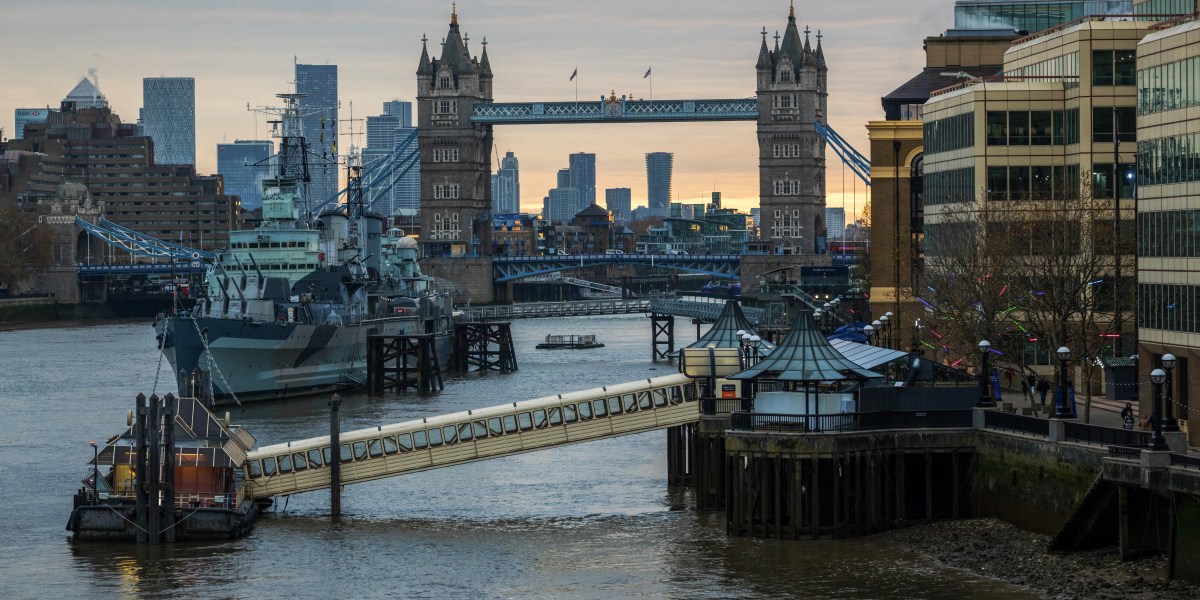
JPMorgan to build new London headquarters in Canary Wharf

Published

on


JPMorgan Chase & Co. plans to build a new tower in Canary Wharf for its headquarters in the UK, a multibillion-pound endorsement of London’s status as a global financial center a day after Rachel Reeves delivered a budget that largely spared banks. 

The office building would be London’s largest by far at three million square feet and could host as many as 12,000 employees, according to a statement from the investment bank Thursday. The construction is expected to take six years. 

The property, which will be co-developed by Canary Wharf Group, is being designed by Foster + Partners, the British architecture practice that’s also responsible for the bank’s recently opened global headquarters in New York

“This building will represent our lasting commitment to the city, the UK” and its staff, said JPMorgan Chief Executive Officer Jamie Dimon. “The UK government’s priority of economic growth has been a critical factor in helping us make this decision.”

The plans are “subject to a continuing positive business environment in the UK and the firm receiving the necessary approvals,” according to a JPMorgan statement. 

With a gross internal area of 3 million square feet, the proposal is about a third larger than the biggest office building currently in London, the 22 Bishopsgate tower, which has a a gross area of about 2.1 million square feet and about 1.2 million square feet of internal office space. JPMorgan said the development is expected to contribute £9.9 billion ($13 billion) to the local economy, including an additional 7,800 jobs across construction and other industries.

Read More: JPMorgan Draws Up New Plans for London’s Biggest Office Building

The decision is a major coup for Reeves as she looks to boost growth in the UK after raising taxes by £26 billion in her Nov. 26 budget. Despite announcing widespread tax hikes that will hit bankers and other high earners, the chancellor of the exchequer refrained from increasing a levy on bank profits, a measure that had previously been under consideration. 

Goldman Sachs Group Inc. also announced it would grow its UK presence by adding 500 roles to its Birmingham office in a separate statement Thursday. Various other lenders have also flagged plans to boost investment in the UK, which came after reports that the Treasury had encouraged the sector to publicly endorse the budget and talk up the economy.

JPMorgan’s decision to commit to the Riverside South site, having also examined a move to the City or a redevelopment of its existing UK headquarters, underscores the dearth of options for businesses seeking large new office buildings in London. Developers have been cautious about starting new projects following a series of shocks, including Brexit, post-pandemic flexible working, massive inflation in the cost of construction and the advent of higher interest rates. 

Dimon has been one of the staunchest advocates for a return to the office, mandating earlier this year that most employees work onsite five days a week, an edict that’s set the tone for tougher policies across Wall Street. That’s been a key driver of Canary Wharf’s recent revival with the number of visitors traveling to the east London financial district by rail and tube surpassing pre-pandemic levels as more bankers resume the daily trek to their desks.

Read More: Canary Wharf Crisis Eases as Dimon Leads Bankers Back to Office

JPMorgan has even needed to lease additional space to facilitate staffers’ return, renting several floors in the former Credit Suisse office close to the US lender’s overflowing European headquarters. 

Having made his mark on Manhattan with the bank’s new global headquarters, Dimon has now turned his attention to addressing the long-term question of the bank’s main European base, a project that will leave a lasting imprint on London. 

JPMorgan acquired the Riverside South site in 2008 before opting to buy the former Lehman Brothers London headquarters at 25 Bank Street for its own occupation in 2010. The bank mothballed plans for the plot of land and hired brokers to sell it in 2014, a process that drew interest from a handful of residential developers who considered the site a prime opportunity to build luxury apartments overlooking the river. But the lender halted that process at the 11th hour a year later, instead choosing to retain ownership.

Since then London’s financial industry has grappled with the shock 2016 Brexit vote, which raised fears of an exodus from the UK capital. Former Canary Wharf Group Chairman and Chief Executive George Iacobescu, who spent decades developing the infrastructure that cemented London’s status as a global financial hub, was among the fiercest critics of leaving the European Union, warning it risked a gradual unravelling. 

He’s now personally advising JPMorgan on the new development, a project that underscores London’s enduring appeal to investment banks even as most have been forced to bolster their footprints elsewhere in the EU. 

JPMorgan currently operates in London primarily from two locations that it owns, 25 Bank Street in Canary Wharf and 60 Victoria Embankment, while the firm also leases space at another building. It plans to retain the Victoria Embankment site once the new headquarters is completed and will consider options for 25 Bank Street, according to the statement. 

Last month, the finance group announced another £350 million investment plan in its Bournemouth campus for a new building and upgraded facilities.


Source link

Continue Reading

Business

SpaceX to offer insider shares at record-setting valuation

Published

on


SpaceX is preparing to sell insider shares in a transaction that would value Elon Musk’s rocket and satellite maker at a valuation higher than OpenAI’s record-setting $500 billion, people familiar with the matter said.

One of the people briefed on the deal said that the share price under discussion is higher than $400 apiece, which would value SpaceX at between $750 billion and $800 billion, though the details could change. 

The company’s latest tender offer was discussed by its board of directors on Thursday at SpaceX’s Starbase hub in Texas. If confirmed, it would make SpaceX once again the world’s most valuable closely held company, vaulting past the previous record of $500 billion that ChatGPT owner OpenAI set in October. Play Video

Preliminary scenarios included per-share prices that would have pushed SpaceX’s value at roughly $560 billion or higher, the people said. The details of the deal could change before it closes, a third person said. 

A representative for SpaceX didn’t immediately respond to a request for comment. 

The latest figure would be a substantial increase from the $212 a share set in July, when the company raised money and sold shares at a valuation of $400 billion.

The Wall Street Journal and Financial Times, citing unnamed people familiar with the matter, earlier reported that a deal would value SpaceX at $800 billion.

News of SpaceX’s valuation sent shares of EchoStar Corp., a satellite TV and wireless company, up as much as 18%. Last month, Echostar had agreed to sell spectrum licenses to SpaceX for $2.6 billion, adding to an earlier agreement to sell about $17 billion in wireless spectrum to Musk’s company.

Subscribe Now: The Business of Space newsletter covers NASA, key industry events and trends.

The world’s most prolific rocket launcher, SpaceX dominates the space industry with its Falcon 9 rocket that launches satellites and people to orbit.

SpaceX is also the industry leader in providing internet services from low-Earth orbit through Starlink, a system of more than 9,000 satellites that is far ahead of competitors including Amazon.com Inc.’s Amazon Leo.

SpaceX executives have repeatedly floated the idea of spinning off SpaceX’s Starlink business into a separate, publicly traded company — a concept President Gwynne Shotwell first suggested in 2020. 

However, Musk cast doubt on the prospect publicly over the years and Chief Financial Officer Bret Johnsen said in 2024 that a Starlink IPO would be something that would take place more likely “in the years to come.”

The Information, citing people familiar with the discussions, separately reported on Friday that SpaceX has told investors and financial institution representatives that it is aiming for an initial public offering for the entire company in the second half of next year.

A so-called tender or secondary offering, through which employees and some early shareholders can sell shares, provides investors in closely held companies such as SpaceX a way to generate liquidity.

SpaceX is working to develop its new Starship vehicle, advertised as the most powerful rocket ever developed to loft huge numbers of Starlink satellites as well as carry cargo and people to moon and, eventually, Mars.


Source link

Continue Reading

Business

U.S. consumers are so strained they put more than $1B on BNPL during Black Friday and Cyber Monday

Published

on


Financially strained and cautious customers leaned heavily on buy now, pay later (BNPL) services over the holiday weekend.

Cyber Monday alone generated $1.03 billion (a 4.2% increase YoY) in online BNPL sales with most transactions happening on mobile devices, per Adobe Analytics. Overall, consumers spent $14.25 billion online on Cyber Monday. To put that into perspective, BNPL made up for more than 7.2% of total online sales on that day.

As for Black Friday, eMarketer reported $747.5 million in online sales using BNPL services with platforms like PayPal finding a 23% uptick in BNPL transactions.

Likewise, digital financial services company Zip reported 1.6 million transactions throughout 280,000 of its locations over the Black Friday and Cyber Monday weekend. Millennials (51%) accounted for a chunk of the sizable BNPL purchases, followed by Gen Z, Gen X, and baby boomers, per Zip.

The Adobe data showed that people using BNPL were most likely to spend on categories such as electronics, apparel, toys, and furniture, which is consistent with previous years. This trend also tracks with Zip’s findings that shoppers were primarily investing in tech, electronics, and fashion when using its services.

And while some may be surprised that shoppers are taking on more debt via BNPL (in this economy?!), analysts had already projected a strong shopping weekend. A Deloitte survey forecast that consumers would spend about $650 million over the Black Friday–Cyber Monday stretch—a 15% jump from 2023.

“US retailers leaned heavily on discounts this holiday season to drive online demand,” Vivek Pandya, lead analyst at Adobe Digital Insights, said in a statement. “Competitive and persistent deals throughout Cyber Week pushed consumers to shop earlier, creating an environment where Black Friday now challenges the dominance of Cyber Monday.”

This report was originally published by Retail Brew.


Source link

Continue Reading

Business

AI labs like Meta, Deepseek, and Xai earned worst grades possible on an existential safety index

Published

on


A recent report card from an AI safety watchdog isn’t one that tech companies will want to stick on the fridge.

The Future of Life Institute’s latest AI safety index found that major AI labs fell short on most measures of AI responsibility, with few letter grades rising above a C. The org graded eight companies across categories like safety frameworks, risk assessment, and current harms.

Perhaps most glaring was the “existential safety” line, where companies scored Ds and Fs across the board. While many of these companies are explicitly chasing superintelligence, they lack a plan for safely managing it, according to Max Tegmark, MIT professor and president of the Future of Life Institute.

“Reviewers found this kind of jarring,” Tegmark told us.

The reviewers in question were a panel of AI academics and governance experts who examined publicly available material as well as survey responses submitted by five of the eight companies.

Anthropic, OpenAI, and GoogleDeepMind took the top three spots with an overall grade of C+ or C. Then came, in order, Elon Musk’s Xai, Z.ai, Meta, DeepSeek, and Alibaba, all of which got Ds or a D-.

Tegmark blames a lack of regulation that has meant the cutthroat competition of the AI race trumps safety precautions. California recently passed the first law that requires frontier AI companies to disclose safety information around catastrophic risks, and New York is currently within spitting distance as well. Hopes for federal legislation are dim, however.

“Companies have an incentive, even if they have the best intentions, to always rush out new products before the competitor does, as opposed to necessarily putting in a lot of time to make it safe,” Tegmark said.

In lieu of government-mandated standards, Tegmark said the industry has begun to take the group’s regularly released safety indexes more seriously; four of the five American companies now respond to its survey (Meta is the only holdout.) And companies have made some improvements over time, Tegmark said, mentioning Google’s transparency around its whistleblower policy as an example.

But real-life harms reported around issues like teen suicides that chatbots allegedly encouraged, inappropriate interactions with minors, and major cyberattacks have also raised the stakes of the discussion, he said.

“[They] have really made a lot of people realize that this isn’t the future we’re talking about—it’s now,” Tegmark said.

The Future of Life Institute recently enlisted public figures as diverse as Prince Harry and Meghan Markle, former Trump aide Steve Bannon, Apple co-founder Steve Wozniak, and rapper Will.i.am to sign a statement opposing work that could lead to superintelligence.

Tegmark said he would like to see something like “an FDA for AI where companies first have to convince experts that their models are safe before they can sell them.

“The AI industry is quite unique in that it’s the only industry in the US making powerful technology that’s less regulated than sandwiches—basically not regulated at all,” Tegmark said. “If someone says, ‘I want to open a new sandwich shop near Times Square,’ before you can sell the first sandwich, you need a health inspector to check your kitchen and make sure it’s not full of rats…If you instead say, ‘Oh no, I’m not going to sell any sandwiches. I’m just going to release superintelligence.’ OK! No need for any inspectors, no need to get any approvals for anything.”

“So the solution to this is very obvious,” Tegmark added. “You just stop this corporate welfare of giving AI companies exemptions that no other companies get.”

This report was originally published by Tech Brew.


Source link

Continue Reading

Trending

Copyright © Miami Select.