Connect with us

Business

JPMorgan CEO Jamie Dimon says people who don’t think job losses due to AI are inevitable, ‘should stop sticking their head in the sand’

Published

on


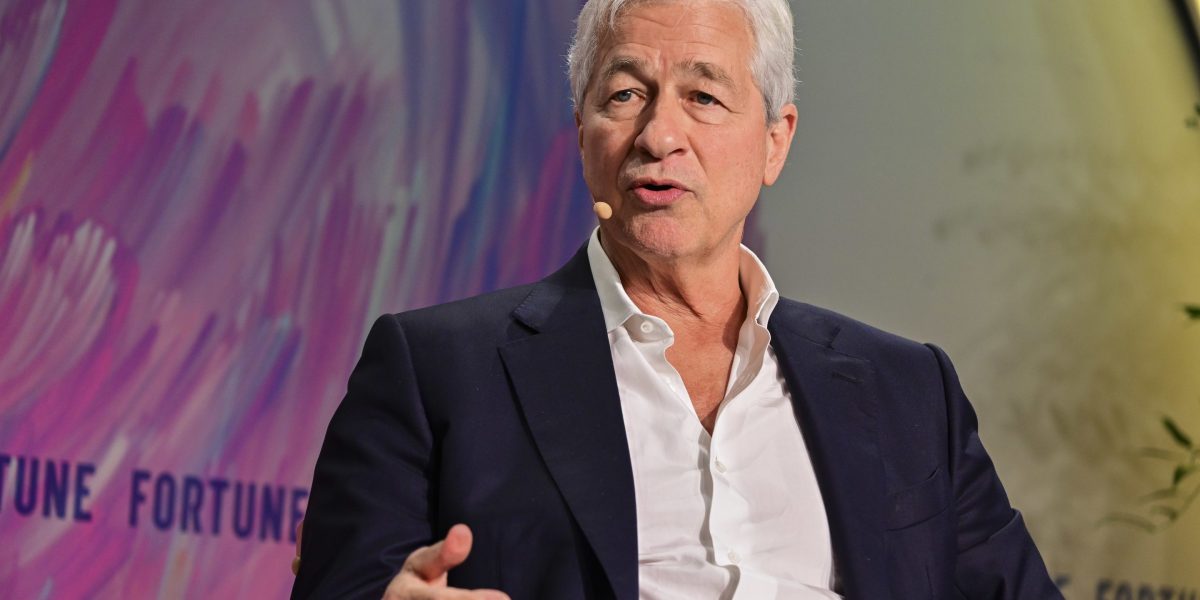
JPMorgan Chase CEO and Chairman Jamie Dimon is sounding the alarm on artificial intelligence and its impact on employment. The banking chief told the audience at Fortune’s Most Powerful Women summit in Washington, D.C., this week AI will ultimately claim thousands of jobs and that anyone who doesn’t believe so is ignoring the inevitable.

“It will eliminate jobs,” said Dimon, speaking in a conversation with Fortune Editor-in-chief Alyson Shontell. “I think people should stop sticking their head in the sand. So did tractors and so did cars.”

And as businesses, governments, and society come together on the same page regarding AI usage, proper regulations and guardrails should be put in place, said Dimon, particularly because it will be the root cause of massive job displacement. Options on the table include upskilling workers for new AI-based tech jobs, providing income assistance, facilitating early retirement, and major retraining, he said. 

“You can’t just take all these people and throw them on the street where the next job is, you know, making $30,000 a year when they were making $150,000,” said Dimon. “You’ll have a revolution.”

Despite the tectonic upheaval that is coming to the employment landscape, AI will eventually get better, faster, and cheaper, much like other milestone developments that allowed operations to scale, he said. Therefore, in the meantime, people should get accustomed to using AI and determining the best use cases.

“Underlying the [AI] hype is a real technology that is extremely transformative and powerful,” said Dimon.

The bank has been utilizing AI and machine learning for fraud detection, identifying patterns of behavior, conducting legal analysis, ensuring compliance with regulations, and enhancing business efficiency. JPMorgan has invested about $2 billion in AI and has seen it improve processes and procedures through its own internally developed models. Dimon said merely improving procedures can lead to a drop in headcount but it’s still difficult to quantify how much value there is in saving two hours out of the workday at this point.

Despite those remaining questions, “it’s absolutely time to go” in terms of investing in AI, and reviewing how it is being used at every business in depth. He said the bank has focused on its own training and executives have picked up techniques for document processing, pattern recognition in fraud, and correlating different databases together. 

“So, use it. Get good at it,” said Dimon. “Make it part of your tool set and your weapon set.”


Source link

Continue Reading

Business

49-year-old Democrat who owns a gourmet olive oil store swipes another historically Republican district from Trump and Republicans

Published

on


Democrat Eric Gisler claimed an upset victory Tuesday in a special election in a historically Republican Georgia state House district.

Gisler said he was the winner of the contest, in which he was leading Republican Mack “Dutch” Guest by about 200 votes out of more than 11,000 in final unofficial returns.

Robert Sinners, a spokesperson with the secretary of state’s office, said there could be a few provisional ballots left before the tally is finalized.

“I think we had the right message for the time,” Gisler told The Associated Press in a phone interview. He credited his win to Democratic enthusiasm but also said some Republicans were looking for a change.

“A lot of what I would call traditional conservatives held their nose and voted Republican last year on the promise of low prices and whatever else they were selling,” Gisler said. “But they hadn’t received that.”

Guest did not immediately respond to a text message seeking comment late Tuesday.

Democrats have seen a number of electoral successes in 2025 as the party’s voters have been eager to express dissatisfaction with Republican President Donald Trump.

In Georgia in November, they romped to two blowouts in statewide special elections for the Public Service Commission, unseating two incumbent Republicans in campaigns driven by discontent over rising electricity costs.

Nationwide, Democrats won governor’s races by broad margins in Virginia and New Jersey. On Tuesday a Democrat defeated a Trump-endorsed Republican in the officially nonpartisan race for Miami mayor, becoming the first from his party to win the post in nearly 30 years.

Democrats have also performed strongly in some races they lost, such as a Tennessee U.S. House race last week and a Georgia state Senate race in September.

Republicans remain firmly in control of the Georgia House, but their majority is likely fall to 99-81 when lawmakers return in January. Also Tuesday, voters in a second, heavily Republican district in Atlanta’s northwest suburbs sent Republican Bill Fincher and Democrat Scott Sanders to a Jan. 6 runoff to fill a vacancy created when Rep. Mandi Ballinger died.

The GOP majority is down from 119 Republicans in 2015. It would be the first time the GOP holds fewer than 100 seats in the lower chamber since 2005, when they won control for the first time since Reconstruction.

The race between Gisler and Guest in House District 121 in the Athens area northeast of Atlanta was held to replace Republican Marcus Wiedower, who was in the seat since 2018 but resigned in the middle of this term to focus on business interests.

Most of the district is in Oconee County, a Republican suburb of Athens, reaching into heavily Democratic Athens-Clarke County. Republicans gerrymandered Athens-Clarke to include one strongly Democratic district, parceling out the rest of the county into three seats intended to be Republican.

Gisler ran against Wiedower in 2024, losing 61% to 39%. This year was Guest’s first time running for office.

A Democrat briefly won control of the district in a 2017 special election but lost to Wiedower in 2018.

Gisler, a 49-year-old Watkinsville resident, works for an insurance technology company and owns a gourmet olive oil store. He campaigned on improving health care, increasing affordability and reinvesting Georgia’s surplus funds

Guest is the president of a trucking company and touted his community ties, promising to improve public safety and cut taxes. He was endorsed by Republican Gov. Brian Kemp, an Athens native, and raised far more in campaign contributions than Gisler.


Source link

Continue Reading

Business

Rivian CEO says it’s a misconception EVs are politicized, with a 50-50 party split among R1 buyers
Published

on


If Rivian’s sales are any indication, owning an electric vehicle isn’t such a partisan issue, despite President Donald Trump’s rollbacks of mandates, incentives, and targets for EVs.

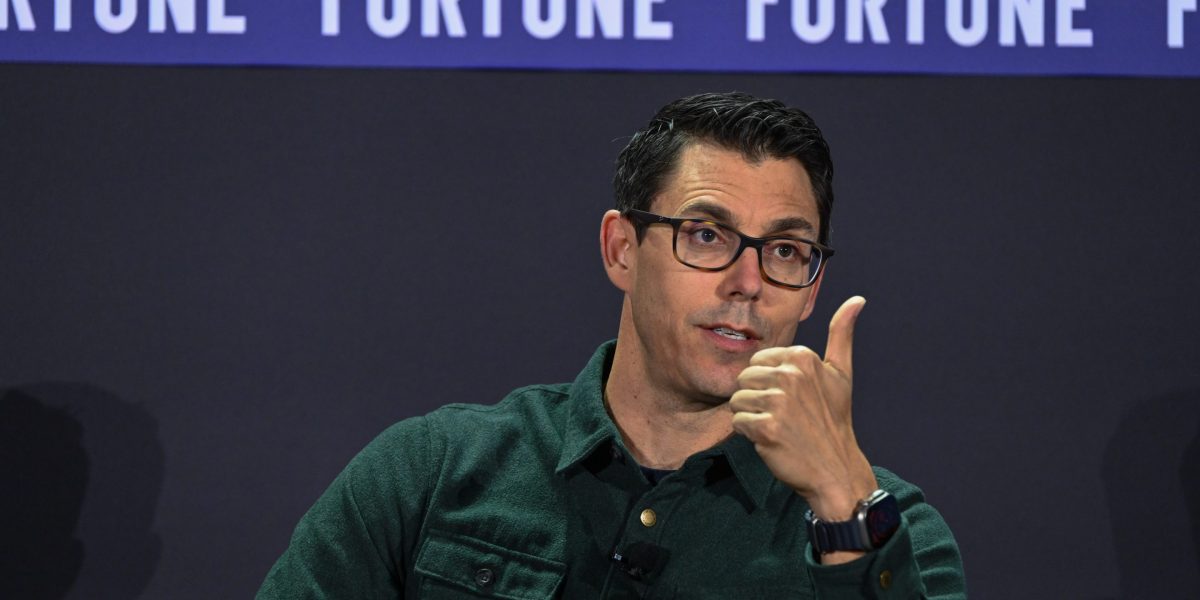
At the Fortune Brainstorm AI conference in San Francisco on Tuesday, Rivian CEO RJ Scaringe said it’s a misconception that electrification is politicized, explaining that most customers buy a product based on how it fits their needs, not their ideology. The questions car buyers ask, he said, are the same whether they’re purchasing one with an internal-combustion engine or a battery: “Is it exciting? Are you attracted to the product? Does it draw you in? Does the brand positioning resonate with you? Do the features answer needs that you have?”

Buyers of Rivian’s R1 electric SUV are split roughly 50-50 between Republicans and Democrats, Scaringe told Fortune’s Andrew Nusca. “I think that’s extraordinarily powerful news for us to recognize—that this isn’t just left-leaning buyers,” he added. “These are people that are saying, ‘I like the idea of this product, I’m excited about it.’ And this is thousands and thousands of customers. This is statistically relevant information.”

Buying an EV was once an indication of left-leaning politics, but the politics got scrambled after Tesla CEO Elon Musk became the top Republican donor and a close adviser to Trump. That drew some new customers to Tesla, and turned off a lot of progressive EV buyers, with many existing owners putting bumper stickers on their Teslas explaining that they bought their cars before Musk’s hard-right turn. Trump and Musk later had a stunning public feud, in part over the administration’s elimination of EV and solar tax credits.

But Scaringe said he started Rivian with a long-term view, independent of any policy framework or political trends. He also insisted that if Americans have more EV choices, sales would follow. Right now, Tesla dominates a key corner of the market, namely EVs in the $50,000 price range. Rivian’s forthcoming R2 mid-size SUV will represent a new choice in that market, with a starting price of $45,000 versus the R1’s $70,000.

Ten years from now, Scaringe said he hopes—and believes—that EV adoption in the U.S. will be meaningfully higher than it is today across the board, explaining that the main constraint isn’t on the demand side. Instead, it’s on the supply side, which suffers from “a shocking lack of choice,” especially compared to Europe and China, he added. EV options in the U.S. are limited by the fact that Chinese brands are shut out of the market.

More choices for U.S. EV buyers would presumably create more competition for Rivian—and indeed, the flood of low-priced Chinese EVs in other auto markets has created a backlash, with countries such as Canada imposing steep tariffs on them. But Scaringe appears to view more competition as positive for the market overall.

“I do think that the existence of choice will help drive more penetration, and it actually creates a unique opportunity in the United States,” he said.


Source link

Continue Reading

Business

Powell warns of a ‘very unusual’ economy as inflation remains high amid a weakening job market
Published

on


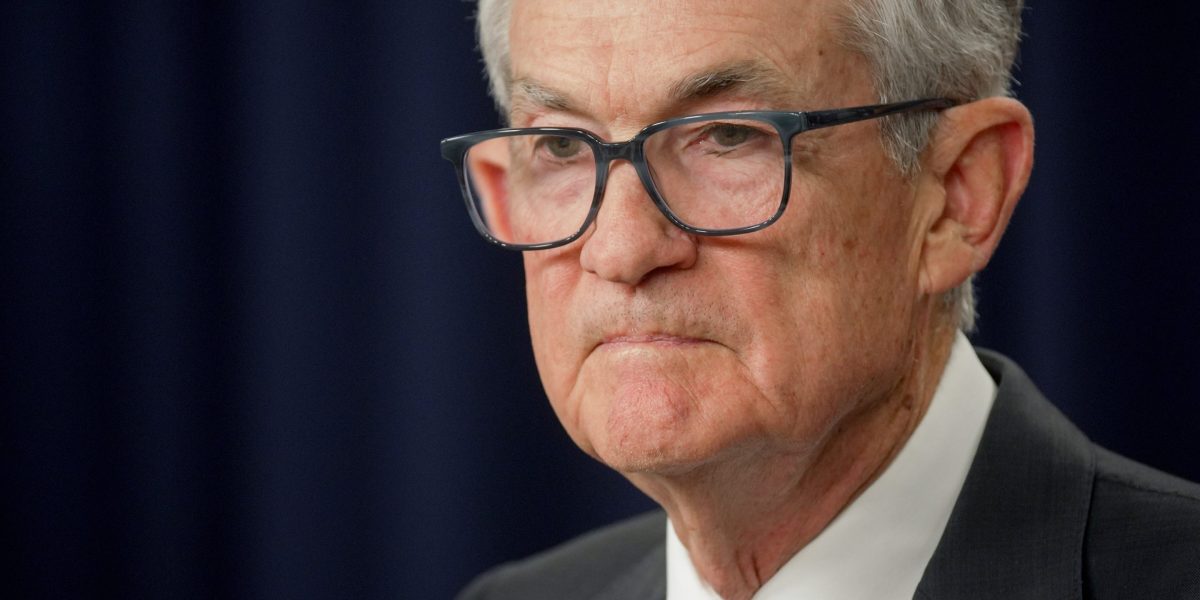
Federal Reserve Chair Jerome Powell on Wednesday described the U.S. economy as “very unusual,” saying policymakers are navigating a rare combination of tariff-driven goods inflation and a labor market that may already be weaker than official data suggests.

The Fed cut interest rates for the third consecutive meeting, a quarter-point reduction Powell framed not as a confident pivot toward easier policy, but as a defensive move meant to keep the labor market from slipping further. He repeatedly emphasized risks to employment have risen “in recent months,” and noted that behind the headline numbers, job creation may already be negative.

Powell made the striking admission the Fed believes the official payroll figures—which have slowed sharply since the summer—are overstating job growth by roughly 60,000 per month. 

“Forty thousand jobs could be negative 20,” he said, adding this dynamic is not well understood by the public because unemployment claims remain historically low—something both economists Mark Zandi and Claudia Sahm recently toldFortune could be giving people a false sense of security about the job market.

“I think a world where job creation is negative… we need to watch that very carefully,” Powell said. 

It is this weakening backdrop Powell said makes the current moment “very unusual”: Inflation remains elevated, but most of the remaining overshoot comes from goods categories directly affected by tariffs, as opposed to domestic economic overheating, which he said the Fed has worked hard to cool since its 2022 highs; inflation excluding tariff-affected goods is “in the low [two percent],” he said. Services inflation is cooling, wage pressures are easing, and neither the labor market nor business surveys suggest a “Phillips-curve” kind of inflation threat, Powell said, referring to the inverse relationship between inflation and unemployment. 

Instead, Powell said, the bulk of the problem is a “one-time price increase” pushing up goods categories as import levies work their way through supply chains. Goods inflation, he noted, should peak around the first quarter of 2026, assuming no additional tariff rounds.

Those crosscurrents have fractured the Fed. Three officials formally dissented from the rate cut on Wednesday, and several others offered what Powell described as “soft dissents,” when an official’s personal projection falls out of what they ultimately voted for. There were six such “soft dissents” this time, during one of the deepest divides inside the FOMC in years, driven by disagreement over how to weigh the risks of lingering inflation against the possibility that job growth is weaker—and much more fragile—than reported.

Powell stressed that policymakers cannot simply choose one mandate to prioritize. 

“There is no risk-free path,” he said, a refrain he’s repeated for months. “When both sides of the mandate are threatened, you should be kind of neutral.” 

He characterized the current stance as being at the “high end” of neutral, allowing the Fed to “wait and see” how the data evolve.


Source link

Continue Reading

Trending

Copyright © Miami Select.
