
Fashion
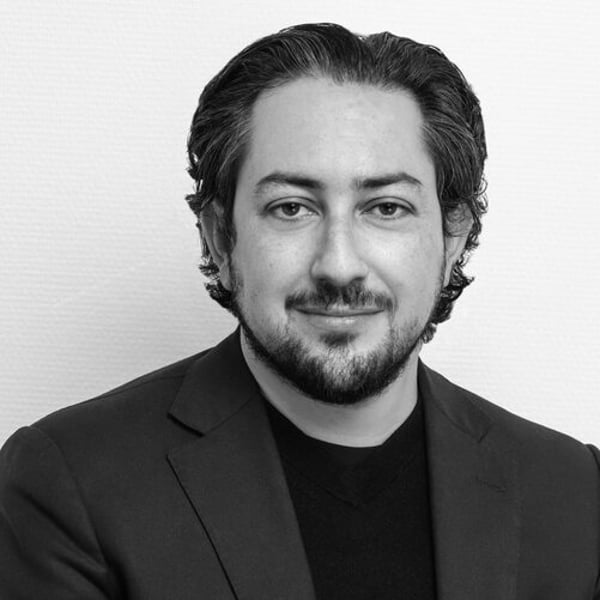
Jonathan Siboni: Frequent changes in creative leadership won’t drive growth
Translated by
Nazia BIBI KEENOO
Published
September 29, 2025
After a week in Milan, which ended on Sunday, the fashion world now turns its attention to Paris. And just as in the Lombard capital, in the City of Light, all eyes will be on the star artistic directors (ADs) of major fashion houses making their debuts this week. This wave of change comes amid a slowdown in the luxury sector that is affecting most brands and groups. Will that be enough to rekindle desirability and spending? Jonathan Siboni, a luxury expert and founder of Luxurynsight — a data analytics platform that supports luxury players — and owner of social media analytics specialist Heuritech, is a keen observer of global dynamics. For FashionNetwork.com, he shares his perspective on the current landscape, from U.S. tariffs and Chinese market pressure to structural challenges inside the sector. He also examines the deeper issues facing the luxury industry in its pursuit of a long-term recovery strategy.
FashionNetwork.com: For several quarters now, the results of luxury groups have highlighted the difficulties associated with the sector’s slowdown. How do you analyze the global economic context? And what are the concerns of senior leaders?
Jonathan Siboni: The keyword this autumn is uncertainty — and it must be plural. Uncertainty surrounds tariffs in the United States, consumption levels in China, purchasing power, and internal dynamics within luxury groups — and more broadly, the desirability of luxury goods. Luxury groups operate on a highly international scale, far more than other sectors, and they now confront uncertainty across every region of the world.
FNW: In other words?
JS: For the past 30 or 40 years, there has always been a region that outperformed others: Japan in the 1970s and 1980s, then the Middle East, and China, which long served as the engine. Today, aside from the Middle East, which remains a modest market, all the engines seem to be sputtering. The only time everything seized up before was during the Covid-19 pandemic… and even then, China was doing relatively well.
What’s changed is that today’s uncertainty has taken on an almost existential tone: “Will luxury survive?” That shakes everything. Some say, “There’s no point fighting.” That’s wrong. I believe luxury — which has existed for 200 years and weathered two world wars — will continue to flourish. The question is how.
FNW: Do you think the groups have the answer?
JS: They’re building it, with an approach that’s more rational than emotional — and they’re right. The emotional response is to change artistic directors in an attempt to reignite brand desirability. You try once, twice, three times… but it’s still emotional.
FNW: We’ve just seen a major turnover of artistic directors. This September Fashion Week features many new names at the helm of big houses. Aren’t these changes rational?
JS: It’s the most basic response: “It’s not going so well, so I’ll make a change.” But in this context, changing the artistic director isn’t rational. You’re shifting how the brand expresses itself — but that alone won’t drive sales in a slowing market. It’s a gamble, and yes, it might work. But I don’t believe that’s where the battle is won or lost.
FNW: Why not?
JS: Because in past years, when a brand was losing momentum — when it stopped making people dream — switching the AD could reignite excitement. This time, the problem is deeper. So replacing the AD won’t fix it. If everyone is changing creative directors, it’s not because they’ve found the solution — it’s because no one has. They’re all putting on a show in front of the curtain… but what matters is what’s happening behind it.

FNW: Meaning?
JS: In the current climate, even hiring the perfect AD won’t be enough without a rational, structured plan. Brands need to reflect on their identity, their growth levers, production strategy, pricing model, and overall desirability. Fortunately, technology now enables the analysis of these elements in real-time — something we couldn’t do 20 years ago. And importantly, a younger generation of leadership will be able to act on these insights.
FNW: Are you seeing movement in that direction?
JS: Not yet in terms of leadership transitions, but I think that’s coming. New generations have a real opportunity here. The cohort behind LVMH — and, to a certain extent, Kering — succeeded in scaling luxury worldwide. In just 15 years, they expanded into every geography, built digital ecosystems, and extended into lifestyle and hospitality. Louis Vuitton alone generates over €20 billion in revenue — that’s massive. So how do you go beyond that?
This shift in the rules of the game is arriving just as generational change is starting. Pressure is high, but that’s also an opportunity for young leaders to take control.
FNW: What about the tech side?
JS: Brands are clearly more open to new tech solutions, despite the sector’s traditional resistance and budget constraints.
FNW: Why the shift?
JS: Historically, visionary leaders drove luxury with gut feeling. Now, complex issues dilute the CEO’s role. Decades ago, CEOs grasped the full picture — three categories, smaller markets. Today, operations bury them. The CEOs who stand out preserve enough bandwidth to rethink and reinvent. We’re seeing increasing openness to tech-driven decision-making. For example, we’re working on pricing — a topic that was almost taboo before. Now it’s front and center.

FNW: Speaking of prices, how do you analyze the impact of tariff changes under the Trump administration on the luxury sector?
JS: I see three key points. First, people buy luxury when they feel good. When customs duties fluctuate wildly and the country’s outlook feels uncertain, Americans don’t line up at boutiques. Second, brands need time to react. They usually choose to sacrifice margin rather than risk losing business. When demand slows, they prefer to maintain sales—even if it means slight margin erosion—rather than protect margins and forfeit revenue. Third, pricing in the United States follows the market as a whole. No single brand sets the tone. Everyone waits for someone else to move first before making an adjustment.
“We’re still in a phase of uncertainty where we mustn’t move too quickly.”
FNW: Does this explain the silence of luxury players on the U.S. situation, given its importance to the market?
JS: Yes. Trump shifts direction faster than the stock market, which creates instability. Luxury brands, on the other hand, never lower their prices. If a government imposes a 50% tax and a brand raises prices by 10% to offset it, the brand can’t reverse the increase if the tax disappears. The ratchet effect locks pricing upward, making rollbacks virtually impossible. That’s why brands rely on slow, strategic increases while closely monitoring the situation. Wealthy consumers—who often influence Trump’s decisions—will be worth watching. He could, for instance, introduce a tax-free zone similar to Hainan in China. In short, we remain in a prolonged phase of uncertainty, and brands must act cautiously.
FNW: So, luxury groups are doing nothing?
JS: On the contrary. They’re working hard to avoid bad decisions and optimize what already exists. Even in a sluggish market, some brands continue to grow. Creativity does matter—but this is more about operations. Take Prada and Miu Miu: they hit the right notes with their offer and their connection to the customer.
FNW: Bernard Arnault has announced the opening of new production units in the United States. Is this just a PR move or the beginning of a real trend?
JS: It could be a real trend. It reminds me of the 1980s, when Japanese automakers opened factories in Europe to avoid Japan-bashing and import taxes. LVMH already has production sites in the U.S., and expanding those makes sense. It also sends a political message to Trump. But this won’t apply to every maison. For items that rely on French savoir-faire or rare materials, “Made in France” is a non-negotiable requirement. In more industrial segments, such as beauty, hybrid models are possible—manufacturing packaging and components in the U.S., while sourcing raw materials and craftsmanship from Europe.
“I’m convinced that China will remain a driving force in luxury goods. The time to be there is now.”
FNW: While the U.S. market is complicated, you’re an expert on China. How do you view the current situation with Chinese consumers? Many say their weakened demand is hurting luxury brands.
JS: This issue has several layers. Before the Covid-19 pandemic, Chinese consumers made around 70% of their luxury purchases abroad. When the pandemic hit, their domestic luxury spending skyrocketed, as local consumption had previously been nearly nonexistent.
However, a larger concern was the sharp drop in the global share of Chinese luxury consumption — from 33% down to 16%. Many observers misread that data. They assumed “China is booming,” but in reality, global spending by Chinese consumers had declined; only local growth had increased. Now that travel has resumed, Chinese shoppers are returning to international markets — especially Japan and South Korea — where they are once again driving luxury sales.
FNW: So, Chinese consumers are still active?
JS: Exactly. Globally, the situation isn’t as bleak as some portray it. Young consumers, in particular, have shifted their mindset. Most grew up as only children, supported by two generations, and they’ve started to challenge the traditional “work first” mentality. They’re entering a saturation phase—similar to what Western markets experienced, just a few years later.
But they’re still spending. They know they’re paying full price—and the moment brands reintroduce discounts, they return to the stores. Analysts often overstate the claim that Chinese consumers have lost interest in luxury.

FNW: So there’s still a market to engage?
JS: Absolutely. Chinese shoppers continue to seek high-quality products that hold meaning at the right moment. Brands that align with that do well. The difference today is that 25 years ago, luxury signaled success and modernity. Then it became about identity. Now, it’s more about self-expression—and people are mixing luxury with more accessible brands.
But if a brand has strong values and adds meaning, it’ll still attract this audience. Despite economic challenges, I’m convinced that China will continue to be a key driver of luxury growth. In fact, the best time to invest there is now. Historically, winners emerge during difficult cycles.
FNW: Can Europe still lead this global race? Earlier this month, the Tianjin Forum in China promoted local and regional economies. Should we fear a shift toward local consumption and brands?
JS: When major geopolitical blocs clash, they always trigger questions about global balance. Still, these tensions won’t affect luxury in the short or mid-term. Consumers purchase French luxury goods because they associate them with France itself. That connection remains our greatest strength—but also our biggest vulnerability. “Brand France” powers the entire industry. If public sentiment shifts against France, global consumers turn away from our brands.
FNW: Could Chinese brands replace European houses?
JS: There’s no Hermès or Louis Vuitton equivalent in China yet. That said, the competition is changing. Chinese consumers will consider local brands if there’s a stronger emotional or functional fit. For example, skincare brands tailored to Chinese skin tones or jewelry houses like Laopu—known for working with pure gold—have appeal.
But there’s no “Guochao” (nationalist fashion) trend on the level of replacing European fashion powerhouses. That’s a myth, for now.
FNW: So European brands still have room to grow?
JS: Absolutely. I’d even say European brands have a storytelling advantage. Europe can remain a neutral space in a potential U.S.–China standoff. I’m seeing more Chinese brands investing in Europe before even considering the U.S. They’ve already dominated Southeast Asia, and now they’re targeting Europe next. That’s a good sign for our local economies.
FNW: Has this global reshuffling shifted geographic priorities?
JS: In reality, they’ve shifted many times over the past decade. We’ve added new dimensions—such as digital—that transcend geographic borders. But the real question is no longer “Where is China?”—it’s “How do we respond to consumers, wherever they are?”
Brands need to re-learn who their customers are and adapt to regional realities. Luxury succeeded in scaling artisanal production. Now, it must scale client relationships with that same care.
FNW: Won’t this create an even bigger gap between large groups and independent brands?
JS: Yes. That’s why Giorgio Armani wrote in his will that he wanted his house to eventually join a major group. Managing global uncertainty becomes far easier when a brand has billions in reserves and access to elite management teams. Large groups can absorb shocks—such as exchange-rate fluctuations—that would devastate smaller brands.
This reality will almost certainly drive further consolidation across the sector. That said, some small, independent companies with niche models will continue to survive. But once a brand reaches around €200 million in revenue, the risks become existential. Scaling beyond that point often requires partnering with a larger group.
This article is an automatic translation.
Click here to read the original article.
Copyright © 2025 FashionNetwork.com All rights reserved.