Connect with us

Business

Johor is building a 7300-acre innovation hub on the Singapore border, offering ‘land and scale’ for its neighbor’s ‘capital and speed’

Published

on


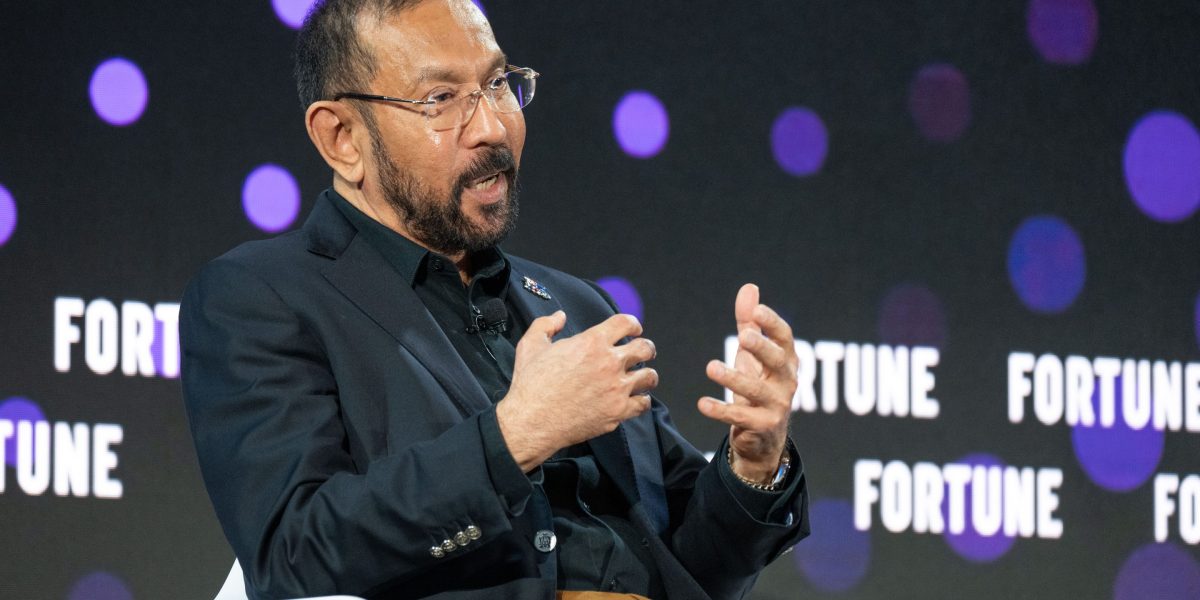
That’s the question facing Datuk Syed Mohamed Syed Ibrahim, president and CEO of Johor Corporation (or JCorp), the principal development institution for the Malaysian state of Johor. The area is home to a new special economic zone along the border with neighboring Singapore, hoping to tap the city-state’s capital, talent and international connections to spur new investments in Malaysia.

“We are mindful of the fact that the critical building blocks in an innovation ecosystem are not really there in Johor,” Syed Mohamed explained during the Fortune Innovation Forum in Kuala Lumpur, Malaysia, on Monday. “But in Singapore, there are.”

Citing successful case studies like Barcelona, Shenzhen, and Silicon Valley, he identified three factors that could lay the groundwork for a successful innovation hub: Physical infrastructure, an open digital infrastructure, and institutional framework, like public-private partnerships and a regulatory sandbox.

Still, JCorp found an opportunity for Malaysia and Singapore to work together. “While Johor offers land and scale, Singapore offers capital and speed. So this is the opportunity that I feel we need to capitalize [on], where we can complement each other,” Syed Mohamed explained, 

JCorp’s flagship project is the Ibrahim Technopolis, a strategic development under JLand Group, JCorp’s real estate arm. IBTEC has a gross development value of 27 billion Malaysian ringgit ($6.5 billion), and hopes to leverage the exponential growth potential of the Johor-Singapore Special Economic Zone, which Malaysia and Singapore agreed to early this year. 

“In IBTEC, there is a big playground, so to speak, not just for industry, but for innovators,” he said. 

Syed Mohamed has high hopes for IBTEC, which covers almost 7,300 acres in the state of Johor. “In five years, IBTEC is going to be a place where researchers, global firms and universities work together with industries to tackle the challenges of food security, green energy, and [a] digital future,” he proposed. “In ten years’ time, IBTEC is going to migrate, not just to become an innovation hub, but a thriving innovation corridor.”

Still, innovation isn’t a costless process, as companies and workers may get disrupted out of a job. 

“Disruption is inevitable when we talk about the dynamics of economic growth, but we feel we should be more humane,” Syed Mohamed said. “I would, in fact, prefer at JCorp that we call it creative renewal, because as we disrupt, we have to make sure that, in fact, there is still an opportunity for those that are going to be disrupted. 

In particular, JCorp also hopes to tap the booming data center industry, in turn connected to rising digitalization and AI usage across the region and beyond. Malaysia has attracted billions in data center investment from Big Tech companies like Microsoft, who hope to tap the country’s ample space and relatively more abundant resources. 

“We’ll be working with partners to provide courses in data center management,” Syed Mohamed said. “We will be moving towards creative renewal.”


Source link

Continue Reading

Business

American farmers warn Trump’s $12 billion bailout isn’t enough to solve trade, pricing woes

Published

on


President Donald Trump has delivered on his promise to provide aid to U.S. farmers hit by his sweeping tariff policy, but that hasn’t freed the agriculture industry from their worries of tight margins and volatile markets. 

On Monday, Trump, alongside Treasury Secretary Scott Bessent, Agriculture Secretary Brooke Rollins, and National Economic Council director Kevin Hassett, announced a $12 billion farm aid program, which outlined much-needed relief for farmers who sounded the alarms about increasing input costs and fewer export opportunities amid ongoing trade tensions. Farmers will begin receiving funds by the end of February, Rollins said.

“Now we’re once again in a position where a president is able to put farmers first,” Trump said at a Monday roundtable of farmers and lawmakers. “But unfortunately, I’m the only president that does that.”

While farmers and agricultural economists see the package as a way to move forward after a disappointing harvest season, they fear the precedent of cash bailouts does not provide systemic solutions to a beleaguered industry, and don’t believe the $12 billion gesture is enough to solve agriculture’s deeper challenges.

“We’re talking $12 billion, and while it is a lot of money, in the grand scheme of things, it’s still going to be a Band-Aid on a bigger wound,” Ryan Loy, assistant professor and extension economist for the University of Arkansas Division of Agriculture, told Fortune. “How can we triage this situation right now, work on that longer-term solution? That’s really, I think, the overall attitude toward it.”

The one-time payment program will send $11 billion to major row-crop producers growing corn, soybeans, and rice, and the remaining $1 billion will be reserved for specialty crop-growers, such as sugar. Trump said additional aid programs will depend on whether trade improves with China and other countries. While the money is welcome, farmers say they’d rather have the government secure stable markets and trade relations.

“At the end of the day, the farmers, they just want to conduct business, not necessarily have to get these packages to help them out during these times,” Loy said.

Farmers’ struggles

Since Trump introduced expansive import taxes—especially on China, provoking a wave of retaliatory tariffs—farmers have seen input costs increase while export demand and crop prices plummet. 

“It’s been a bit of a roller coaster in terms of not just uncertainty over our global markets and our prices, but also whether or not we were going to see any relief on the input side,” Kyle Jore, an economist, northwest Minnesota-based farmer, and secretary of the Minnesota Soybean Growers Association, told Fortune.

Tariffs on farming-related machinery as well as products like seeds and fertilizer sit at 9%, costing U.S. farmers about $33 billion more, according to North Dakota State University’s Agricultural Trade Monitor. That includes a more-than 15% tax on tractors and herbicides.

Soybean farmers, responsible for the U.S.’ biggest agricultural export that makes up about 14% of the country’s total crops sent overseas, have been hit particularly hard by tariffs. Trade disputes with Beijing have disincentivized China from buying American soybeans, and the country has instead turned to South American countries like Argentina and especially Brazil, which makes up about 71% of China’s soybean imports, according to the American Soybean Association.

To be sure, thawing relations between the U.S. and China has enlivened soybean trade. China committed in October to resume orders of U.S. soybeans after halting all purchases in May, promising to import 12 million tons of soybeans by the end of the year, as well as at least 25 million tons in each of the next three years. However, soybean prices have still lagged because of stifled demand, and farmers saw their third straight year of losses, in large part due to tariff turmoil.

According to agricultural economists, Trump’s farm aid program doesn’t hurt, but its benefits are limited: The bailout announcement arrived late in the harvest season, with farmers already booking orders at lower prices, nearly guaranteeing losses for the year. The package also doesn’t address input costs, which Jore sees as critical in improving tight margins.

“A lot of farmers are making purchasing decisions on the ‘26 year crop right now,” he said. “And the hope was that by now, we’d start to see some of the fertilizers and stuff come down, and it’s just not happening to the extent that we were hoping for.”

Changing systems

Joe Maxwell, a Missouri farmer and cofounder and chief strategy officer of agriculture watchdog group Farm Action, said many of the issues plaguing the U.S. agriculture industry—including input costs—go beyond the trade disputes created by the Trump administration. His celebration of the bailout package was tempered by his belief the administration should be addressing policies that for years have been hurting the industry.

“The message we’re wanting to get to Washington, D.C., is that the system is broke,” Maxwell told Fortune. “We need the financial support that the president has announced. But we need Congress to take a serious look at the structure of these programs, because it’s just failed.”

While input costs have risen substantially from tariffs, Maxwell said the reason behind rising fertilizer and seed prices have more to do with corporate consolidations and monopolies dominating the input industry. According to Farm Action’s Agriculture Consolidation Data Hub, three fertilizer companies (CF Industries, Nutrien, and Koch) control 93% of North American nitrogen fertilizer sales in North America. Four seed companies (Bayer, Corteva, ChemChina, and BASF) similarly dominated 60% of the global seed market.

On Saturday, Trump signed an executive order creating a task force to investigate alleged antitrust practices impacting the cost of farming.

“There is a disconnect from the fundamentals in the market, basic supply, demand,” Maxwell said. “One of the fundamentals is competition, and that does not exist in America’s agriculture.” 

Maxwell also noted Congress provides subsidies for export crops, which he argued has created an oversupply problem. That exposes U.S. farmers, such as soybean producers, in instances like trade disputes when export demand plummets, he added. These subsidies also discourage American farmers from planting fruits and vegetables that would make the U.S. less reliant on exports and encourage crop diversification, which lends itself better to regenerative farming practices like crop rotation, which can decrease input costs and ultimately widen profits, Maxwell argued.

The USDA directed Fortune to its press release about the bailout program when asked for comment.

Until the government addresses the purported anticompetitive input industry and how subsidies may be exposing the agriculture industry in times of trade volatility, bailout packages will only go so far, Maxwell said.

“If we don’t go after the antitrust violations that are there, and we don’t change the structure of our farm programs, we will not solve the financial crisis farmers are facing today,” he concluded.


Source link

Continue Reading

Business

Tesla promotes Optimus as its next big breakthrough, but one robot’s collapse has sparked doubts

Published

on


Elon Musk and Tesla are touting the company’s Optimus robot as its next revolutionary moneymaker, but after several incidents, some are questioning how autonomous it actually is.

During an event titled “autonomy visualized” at a Tesla location in Miami over the weekend, one of the humanoid robots handing out water bottles fell backwards after making upward motions toward its head with both hands, according to a video posted to Reddit. (This incident was shortly after Russia debuted its first AI-powered robot, which similarly fell onstage at an event). The Tesla event was meant to show off its “Autopilot technology and Optimus,” Electrek reported.

It made the movement after accidentally knocking some of the water bottles it was handing out off a desk, and stood out because of its similarity to a human reaction. While it’s unknown what actually occurred during the incident, the robot’s movement led some online to speculate the robot may have been taking off a VR headset. 

Tesla did not immediately respond to Fortune’s request for comment.

Tesla Optimus
byu/Decent_Cheesecake643 inteslamotors

The incident stood out because Tesla has used human-controlled Optimus robots at prior events. During Tesla’s Robotaxi event last year, attendees interacted with Optimus robots in person. Some played rock, paper, scissors, while others served drinks or posed for photos.

Yet, it turns out—although the company did not advertise it—some of those bots were apparently being controlled remotely by humans. At least one Optimus robot admitted it, saying: “Today, I’m assisted by a human, I’m not yet fully autonomous,” although the LA Timesreported, at the time, using humans to operate the bots may have been due to a late request by Musk to include the robots in the Robotaxi event.

Tesla has previously trained its robots with workers wearing special motion-capture suits and VR headsets.

While Tesla has relied on humans before to showcase their Optimus robots, Musk has often said the robots, in other settings, are not human operated.

In reply to a post on X in October that showed Optimus practicing martial arts, Musk affirmed the robots movements were “AI, not tele-operated.” At the premiere of Tron: Ares that same month, an Optimus robot can also be seen squaring up with actor Jared Leto, a feat which Musk also said was AI-led, not human-controlled.

“Optimus was at the Tron premiere doing kung fu, just up in the open, with Jared Leto. Nobody was controlling it. It was just doing kung fu with Jared Leto at the Tron premier. You can see the videos online,” Musk said during Tesla’s third quarter earnings call. “The funny thing is, a lot of people walked past it thinking it was just a person.” 

Whether the Optimus robots still rely on human assistance is unclear, yet Musk and Tesla have pinned high hopes on the product, which Musk has called “the biggest product of any kind, ever.”

Musk has projected Optimus could represent up to 80% of the company’s total value, and during the company’s third quarter earnings call, the CEO said Tesla would next year start  building a production line that could eventually have an annual capacity of 1 million Optimus robots. 


Source link

Continue Reading

Business

You’re probably $30,000 short of what you need to buy a house—and you’re not alone

Published

on


Buying a home in America feels further and further out of reach. Home prices and mortgage rates have been elevated ever since the pandemic housing boom, and wages haven’t kept up with inflation. 

Considering these variables, more than 75% of homes on the market are unaffordable to the typical household, according to a new Bankrate analysis released Monday. 

“When only a sliver of the market is affordable to the typical household, homeownership starts to feel less like a milestone and more like a luxury,” said Bankrate data analyst Alex Gailey. “It’s no surprise that one in six aspiring homeowners have walked away in the last five years.” Another Bankrate analysis from September shows one in six aspiring homeowners had completely given up on finding a home to buy.

Meanwhile, there’s a $30,000 gap between what the typical U.S. household makes and what it needs to afford a median-price home, according to the latest Bankrate analysis. The typical U.S. household earns about $80,000 per year, according to U.S. Census Bureau data, but hopeful homebuyers need a $113,000 salary to afford a median-priced home. A median-priced home in the U.S. is $447,035, according to an August Redfin report.

But in some of the most desirable U.S. metros, buyers need far more to afford a median-priced home. The following is a list of the 10 cities requiring the highest salaries in the U.S., per Redfin:

  1. San Jose, Calif.: $413,100
  2. San Francisco: $393,443
  3. Anaheim, Calif.: $302,587
  4. Oakland, Calif.: $244,073
  5. Los Angeles: $234,619
  6. San Diego: $227,612
  7. Seattle: $219,498
  8. New York City: $213,245
  9. Nassau County, N.Y.: $207,386
  10. Boston: $204,465

Bankrate’s analysis also showed Los Angeles, San Diego, and Boston were among the cities where affordable homes are the hardest to find, also including New Orleans and Miami. 

“For many families, the challenge isn’t just high home prices and elevated mortgage rates,” Gailey said. “It’s that housing shortages across the country have left them with far fewer homes they can afford.”

However, there are a few U.S. cities where affordable homes are at least a little easier to find. That includes Pittsburgh, St. Louis, Baltimore, Detroit, and Birmingham, Ala.

Realtor.com recently crowned Pittsburgh as the most affordable city in America, where the median home price is less than $250,000. “In a housing landscape where affordability has eroded nationwide, Pittsburgh remains a rare bright spot where buying a home is still within reach for most households,” Realtor.com senior economic research analyst Hannah Jones said in a statement. 

The Washington Post also recently profiled Pittsburgh as having one of the most affordable housing markets in the U.S., giving the example of grocery store deli counter manager Liam Weaver, 30, and professional ballet dancer Issac Ray, 26, who bought their first home in Pittsburgh for just $163,000. Although they spent about $10,000 on renovations, the cost of the house was only about one-third the cost of a median-priced home in the U.S. 

But Pittsburgh, among other semi-affordable cities, is most certainly the outlier in today’s housing market. 

“Affordability looks very different depending on where you live,” Gailey said. “Some large cities still give median-income households a path to buying a home, while others have become increasingly difficult to break into.”

And some Americans—particularly younger generations—have been desperate to break into the housing market, grasping for long-term financial stability and the same security their parents and grandparents earned by buying a home. Some millennials are carpooling for homes, teaming up with friends and family to buy a house. Some Gen Zers are taking on multiple side hustles just to save up enough to afford a down payment. 

Realtors working with these clients have also encouraged them to accept the idea of “trading up,” or essentially settling for a cheaper house and one that’s certainly not a dream home. Paul Beaudreau with KW Realty in Burlingame, Calif., previously told Fortune he teaches buyers that purchasing a more affordable house first, building equity, then selling it, can be an easier way to save up for a down payment on a dream home down the road.

“While I don’t try to tell my clients to give up on that dream home, I’m trying to explain to them what the path is to get to that dream home,” he said. “Your first home is never your last home, and quite frankly is never your dream home.”


Source link

Continue Reading

Trending

Copyright © Miami Select.