
Politics
Joe Gruters, RNC make case at Supreme Court against ballots arriving after Election Day
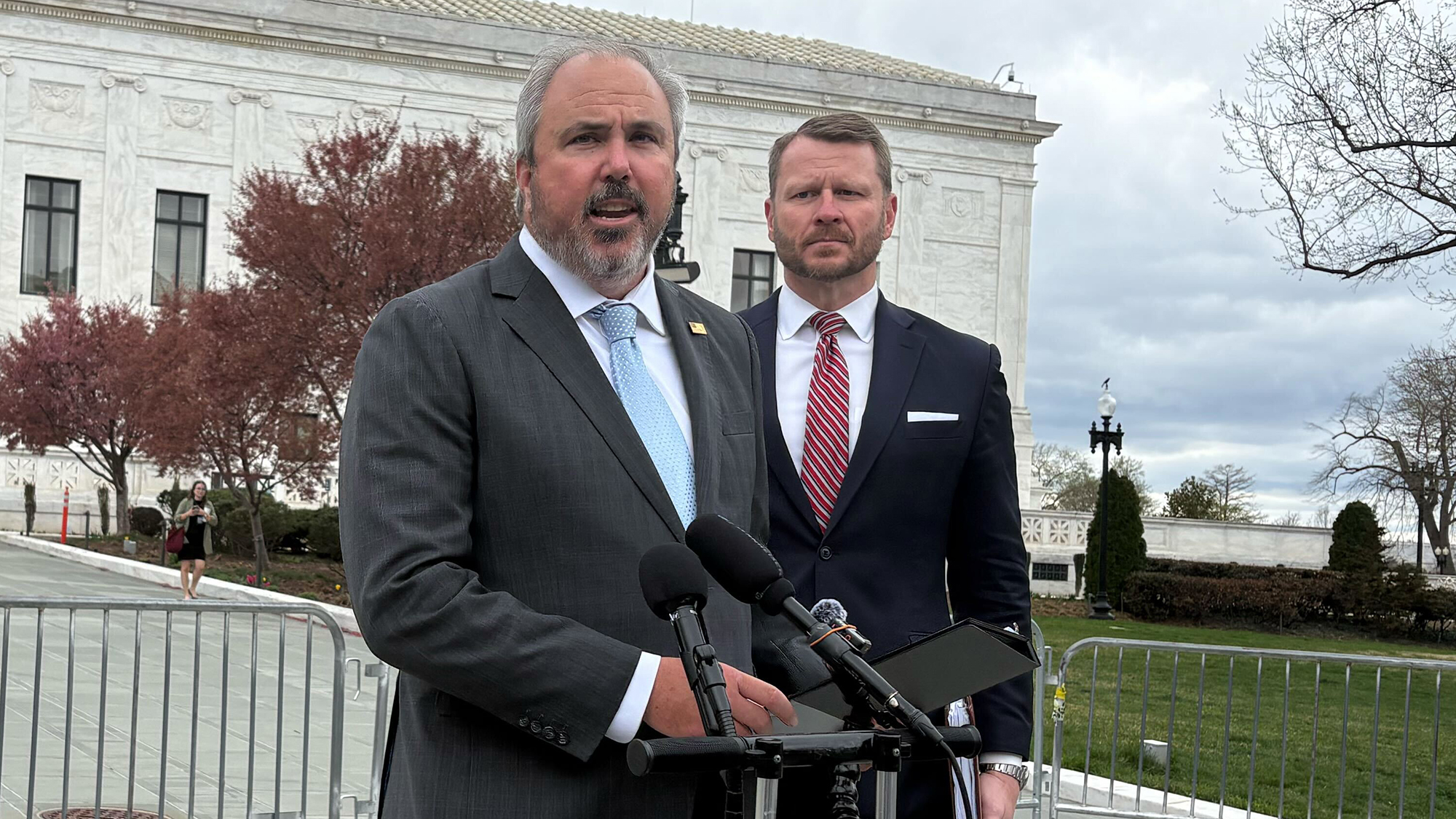
The Republican National Committee (RNC) argued to U.S. Supreme Court Justices that votes collected after Election Day shouldn’t ever count.
After oral arguments, RNC Chair Joe Gruters said that’s the only way to ensure a singular end to the federal campaign season.
“This case is about clarity and confidence, making sure Election Day means what it says,” the Sarasota Republican told reporters outside the U.S. Supreme Court. “The Republican National Committee is engaged in protecting election integrity nationwide.”
Arguments were part of a lawsuit challenging Mississippi’s law allowing mail-in ballots postmarked before Election Day to be counted if received up to five days later. But the ramifications if the challenge is victorious will extend to 13 other states, and Washington, D.C., that also allow a grace period for mail to arrive after Election Day.
A win would also affect 15 other states that allow a period after Election Day for military and overseas votes to be tabulated. In Florida, state law, in accordance with the Uniformed and Overseas Citizens Absentee Voting Act (UOCAVA), allows up to 10 days for those votes to be received.
Gruters, who also serves in the Florida Senate, insists that Florida election law remains a “gold standard” and would be impacted little by a ruling.
But it could change rules on a process used by thousands of voters in the last Presidential Election. About 85,700 voters cast ballots in Florida using the UOCAVA process in the 2024 General Election, according to a report from the U.S. Election Assistance Commission. That’s less than 1% of the more than 11 million ballots cast statewide that year, and it is unclear how many were collected after Election Day.
Mike Hurst, Mississippi Republican Party Chair and the counsel arguing the RNC’s case, said any allowance of votes to be counted after Election Day actually violated federal law, which sets a nationwide Election Day.
“Counting ballots after Election Day violates federal law and changes the rules after voters have already cast their ballot,” he said. “It also delays results, sometimes for days or weeks, and creates confusion that erodes public trust, that raises concerns about fairness and consistency.”
Hurst also expressed skepticism that troops deployed overseas would be disenfranchised by refusing ballots received after Election Day, noting federal law requires those voters receive ballots 45 days ahead of an election.

That argument seemed compelling to conservative Justices, though liberal Justices expressed skepticism about whether the courts should be overruling states regarding the administration of elections.
Mississippi Solicitor General Scott Stewart, who defended his state’s law in court, noted that over the course of the entire case, no evidence had ever been presented evidence of a fraudulent vote cast among mailed ballots arriving after Election Day.