
Politics
Jim Boyd expects steady 2026 Legislative Session, with property taxes looming large

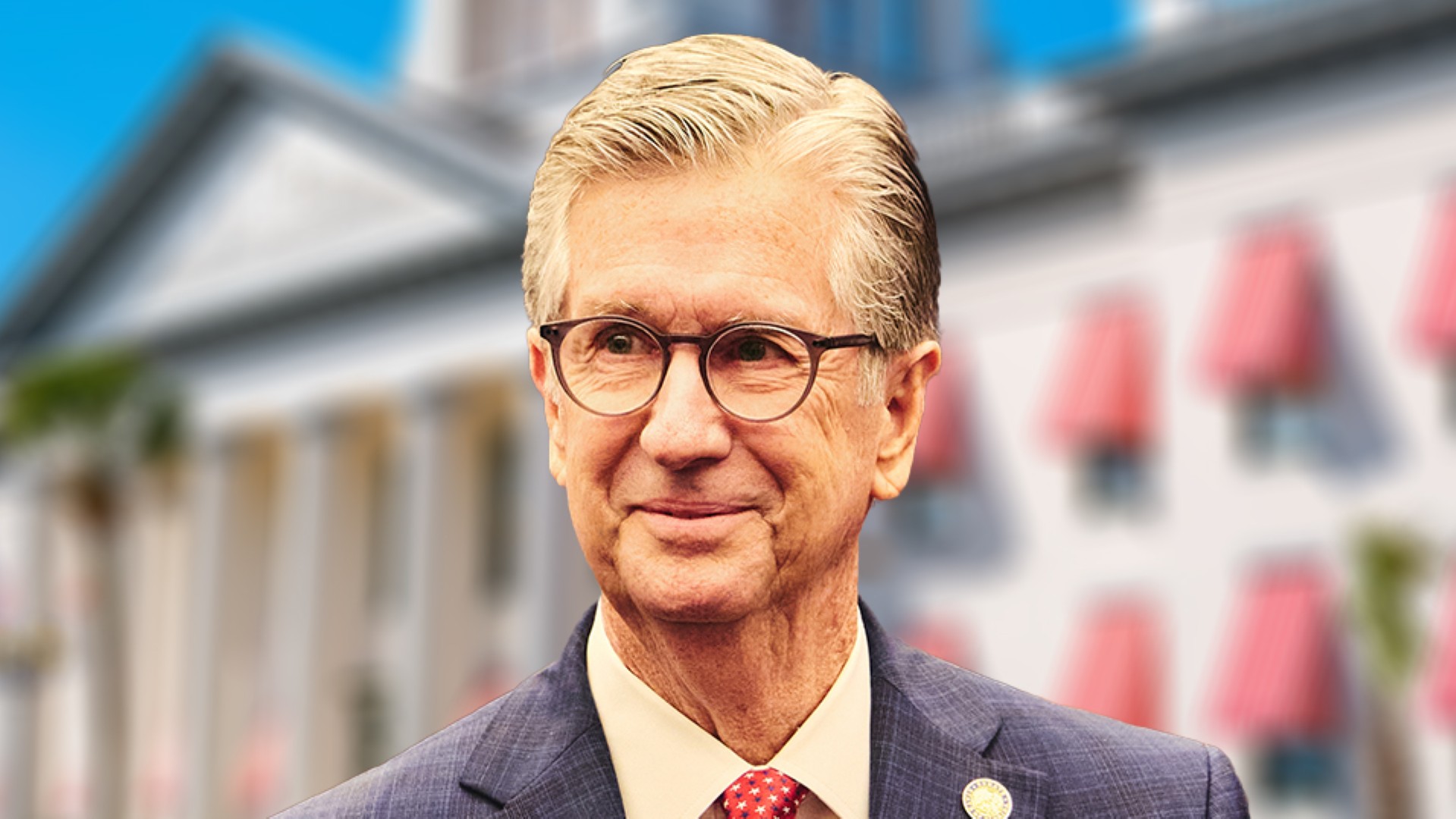
As lawmakers gavel in this week to begin the 2026 Legislative Session, Sen. Jim Boyd says the coming weeks in Tallahassee are likely to be defined by a careful approach to budgeting, targeted fixes to existing laws and an intensifying debate over how Florida funds local government.
Boyd, a Republican who represents Manatee County and parts of Hillsborough County, described the Session as one that should be comparatively steady after recent Sessions marked by sharper conflicts between the Legislature and Gov. Ron DeSantis. Still, he said lawmakers are already preparing for extensive discussions around property taxes, an issue he expects to dominate early debate.
“I think it’ll be a fairly benign Legislative Session this year,” Boyd said. “Sadly, we’ve had some disagreements with the House and the Senate, and the Governor and the House. My goal and overarching desire is for the three of our branches to work well together to do what’s good for our communities.”
“I don’t think there’s anything huge that will come out of this Session in terms of revolutionary legislation or change,” he added. “Property taxes are probably the issue that will be at the forefront of discussion.”
Boyd said property taxes have been a major topic of conversation for months as residents continue to grapple with rising housing costs. While calls for relief have grown louder, he said a full repeal of homestead property taxes is unrealistic without a replacement funding source.
“I think it’s important to talk about property taxes, that’s been a huge topic of discussion for the past six months or so,” Boyd said. “My gut feeling is there’s no way we’re going to be able to totally eliminate homestead property taxes. That would be nice, but there’s so much dependence upon those funds at the local level that we’ll have to figure out how to address those needs if the property taxes were not there to support them.”
Even so, Boyd said he expects lawmakers to advance some form of proposal this year, potentially during a Special Session teased by DeSantis, that could ultimately go before voters in 2026. Any significant changes to property taxes would require a constitutional amendment.
“I do believe there’ll be a proposal that will come out of the Legislature that will go on the ballot in ’26,” Boyd said. “The voters will have a chance to decide.”
Alongside tax policy, Boyd said lawmakers are entering the session with a more cautious approach to spending. Florida’s fiscal position remains strong, he said, pointing to solid bond ratings, continued debt reduction and healthy reserves. But he warned that lawmakers are tightening their grip on discretionary spending as they finalize the state budget.
“This year, project money won’t be quite as plentiful as it has been in the past,” Boyd said. “We’re being very careful and judicious about spending, as we should be.”

That restraint will shape how legislators evaluate local funding requests from cities, counties and nonprofits across the state. Boyd said he has spent years prioritizing projects that local governments cannot easily fund on their own, particularly large infrastructure items tied to growth and storm resilience.
“I’m doing my best to continue to bring dollars back to our community that will make a difference,” Boyd said, while acknowledging that final decisions rest with legislative budget leaders balancing competing requests from 40 Senators and 120 House members.
Boyd has not introduced legislation this year, but said he is closely watching proposals that could have significant impacts on his district, including a bill from Sen. Nick DiCeglie (SB 840).
The bill would revise last year’s storm recovery law, SB 180, which limited local governments’ ability to delay rebuilding after hurricanes but also created unintended consequences for counties and cities, including Manatee, seeking to make broader planning or environmental policy changes. Rep. Alex Andrade is sponsoring the companion bill (HB 1465) in the House.
Boyd defended the original intent of SB 180, saying it was driven by constituent complaints after storms, when residents struggled to obtain basic permits needed to make their homes livable again.
“That has been a topic of discussion,” Boyd said. “The reason for SB 180 was because governments in various parts of the state, our area included, were making it very hard for people to get back in their homes after a storm by dragging out permits or creating challenges, and that’s just unacceptable.”
He said he supports efforts to fix unintended consequences created by the law this Session while preserving its core protections for property owners.
“Once in a while there’s unintended consequences in bills, and we are always open-minded to look at them and see if there’s anything we can do to make it better,” Boyd said.
“I haven’t looked at the details, but I know we will be discussing it in Tallahassee, and I’ll be deeply involved because it’s an important issue,” he added. “I supported SB 180 to begin with, and I certainly support his efforts to try to make it as palatable as possible.”
Boyd said discussions about potential consolidation of services on Anna Maria Island remain ongoing, though he does not expect the Legislature to take action this year. The conversation has focused on whether the island’s three municipalities could consolidate certain services to reduce duplication and costs.
Boyd said he hopes to find resolution outside of the Legislature even though conversations were started through legislative action a couple of years ago. Those talks stalled after recent storms disrupted local operations, but Boyd said he hopes discussions with the cities of Anna Maria, Holmes Beach and Bradenton Beach will resume as recovery continues.
“We have three building departments, we have three police units, we have three zoning and public works. Does it make sense for an island that is 7 miles long to have three of everything? Or could we perhaps consolidate some of those services?” Boyd said.
Boyd is also looking ahead to a Special Session in April on redistricting, although he declined to discuss the topic in detail, citing ongoing legal considerations.
This Session also marks Boyd’s final stretch before he assumes the role of Senate President later this year. He said the position is an honor and noted he is beginning to think about the policy direction he hopes to pursue once he takes the gavel. Boyd also said he is optimistic about working with the House under incoming Speaker Sam Garrison, and emphasized the importance of collaboration between the Legislature and a newly elected Governor.
“It’s an incredible honor, and I’m very humbled by the support of my colleagues to allow me to be the President of the Senate starting next November when we reconvene,” Boyd said. “It’s a daunting task because it’s a big job, but it’s one that I feel I am capable of and ready for.”
“Right now I’m focused on this Session and doing what’s best for our members and my colleagues as I’m the Majority Leader this year,” he added. “Then I’ll start to develop a policy plan and platform for the upcoming two years that will start in November.”
Politics
Daniel Perez warns of tough choices in 2026 as House braces for tax, insurance, drug-cost battles
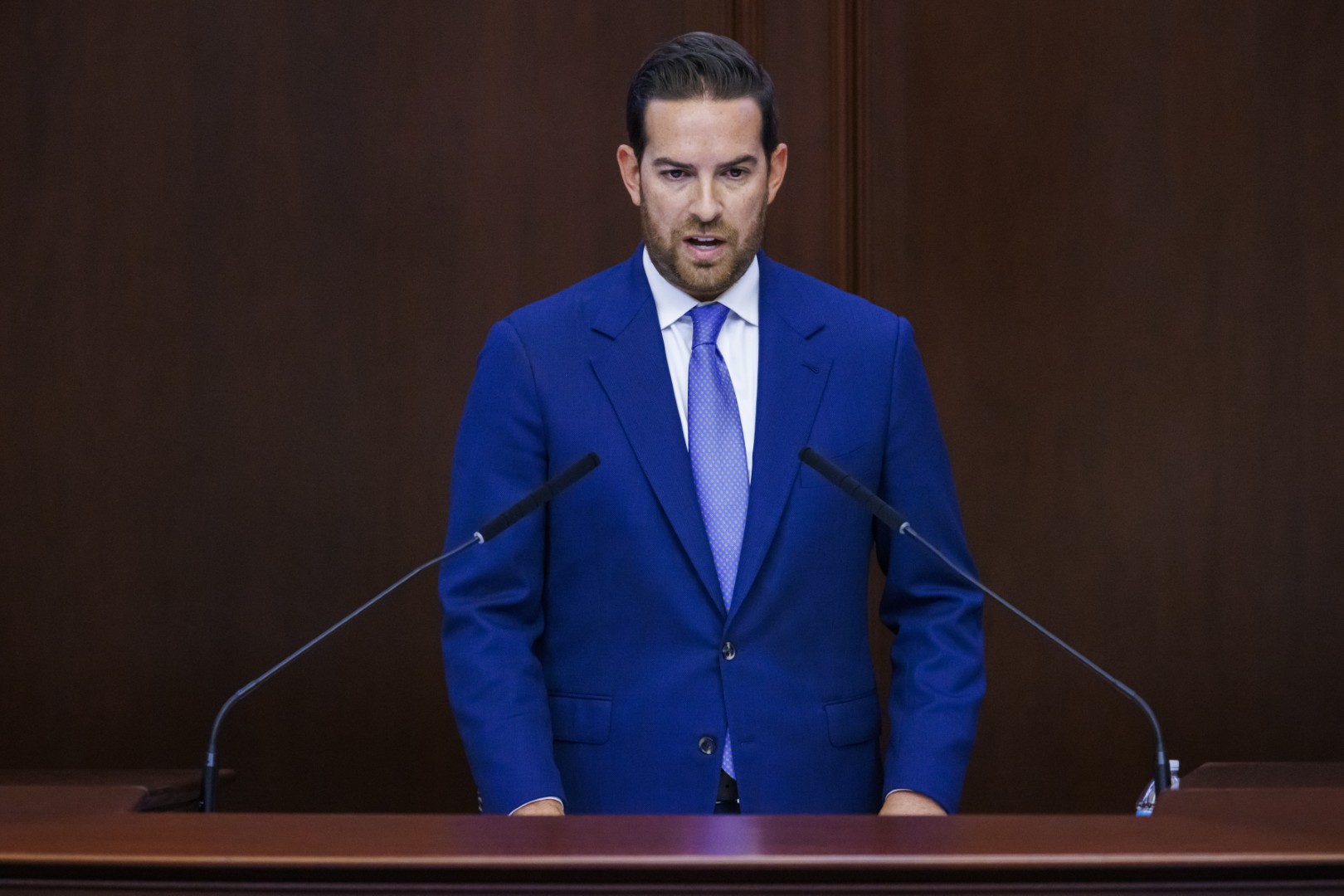
House Speaker Daniel Perez opened the 2026 Legislative Session by casting the chamber’s activities last year as a part of a necessary transition shaped by internal fights, bruising negotiations and a public rupture with Gov. Ron DeSantis.
When he took the gavel in November 2024, he said, House lawmakers entered the subsequent Session “believing that our service here could matter.”
“In the weeks and months that followed,” he continued, “our story took several surprising twists and turns.”
Perez’s message, while reflective, was largely a presaging of what lies ahead this year: a Session dominated by affordability pressures, property tax politics and a budget outlook that could force lawmakers to choose between trimming recurring spending and sustaining popular programs. “Affordability and insurance. Taxes and the economy. Prescription drug prices and the rising cost of public benefits,” Perez said.
“We must ensure Florida stays at the center of our planet’s race for the stars, and that our infrastructure keeps pace with our growth. Every child in Florida, from the unborn to our college graduates, deserves a fair shot at finding their own American Dream.”
The Miami Republican also used the moment to reflect on the volatility of the 2025 Session, when, in his telling, the House “found (its) voice” and “insisted on our independence.”
That included overrides of DeSantis’ budget vetoes, the investigation and dismantling of First Lady Casey DeSantis’ questionable Hope Florida charity, replacing DeSantis’ Special Session on immigration enforcement with one the Legislature devised and, ahead of the 2026 Session, introducing a fleet of bills with concrete property tax proposals while the Governor stalled on issuing his own.
When DeSantis fumed at the House’s open attempt to regain a coequal footing with the executive branch, Perez called the Governor “emotional” and prone to “temper tantrums” while stressing, “I consider him a friend. I consider him a partner.”
Under Perez, the House has also set to follow through on President Donald Trump’s call for mid-decade redistricting — an effort DeSantis and Senate President Ben Albritton also support, but have been slower to act on.
Perez framed the House’s comparative expeditiousness as an alternative to Tallahassee’s transactional culture.

“We learned that words without truth have no meaning. We learned that actions without humility lack consequence,” he said. “We learned that issues we tackle are not easily reducible to a slogan or an idea. … But difficult doesn’t mean impossible, and hard isn’t an excuse for cowardice.”
Those lines land in a Capitol still feeling the aftershocks of 2025, when budget and tax disputes between the House and Senate pushed the 60-day Regular Session into extended overtime. Perez’s friction with Albritton, whom he embraced before the Governor’s State of the State address Tuesday, remains a live factor. The Senate is again pushing Albritton’s “Rural Renaissance” package after it fell apart in the House last year, and Albritton has said he may prefer tackling major property tax relief after the Regular Session, which could collide with House urgency.
Hovering above it all is Perez’s feud with DeSantis, a rivalry that hardened last year and has since only been betrayed by a veneer of civility and common causes. On the most recent flashpoint, redistricting, the Governor this month called for a Special Session in April to redraw congressional lines — markedly later than when Perez views as ideal.
As for what will happen with that undertaking and many other hot-button issues the Legislature faces this year, it’s anyone’s guess, the Speaker said.
“Honestly, I don’t know what is going to happen,” he said. “That’s OK, because the journey is the best part.”
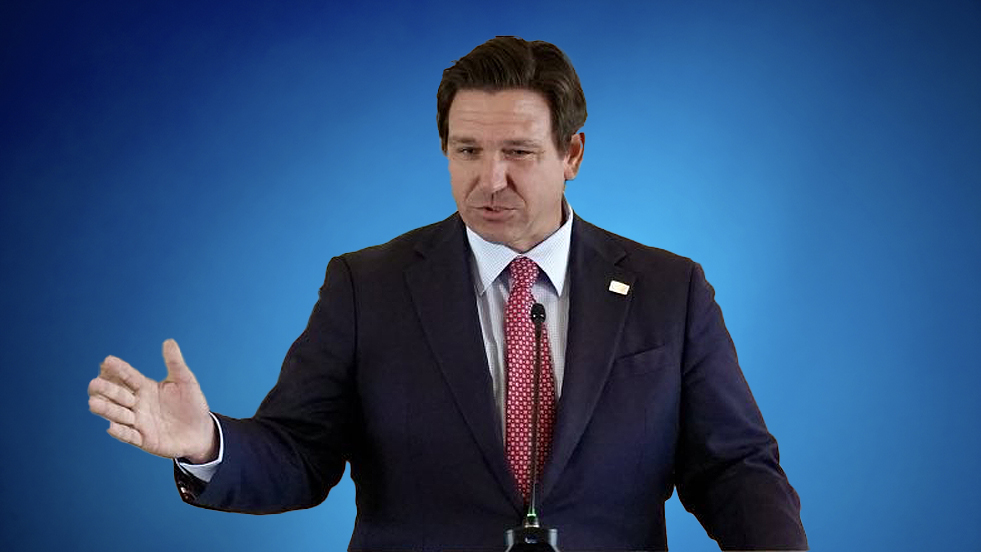
In his final State of the State address as Governor, a defiant Ron DeSantis defended the controversial Hope Florida charity and proclaimed that he has delivered “big results” during his time in office.
“We have set the standard for the rest of the country to follow. We are the Free State of Florida,” DeSantis said in his 30-minute speech addressing lawmakers on the opening day of the 2026 Session.
DeSantis urged the Legislature to pass bills on illegal immigration, eliminating diversity, equity and inclusion programs, expanding gun rights and supporting the state’s rural areas.
“My message is simple. Get the bills to my desk,” DeSantis said. “In the spirit of 1776, I’m happy to put my John Hancock on those pieces of legislation.”
In the debate on how to provide property tax relief, DeSantis’ tone has, at times, been combative and critical of his own political party.
On Tuesday, his approach was different.
“The Legislature has the ability to place a measure on the ballot to provide transformational relief for taxpayers. Let’s resolve to all work together, get something done and let the people have a say,” DeSantis said.
DeSantis credited his wife, First Lady Casey DeSantis, and Hope Florida for helping Floridians get off public assistance to save the state $130 million annually, he said.
“We have proven that a hand up is better than a handout,” DeSantis said.
Following DeSantis’ speech, Democrats struck back to offer their own take on the Hope Florida scandal.

“The Governor remains completely out of touch with reality. Eight years of his ineffective and dangerous leadership has left Florida less affordable and more corrupt,” Senate Democratic Leader Lori Berman said. She said millions of dollars were illegally funneled to a political committee controlled by DeSantis’ then Chief of Staff, James Uthmeier. Berman noted that Uthmeier was later appointed by DeSantis to be Florida’s Attorney General.
In the rest of the State of the State address, DeSantis called for oversight on artificial intelligence as he warned about the new technology’s dangers.
“Artificial intelligence is touted as being the key to curing cancer and expanding America’s military edge over arrivals, and perhaps this will be true. But this technology also threatens to upend key parts of our economy in ways that could leave many Americans out of work and with consumers footing the bill for the cost of power-intensive data centers,” DeSantis said.
“As AI chatbots have already been linked to teen suicides, it can also further devolve our society into a focus not on substance, but on online slop.”
The state has already turned over 20,000 undocumented immigrants to the federal government to be deported, DeSantis said.
Before the history books weigh in on the legacy of the DeSantis administration, the Governor described what he called a fiscally responsible state that promotes school choice and is winning cultural wars.
The state said the state has more than tripled its rainy-day fund and paid off nearly half of the state’s taxpayer supported debt, DeSantis said.
“Because the Legislature has supported efforts to accelerate repayment of this debt, we’ve saved more than $1 billion on principal and interest costs,” DeSantis said. “We’ve defeated attempts to force boys into girls’ sports, to inject gender ideology into elementary schools and deny parents the right to direct the education and upbringing of their children. We have ensured that our schools have a duty to educate, not a right to indoctrinate.”
One of the state’s crowning achievements has been Everglades restoration, DeSantis said.
“Even the flamingos have returned inside the Glades,” DeSantis said. “This has been the largest environmental restoration in the entire country. You can now walk into the swamp, sit on a cypress stump and see nature healing. The ghost of Osceola need cry no more.”
With America’s semiquincentennial upon us, DeSantis weaved in references to the Founding Fathers, a favorite topic of his, throughout the speech.
“We are the keepers of the flame of liberty that burned in Philadelphia in July of 1776,” DeSantis said. “We will not allow the flame to go out. We will answer the call. We will go forward with courage. We will take bold action. We will get the job done.”
Former Republican Rep. Rick Roth added nearly $165,000 last quarter toward his bid for Senate District 26. All but $15,000 came from his bank account.
His lone Democratic opponent in the contest, former Rep. David Silvers, raised about $48,000, all from outside sources.
Heading into 2026, both candidates enjoyed six-figure war chests in the race to succeed Senate Democratic Leader Lori Berman, who has represented Palm Beach County in the upper chamber since 2018.
Roth, who represented the county in the House from 2016 to 2024, eschewed his political committee, Palm Beach Prosperity Fund, in amassing funds between Oct. 1 and Dec. 31, raising solely through his campaign account.
Beyond the $150,000 self-funded infusion to his campaign, Roth received 44 contributions in the fourth quarter of 2025.
Several came from political committees. He accepted $1,000 apiece from Inverness Republican Sen. Ralph Massullo’s political committee, Better Lives for Floridians, and Conservatives for Effective Government, a PC run by consultant David Ramba.
Friends of Rachel Plakon, the PC of Lake Mary Republican Rep. Rachel Plakon, gave $750. Florida Always First, a PC that backed former Republican Rep. Alina Garcia, now Miami-Dade County’s Supervisor of Elections, kicked in $500.
Industry interests gave too. Roth received $1,000 from Clewiston-based Berner Oil Inc., Delray Beach-based plant nursery Atchison Exotics Inc. and the Palm Beach Kennel Club. Perry Farms, based in Moore Haven, gave $750.
Roth spent $2,668 in Q4, leaving himself with about $288,000 by New Year’s Day. The lion’s share of his spending, $2,266, went to St. Petersburg-based Direct Mail Systems for advertising.
He also spent about $300 on a licensing fee and $30 on checks. The rest covered bank and donation-processing fees.

Silvers, who represented Housed District 89 from 2016 to 2024, collected $11,000 through his campaign account and $36,800 through his political committee, Friends of David Silvers, in Q4.
He also spent $30,300, leaving about $195,000 in his coffers by the quarter’s end.
His biggest gain, a $20,000 check, came from motorsports driver and auto magnate Rodin Younessi. His second-biggest gain, a $5,000 contribution, came from Miami-headquartered Southern Glazer’s Wine and Spirits.
Silvers received $3,500 from firefighter unions, $2,000 from the Florida OBGYN PAC and $1,000 from the International Longshoreman Association. Humana Inc. gave $2,500.
From the government relations sector, Silvers took $1,000 apiece from Capitol Alliance Group, Rubin Turnbull & Associates, TSE Consulting LLC, Florida Partners LLC, Lewis Longman & Walker, Lisa Miller & Associates and Venture PAC, a political committee run by Jones Walker LLP Director of Strategy and Management Chris Moya.
His Q4 spending went almost exclusively to consulting, including $15,000 to Tallahassee-based ENH Industries Inc., $10,000 to Tampa-based Renaissance Campaign Strategies and $5,250 to West Palm Beach-based Cornerstone Solutions.
The rest covered bank fees.
A third candidate, Republican lawyer Stephen Iacullo, filed for the SD 26 race Oct. 23, 2025, but did not file his Q4 campaign finance report by Monday’s deadline, according to the Division of Elections website.
SD 26 covers a southern portion of Palm Beach County, spanning the inland municipalities of Belle Glade, Golf, South Bay and Wellington; coastal Briny Breezes, Delray Beach, Highland Beach and Ocean Ridge; and a northern part of Boca Raton.
The 2026 Primary is Aug. 18, followed by the General Election on Nov. 3.


Scott Adams, Dilbert creator who went from cubicle wars to culture wars, posts open letter to time with his death at 68

Singer Julio Iglesias Under Investigation in Spain for Alleged Sexual Assault

The Perfume Shop does it again with big Christmas sales as Dior, Carolina Herrera, Chanel top the charts
-

 Politics8 years ago
Congress rolls out ‘Better Deal,’ new economic agenda
-
Entertainment8 years ago
New Season 8 Walking Dead trailer flashes forward in time
-
Politics8 years ago
Poll: Virginia governor’s race in dead heat
-
Politics8 years ago
Illinois’ financial crisis could bring the state to a halt
-
Entertainment8 years ago
The final 6 ‘Game of Thrones’ episodes might feel like a full season
-
Entertainment8 years ago
Meet Superman’s grandfather in new trailer for Krypton
-
Business8 years ago
6 Stunning new co-working spaces around the globe
-
Tech8 years ago
Hulu hires Google marketing veteran Kelly Campbell as CMO