Connect with us

Business

Jensen Huang tells Stanford students their high expectations may make it hard for them to succeed

Published

on


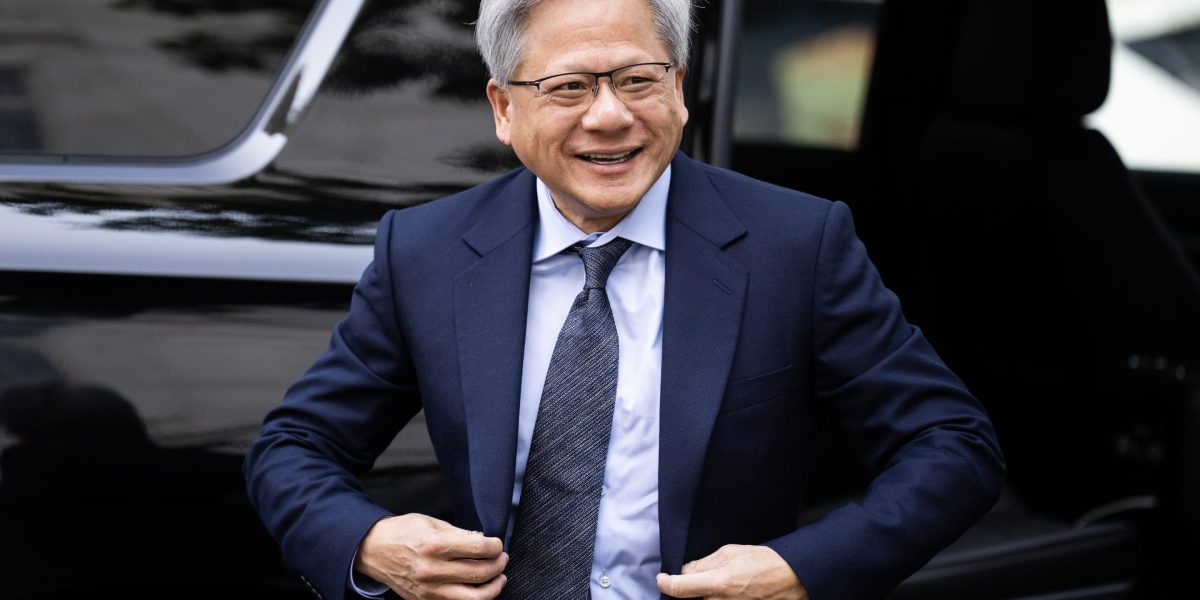
We are often told that setting the bar high is key to success. After all, if you shoot for the moon and miss, at least you’ll land with the stars. But Nvidia’s CEO Jensen Huang wants privileged Gen Z grads to lower their expectations. 

“People with very high expectations have very low resilience—and unfortunately, resilience matters in success,” Huang said during an interview with the Stanford Graduate School of Business. “One of my great advantages is that I have very low expectations.”

Indeed, as the billionaire boss pointed out, those at elite institutions like Stanford probably have higher expectations for their future than your average Joe. 

The university is one of the most selective in the United States—it ranks third best in the country, according to the QS World University Rankings, and the few students who get picked to study there are charged more than $68,000 in tuition fees for the premium, compared to the average $38,270 per annum cost.

But, unfortunately for those saddled with student debt, not even the best universities in the world can teach you resilience.

“I don’t know how to teach it to you except for I hope suffering happens to you,” Huang added.

Huang overcame adversity to succeed

Huang’s advice for America’s next-gen elite comes from a place of experience: His life now is a world away from his childhood, which was, by his own admission, steeped in adversity. 

The tech genius—who with a net worth of $155 billion is one of the world’s wealthiest people—was born in Taiwan in 1963 and spent the bulk of his early life in Thailand, before moving to the U.S. at 9 years old.

His serendipitous Stateside move came after his dad, who worked for an air conditioner manufacturer, did some training in the country and set his sights on the American Dream. 

“I was fortunate that I grew up with my parents providing a condition for us to be successful on the one hand,” he said. “But there were plenty of opportunities for setbacks and suffering.”

One example of Huang’s hardship was his daily high school experience: The teenager had to cross a dangerous footbridge with missing planks over a river to get to his public school in Kentucky, where he was then relentlessly tormented. 

“The way you described Chinese people back then was ‘Ch-nks,’ ” Huang previously told the New Yorker, adding that bullies even tried to toss him off the bridge.

In the Stanford interview, he also credited his success and work ethic with his first job at Denny’s, where he was the “best dishwasher” before getting promoted to busboy and giving that his “best” also.

“I never left the station empty-handed. I never came back empty-handed. I was very efficient,” Huang added. “Anyways, eventually I became a CEO. I’m still working on being a good CEO.”

Coincidentally, it was at Denny’s where he cooked up the idea for a company that specialized in computer chips to render graphics, over a Super Bird sandwich with his friends Chris Malachowsky and Curtis Priem. The trio went on to cofound Nvidia, and the rest is history. 

‘I wish upon you ample doses of pain and suffering’

For those fortunate enough to never have personally experienced hardship growing up, Huang doesn’t have any advice on how to welcome more of it into your life now. But he did have some advice on embracing tough times. 

“I don’t know how to do it [but] for all of you Stanford students, I wish upon you ample doses of pain and suffering,” Huang said. “Greatness comes from character and character isn’t formed out of smart people—it’s formed out of people who suffered.” 

It’s why despite Nvidia’s success—the company has a $2 trillion market cap—Huang would still welcome hardship at his organization. 

“To this day I use the phrase ‘pain and suffering’ inside our company with great glee,” he added. “I mean that in a happy way because you want to refine the character of your company.”

Essentially, if you want your workforce to always be on their A game, don’t let them rest on their laurels.

A version of this story was published on Fortune.com on March 13, 2024.


Source link

Continue Reading

Business

How Trump became a death knell for the 85-year relationship between farmers and the federal government

Published

on


President Donald Trump appears to have upended an 85-year relationship between American farmers and the United States’ global exercise of power. But that link has been fraying since the end of the Cold War, and Trump’s moves are just another big step.

During World War II, the U.S. government tied agriculture to foreign policy by using taxpayer dollars to buy food from American farmers and send it to hungry allies abroad. This agricultural diplomacy continued into the Cold War through programs such as the Marshall Plan to rebuild European agriculture, Food for Peace to send surplus U.S. food to hungry allies, and the U.S. Agency for International Development, which aimed to make food aid and agricultural development permanent components of U.S. foreign policy.

During that period, the United States also participated in multinational partnerships to set global production goals and trade guidelines to promote the international movement of food – including the U.N.’s Food and Agriculture Organization, the International Wheat Agreement and the General Agreement on Tariffs and Trade.

When U.S. farmers faced labor shortfalls, the federal government created guest-worker programs that provided critical hands in the fields, most often from Mexico and the Caribbean.

At the end of World War II, the U.S. government recognized that farmers could not just rely on domestic agricultural subsidies, including production limits, price supports and crop insurance, for prosperity. American farmers’ well-being instead depended on the rest of the world.

Since returning to office in January 2025, Trump has dismantled the U.S. Agency for International Development. His administration has also aggressively detained and deported suspected noncitizens living and working in the U.S., including farmworkers. And he has imposed tariffs that caused U.S. trading partners to retaliate, slashing international demand for U.S. agricultural products.

Trump’s actions follow diplomatic and agricultural transformations that I research, and which began with the fall of the Soviet Union in 1991.

Feed the world, save the farm

Even before the nation’s founding, farmers in what would become the United States staked their livelihood on international networks of labor, plants and animals, and trade.

Cotton was the most prominent early example of these relationships, and by the 19th century wheat farmers depended on expanding transportation networks to move their goods within the country and overseas.

Workers load cattle on a train for shipment to market in the late 19th century. Bettmann via Getty Images

But fears that international trade could create economic uncertainty limited American farmers’ interest in overseas markets. The Great Depression in the 1930s reinforced skepticism of international markets, which many farmers and policymakers saw as the principal cause of the economic downturn.

World War II forced them to change their view. The Lend-Lease Act, passed in March 1941, aimed to keep the United States out of the war by providing supplies, weapons and equipment to Britain and its allies. Importantly for farmers, the act created a surge in demand for food.

And after Congress declared war in December 1941, the need to feed U.S. and allied troops abroad pushed demand for farm products ever higher. Food took on a significance beyond satisfying a wartime need: The Soviet Union, for example, made special requests for butter. U.S. soldiers wrote about the special bond created by seeing milk and eggs from a hometown dairy, and Europeans who received food under the Lend-Lease Act embraced large cans of condensed milk with sky-blue labels as if they were talismans.

Ropes hoist large boxes aboard a ship.

Crates of American hams, supplied through the Lend-Lease Act, are loaded on a ship bound for Britain in 1941. Bettmann via Getty Images

Another war ends

But despite their critical contribution to the war, American farmers worried that the familiar pattern of postwar recession would repeat once Germany and Japan had surrendered.

Congress fulfilled farmers’ fears of an economic collapse by sharply reducing its food purchases as soon as the war ended in the summer of 1945. In 1946, Congress responded weakly to mounting overseas food needs.

Large bags are stacked in a pile, each with a tag on it saying it came from the U.S. to help Europe.

Bags of Marshall Plan flour wait in New York for shipment to Austria in 1948. Ann Ronan Picture Library/Photo12/Universal Images Group via Getty Images

More action waited until 1948, when Congress recognized communism’s growing appeal in Europe amid an underfunded postwar reconstruction effort. The Marshall Plan’s more robust promise of food and other resources was intended to counter Soviet influence.

Sending American food overseas through postwar rehabilitation and development programs caused farm revenue to surge. It proved that foreign markets could create prosperity for American farmers, while food and agriculture’s importance to postwar reconstruction in Europe and Asia cemented their importance in U.S. foreign policy.

Farmers in the modern world

Farmers’ contribution to the Cold War shored up their cultural and political importance in a rapidly industrializing and urbanizing United States. The Midwestern farm became an aspirational symbol used by the State Department to encourage European refugees to emigrate to the U.S. after World War II.

American farmers volunteered to be amateur diplomats, sharing methods and technologies with their agricultural counterparts around the world.

By the 1950s, delegations of Soviet officials were traveling to the Midwest, including Soviet premier Nikita Khrushchev’s excursion to Iowa in 1959. U.S. farmers reciprocated with tours of the Soviet Union. Young Americans who had grown up on farms moved abroad to live with host families, working their properties and informally sharing U.S. agricultural methods. Certain that their land and techniques were superior to those of their overseas peers, U.S. farmers felt obligated to share their wisdom with the rest of the world.

The collapse of the Soviet Union undermined the central purpose for the United States’ agricultural diplomacy. But a growing global appetite for meat in the 1990s helped make up some of the difference.

U.S. farmers shifted crops from wheat to corn and soybeans to feed growing numbers of livestock around the world. They used newly available genetically engineered seeds that promised unprecedented yields.

Expecting these transformations to financially benefit American farmers and seeing little need to preserve Cold War-era international cooperation, the U.S. government changed its trade policy from collaborating on global trade to making it more of a competition.

In a large auditorium, people sit at a long table on a stage and sign papers.

World leaders sign the Marrakesh Agreement, creating the World Trade Organization, in 1994. Jacques Langevin/Sygma/Sygma via Getty Images

The George H.W. Bush and Clinton administrations crafted the North American Free Trade Agreement and the World Trade Organization to replace the general agreement on trade and tariffs. They assumed American farmers’ past preeminence would continue to increase farm revenues even as global economic forces shifted.

But U.S. farmers have faced higher costs for seeds and fertilizer, as well as new international competitors such as Brazil. With a diminished competitive advantage and the loss of the Cold War’s cooperative infrastructure, U.S. farmers now face a more volatile global market that will likely require greater government support through subsidies rather than offering prosperity through commerce.

That includes the Trump administration’s December 2025 announcement of a US$12 billion farmer bailout. As Trump’s trade wars continue, they show that the U.S. government is no longer fostering a global agricultural market in which U.S. farmers enjoy a trade advantage or government protection – even if they retain some cultural and political significance in the 21st century.

Peter Simons, Lecturer in History, Hamilton College

This article is republished from The Conversation under a Creative Commons license. Read the original article.

The Conversation


Source link

Continue Reading

Business

‘No way, no how’: Dimon says he’d never run the Fed but ‘would take the call’ to lead Treasury

Published

on


As questions swirl over who will replace Fed Chair Jerome Powell when his term ends in May, Jamie Dimon is taking his name off the list of potential candidates. 

“Chairman of the Fed, I’d put in the absolutely, positively no chance, no way, no how, for any reason,” the JPMorgan CEO said when asked at a Chamber of Commerce meeting on Thursday if he’d ever consider the role. “I would so much more prefer this job than that job. That’s a hard job, but I don’t want to do that job,” he later added. 

“Hard job” may be an understatement given unprecedented pressures on the Fed since President Donald Trump returned to the White House. Last Friday, the Justice Department launched a criminal investigation into the Federal Reserve and Powell’s testimony on the renovation of Fed office buildings. The probe follows a year of increased pressure on the central bank from the Trump administration to lower interest rates. 

In August, the president attempted to unseat Fed governor Lisa Cook over alleged mortgage fraud, the first time a president has fired a sitting governor in the central bank’s 112-year history. A federal court ruled that Cook could keep her seat while she fights the firing, but Cook’s future remains uncertain as the Supreme Court hears the Trump administration’s appeal later this month. 

In addition, the Fed faces the tricky task of trying to prop up the labor market by lowering interest rates without reigniting inflation.

Dimon said he would consider being Treasury secretary if asked, but he’s hesitant to take a job working under someone else. 

“I would take the call, consider it, and think about why and what they want. But what they want and how they want to operate would be important to me,” Dimon said. “But I’ve been my own boss for pretty much 25 years, and I like it that way.” 

This is not the first time Dimon’s name has been mentioned as a potential cabinet secretary. In 2024, then President-elect Trump announced that Dimon would not be in his administration after speculation that he would be nominated for Treasury secretary. Dimon agreed that he wouldn’t be the best fit, saying “I’m not about ready to start” having a boss again. 

Earlier this week, it seemed that Dimon and Trump were at odds after Dimon warned chipping away at the central bank’s independence “is not a good idea.”    

Trump later called Dimon out, saying “Jamie Dimon probably wants higher rates. Maybe he makes more money that way.” 

On Thursday, Dimon reiterated his opposition to interfering with the Fed’s independence because “it will drive rates higher not lower,” but said he and Trump were on the same page. 

“Everyone I know, including the president of the United States, says we need an independent Fed board,” Dimon said. “Most people I know, including the president of the United States, speak up about their opinion, which they’re free to do.”

Dimon and other CEOs such as Bank of America’s Brian Moynihan and Citigroup’s Jane Fraser did just that this week after Trump called for a one-year 10% cap on credit card interest rates. Dimon said that would limit access to credit and adversely affect people who lower credit credits. 

“If it happened the way it was described, it would be dramatic,” Dimon said, speaking to analysts during the earnings call on Tuesday. “It would be dramatic on subprime.”


Source link

Continue Reading

Business

Vail Resorts reports record‑low snowpack, forcing the company to lower its 2026 earnings outlook

Published

on


Good luck trying to wash your hands, your face, your hair with snow; there’s not nearly enough of it to do all that. Vail Resorts is lowering its expected 2026 earnings after some of the lowest snowpack in recorded history has cratered visits at its North American locations by nearly 20% since the start of the season through January 4.

Skiers staying home is taking its toll: Vail’s ski school revenue has dropped 14.9% since the start of the season compared to last year, and dining revenue fell nearly 16%, the company said in an investor statement released yesterday.

Just how dry is it? A rare polar vortex and La Niña combination dumped record amounts of snow on the East Coast this year…while starving everywhere else. The company said snowfall during November and December at its Rocky Mountain locations was down almost 60% compared to the area’s historical 30-year average. Western US resorts were faring only slightly better, with 50% less snowfall than average.

  • On Tuesday, Vail Mountain reported its worst snowpack since it started keeping records in 1978, with just 4.4 inches.
  • Only about 11% of Vail Resort’s terrain in the Rocky Mountains was open last month.

Zoom out: The wipeout comes amid the return of CEO Rob Katz, who revolutionized the ski business by consolidating resort ownership and introducing the Epic Pass, after years of the company faltering financially without him in the C-suite.—MM

This report was originally published by Morning Brew.

Join us at the Fortune Workplace Innovation Summit May 19–20, 2026, in Atlanta. The next era of workplace innovation is here—and the old playbook is being rewritten. At this exclusive, high-energy event, the world’s most innovative leaders will convene to explore how AI, humanity, and strategy converge to redefine, again, the future of work. Register now.


Source link

Continue Reading

Trending

Copyright © Miami Select.