Connect with us

Politics

Jeff Brandes: Florida’s Department of Chaos
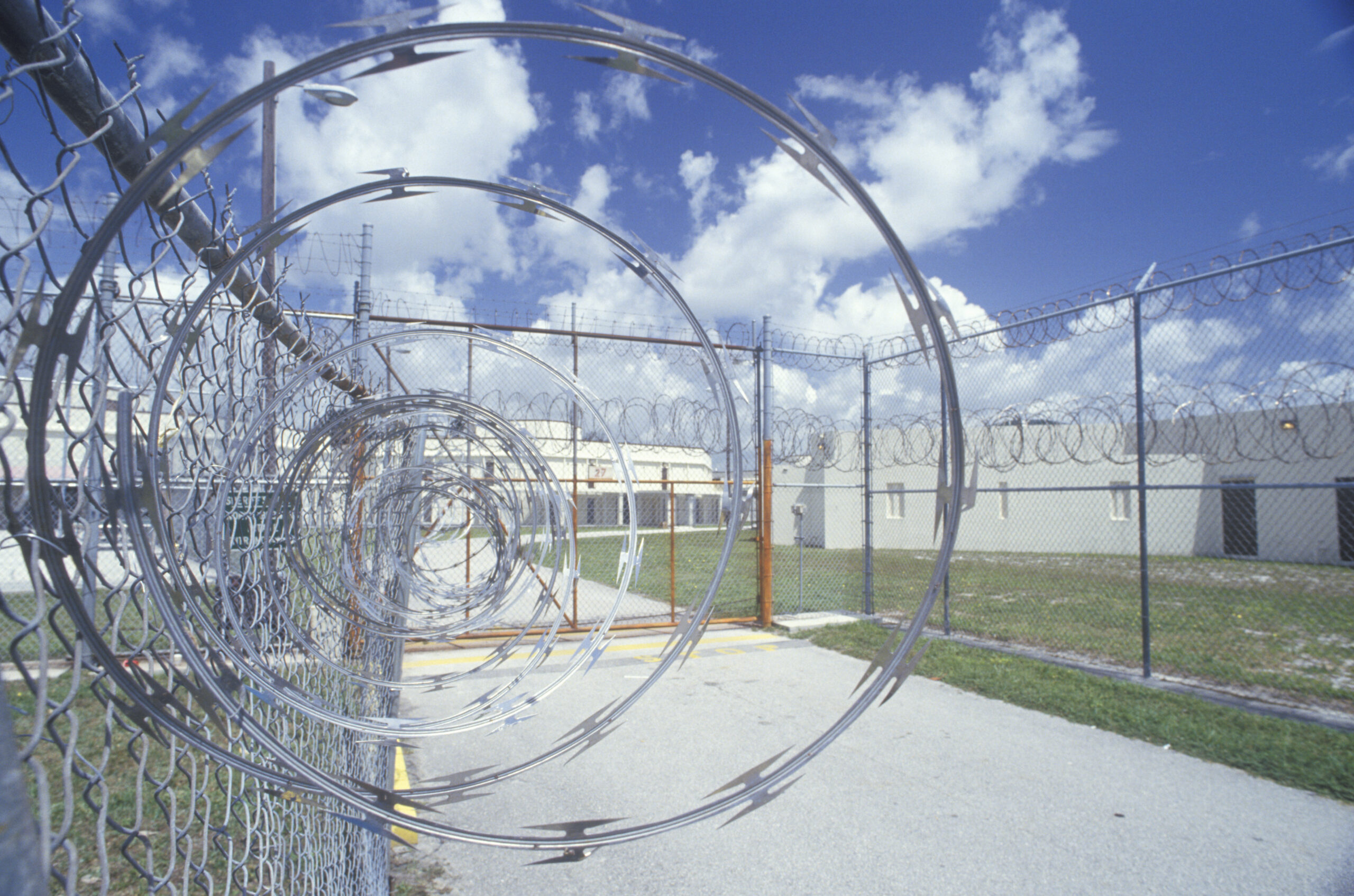
Published

on


If you want to understand a system in crisis, watch the person trying to hold it together.

Last month, Florida Corrections Secretary Ricky Dixon stood before state lawmakers and asked for an additional $512 million just to keep the system functioning next year. That request did not include raises for some of the lowest-paid correctional officers in the country.

His voice, somewhere between anger and fear, cracked as he explained why: Ten thousand more inmates since he took the job, no increase in staff, nineteen-year-old rookies with two weeks of training supervising 150 inmates at a time, and an overtime bill spiraling toward $150 million a year.

There was a moment when Dixon paused and said, “If I continue to do this job.” It sounded like a man staring at the abyss.

But this moment is not really about Dixon. It is about a system that has been rotting in plain sight.

Advertisement

Florida imprisons 89,000 people. Most Floridians will never step inside a prison. They will not see cells leaking roofs, medical units overflowing, or exhausted young officers forced to choose between vigilance and survival. They will not hear the clatter of keys that signal a shift change, or the silence that follows when everyone knows there are not enough officers to respond if something goes wrong.

Inside, the numbers have turned deadly. One officer for every 150 inmates. Assaults up 50% on both officers and inmates. Seventy percent of officers have fewer than three years of experience. This is not a workforce. It is a warning siren.

And yet the crisis continues because it has been treated as someone else’s problem.

This is our state leader’s greatest failure. Not because of what they have done, but because of what they have refused to do. Most have visited disaster zones, schools, and stadiums, but never the dorms of the largest state agency. Never stood eye to eye with the terrified teenager responsible for keeping 150 men alive. Never witnessed how razor wire and concrete turn desperation into violence.

Instead, Florida’s prisons have become a political blind spot, a place where the state hides what it does not want to face.

We have been warned before. A previous Secretary of Corrections handed out a book titled The Devil’s Butcher Shop, a chronicle of how New Mexico’s prison system collapsed into bloodshed after decades of neglect. Florida read that book, then ignored every warning. The butcher shop didn’t close. It just moved south.

An independent assessment by KPMG, commissioned by lawmakers, called for $2 billion immediately and up to $12 billion over time to modernize the system. They did nothing. They watched other southern states raise correctional salaries by tens of thousands of dollars to avoid collapse. They did nothing. They saw overtime surge, staffing crumble, and inmate numbers rise. They did nothing.

If the Devil has a butcher shop, Florida’s leaders have been sharpening the cleaver.

We pretend prisons are sealed off from the world. They are not. Most inmates will be released. If the state spends years nurturing fear, trauma, and chaos, that is exactly what will return to our neighborhoods.

The truth is simple. Florida is living one emergency away from collapse. A riot. A hurricane evacuation gone wrong. A mass staffing failure that forces emergency releases because there is no one left to guard the gates. The only thing preventing that nightmare today is the Florida National Guard, which has been used to prop up staffing levels. The Guard is the thin line between order and disaster.

Real leadership means confronting danger before it explodes. Florida has not had that leadership.

Florida must build a different system. And that begins with accountability.

The state must create an Independent Corrections Commission, a permanent oversight body with the power to monitor staffing and safety conditions, consolidate decaying facilities, recommend evidence-based sentencing reform, expand supervised release for those who have aged out of crime, and enforce basic safety and care standards.

Right now, a four-billion-dollar public safety institution operates without independent scrutiny. No major state agency handling this much violence and risk should be allowed to supervise itself.

We can fix this. We must pay officers competitively. We must close the most obsolete facilities and replace them with secure, manageable ones. We must review sentences that no longer protect the public.

But first, we must stop pretending we do not know what is happening. We must walk the dorms. We must look into the eyes of the officers who fear they will not survive their shift. We must acknowledge that Florida’s prison system is no longer a place where justice is served. It is a place where chaos is manufactured.

The most chilling part of Dixon’s testimony was not his plea for money. It was his warning.

“We cannot keep going in the direction we are going in.”

He is right.

The state’s leaders have left the department in solitary confinement for decades, and the madness is showing.

Because we no longer have a Department of Corrections.

We have a Department of Chaos.

___

Former state Sen. Jeff Brandes is the founder and president of the Florida Policy Project.


Source link

Continue Reading

Politics

Early voting underway for Miami Mayor’s runoff between Eileen Higgins, Emilio González

Published

on


Early voting is underway in Miami as former County Commissioner Eileen Higgins and former City Manager Emilio González enter the final stretch of a closely watched Dec. 9 mayoral runoff.

The two candidates rose from a 13-person field Nov. 4, with Higgins winning about 36% of the vote and González taking 19.5%. Because neither surpassed 50%, Miami voters must now choose between contrasting visions for a city grappling with affordability, rising seas, political dysfunction and rapid growth.

Both promise to bring more stability and accountability to City Hall. Both say Miami’s permitting process needs fixing.

Higgins, a mechanical engineer and eight-year county commissioner with a broad, international background in government service, has emphasized affordable housing — urging the city to build on public land and create a dedicated housing trust fund — and supports expanding the City Commission from five to nine members to improve neighborhood representation.

She also backs more eco-friendly and flood-preventative infrastructure, faster park construction and better transportation connectivity and efficiency.

She opposes Miami’s 287(g) agreement with U.S. Immigration and Customs Enforcement, calling recent enforcement “inhumane and cruel,” and has pledged to serve as a full-time mayor with no outside employment while replacing City Manager Art Noriega.

González, a retired Air Force colonel, former Director of U.S. Citizenship and Immigration Services and ex-CEO of Miami International Airport, argues Miami needs an experienced administrator to fix what he calls deep structural problems.

He has made permitting reform a top priority, labeling the current system as barely functioning, and says affordability must be addressed through broader tax relief rather than relying on housing development alone.

He supports limited police cooperation with ICE and wants Miami to prepare for the potential repeal of homestead property taxes. Like Higgins, he vows to replace Noriega but opposes expanding the commission.

He also vows, if elected, to establish a “Deregulation Task Force” to unburden small businesses, prioritizing capital investments that protect Miamians, increasing the city’s police force, modernizing Miami services with technology and a customer-friendly approach, and rein in government spending and growth.

Notably, Miami’s Nov. 4 election this year might not have taken place if not for González, who successfully sued in July to stop officials from delaying its election until 2026.

The runoff has drawn national attention, with major Democrats like Democratic National Committee Chair Ken Martin, Arizona U.S. Rep. Ruben Gallego and Orange County Mayor-turned-gubernatorial candidate Jerry Demings and his wife, former Congresswoman Val Demings, backing Higgins and high-profile Republicans like President Donald Trump, Gov. Ron DeSantis and U.S. Sen. Rick Scott lining up behind González.

For both parties, Miami’s outcome is seen as a bellwether heading into a volatile 2026 cycle, in a city where growth, climate challenges and governance failures remain top concerns for nearly 500,000 residents.

Higgins, a 61-year-old Democrat who was born in Ohio and grew up in New Mexico, entered the race as the longest-serving current member of the Miami-Dade Commission. She won her seat in a 2018 Special Election and coasted back into re-election unopposed last year.

She chose to vacate her seat three years early to run for Mayor.

She worked for years in the private sector, overseeing global manufacturing in Europe and Latin America, before returning stateside to lead marketing for companies such as Pfizer and Jose Cuervo.

In 2006, she took a Director job with the Peace Corps in Belize, after which she served as a foreign service officer for the U.S. State Department under President Barack Obama, working in Mexico and in economic development areas in South Africa.

Since filing in April, Higgins raised $386,500 through her campaign account. She also amassed close to $658,000 by the end of September through her county-level political committee, Ethical Leadership for Miami. Close to a third of that sum — $175,000 — came through a transfer from her state-level PC.

She also spent about $881,000.

If elected, Higgins would make history as Miami’s first woman Mayor.

González, a 68-year-old born in Cuba, brought the most robust government background to the race. A U.S. Army veteran who rose to the rank of colonel, he served as Miami City Manager from 2017 to 2020, CEO of Miami International Airport (MIA) from 2013 to 2017 and as Director of Citizenship and Immigration Services at the U.S. Department of Homeland Security under President George W. Bush.

In private life, he works as a partner at investment management firm RSMD Investco LLC. He also serves as a member of the Treasury Investment Council under the Florida Department of Financial Services.

Since filing to run for Mayor in April, he raised nearly $1.2 million and spent about $1 million.

Election Day is Tuesday.


Source link

Continue Reading

Politics

Paul Renner doubles down on Cory Mills critique, urges more Republicans to join him

Published

on


Mills was a day-one Byron Donalds backer in the gubernatorial race.

A former House Speaker and current candidate for Governor is leading the charge for Republicans as scandal swirls around a Congressman.

Saying the “evidence is mounting” against Rep. Cory MillsPaul Renner says other candidates for Governor should “stand up and be counted” and join him in the call for Mills to leave Congress.

Renner made the call earlier this week.

But on Friday, the Palm Coast Republican doubled down.

He spotlighted fresh reporting from Roger Sollenberger alleging that Mills’ company “appears to have illegally exported weapons while he serves in Congress, including to Ukraine,” that Mills failed to disclose conflicts of interest, “tried to fistfight other Republican members of Congress, and lied about his party stature to bully other GOP candidates out of primaries that an alleged romantic interest was running in,” and lied about his conversion to Islam.

The House Ethics Committee is already probing Mills, a New Smyrna Beach Republican, over allegations of profiting from federal defense contracts while in Congress. More recently, the Committee expanded its work to review allegations that he assaulted one ex-girlfriend and threatened to share intimate photos of another.

Other candidates have been more reticent in addressing the issue, including Rep. Byron Donalds.

“When any other members have been involved and stuff like this, my advice is the same,” said Donalds, a Naples Republican. “They need to actually spend a lot more time in the district and take stock of what’s going on at home, and make that decision with their voters.”

The response came less than a year after Mills, a New Smyrna Beach Republican, spoke at the launch of Donalds’ gubernatorial campaign.

___

Staff writer Jacob Ogles contributed reporting.


Source link

Continue Reading

Politics

Eileen Higgins brings out starpower as special election campaign nears close

Published

on


Prominent Democrats will be on hand at a number of stops.

Former Miami-Dade Commissioner Eileen Higgins is enlisting more big names as support at early vote stops ahead of Tuesday’s special election for Mayor, including a Senate candidate, a former Senate candidate, and a current candidate for Governor.

During her canvass kickoff at 10 a.m at Elizabeth Virrick Park, Higgins will appear with U.S. Senate Candidate Hector Mujica.

Early vote stops follow, with Higgins solo at the 11 a.m. show-up at Miami City Hall and the 11:30 at the Shenandoah Library.

From there, big names from Orlando will be with the candidate.

Orange County Mayor and candidate for Florida Governor Jerry Demings and former Congresswoman Val Demings will appear with Higgins at the Liberty Square Family & Friends Picnic (2 p.m.), Charles Hadley Park (3 p.m.), and the Carrie P. Meek Senior and Cultural Center (3:30 p.m.)

Higgins, who served on the County Commission from 2018 to 2025, is competing in a runoff for the city’s mayoralty against former City Manager Emilio González. The pair topped 11 other candidates in Miami’s Nov. 4 General Election, with Higgins, a Democrat, taking 36% of the vote and González, a Republican, capturing 19.5%.

To win outright, a candidate had to receive more than half the vote. Miami’s elections are technically nonpartisan, though party politics frequently still play into races.


Source link

Continue Reading

Trending

Copyright © Miami Select.