
Fashion
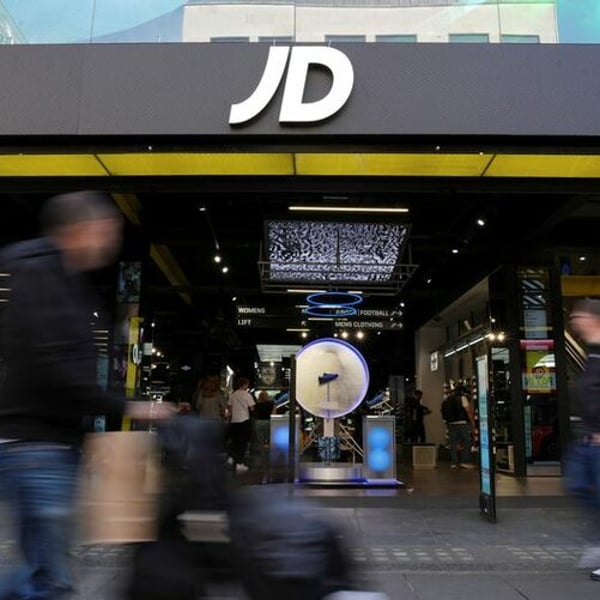
JD Sports profit falls but CEO cautiously upbeat, reassures on tariffs

Published
September 24, 2025
JD Sports released its first-half results on Wednesday and while it had already issued a sales update last month, this release filled in the gaps on margins and profits, as well as giving monetary numbers rather than just percentages.
So, let’s look at those numbers for the six months to early August. The company saw reported sales growth of 18% (+20% at constant currency) to reach £5.94 billion, although this jump was driven by the acquisitions of Hibbett and Courir. The gross margin fell to 48% from 48.6%.
Operating profit fell 8.2% on a reported basis to £369 million and the operating margin was down to 6.2% from 8%. Profit before tax and adjusting items dropped 13.5% to £351 million. On a statutory basis, however, operating profit rose 33.2% to £389 million and profit before tax was up 9.5% at £138 million.
The company’s overall organic sales growth was 2.7% during the half, which its CEO Régis Schultz said demonstrates the resilience of the business.
The numbers in detail
In H1, like-for-like (LFL) sales fell 2.5%. North America was -3.8% LFL and +3.1% organic; Europe was -0.3% LFL and +6% organic; the UK was -3.3% LFL and -1.7% organic; and Asia pacific was +2.4% LFL and +6% organic.
North America is its largest market by sales, generating 39% of JD Group sales in H1, with Europe at 32%, the UK at 25% and Asia Pacific at 4%. LFL sales in H1 were resilient in Europe, supported by its sporting goods fascias in Iberia, Greece and Cyprus, and it was “encouraging” to see improved LFL trends quarter on quarter in both North America and Asia Pacific. In H1, it grew its market share in North America and Europe. In the UK, it sees organic sales as a better sales KPI than LFL, “given the ongoing evolution of our store footprint with ‘bigger and better’ stores”. And while the UK was down both LFL and organic, it had said earlier that new stores were pulling their weight with the new giant Manchester store performing strongly.

By segment, the JD brand saw total sales down 3% LFL and up 3.7% organic at £3.674 billion. The Complementary Concepts division saw a 2.4% LFL drop and a 1.1% organic rise to £1.567 billion. The division includes Hibbett, DTLR, Shoe Palace and City Gear in North America, together with Courir and MIG in Europe.
It also operates sporting goods businesses through ISRG (Iberia) and Cosmos (Greece and Cyprus), as well as outdoors businesses in the UK (including Go Outdoors, Blacks and Millets). Its Sporting Goods & Outdoor division was flat on an LFL basis and down 0.8% organic at £699 million.
Cautiously upbeat CEO
Régis Schultz said the half continued to see “a tough trading environment”. And he added: “In North America, where we gained market share in the period, the development of our operations is progressing well.
“Our supply chain investments are poised to unlock significant efficiencies across our global network. Our new European distribution centre in Heerlen, the Netherlands, is set to launch automation for JD Europe store replenishment in the coming weeks, while our US west coast site in Morgan Hill is set to go live with JD and Finish Line by year-end — the next step of our plan to leverage our distribution centres on a multi-fascia basis.”
He highlighted the strong points of the first half, including market share gains in key growth markets of North America and Europe against a tough consumer backdrop; costs and cash being well controlled; stronger LFL sales trends in apparel and online in North America; and “resilient” LFL sales in Europe, although UK organic sales were affected by tough Q2 comparatives due to last year’s Euro football tournament.
Also a plus point was that it saw a good underlying performance in apparel globally even though footwear was softer given the “ongoing shift in product cycle”.

That said, it saw “an encouraging performance in newer footwear lines (especially performance-based lines)”. Footwear sales as a proportion of overall group sales increased from 60% to 62% year on year, due to the category mix of the recently acquired Hibbett and Courir. On an organic basis (excluding Hibbett and Courir), footwear sales were slightly lower — down about 1% to £2.9 billion — while apparel grew around 6% to £1.6 billion.
As for the current half, the company continues to expect the impact of US tariffs to be “limited” but said “we remain cautious on the trading environment for the [rest] of the year, reflecting continued pressure on consumer finances, elevated unemployment risk, and the ongoing transition in the footwear product cycle. Despite these headwinds, we expect our full-year profit before tax and adjusting items (FY26 PBTAI) to be in line with current market expectations”.
Copyright © 2025 FashionNetwork.com All rights reserved.
Published
December 5, 2025
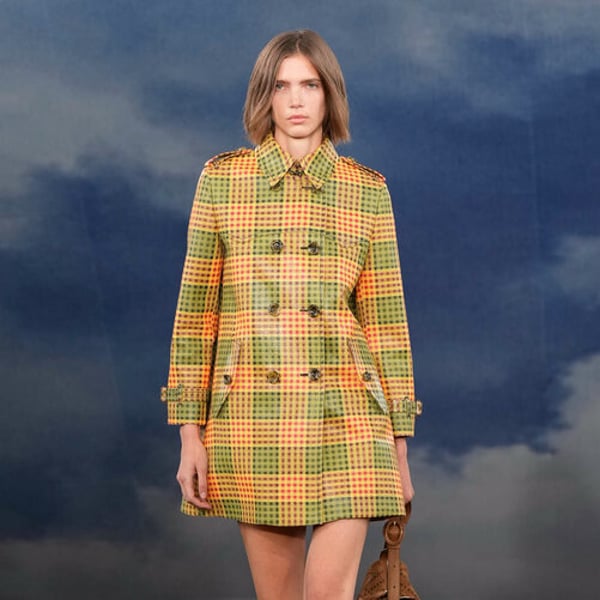
Burberry has named a new chief operating and supply chain officer as well as a new chief customer officer. They’re both key roles at the recovering luxury giant and both are being promoted from within.
Matteo Calonaci becomes chief operating and supply chain officer, moving from his role as senior vice-president of strategy and transformation at the firm.
In his new role, he’ll be oversee supply chain and planning, strategy and transformation, and data and analytics. He succeeds Klaus Bierbrauer, who’s currently Burberry supply chain and industrial officer. Bierbrauer will be leaving the company following its winter show and a transition period.

Meanwhile, Johnattan Leon steps up as chief customer officer. He’s currently currently Burberry’s senior vice-president of commercial and chief of staff. In his new role he’ll be leading Burberry’s customer, client engagement, customer service and retail excellence teams, while also overseeing its digital, outlet and commercial operations.
Both Calonaci and Leon will join the executive committee, reporting to Company CEO Joshua Schulman.

Schulman said of the two execs that the appointments “reflect the exceptional talent and leadership we have at Burberry. Both Matteo and Johnattan have been instrumental in strengthening our focus on executional excellence and elevating our customer experience. Their deep understanding of our business, our people, and our customers gives me full confidence that their leadership will help drive [our strategy] Burberry Forward”.
Copyright © 2025 FashionNetwork.com All rights reserved.
Published
December 5, 2025
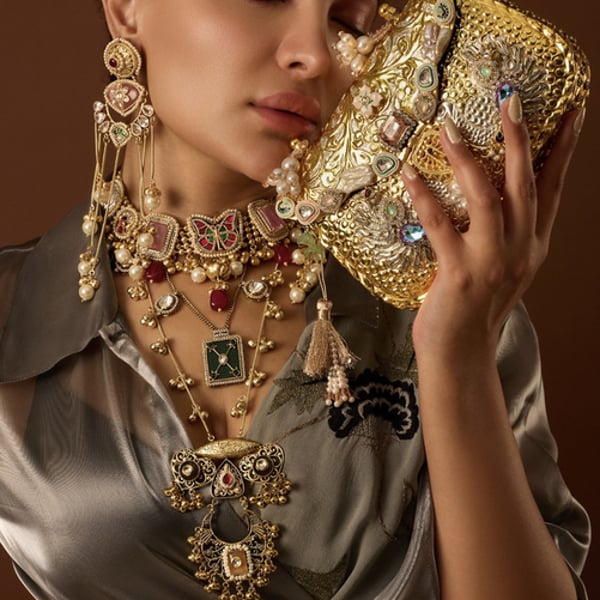
Traditional and occasion wear designer Puneet Gupta has stepped into the world of fine jewellery with the launch of ‘Deco Luméaura,’ a collection designed to blend heritage and contemporary aesthetics while taking inspiration from the dramatic landscapes of Ladakh.
“For me, Deco Luméaura is an exploration of transformation- of material, of story, of self,” said Puneet Gupta in a press release. “True luxury isn’t perfect; it is intentional. Every piece is crafted to be lived with and passed on.”
The jewellery collection features cocktail rings, bangles, chokers, necklaces, and statement evening bags made in recycled brass and finished with 24 carat gold. The stones used have been kept natural to highlight their imperfect and unique forms and each piece in the collection has been hammered, polished, and engraved by hand.

Designed to function as wearable art pieces, the colourful jewellery echoes the geometry of Art Deco while incorporating distinctly South Asian imagery such as camels, butterflies, and tassels. Gupta divides his time between his stores in Hyderabad and Delhi and aims to bring Indian artistry to a global audience while crafting a dialogue between designer and artisan.
Copyright © 2025 FashionNetwork.com All rights reserved.


Kanye West and Bianca Censori Travel to South Korea Together

SpaceX to offer insider shares at record-setting $800 billion valuation

Anthony Joshua Says Beating Jake Paul By Decision Not Enough, Must Destroy Him
-

 Politics8 years ago
Congress rolls out ‘Better Deal,’ new economic agenda
-
Entertainment8 years ago
New Season 8 Walking Dead trailer flashes forward in time
-
Politics8 years ago
Poll: Virginia governor’s race in dead heat
-
Entertainment8 years ago
The final 6 ‘Game of Thrones’ episodes might feel like a full season
-
Entertainment8 years ago
Meet Superman’s grandfather in new trailer for Krypton
-
Politics8 years ago
Illinois’ financial crisis could bring the state to a halt
-
Business8 years ago
6 Stunning new co-working spaces around the globe
-
Tech8 years ago
Hulu hires Google marketing veteran Kelly Campbell as CMO