
Politics
Jason Shoaf will seek re-election to Legislature, sit out race to succeed Neal Dunn in Congress

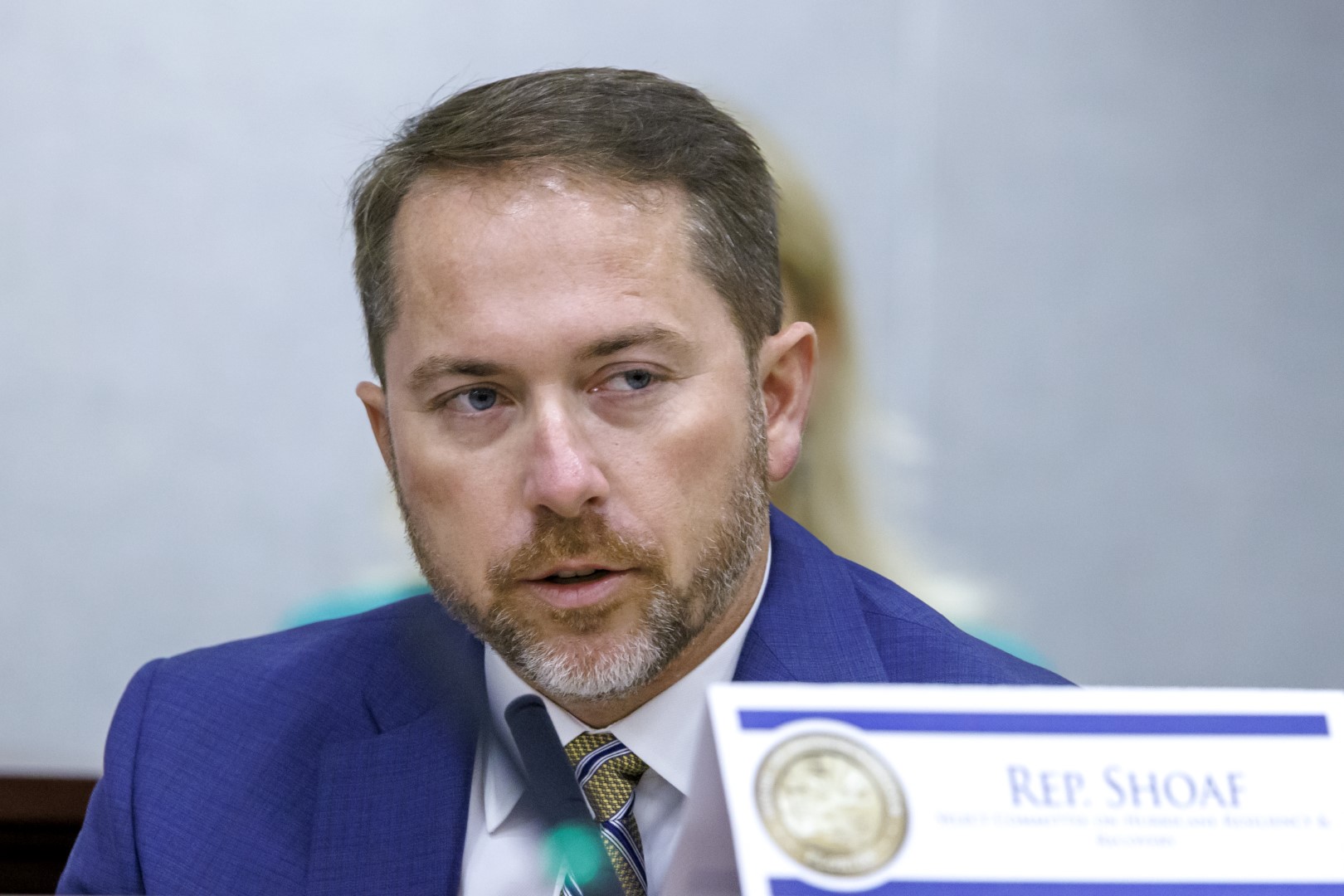
The Port St. Joe Republican plans to remain in the Florida House through 2028.
State Rep. Jason Shoaf says he will not run to succeed U.S. Rep. Neal Dunn.
“I am fully focused on serving the people of North Florida in the Florida House of Representatives, and I am committed to fulfill my term through 2028,” Shoaf said.
The Port St. Joe Republican first won his legislative seat in a Special Election in 2019. Term limits will not prohibit him seeking re-election this year.
He shot down rumors he may run for Congress two days after Dunn, Panama City Republican serving his fifth term in the House, announced his retirement at the end of this Congress.
Shoaf said he feels he can best serve his community by remaining in the Florida Legislature as a senior member. He currently serves the Transportation & Economic Development Budget Subcommittee. Shoaf remains the only candidate filed in House District 7.
“I believe this next two years in my current role is my greatest chance to make the most meaningful impact delivering real results for our communities, strengthening our economy and defending the values that make North Florida such a special place to call home,” Shoaf said.
Other candidates already in the race for Florida’s 2nd Congressional District include Republican Party of Florida Chair Evan Power and former U.S. Senate candidate Keith Gross. But speculation has swirled significantly this week about whether other Republicans in the region will run for the seat now that it’s open.
CD 2, which covers parts of the Panhandle and Big Bend, currently leans comfortably Republican.
Dunn easily won re-election in 2024 over Democrat Yen Bailey with about 61.7% of the vote. More than 58.5% of voters there supported Republican Donald Trump over Democrat Kamala Harris for President, according to MCI Maps, and more than 60% of voters backed GOP U.S. Sen. Rick Scott’s re-election.
Notably, Republican leaders in Tallahassee say they intend to redraw congressional districts ahead of the 2026 Midterms.


As Florida’s 2026 Legislative Session approaches, artificial intelligence is expected to be a major focus among Tallahassee’s policymakers. Driven by Gov. Ron DeSantis’ calls for greater regulation, the legislature has already filed at least 32 bills ranging from embracing the new technology to banning it. But before legislators weigh these proposals, they should review the protections Florida has already put in place.
The House got a head start on the subject during their inaugural AI Week, convening various agencies, industries, and practitioners to discuss how they are approaching the emerging technology. As legislators consider new AI proposals, they would do well to heed the advice of Leo Schoonover, Chief Information Officer at the Department of Health, who urged the state in an early IT Budget & Policy Subcommittee meeting to “set the floor, not the ceiling.”
Schoonover has reason to be confident.
Over the past few years, Florida has set a strong “floor” of accountability for AI, in some cases without even trying. Those who testified before House committees repeatedly noted that Florida’s existing legal framework already addresses many of the concerns people have about AI. This is largely because preexisting laws tend to be process-neutral, providing penalties for harmful outcomes regardless of the tool or technology used.
Whether the technology is a chatbot, image generator, or diagnostic tool, the same accountability principles apply.
Consider the state’s protections against unauthorized commercial use of someone’s likeness. In 1967, long before generative AI was conceivable, lawmakers established penalties for profiting from a person’s identity without consent. While some fear that AI-generated media might evade these restrictions, the original statute focuses on the transgression rather than the method. Unauthorized profiteering remains illegal, whether the image is captured by a camera or generated by an algorithm.
The same accountability principles apply across licensed professional practices. The Florida Bar testified that lawyers who cite AI-hallucinated cases already face disciplinary action under longstanding ethics rules that predate the technology. Similarly, health care providers confirmed that physicians remain fully liable for any incorrect AI-assisted diagnosis or documentation under existing malpractice standards. Physicians, therefore, have strong reason to actively verify AI outputs rather than defer to them without scrutiny. In both professions, existing accountability structures discourage over-reliance without requiring AI-specific regulation.
Where regulatory gaps have arisen, the Legislature has moved to close them. Since 2022, the Legislature has reaffirmed that willfully promoting an altered sexual depiction of someone without their consent is illegal, most recently with the passage of “Brooke’s Law” last Session. In 2024, the Legislature passed requirements for political advertisements to include a transparency disclosure when content is created using AI. These efforts extend the same process-neutral logic to new contexts, keeping the focus on the harm itself rather than the technology used to commit it. If new gray areas arise in the future, Florida can and should apply the same framework when drafting new protections.
AI Week offered Florida a model for approaching novel technologies. Legislators heard directly from the agencies, industries, and practitioners who work with these tools every day. That kind of informed deliberation is exactly what good policymaking looks like. Florida has taken Schoonover’s approach without even realizing it. Through decades of process-neutral law, Florida has built a strong floor of consumer protection, while recent legislation has filled gaps where needed.
In the upcoming Session, legislators have a chance to build upon that foundation rather than abandon it. The floor is already there. All that’s left is deciding whether to trust it.

___
Turner Loesel is a policy analyst in the Center for Technology and Innovation at The James Madison Institute.
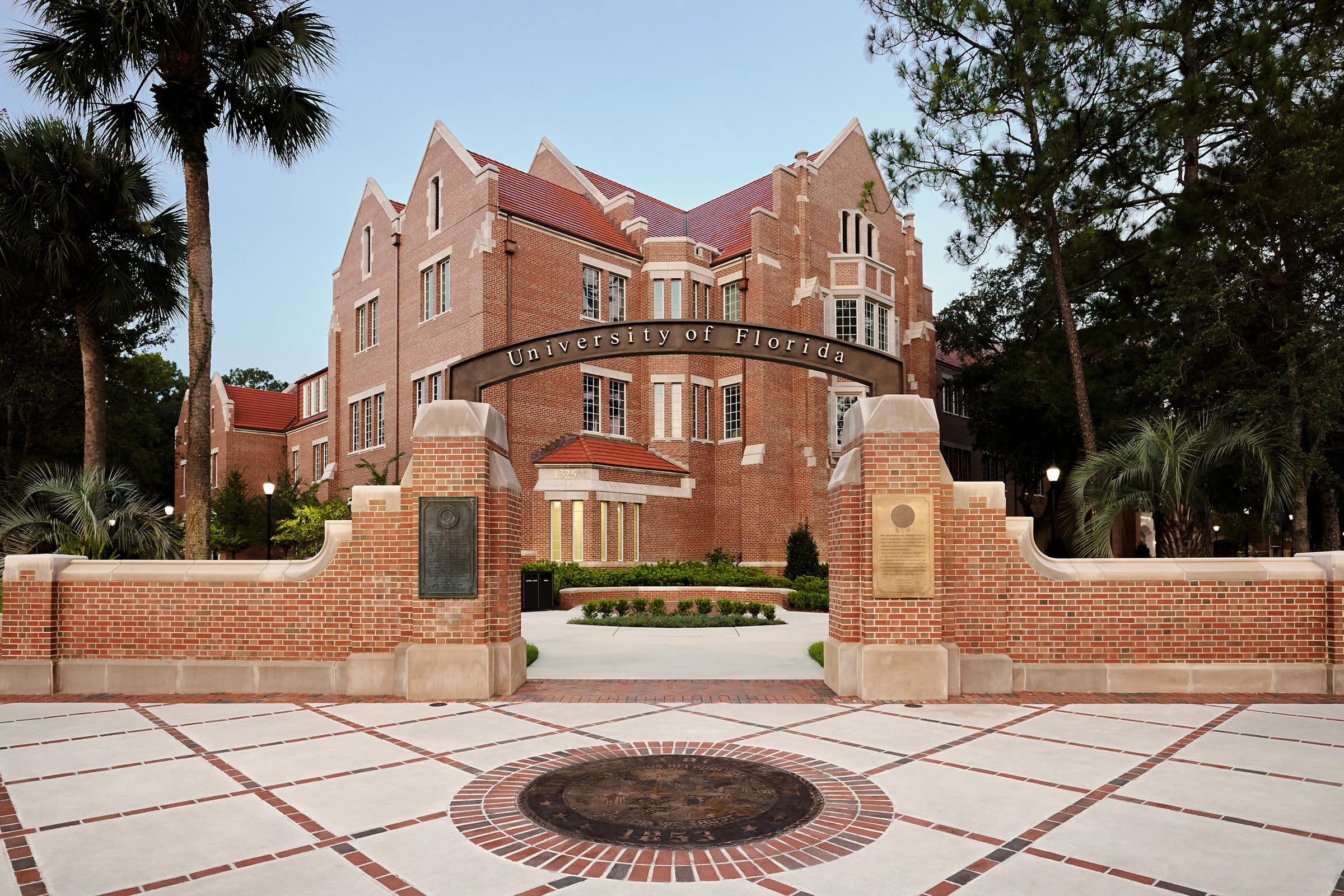
Seven Florida public universities are earning recognition for outreach to their respective communities in the state.
The State University System (SUS) of Florida announced that the Carnegie Foundation awarded the schools with the 2026 Community Engagement Classification. The award, which is designated by the American Council on Education and Carnegie Foundation for the Advancement of Teaching, highlights colleges and universities that are involved in the community.
The Sunshine State schools receiving the recognition include Florida Atlantic University, Florida Gulf Coast University, Florida International University, Florida State University, the University of Florida, the University of North Florida and the University of South Florida. Of the 12 state universities in Florida, the University of Central Florida and the University of West Florida also obtained the honor in 2024.
“Florida’s public higher education system leads the nation because our focus extends past handing out degrees; our institutions care about their impact on their communities, statewide, and beyond,” said SUS Board of Governors Chair Alan Levine.
“From nursing to engineering to aerospace technology, our academic programs are serving students and Floridians through innovative research and experiential learning that solve today’s challenges and prepare tomorrow’s leaders.”
Carnegie officials note that 230 U.S. higher-education institutions were selected for the award.
“The Community Engagement Classification is awarded following a process of self-study by each institution. The classification has been the leading framework for institutional assessment and recognition of community engagement in U.S. higher education for the past 19 years with classification cycles in 2006, 2008, 2010, 2015, 2020, 2024, and now 2026. The 2029 cycle will be for first-time applicants,” a Carnegie news release said.
SUS officials say the schools never shied away from giving back to residents.
“Under the System’s strategic plan, universities prioritize engaging stakeholders in their communities to elevate student and economic outcomes, and to cultivate prepared and engaged citizens,” said SUS Chancellor Ray Rodrigues.
“Recognition through the Community Engagement Classification demonstrates this plan in action, proving that our universities are a comprehensive resource for communities and businesses across the state and serve Floridians in the ways that matter most.”


Florida is in the middle of a housing affordability crisis.
Across our state, families are feeling the squeeze of a housing market that no longer works for them. Rapid population growth, rising construction costs, and record-high taxes all contribute to the crisis. But a major part of the problem is far less visible.
Outdated zoning rules are making it harder to build the homes Floridians need.
Minimum lot-size mandates are a major issue. In many communities, local governments require new homes to be built on lots that are far larger than the market demands. This may have made sense a decade ago, but today it limits housing supply, increases costs, and pushes homeownership out of reach for the next generation.
The impact is clear. According to the American Enterprise Institute, Florida faces a housing shortage of more than 486,000 homes. Families are paying more than ever just to keep a roof overhead, and the average home price in Florida has now reached about $400,000. This is a clear sign that housing costs are continuing to rise in Florida, and we urgently need these reforms. Multigenerational households, which are increasingly common in states where families care for multiple children and aging parents under one roof, often cannot expand or add living space because zoning rules restrict growth.
The housing affordability crisis is not accidental. It’s the result of decades of policies that restricted supply, limited housing types, and made it nearly impossible for the market to keep up with demand.
Florida homeowners need common-sense solutions. Thankfully, lawmakers have filed legislation, SB 948 and HB 1143, that would modernize minimum lot size requirements and restore flexibility for both homeowners and builders. This reform would allow the market to produce the smaller, more attainable homes that do not exist today. And Florida would not be alone.
Texas recently enacted similar lot-size reforms and has shown that a conservative, pro-growth approach to zoning works. When Texas lifted unnecessary land-use barriers, communities gained more choices and families benefited from a wider range of affordable housing options.
This effort also aligns with another important housing solution moving through the Legislature. House Bill 313 and Senate Bill 48 strengthen support for accessory dwelling units (ADU), often called garage apartments, in-law suites, or granny flats. ADUs give families a practical way to create affordable rental units, support aging parents, help young adults stay close to home and make better use of underused land near jobs and schools.
Both reforms target the same issue: the lack of affordable homes in communities across Florida.

When local governments enforce large minimum lot sizes, they block the smaller, more affordable homes that many families would choose. They also make it more difficult for ADUs, modular homes, and cottage-style developments to expand.
At a time when families are being priced out of the neighborhoods they love, these restrictions no longer make sense.
By eliminating minimum lot-size mandates, lawmakers can enable new starter homes, duplexes, cottages, and family-friendly ADUs that reflect how people actually live today. A statewide approach would also bring consistency and predictability to a system that currently varies widely across localities.
Florida has always been a place of opportunity. But opportunity means little if families cannot afford to buy a home and stay there.
Americans for Prosperity-Florida supports this legislation because it puts families, homeowners and communities first. Floridians deserve the freedom to use their property in ways that meet their needs while strengthening families and communities. We appreciate Sen. Stan McClain and Rep. Danny Nix, sponsors of SB 948 and HB 1143, along with Sen. Don Gaetz, for driving these common sense solutions that will help lower housing costs and expand opportunities for Florida families.
It is time to lift outdated restrictions and help end the housing affordability crisis.
Together, we can get the government out of the way and create greater housing opportunities for Florida families.
___
Skylar Zander is the State Director of Americans for Prosperity-Florida.


The new rules of office space now that the ‘genie is out of the bottle on hybrid’

Nick Reiner Placed Into Mental Health Conservatorship in 2020

Sailing and mountain specialist Helly Hansen looks to strengthen its position in urbanwear
-

 Politics8 years ago
Congress rolls out ‘Better Deal,’ new economic agenda
-
Entertainment8 years ago
New Season 8 Walking Dead trailer flashes forward in time
-
Politics9 years ago
Poll: Virginia governor’s race in dead heat
-
Politics8 years ago
Illinois’ financial crisis could bring the state to a halt
-
Entertainment8 years ago
The final 6 ‘Game of Thrones’ episodes might feel like a full season
-
Entertainment8 years ago
Meet Superman’s grandfather in new trailer for Krypton
-
Business8 years ago
6 Stunning new co-working spaces around the globe
-
Tech8 years ago
Hulu hires Google marketing veteran Kelly Campbell as CMO