Connect with us

Sports

January 1 Is Just Another College Football Day
Published

on


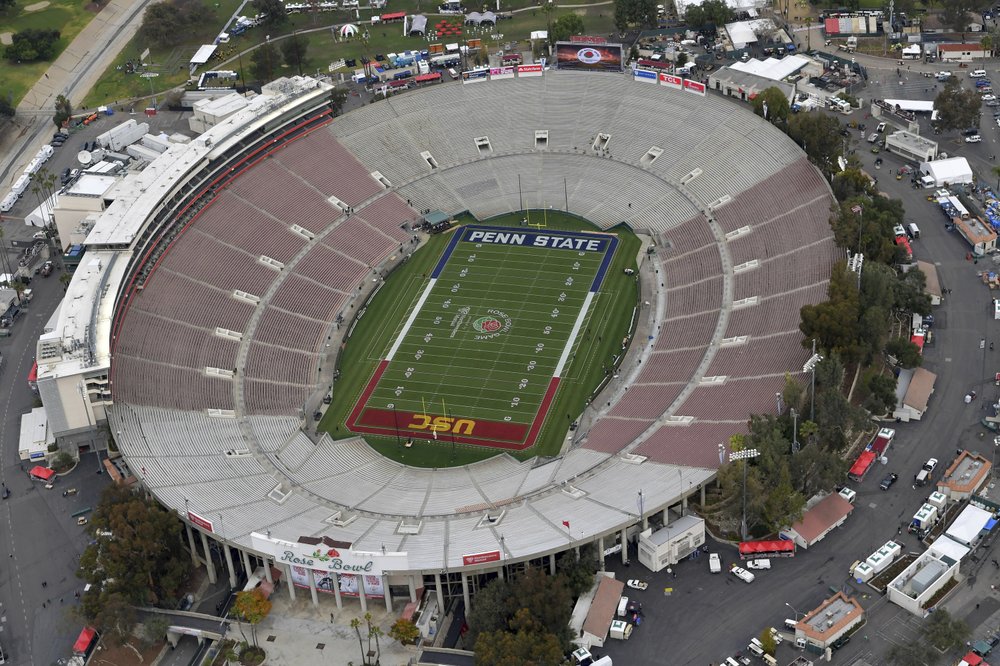
FILE – This Jan. 2, 2017, file pool photo, shows an aerial view of the empty Rose Bowl stadium before to the Rose Bowl NCAA college football game between Southern California and Penn State in Pasadena, Calif. The Rose Bowl was denied a special exemption from the state of California to allow a few hundred fans to attend the College Football Playoff semifinal on Jan. 1, putting the game staying in Pasadena in serious doubt. A person involved with organizing the game told The Associated Press the Tournament of Roses’ request was denied earlier this week. (The Tournament of Roses via AP, Pool, File)

The college bowl games are just steps to the championship game

When January 1st Meant the End of the College Football season

Once upon a time, January 1st marked the finish line of the college football season. The traditional bowl games played out, a champion was crowned, and players returned to campus to resume their roles as students. That version of the sport no longer exists.

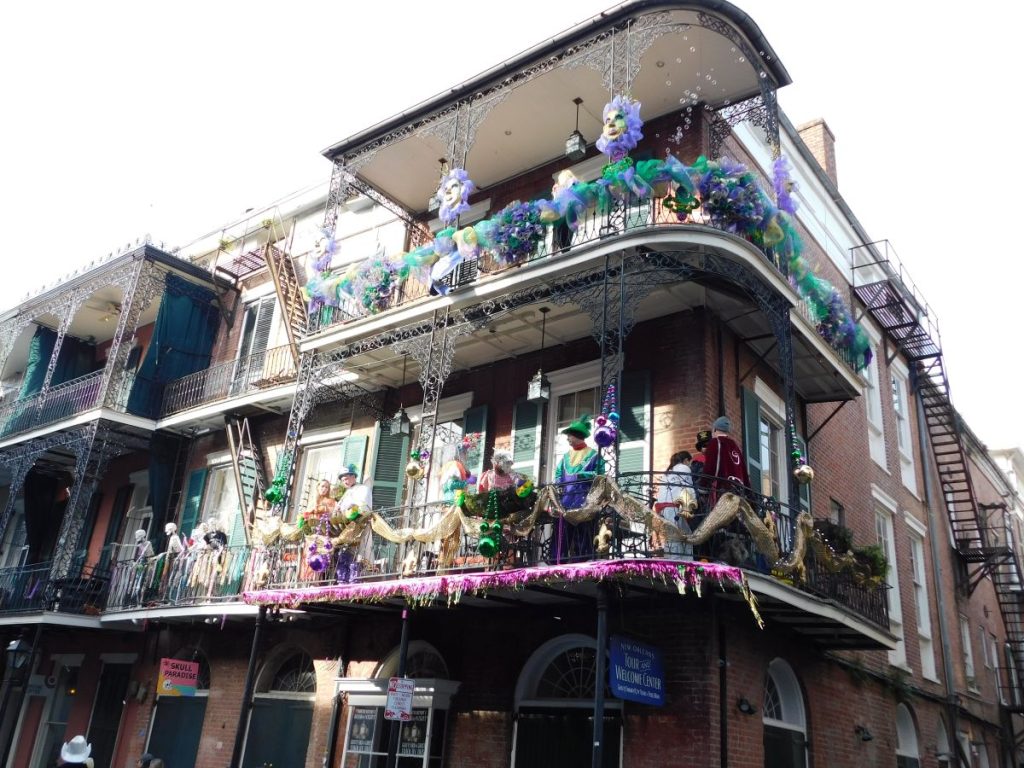
Money changed everything. January 1st is no longer a conclusion. It is now a checkpoint. This year, the Rose Bowl in Pasadena serves as a College Football Playoff quarterfinal. Two more quarterfinal games follow at the Orange Bowl in Miami Gardens and the Sugar Bowl in New Orleans. What was once a ceremonial finale has become one of the most lucrative days on the college football calendar.

A Playoff That Pushes Deeper Into the Academic Year

The expansion does not stop on New Year’s Day. The College Football Playoff continues with semifinal games in Glendale, Arizona, and Atlanta. The national championship game follows on January 19 in Miami Gardens.

That date sits deep into the second semester of the academic year. Classes are underway. Campuses are back in full session. The obvious question lingers in the background. Will the players competing for a national title be excused from attending class?

College football now operates on a professional calendar while still claiming an academic identity. That tension grows harder to ignore with every added game.

Players Are Paid, and the NCAA Is Uneasy

The biggest shift in this new era is money flowing directly to players. Stars now receive compensation through schools, collectives, or third-party arrangements. Name, Image, and Likeness payments have effectively turned elite recruiting into a bidding process.

NCAA leadership does not like this reality. The organization has urged federal lawmakers to intervene and create national standards. Their stated concern centers on fairness and competitive balance. Without regulation, boosters can offer massive financial incentives to steer players toward specific programs.

The system is legal. It is also chaotic. And it has stripped away much of the control the NCAA once exercised.

The “Student-Athlete” Label Under Scrutiny

For decades, the NCAA relied on the term “student-athlete” as a legal shield. That label helped deny players salaries, workers’ compensation, and long-term health care for injuries sustained on the field. Courts often sided with schools, ruling athletes were students, not employees.

As a result, schools avoided financial responsibility for life-altering injuries. Scholarships were presented as fair compensation, though the arrangement overwhelmingly favored institutions.

Now, the landscape has shifted. Players earn money. Games stretch further into the academic calendar. The business looks professional in every way except accountability.

A New Order Nobody Fully Controls

College sports leaders find themselves uncomfortable in the world they helped create. The old model no longer holds. The new one lacks structure.

January 1st used to close the season. Now it opens the most profitable chapter. The page has turned. There is no going back.

Evan Weiner’s books are available at iTunes – https://books.apple.com/us/author/evan-weiner/id595575191

Evan can be reached at evan_weiner@hotmail.com
New Orleans


Source link

Continue Reading

Sports

AFCON: Injured Gabon star Aubameyang returns to Marseille

Published

on


Pierre-Emerick Aubameyang will miss Gabon’s final group game against Cote d’Ivoire at the 2025 Africa Cup of Nations (AFCON) due to a thigh injury.

The Gabon Football Federation confirmed on Tuesday that the 36-year-old striker is suffering from a thigh injury and they reached an agreement with his French Ligue 1 club Marseille for his immediate return for further treatment.

Aubameyang made two appearances in the tournament and he has a goal to his name after converting from the spot in their 3-2 loss to Mozambique.

Wednesday’s match against Cote d’Ivoire is an inconsequential game for Gabon as they currently sit at the bottom of Group F with no points after two matches.

“Following the established medical protocol between Marseille and Gabon medical staff regarding Pierre-Emerick Aubameyang, clinical examinations were conducted daily,” read the statement from the Gabon Football Federation.

“The most recent examination confirmed the discomfort he experienced in his left thigh the day after the Gabon-Mozambique match. Given the disappointing results, which cut short Gabon’s participation, the medical staff, in consultation with his club, agreed to protect the player’s physical well-being by exempting him from the final, inconsequential match.”

Since he made his international debut for the Panthers in 2009, Aubameyang has made 82 appearances for Gabon, scoring 39 goals.

At 36 years, it remains unclear if the 2015 African Footballer of the Year will draw the curtain on his international career anytime soon.

Aubameyang returned to Marseille in August after a successful brief spell in Saudi Arabia with Al-Qadisiyah and his injury comes a worry for Roberto De Zerbi who is still without injured Algeria star Amine Gouiri since October.

This season, Aubameyang has contributred eight goals and nine assists in 19 games for Marseille across all competitions.


Source link

Continue Reading

Sports

Goodbye 2025, but not after scandals threatened leagues integrity

Published

on


Emmanuel Clase

2025 Will Not Be Forgotten

They tell us to move on. 2025 is over. Close the book and turn the page. History, however, rarely listens to that advice.

When historians look back decades from now, 2025 will stand out for one uncomfortable reason. Gambling scandals cut across professional and collegiate sports. Major League Baseball, the NCAA, and the NBA all faced serious questions about integrity. The year exposed how deeply betting had embedded itself into sports. It also showed how little resistance existed from those who profit the most.

The games continued. The partnerships continued. The arrests did too.

Major League Baseball Faces a Direct Hit

MLB took one of the hardest blows. Cleveland Guardians pitchers Emmanuel Clase and Luis Ortiz became central figures in a federal investigation that shook the league.

In July, MLB placed both pitchers on paid administrative leave while investigators examined suspicious betting activity. In November, federal authorities arrested both players. Prosecutors allege the two began conspiring with sports bettors as early as 2023. According to the indictments, the pitchers shared advance information about specific pitches they planned to throw during games.

Bettors allegedly used that information to place prop bets totaling hundreds of thousands of dollars. The trial is scheduled for May 4, 2026. The case marked one of the most serious gambling-related scandals MLB has faced in decades.

NBA Scandals Extend Beyond the Court

The NBA did not escape the storm. Miami Heat guard Terry Rozier was placed on indefinite leave after federal authorities launched an investigation into an illegal sports betting operation.

In October, agents arrested Rozier on charges that include conspiracy to commit wire fraud and money laundering. Prosecutors allege he played a role in a betting scheme tied to manipulated outcomes.

That same month delivered another shock. FBI agents arrested Portland Trail Blazers head coach Chauncey Billups in connection with a separate illegal gambling investigation. The NBA placed Billups on indefinite leave as the case proceeds. A sitting head coach facing federal charges sent tremors through the league.

College Basketball Pays the Price

At the collegiate level, the consequences were swift and severe. In November, the NCAA suspended multiple players for gambling violations. Six men’s basketball players received permanent bans from competition.

Unlike professional leagues, college athletes do not have unions or guaranteed contracts. Their careers ended instantly. The message was clear. The rules exist. The penalties remain harsh.

Gambling Grows While Oversight Lags

Despite all of this, the business of sports betting never slowed. Team owners maintained partnerships with gambling companies. Sports cable networks continued promoting betting lines and prop wagers during broadcasts.

The contradiction became impossible to ignore. Gambling was labeled a growing problem. At the same time, it remained a primary revenue stream.

2025 exposed the fault line. Integrity matters, but profits matter more. That is the legacy historians will not forget.

Evan Weiner’s books are available at iTunes – https://books.apple.com/us/author/evan-weiner/id595575191

Evan can be reached at evan_weiner@hotmail.com

luis ortiz


Source link

Continue Reading

Sports

Miami and Ohio State two teams with history

Published

on


COTTON BOWL The Miami Hurricanes continue to be one of college football’s most frustrating programs

Defending national champion Ohio State returns to the Cotton Bowl for the third straight season, continuing a dominant postseason run under Ryan Day. Meanwhile, Miami arrives in Texas for the second time in just over a week after winning its College Football Playoff debut at Texas A&M.

Both teams touched down in North Texas on Sunday, setting the stage for a high‑stakes New Year’s Eve CFP quarterfinal — the first of the four playoff games this season.

Ohio State enters the matchup at 12–1, still processing its narrow 13–10 loss to No. 1 Indiana in the Big Ten Championship Game. Despite the setback, the Buckeyes secured the No. 2 seed and a first‑round bye, giving them time to regroup and refocus.

Cornerback Lorenzo Styles summed up the team’s mindset:
“We had to take a step back because that loss kind of hurt… but everything we want is still in front of us.”

A Rivalry Rooted in Decades of High‑Drama Matchups

This Cotton Bowl isn’t just a playoff game — it’s the next chapter in one of college football’s most dramatic, emotionally charged cross‑conference rivalries.

1977: The First Meeting — A Defensive Battle

Miami’s first trip to Columbus in 1977 ended in a 10–0 Ohio State victory, giving the Buckeyes an early edge in the all‑time series.

1999 Kickoff Classic: Miami Strikes Back

More than 20 years later, Miami evened the series with a 23–12 win in the Kickoff Classic at the Meadowlands, signaling the Hurricanes’ rise as a national powerhouse.

2003 Fiesta Bowl: One of the Most Iconic Games Ever Played

The programs’ most famous clash came in the 2003 BCS National Championship, where Ohio State stunned the heavily favored Hurricanes 31–24 in double overtime.

The game featured the unforgettable Maurice Clarett “steal” — a moment etched into college football lore. After a Miami interception, Clarett chased down Sean Taylor, stripped the ball, and preserved OSU’s title hopes. The Buckeyes later sealed the championship with a Clarett touchdown.

2010: A High‑Scoring Showdown in Columbus

In 2010, No. 12 Miami jumped ahead early, but Terrelle Pryor Sr. powered No. 2 Ohio State to a 36–24 win, accounting for nearly 350 total yards.
The victory was later vacated due to NCAA sanctions, leaving the official record unchanged.

2011: Miami Dominates at Home

The Hurricanes controlled the 2011 rematch in Miami, rushing for 240 yards and holding OSU to just 45 passing yards in a 24–6 win.
With Ohio State ranked No. 17 and Miami unranked, the result was considered a significant upset.

The Series Today: A 2–2 Deadlock With Everything on the Line

With Ohio State’s 2010 win vacated, the official series stands tied at 2–2.
The Cotton Bowl offers the Buckeyes a chance to take a 3–2 series lead, while Miami seeks to reclaim national prominence with another postseason statement.

Both teams enter with elite defenses and high‑powered offenses, as highlighted by USA Today’s breakdown of All‑Americans and quarterback play on both sides.

Why This Cotton Bowl Matters More Than Ever

Ohio State’s Mission: Repeat as National Champions

The Buckeyes are the only team to appear in five of the last seven CFPs, all under Ryan Day. Their postseason pedigree is unmatched.

Miami’s Mission: Prove They’re Back

The Hurricanes’ first CFP win in program history has energized the fanbase and revived national expectations.

A Rivalry Renewed on the Biggest Stage

Nearly 23 years after their legendary championship clash, Miami and Ohio State meet again — this time with a semifinal berth on the line.

Final Thoughts: A New Year’s Eve Classic in the Making

This Cotton Bowl isn’t just a playoff game.
It’s a collision of history, pride, and championship ambition.

Miami seeks validation.
Ohio State seeks redemption.
Both seek a path to the national title.

And on New Year’s Eve in Arlington, only one will move on.


Source link

Continue Reading

Trending

Copyright © Miami Select.