
Politics
Jane Castor says Tampa will ‘finish strong’ amid construction and transit plans

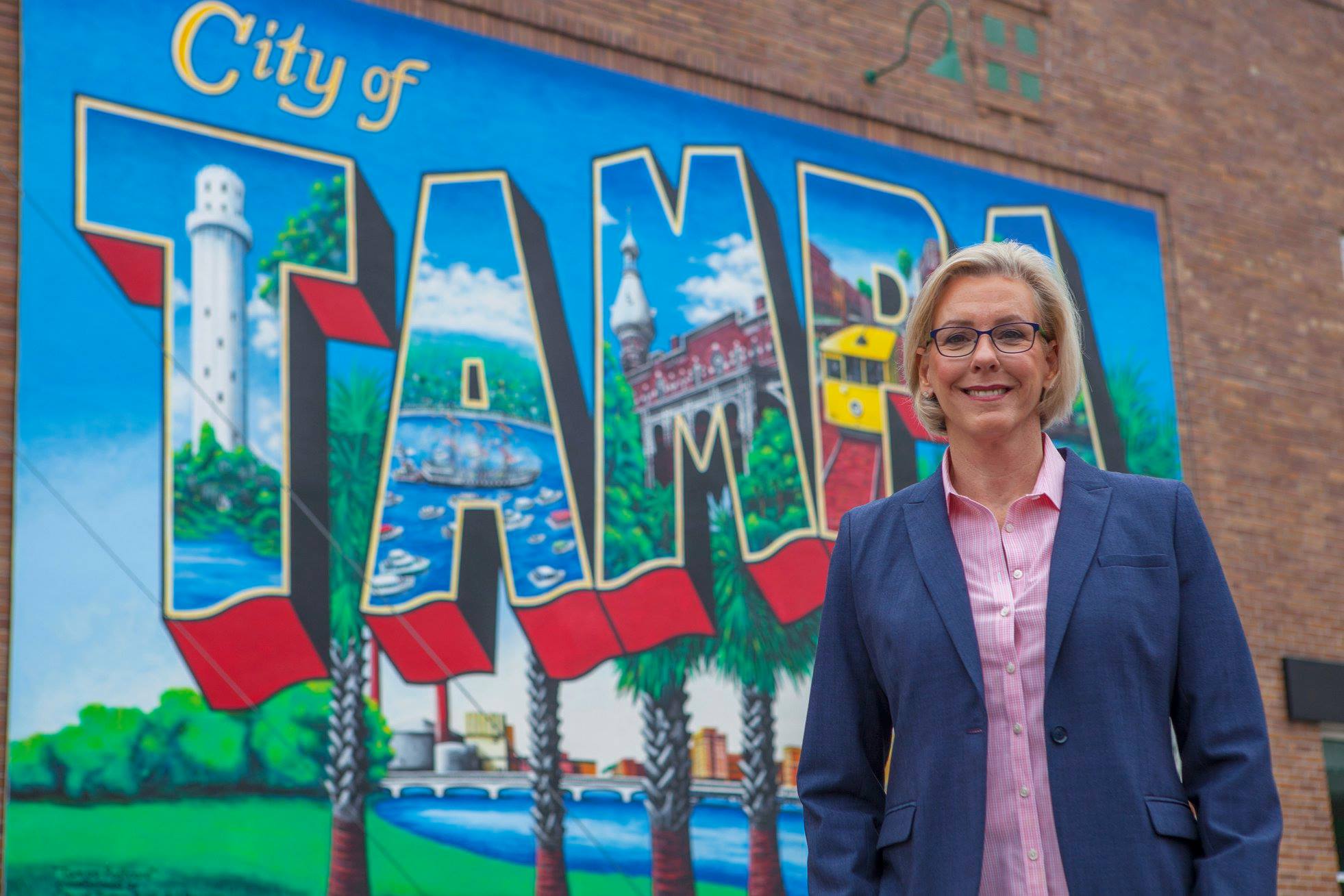
With just over a year remaining in her second and final term, Tampa Mayor Jane Castor’s administration is shifting into a “finish strong” phase to wrap up major redevelopment projects while positioning the city for continued growth under its next Mayor.
Castor told Florida Politics that she is focused on completing long-planned initiatives in the coming year, and creating what she called “project launch pads” for the next administration after nearly seven years of rapid development and population growth.
“We’ve accomplished a great deal in just a bit less than seven years,” Castor said. “Our city’s grown dramatically. We’re focused on finishing up some of those projects and getting other projects ready for the next administration.”
Castor said recent city budgets have emphasized investment in transportation, affordable housing and workforce development.
Transportation remains Tampa’s biggest challenge, she said, calling it the city’s “Achilles heel.” Castor pointed to the defeat of Hillsborough County’s voter-approved transportation surtax as a major setback for the region, though she emphasized that local governments have continued pursuing alternatives.
“We mourned the loss of that, but we didn’t stop,” Castor said.
Instead, Tampa and regional partners turned to grants and federal funding, securing nearly $4 million through a U.S. Department of Transportation program known as the Regional Infrastructure Accelerator. The grant supports planning for large-scale, multicounty transportation projects across Hillsborough, Pinellas and Pasco counties, including both local and regional transit options.
One proposal under consideration would expand Tampa’s streetcar system beyond its current footprint in Ybor City, Channel District and downtown, extending north into Tampa Heights. Castor said the city is also examining longer-term regional transit connections, including potential airport links and public-private partnerships to help finance future projects.
Meanwhile, construction across Tampa continues at a rapid pace, particularly along the riverfront and in historically underserved neighborhoods.
Castor highlighted projects nearing key milestones, such as the West River redevelopment in West Tampa — where a new Riverwalk extension is under construction. Castor also noted the Rome Yard project near Rome Avenue and Columbus Drive, a 16-acre mixed-use development now rising out of the ground.

In East Tampa, the city recently held a ribbon-cutting for the new East Tampa Recreation Center, a sprawling, multiblock complex that Castor said will be among the best facilities in Tampa’s parks system once completed later this year.
Downtown and surrounding neighborhoods are also seeing a wave of new residential construction. Castor cited multiple high-rise developments near downtown, additional riverfront condominiums along Kennedy Boulevard, student housing tied to the University of Tampa, and the long-anticipated opening of the five-star Pendry Hotel near the river this year.
Ybor City and the Channel District remain hot spots for redevelopment as well, with Water Street Tampa entering its second phase and developer Darryl Shaw advancing residential, office and retail projects, including a food hall, near the Gas Worx site.
“The city is just on fire,” Castor said. “I keep saying I’m going to change our city bird to the crane, there’s cranes all over the city.”
As lawmakers convene in Tallahassee for the ongoing Legislative Session, Castor said her top request is simple: leave property taxes alone.
Property taxes remain the primary revenue source for cities and counties, she said, and are already constrained by Florida’s Save Our Homes cap, which limits annual increases regardless of rising property values.
“Any cuts to property tax would be cuts to police and fire, to our parks and recreation, and to all the other city departments that rely on property tax funding,” Castor said.
Castor also addressed ongoing discussions surrounding professional sports facilities, noting that planned improvements to Raymond James Stadium and Benchmark International Arena are already accounted for through Hillsborough County’s voter-approved Community Investment Tax extension. She said city and county officials are meeting with the Tampa Bay Rays as discussions continue around a potential baseball stadium site near Hillsborough Community College.
Looking beyond her tenure, Castor said she does not plan to seek another political office, but intends to remain active in civic life after leaving City Hall.
“I don’t have any plans politically, but I definitely will stay involved in the community,” Castor said. “I was born and raised here in Tampa, so I’ll always be involved — participate on boards, volunteering, whatever way I can — to help continue to grow this great city.”

A House panel is on board with legislation that aims to increase regulations of electronic bikes and scooters in Florida.
Rep. Yvette Benarroch, a Naples Republican and co-sponsor of the House bill (HB 243), presented it before the House Government Operations Subcommittee. She offered a committee substitute bill, which the panel unanimously approved.
It’s identical to a measure that was approved by the Senate Transportation Committee Tuesday.
E-bikes especially have gained unflattering attention in recent years as they have been involved in more and more accidents. Benarroch during her presentation provided a list of about a half-dozen fatalities involving e-bikes on Florida roads recently.
“Unfortunately, this bill was inspired by tragedy,” Benarroch said during her presentation. “Young people have been seriously injured.”
She added that the number of e-bike accidents is not going down and there needs to be more data collected to understand how profound the issue is. She said she’s been working on the bill for about the past half-year.
“There are many others whose stories do not make the headlines,” Benarroch said. “The call to act is immediate.”
Benarroch’s bill is identical to Sen. Keith Truenow’s measure (SB 382). The Tavares Republican amended his original bill to include provisions establishing an “electric bicycle task force,” which are also included in the House proposal.
That task force would collect data on e-bike and scooter accidents, provide recommendations on enforcement, and submit a report to the Florida Department of Highway Safety and Motor Vehicles.
The bill would also limit e-bikes to operating at 10 mph on sidewalks if a pedestrian is within 50 feet.

Several law enforcement organizations, hospitals and School Boards supported Benarroch’s bill Wednesday.
Rep. Linda Chaney, a St. Petersburg Republican and Chair of the House subcommittee, said she was thankful for Benarroch’s work on the measure because local municipalities have approached the e-bike issue with inconsistent measures.
“There are a lot of different areas in our state with different laws, depending on how fast the bike goes, how you peddle it if you have a motor (and) there’s a lot of confusion out there. … This is going to have far-reaching impact,” Chaney said.
Two actions in North Florida in 2024 demonstrate the wide range of approaches to dealing with e-bikes.
Two 15-year-old boys were seriously injured in St. Johns County alone last year. The St. Johns County Commission passed a resolution in August to join forces with the Sheriff’s Office and the St. Johns County School District to promote more awareness and safety for the operators of e-bikes, as well as e-scooters and other electronic motorized devices.
The County Commission’s measure promised joint education with the St. Johns County Sheriff’s Office and the St. Johns County School District.
St. Johns County Sheriff Rob Hardwick said the resolution’s timing was right.
The Palm Coast City Council in 2025 also passed an ordinance that makes it illegal for e-bike owners to modify their vehicles so they can exceed state-defined speed limits on streets, sidewalks or paths.

An annual day to remember fallen conservative icon Charlie Kirk is closer to becoming law after meetings of the Senate Education Postsecondary Committee and the House Governmental Operations Subcommittee.
The panels voted on party lines to devote Oct. 14 to remember the activist and commentator who spoke for a generation on the Right before he was gunned down while addressing a Utah university crowd.
Under bills from Sen. Jonathan Martin and Rep. Yvette Benarroch (SB 194, HB 125), the Governor would be compelled to issue a proclamation every Oct. 14 — Kirk’s birthday — for the “Charlie Kirk Day of Remembrance.”
“This bill would have this day be a day of remembrance and recognition of Charlie Kirk’s influence on civic engagement, youth leadership, and constitutional education. It does not create a state holiday or mandate closures,” Martin said Wednesday.
Martin extolled Kirk’s “alternative viewpoint” and willingness to debate, saying “what he was doing when he was assassinated goes to the very core of who we are as Americans.”
“The First Amendment does not exist to protect comfortable speech,” Benarroch said. “It exists to protect speech we disagree with. It exists to protect debate, House Bill 125 is not about asking anyone to agree with Charlie Kirk. It is not about endorsing every statement he ever made. It is not about elevating a personality. This bill is about what happens when violence replaces debate.”
Ahead of the Senate vote and after numerous members of the public cited various racially provocative things Kirk said into live microphones, an amendment from Sen. Shevrin Jones creating the gubernatorial option for a George Floyd day of remembrance was rejected, saying his killing, like Kirk’s, changed “public consciousness.”
Jones noted that when he was in the House, legislation like the main bill wouldn’t have advanced, which he framed as a measure of how far to the right discourse in the Capitol has moved in just the last few years.
“We’re passing days of remembrance of an individual who … probably wouldn’t spit on me if I was on fire,” Jones said, before his amendment was turfed.
These bills are part of several efforts to remember the founder of Turning Point USA.

A proposed road renaming in Miami-Dade, an honorary naming of the Florida Civics and Debate Initiative championship trophy, and Attorney General James Uthmeier’s Combat Violent Extremism Portal all exemplify state leaders’ effort to pay tribute to a leading advocate for the kind of unapologetic conservatism Florida Republicans embrace.
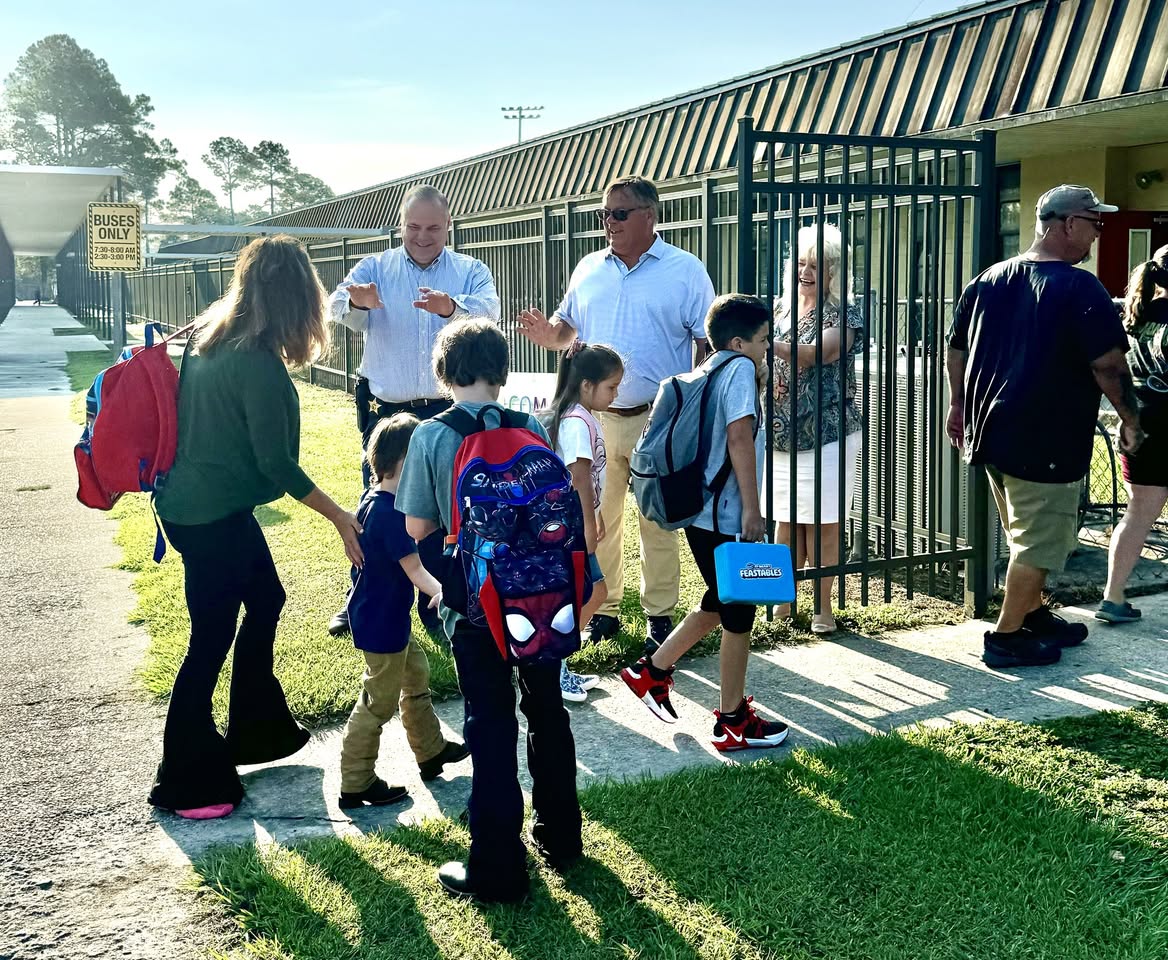


House subcommittee backs bill to regulate e-bikes in Florida, establish task force

The rise of on-demand leadership in the AI economy

TMZ Sports Streaming Live From Newsroom, Join The Conversation!
-

 Politics9 years ago
Congress rolls out ‘Better Deal,’ new economic agenda
-
Entertainment9 years ago
New Season 8 Walking Dead trailer flashes forward in time
-
Politics9 years ago
Poll: Virginia governor’s race in dead heat
-
Politics9 years ago
Illinois’ financial crisis could bring the state to a halt
-
Entertainment9 years ago
The final 6 ‘Game of Thrones’ episodes might feel like a full season
-
Entertainment9 years ago
Meet Superman’s grandfather in new trailer for Krypton
-
Business9 years ago
6 Stunning new co-working spaces around the globe
-
Tech9 years ago
Hulu hires Google marketing veteran Kelly Campbell as CMO