Connect with us

Business

Jamie Dimon’s bombshell on proxy advisory delivers a body blow to the firms he called ‘incompetent’

Published

on


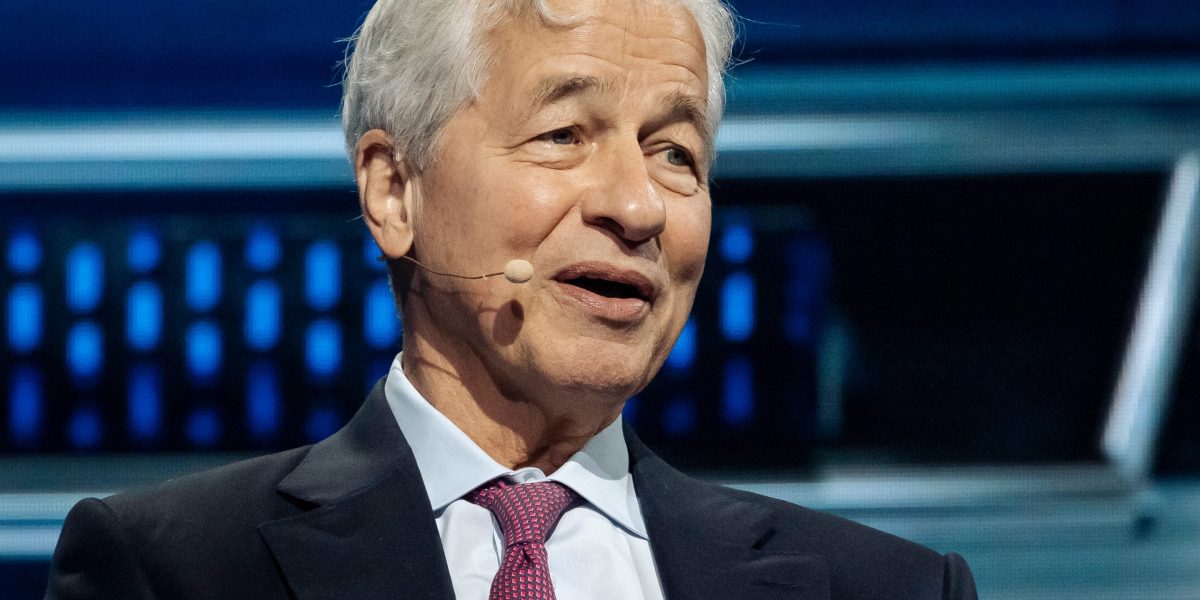
In a break that shapes the architecture of shareholder power, JPMorgan Asset Management, which manages more than $7 trillion in client assets — severed all ties this week with proxy advisory giants ISS and Glass Lewis

It will now rely solely on an internal, AI-driven voting platform called Proxy IQ — the first such move by a major asset manager.

It comes days after President Trump issued an executive order directing federal agencies to investigate proxy advisers, citing concerns that their influence on board votes, CEO pay, and ESG policies is driven more by political agendas than fiduciary duty.

Together, Trump and JPMorgan waged a two-front assault on the proxy advisory industry — one political, one financial. Trump’s order adds regulatory firepower. Dimon’s decision delivers a market blow.

JPMorgan CEO Jamie Dimon, relentless critic of proxy advisers, called these firms “incompetent” and their dominance “done with.”  The bank’s full exit marks a direct challenge to a system many view as opaque and obsolete.

Yet in dismantling the old gatekeepers, JPMorgan may be quietly installing itself as a new one.

By replacing outside advisers with its own AI platform, it now controls the very machinery of shareholder voting it once condemned. What began as a crusade against centralized influence may be remembered as a corporate land grab.

These developments underscore the rise of a more decentralized and digitally engaged electorate — part of a broader shift toward democratization of investing, as individuals gain real-time access to ballots and influence decisions once shaped by a handful of power brokers.

This spring’s proxy season may not hinge on an activist’s letter, banker spreadsheets or hedge fund media blitzes … but instead on the quick, quiet clicks of individual investors — each with a few hundred shares — voting between Zoom calls and scrolling through message board threads.

When digital swarms reshape the roadshow

In March 2025, ExxonMobil moved to elevate individual investors — still shaped by its 2021 clash with Engine No. 1 — even without adopting default proxy instructions. 

In September, the Securities and Exchange Commission (SEC) approved a program that lets individual stakeholders automatically follow board recommendations, aiming to counter chronically low voting turnout and disproportionate influence of institutional and activist investors.

And Exxon isn’t alone. Small investors blocked a share conversion at AMC in August 2023, triggering a lawsuit and court-approved settlement. The conversion and split took effect, revealing the persistence of a shareholder base once hailed as the company’s savior.

At Disney in April 2024, Nelson Peltz’s proxy fight culminated in a vote that drew support from fans-turned-shareholders mobilizing around board accountability and creative direction. While Peltz lost, Disney revamped investor engagement.

Main Street investors rallied behind Elon Musk’s billion-dollar pay package at Tesla in June 2024 and again in October 2025, circulating voting instructions and videos across social media. This outreach momentum carried into the subsequent vote. 

These episodes point to a shift, not a revolt 

One important new mechanism drawing attention is pass-through proxy voting — allowing mutual fund and ETF investors to vote their shares directly instead of delegating authority to fund managers. It gives individuals direct control over votes attached to their assets.

But it still only matters if they vote. Many independent shareholders skip proxy voting, as notices go unread. Engagement usually emerges in a contested election, as investors hold their ballots to see how the fight unfolds.

As of March 2024, BlackRock expanded its Voting Choice program to U.S. individual investors in select funds, enabling direct proxy voting. This marked the first major rollout of pass-through voting within fund structures.

Still, only 8% of BlackRock funds offer it, but it is increasing pressure across the industry as analysis grows around individual investor inclusion.

But Waiting for Godot is a mistake. Regulation can tweak the system, but real change begins when investors are brought in early, understand the stakes, trust the process and choose to engage.

Let the votes flow: Unlocking real shareholder influence

Funds should … Implement full pass-through voting across all funds in 2026.

BlackRock’s Larry Fink, Vanguard’s Salim Ramji, Fidelity’s Abigail Johnson, State Street’s Yie-Hsin Hung and J.P. Morgan’s Jamie Dimon can set standards now. Every individual investor’s capital carries its own vote.

Boards in parallel should …

  • Make proxy voting as seamless as trading. Investors can execute options in seconds but face treasure maps to cast a proxy vote; convenience drives turnout.
  • Recognize voting isn’t just procedural — it’s reputational. Individual shareholders vote on brand trust. Opaque disclosures or footnote-heavy messaging erode confidence. Say clearly what you want and why.
  • Clear instructions turn a ballot into a voice. Not voting isn’t neutral — it cedes your power to others who choose to engage. Every proxy should say plainly, in bold in all correspondence: “We encourage you to vote. If you don’t, your silence increases power of those who do.”

When proxy voting really begins

Influence doesn’t begin with a proxy. It starts with a viral post that reframes a proposal in plain English, sharp YouTube explainer or social threads that turn legalese into a clear takeaway. This is where shareholder sentiment is formed and fortified.

As proxy season approaches, the same question looms: Do we have the votes? This year, outcomes may hinge on stakeholders who rarely join investor calls.

“Trust is like the air we breathe — when it’s present, nobody really notices. But when it’s absent, everybody notices.” — Warren Buffett

The opinions expressed in Fortune.com commentary pieces are solely the views of their authors and do not necessarily reflect the opinions and beliefs of Fortune.


Source link

Continue Reading

Business

If Trump takes Greenland, he must build a welfare state ‘that he doesn’t want for his own citizens’

Published

on


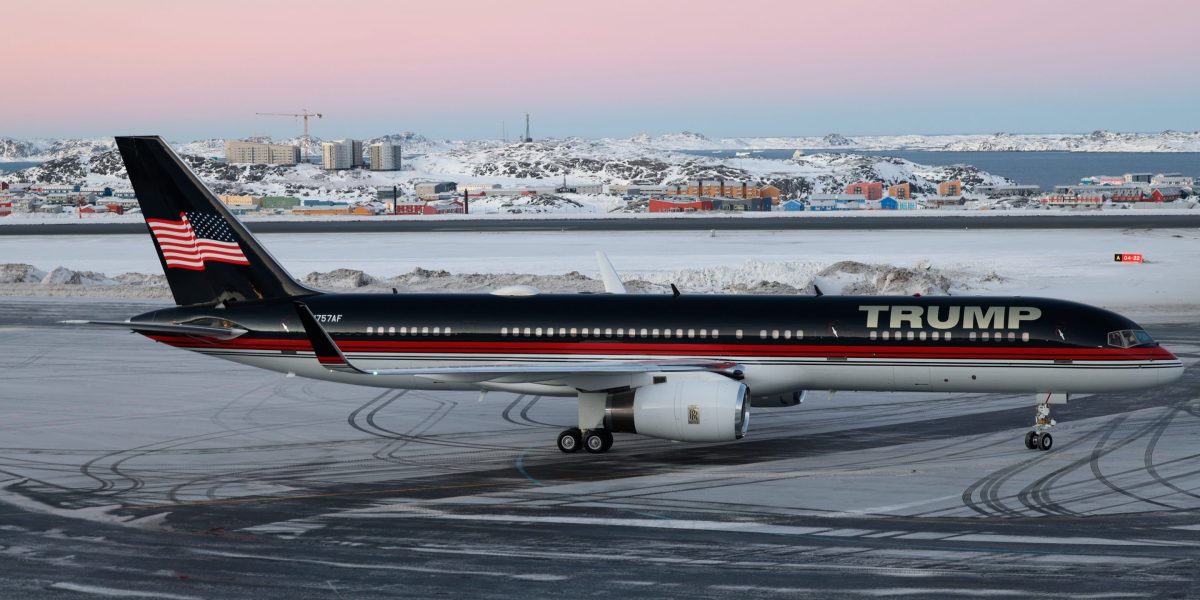
U.S. President Donald Trump wants to own Greenland. He has repeatedly said the United States must take control of the strategically located and mineral-rich island, which is a semiautonomous region that’s part of NATO ally Denmark.

Officials from Denmark, Greenland and the United States met Thursday in Washington and will meet again next week to discuss a renewed push by the White House, which is considering a range of options, including using military force, to acquire the island.

Trump said Friday he is going to do “something on Greenland, whether they like it or not.”

If it’s not done “the easy way, we’re going to do it the hard way,” he said without elaborating what that could entail. In an interview Thursday, he told The New York Times that he wants to own Greenland because “ownership gives you things and elements that you can’t get from just signing a document.”

Danish Prime Minister Mette Frederiksen has warned that an American takeover of Greenland would mark the end of NATO, and Greenlanders say they don’t want to become part of the U.S.

This is a look at some of the ways the U.S. could take control of Greenland and the potential challenges.

Military action could alter global relations

Trump and his officials have indicated they want to control Greenland to enhance American security and explore business and mining deals. But Imran Bayoumi, an associate director at the Atlantic Council’s Scowcroft Center for Strategy and Security, said the sudden focus on Greenland is also the result of decades of neglect by several U.S. presidents towards Washington’s position in the Arctic.

The current fixation is partly down to “the realization we need to increase our presence in the Arctic, and we don’t yet have the right strategy or vision to do so,” he said.

If the U.S. took control of Greenland by force, it would plunge NATO into a crisis, possibly an existential one.

While Greenland is the largest island in the world, it has a population of around 57,000 and doesn’t have its own military. Defense is provided by Denmark, whose military is dwarfed by that of the U.S.

It’s unclear how the remaining members of NATO would respond if the U.S. decided to forcibly take control of the island or if they would come to Denmark’s aid.

“If the United States chooses to attack another NATO country militarily, then everything stops,” Frederiksen has said.

Trump said he needs control of the island to guarantee American security, citing the threat from Russian and Chinese ships in the region, but “it’s not true” said Lin Mortensgaard, an expert on the international politics of the Arctic at the Danish Institute for International Studies, or DIIS.

While there are probably Russian submarines — as there are across the Arctic region — there are no surface vessels, Mortensgaard said. China has research vessels in the Central Arctic Ocean, and while the Chinese and Russian militaries have done joint military exercises in the Arctic, they have taken place closer to Alaska, she said.

Bayoumi, of the Atlantic Council, said he doubted Trump would take control of Greenland by force because it’s unpopular with both Democratic and Republican lawmakers, and would likely “fundamentally alter” U.S. relationships with allies worldwide.

The U.S. already has access to Greenland under a 1951 defense agreement, and Denmark and Greenland would be “quite happy” to accommodate a beefed up American military presence, Mortensgaard said.

For that reason, “blowing up the NATO alliance” for something Trump has already, doesn’t make sense, said Ulrik Pram Gad, an expert on Greenland at DIIS.

Bilateral agreements may assist effort

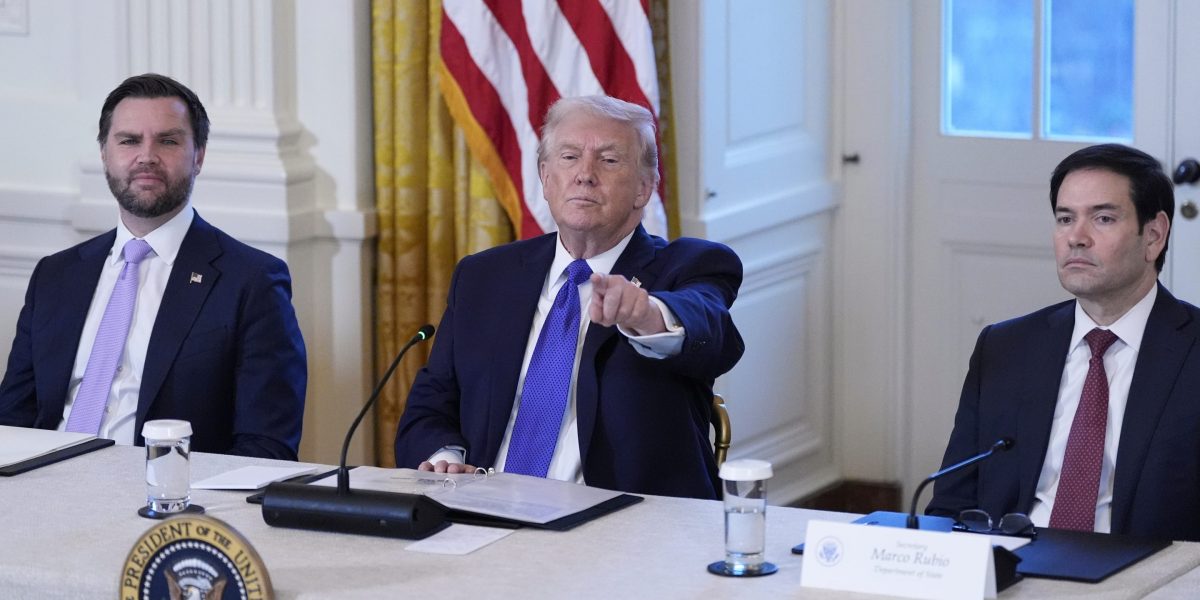
U.S. Secretary of State Marco Rubio told a select group of U.S. lawmakers this week that it was the Republican administration’s intention to eventually purchase Greenland, as opposed to using military force. Danish and Greenlandic officials have previously said the island isn’t for sale.

It’s not clear how much buying the island could cost, or if the U.S. would be buying it from Denmark or Greenland.

Washington also could boost its military presence in Greenland “through cooperation and diplomacy,” without taking it over, Bayoumi said.

One option could be for the U.S. to get a veto over security decisions made by the Greenlandic government, as it has in islands in the Pacific Ocean, Gad said.

Palau, Micronesia and the Marshall Islands have a Compact of Free Association, or COFA, with the U.S.

That would give Washington the right to operate military bases and make decisions about the islands’ security in exchange for U.S. security guarantees and around $7 billion of yearly economic assistance, according to the Congressional Research Service.

It’s not clear how much that would improve upon Washington’s current security strategy. The U.S. already operates the remote Pituffik Space Base in northwestern Greenland, and can bring as many troops as it wants under existing agreements.

Influence operations expected to fail

Greenlandic politician Aaja Chemnitz told The Associated Press that Greenlanders want more rights, including independence, but don’t want to become part of the U.S.

Gad suggested influence operations to persuade Greenlanders to join the U.S. would likely fail. He said that is because the community on the island is small and the language is “inaccessible.”

Danish Foreign Minister Lars Løkke Rasmussen summoned the top U.S. official in Denmark in August to complain that “foreign actors” were seeking to influence the country’s future. Danish media reported that at least three people with connections to Trump carried out covert influence operations in Greenland.

Even if the U.S. managed to take control of Greenland, it would likely come with a large bill, Gad said. That’s because Greenlanders currently have Danish citizenship and access to the Danish welfare system, including free health care and schooling.

To match that, “Trump would have to build a welfare state for Greenlanders that he doesn’t want for his own citizens,” Gad said.

Disagreement unlikely to be resolved

Since 1945, the American military presence in Greenland has decreased from thousands of soldiers over 17 bases and installations to 200 at the remote Pituffik Space Base in the northwest of the island, Rasmussen said last year. The base supports missile warning, missile defense and space surveillance operations for the U.S. and NATO.

U.S. Vice President J.D. Vance told Fox News on Thursday that Denmark has neglected its missile defense obligations in Greenland, but Mortensgaard said that it makes “little sense to criticize Denmark,” because the main reason why the U.S. operates the Pituffik base in the north of the island is to provide early detection of missiles.

The best outcome for Denmark would be to update the defense agreement, which allows the U.S. to have a military presence on the island and have Trump sign it with a “gold-plated signature,” Gad said.

But he suggested that’s unlikely because Greenland is “handy” to the U.S president.

When Trump wants to change the news agenda — including distracting from domestic political problems — “he can just say the word ‘Greenland’ and this starts all over again,” Gad said.


Source link

Continue Reading

Business

The ‘Holy Grail of comic books’ once owned by Nicolas Cage sells at auction for a record $15 million

Published

on


A rare copy of the comic book that introduced the world to Superman and also was once stolen from the home of actor Nicolas Cage has been sold for a record $15 million.

The private deal for “Action Comics No. 1” was announced Friday. It eclipses the previous record price for a comic book, set last November when a copy of “Superman No. 1″ was at sold at auction for $9.12 million.

The Action Comics sale was negotiated by Manhattan-based Metropolis Collectibles/Comic Connect, which said the comic book’s owner and the buyer wished to remain anonymous.

The comic — which sold for 10 cents when it came out in 1938 — was an anthology of tales about mostly now little-known characters. But over a few panels, it told the origin story of Superman’s birth on a dying planet, his journey to Earth and his decision as an adult to “turn his titanic strength into channels that would benefit mankind.”

Its publication marked the beginning of the superhero genre. About 100 copies of Action Comics No. 1 are known to exist, according to Metropolis Collectibles/Comic Connect President Vincent Zurzolo.

“This is among the Holy Grail of comic books. Without Superman and his popularity, there would be no Batman or other superhero comic book legends,” Zurzolo said. “It’s importance in the comic book community shows with his deal, as it obliterates the previous record,” Zurzolo said.

The comic book was stolen from Cage’s Los Angeles home in 2000 but was recovered in 2011 when it was found by a man who had purchased the contents of an old storage locker in southern California. It eventually was returned to Cage, who had bought it in 1996 for $150,000. Six months after it was returned to him, he sold it at auction for $2.2 million.

Stephen Fishler, CEO of Metropolis Collectibles/Comic Connect, said the theft eventually played a big role in boosting the comic’s value.

“During that 11-year period (it was missing), it skyrocketed in value.,” Fishler said “The thief made Nicolas Cage a lot of money by stealing it.”

Fishler compared it to the theft of Mona Lisa, which was stolen from the Louvre museum in Paris in 1911.

“It was kept under the thief’s bed for two years,” Fishler noted. “The recovery of the painting made the Mona Lisa go from being just a great Da Vinci painting to a world icon — and that’s what Action No. 1 is — an icon of American pop culture.”


Source link

Continue Reading

Business

Trump order says Venezuelan oil money is being held by US for ‘governmental and diplomatic purposes’

Published

on


President Donald Trump’s new executive order on Venezuelan oil revenue is meant to ensure that the money remains protected from being used in judicial proceedings.

The executive order, made public on Saturday, says that if the funds were to be seized for such use, it could “undermine critical U.S. efforts to ensure economic and political stability in Venezuela.”

The order comes amid caution from top oil company executives that the tumult and instability in Venezuela could make the country less attractive for private investment and rebuilding.

“If we look at the commercial constructs and frameworks in place today in Venezuela, today it’s uninvestable,” said Darren Woods, CEO of ExxonMobil, the largest U.S. oil company, during a meeting convened by Trump with oil executives on Friday.

During the session, Trump tried to assuage the concerns of the oil companies and said the executives would be dealing directly with the U.S., rather than the Venezuelan government.

Venezuela has a history of state asset seizures, ongoing U.S. sanctions and decades of political uncertainty.

Getting U.S. oil companies to invest in Venezuela and help rebuild the country’s infrastructure is a top priority of the Trump administration after the dramatic capture of now-deposed leader Nicolás Maduro.

The White House is framing the effort to “run” Venezuela in economic terms, and Trump has seized tankers carrying Venezuelan oil, has said the U.S. is taking over the sales of 30 million to 50 million barrels of previously sanctioned Venezuelan crude, and plans to control sales worldwide indefinitely.

“I love the Venezuelan people, and am already making Venezuela rich and safe again,” Trump, who is currently in southern Florida, wrote on his social media site on Saturday. “Congratulations and thank you to all of those people who are making this possible!!!”

The order says the oil revenue is property of Venezuela that is being held by the United States for “governmental and diplomatic purposes” and not subject to private claims.

Its legal underpinnings are the National Emergencies Act and the International Emergency Economic Powers Act. Trump, in the order, says the possibility that the oil revenues could be caught up in judicial proceedings constitutes an “unusual and extraordinary threat” to the U.S.


Source link

Continue Reading

Trending

Copyright © Miami Select.