Connect with us

Business

Jamie Dimon was the ‘master architect’ of JPMorgan’s new $3 billion skyscraper, the bank’s real estate head says

Published

on


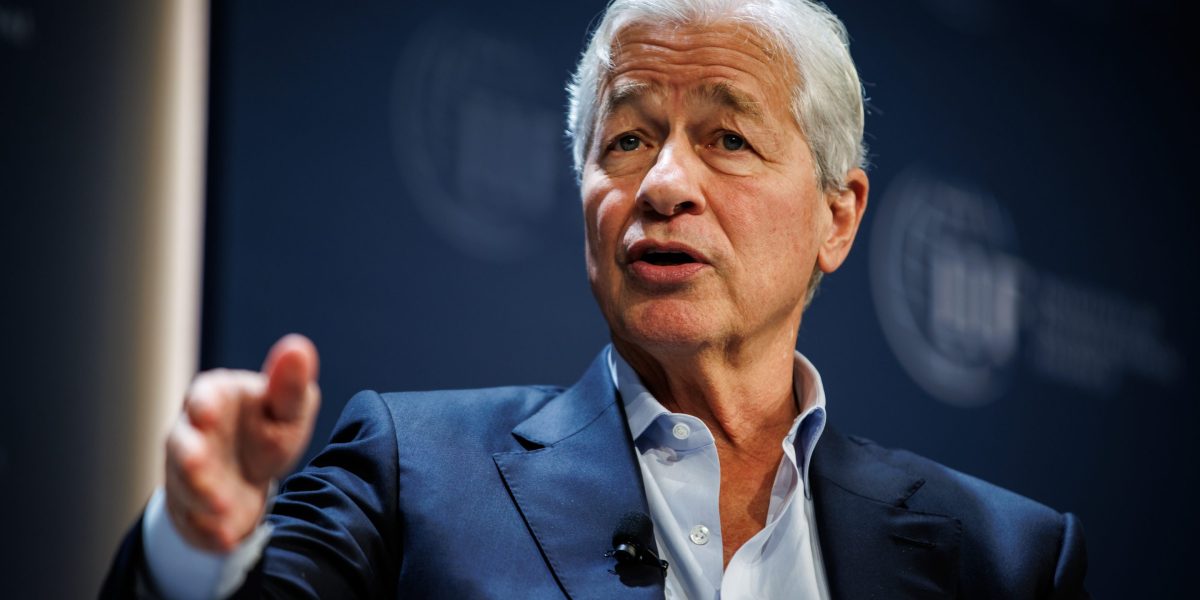
JPMorgan Chase’s six-year-long process to deconstruct its headquarters in Midtown Manhattan and build up a new $3 billion skyscraper from its foundation is nearly completed, with Jamie Dimon and other execs taking an active part in its design.

Architect Norman Foster, who’s behind Apple’s headquarters in California and Hearst Tower in Manhattan, said the project may top his previous work.

“In terms of leisure, entertainment, lifestyle, I would say that every level of this tower pushes those boundaries further than anything we’ve done before,” he told The Wall Street Journal on Friday.

But Dimon essentially acted as the building’s “master architect,” David Arena, the bank’s head of real estate, told The Journal.

Other JPMorgan execs were intimately involved in the design process, Dimon told The Journal.

Doug Petno, co-head of commercial and investment banking, was tasked with looking at the ground floor and lobby. Mary Erdoes, head of asset and wealth management, and Marianne Lake, the consumer head, planned office floors and client spaces. And Erdoes joined former president Daniel Pinto to look at the executive floor.

The 60-story building at 270 Park Avenue is also home to 19 restaurants, as well as coffee shops, a company store, a gym and Morgan’s, an English pub, The Journal reported.

Some execs feared the headquarters’ sky-lobby looked more like a mall than an office building. So Dimon asked Rick Caruso, a billionaire Los Angeles developer of high-end shopping centers, for advice on how to make the space lined with retail and eateries appear more professional, according to The Journal.

The JPMorgan tower at 270 Park Avenue takes up a whole block.

Michael Nagle/Bloomberg via Getty Images

For nearly 20 years, Dimon has been the chief executive of the country’s largest bank. He recently emphasized the importance of in-person work during an expletive-laced rant to employees. His answer to workers hesitant to work in-office? Build one they can hardly refuse.

The building, which spans a city block and plans to hold 10,000 employees at full capacity, opened in late August, and designer Foster + Partners announced Sept. 10 that construction had wrapped up.

But it won’t be complete until next year. Dimon and other execs don’t expect the upper-floor offices for them to be ready until Christmas, The Journal reported. A not-yet-opened trading floor has rows of wooden desks still covered in blue masking tape, the Friday report said.

As more employees filter into the building next year, the $3 billion investment reflects Dimon’s broader bet on the future of office life, built on the conviction that real culture and creativity thrive only when people work side by side.


Source link

Continue Reading

Business

Australia will start banning kids from social media this week

Published

on


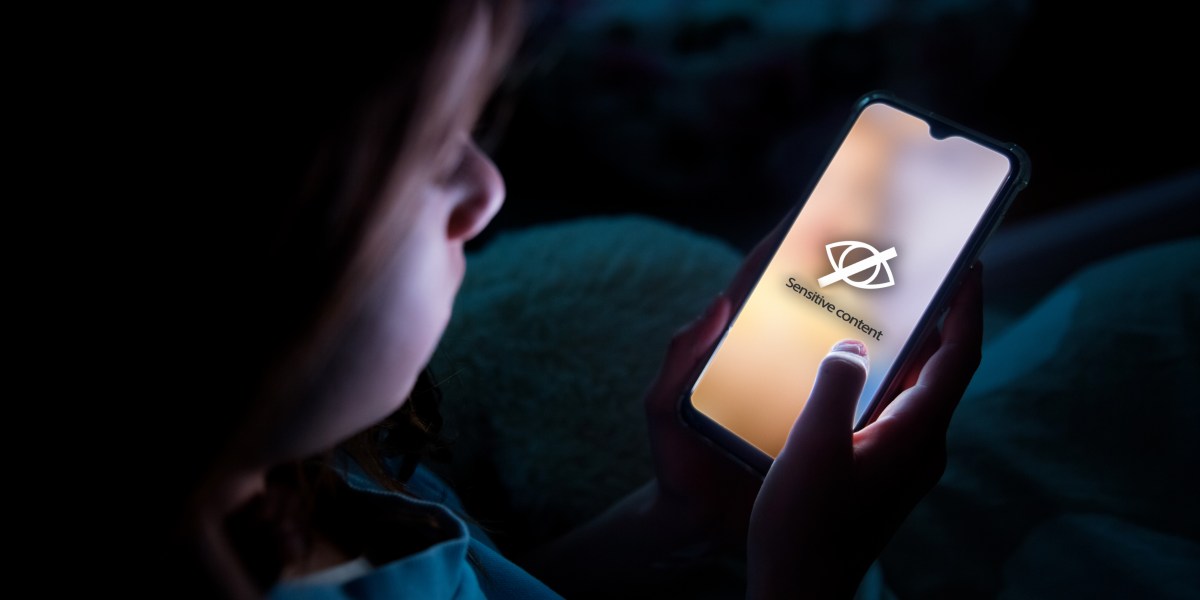
Starting this Wednesday, many Australian teens will find it near impossible to access social media. That’s because, as of Dec. 10, social media platforms like TikTok and Instagram must bar those under the age of 16, or face significant fines. Australian Prime Minister Anthony Albanese called the pending ban “one of the biggest social and cultural changes our nation has faced” in a statement.

Much is riding on this ban—and not just in Australia. Other countries in the region are watching Canberra’s ban closely. Malaysia, for example, said that it also plans to bar under-16s from accessing social media platforms starting next year. 

Other countries are considering less drastic ways to control teenagers’ social media use. On Nov. 30, Singapore said it would ban the use of smartphones on secondary school campuses. 

Yet, governments in Australia and Malaysia argue a full social media ban is necessary to protect youth from online harms such as cyberbullying, sexual exploitation and financial scams.

Tech companies have had varied responses to the social media ban. 

Some, like Meta, have been compliant, starting to remove Australian under-16s from Instagram, Threads and Facebook from Dec. 4, a week before the national ban kicks in. The social media giant reaffirmed their commitment to adhere to Australian law, but called for app stores to instead be held accountable for age verification.

“The government should require app stores to verify age and obtain parental approval whenever teens under 16 download apps, eliminating the need for teens to verify their age multiple times across different apps,” a Meta spokesperson said.

Others, like YouTube, sought to be excluded from the ban, with parent company Google even threatening to sue the Australian federal government in July 2025—to no avail.

However, experts told Fortune that these bans may, in fact, be harmful, denying young people the place to develop their own identities and the space to learn healthy digital habits.

“A healthy part of the development process and grappling with the human condition is the process of finding oneself. Consuming cultural material, connecting with others, and finding your community and identity is part of that human experience,” says Andrew Yee, an assistant professor at the Nanyang Technological University (NTU)’s Wee Kim Wee School of Communication and Information.

Social media “allows young people to derive information, gain affirmation and build community,” says Sun Sun Lim, a professor in communications and technology at the Singapore Management University (SMU), who also calls bans “a very rough tool.”

Yee, from NTU, also points out that young people can turn to platforms like YouTube to learn about hobbies that may not be available in their local communities. 

Forcing kids to go “cold turkey” off social media could also make for a difficult transition to the digital world once they are of age, argues Chew Han Ei, a senior research fellow at the Lee Kuan Yew School of Public Policy in the National University of Singapore (NUS).

“The sensible way is to slowly scaffold [social media use], since it’s not that healthy social media usage can be cultivated immediately,” Chew says.

Enforcement

Australia plans to enforce its social media ban by imposing a fine of 49.5 million Australian dollars (US$32.9 million) on social media companies which fail to take steps to ban those under 16 from having accounts on their platforms.

Malaysia has yet to explain how it might enforce its own social media ban, but communications minister Fahmi Fadzil suggested that social media platforms could verify users through government-issued documents like passports. 

Though young people may soon figure out how to maintain their access to social media. “Youths are savvy, and I am sure they will find ways to circumvent these,” says Yee of NTU. He also adds that young may migrate to platforms that aren’t traditionally defined as social media, such as gaming sites like Roblox. Other social media platforms, like YouTube, also don’t require accounts, thus limiting the efficacy of these bans, he adds.

Forcing social media platforms to collect huge amounts of personal data and government-issued identity documents could also lead to data privacy issues. “It’s very intimate personally identifiable information that’s being collected to verify age—from passports to digital IDs,” Chew, from NUS, says. “Somewhere along the line, a breach will happen.”

Moving towards healthy social media use

Ironically, some experts argue that a ban may absolve social media platforms of responsibility towards their younger users. 

“Social media bans impose an unfair burden on parents to closely supervise their children’s media use,” says Lim of SMU. “As for the tech platform, they can reduce child safety safeguards that make their platforms safer, since now the assumption is that young people are banned from them, and should not have been venturing [onto them] and opening themselves up to risks.”

And rather than allow digital harms to proliferate, social media platforms should be held responsible for ensuring they “contribute to intentional and purposeful use”, argues Yee.

This could mean regulating companies’ use of user interface features like auto-play and infinite scroll, or ensuring algorithmic recommendations are not pushing harmful content to users.

“Platforms profit—lucratively, if I may add—from people’s use, so they have a responsibility to ensure that the product is safe and beneficial for its users,” Yee explains. 

Finally, conversations on safe social media use should center the voices of young people, Yee adds.

“I think we need to come to a consensus as to what a safe and rights-respecting online space is,” he says. “This must include young people’s voices, as policy design should be done in consultation with the people the policy is affecting.”


Source link

Continue Reading

Business

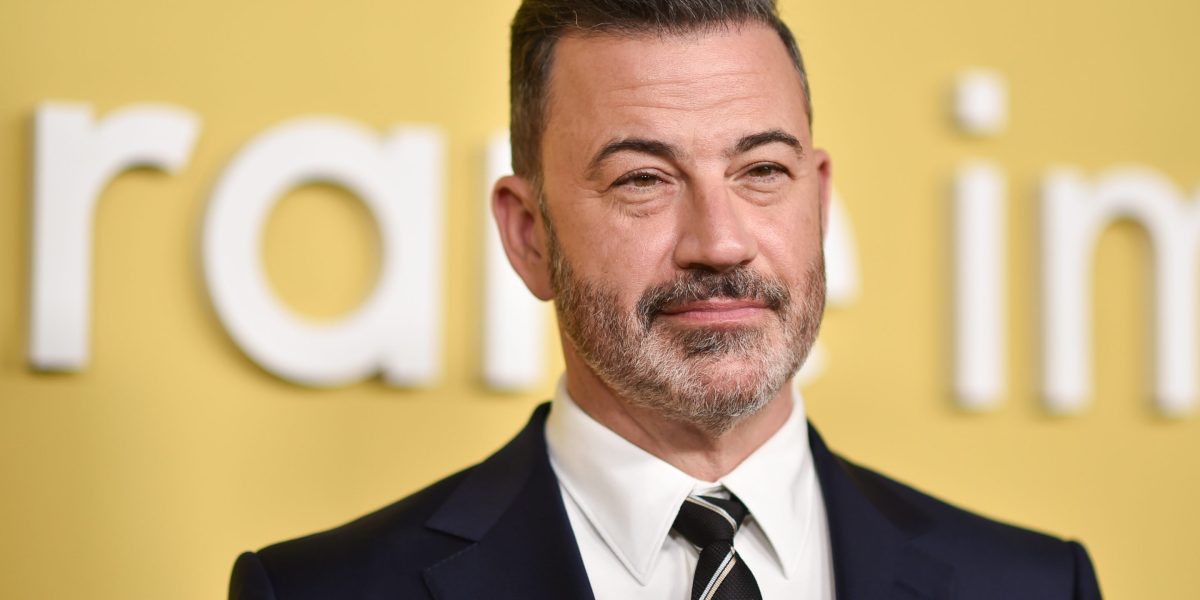
Jimmy Kimmel signs ABC extension through 2027

Published

on


Kimmel’s previous, multiyear contract had been set to expire next May, so the extension will keep him on the air until at least May 2027.

Kimmel’s future looked questionable in September, when ABC suspended “Jimmy Kimmel Live!” for remarks made following the assassination of conservative activist Charlie Kirk. Following a public outcry, ABC lifted the suspension, and Kimmel returned to the air with much stronger ratings than he had before.

He continued his relentless joking at the president’s expense, leading Trump to urge the network to “get the bum off the air” in a social media post last month. The post followed Kimmel’s nearly 10-minute monologue on Trump and the Jeffrey Epstein files.

Kimmel was even on Trump’s mind Sunday as the president hosted the Kennedy Center Honors in Washington.

“I’ve watched some of the people that host,” Trump said. “I’ve watched some of the people that host. Jimmy Kimmel was horrible, and some of these people, if I can’t beat out Jimmy Kimmel in terms of talent, then I don’t think I should be president.”

Kimmel has hosted the Oscars four times, but he’s never hosted the Kennedy Center show.

Just last week, Kimmel was needling Trump on the president’s approval ratings. “There are gas stations on Yelp with higher approval ratings than Trump right now,” he said.

Kimmel will be staying longer than late-night colleague Stephen Colbert at CBS. The network announced this summer it was ending Colbert’s show next May for economic reasons, even though it is the top-rated network show in late-night television.

ABC has aired Kimmel’s late-night show since 2003, during a time of upheaval in the industry. Like much of broadcast television, late-night ratings are down. Viewers increasingly turn to watching monologues online the day after they appear.

Most of Kimmel’s recent renewals have been multiyear extensions. There was no immediate word on whose choice it was to extend his current contract by one year.

Bill Carter, author of “The Late Shift” and veteran chronicler of late-night TV, cautioned against reading too much into the length of the extension. Kimmel, at age 58, knows he’s getting close to the end of the line, Carter said, but when he leaves, he doesn’t want it to appear under pressure from Trump or anyone.

“He wants to make sure that it’s on his terms,” Carter said.

Kimmel has become one of the leading voices resisting Trump. “I think it’s important for him and for ABC that they are standing up for him,” Carter said.

Following Kirk’s killing, Kimmel was criticized for saying that “the MAGA gang” was “desperately trying to characterize this kid who murdered Charlie Kirk as anything other than one of them and doing everything they can to score political points from it.” The Nexstar and Sinclair television ownership groups said it would take Kimmel off the air, leading to ABC’s suspension.

When he returned to the air, Kimmel did not apologize for his remarks, but he said he did not intend to blame any specific group for Kirk’s assassination. He said “it was never my intention to make the light of the murder of a young man.”


Source link

Continue Reading

Business

Trump says he’ll allow Nvidia to sell advanced chips to ‘approved customers’ in China

Published

on


President Donald Trump said Monday that he would allow Nvidia to sell an advanced type of computer chip used in the development of artificial intelligence to “approved customers” in China.

There have been concerns about allowing advanced computer chips to be sold to China as it could help the country better compete against the U.S. in building out AI capabilities, but there has also been a desire to develop the AI ecosystem with American companies such as chipmaker Nvidia.

The chip, known as the H200, is not Nvidia’s most advanced product. Those chips, called Blackwell and the upcoming Rubin, were not part of what Trump approved.

Trump said on social media that he had informed China’s leader Xi Jinping about his decision and “President Xi responded positively!”

“This policy will support American Jobs, strengthen U.S. Manufacturing, and benefit American Taxpayers,” Trump said in his post.

Nvidia said in a statement that it applauded Trump’s decision, saying the choice would support domestic manufacturing and that by allowing the Commerce Department to vet commercial customers it would “strike a thoughtful balance” on economic and national security priorities.

Trump said the Commerce Department was “finalizing the details” for other chipmakers such as AMD and Intel to sell their technologies abroad.

The approval of the licenses to sell Nvidia H200 chips reflects the increasing power and close relationship that the company’s founder and CEO, Jensen Huang, enjoys with the president. But there have been concerns that China will find ways to use the chips to develop its own AI products in ways that could pose national security risks for the U.S., a primary concern of the Biden administration that sought to limit exports.

Nvidia has a market cap of $4.5 trillion and Trump’s announcement appeared to drive the stock slightly higher in after hours trading.


Source link

Continue Reading

Trending

Copyright © Miami Select.