Connect with us

Politics

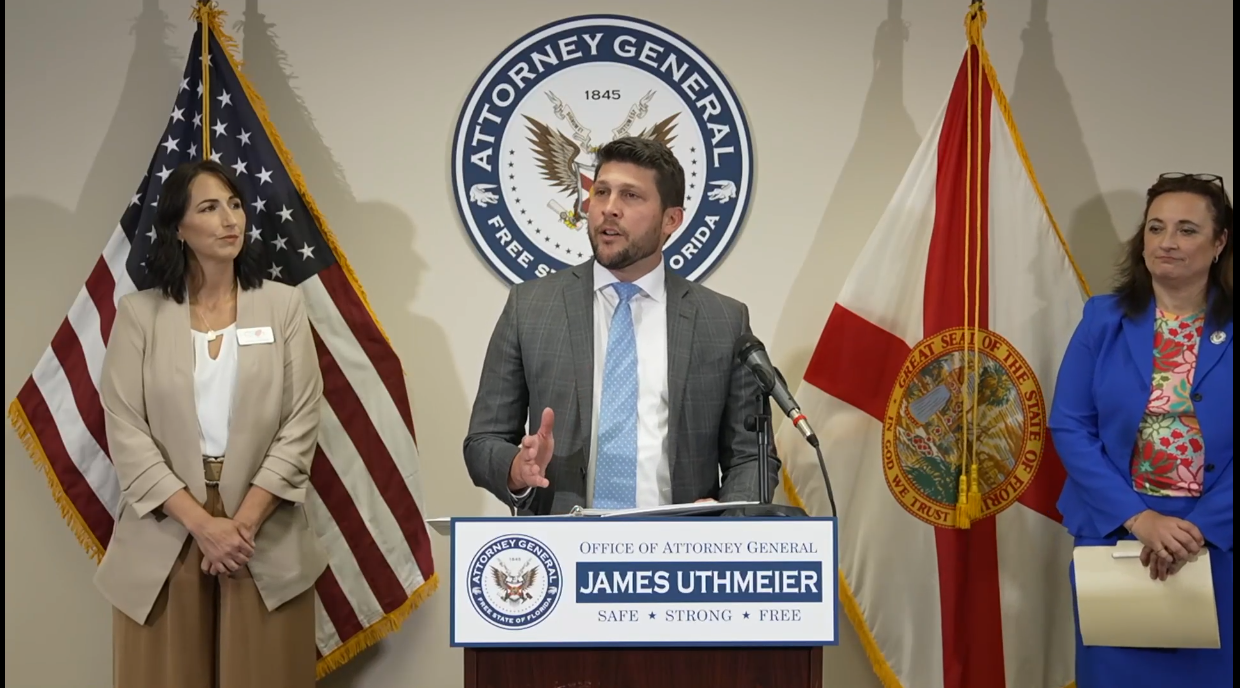
James Uthmeier sues textbook giants, accuses them of overcharging Florida school districts

Published

on


Florida’s lawsuit is seeking civil penalties against McGraw Hill and Savvas Learning Co.

Florida is suing two of the largest publishers of school textbooks amid claims the companies are overcharging school districts.

Attorney General James Uthmeier filed the lawsuit against McGraw Hill and Savvas Learning Co., alleging that the companies set up a system where they overcharged Florida public school districts in violation of Florida’s False Claims Act.

The lawsuit was filed in the 2nd Judicial Circuit Court of Florida in the Big Bend and Panhandle area.

Uthmeier claims the companies did not comply with Florida’s statutory pricing requirements for instructional materials adopted for statewide use. According to Uthmeier, Florida law requires publishers to give school districts in the state the best prices offered anywhere in the United States. Publishers must also automatically extending any price cuts that are available in other areas of the country and provide free materials to Florida schools if they are provided for free in other areas of the U.S.

“Our lawsuit exposes a textbook case of corporate greed — companies charging Florida schools more than the law allows, pocketing the difference, and sticking taxpayers with the bill,” Uthmeier said in a news release. “Florida will not be a playground for deceitful profiteers who think they can cheat our students and teachers. We will make sure they pay back every dime and face the full consequences under the law.”

Gov. Ron DeSantis also championed the lawsuit in a news conference Tuesday morning.

The state’s lawsuit says both companies “knowingly” charged Florida school districts more than the lowest prices they were offering districts in other states. They also withheld cost reductions that were being offered elsewhere, according to Uthmeier.

Ultimately, the legal action contends, public school districts in Florida ended up making “substantial overpayments” that the taxpayers eventually had to pick up.

The lawsuit is requesting civil penalties be paid by the companies as part of a strategy to deter the violations from occurring again.


Post Views: 0


Source link

Continue Reading

Politics

Dean Black bill abolishing Nassau County board advances in House

Published

on


This could save the county money.

Nassau County’s government is about to become a bit more streamlined, as an appointed board dormant since 2002 is potentially subject to be wiped off the books completely.

Rep. Dean Black’s legislation (HB 4017) would terminate Nassau County Recreation & Water Conservation & Control Districts on the books since the 1960s, when the Legislature created them by a special act.

There is one such district in ordinance.

Though the board hasn’t done anything in 23 years, removing it from the books purportedly would reduce administrative costs, and would transfer all assets and liabilities of the district to the Nassau County Board of County Commissioners, and protect taxpayers.

“The county has established a municipal service benefit unit, or MSBU, to address drainage issues subsequently. Therefore, the district is no longer functioning or necessary. In a word, it is now obsolete,” Black said.

“The district does not own any land, the district does not have any assets. The district does not currently levy any taxes. It has been inactive since 2002. The repeal of this district would prevent a future board of county commissioners from levying millage rates for what is now a defunct and unnecessary district against the taxpayers of Nassau County.”

The State Affairs Committee is the final committee stop before the House floor.


Source link

Continue Reading

Politics

Gov. DeSantis prioritizes road projects, infrastructure improvements in budget plan

Published

on


Gov. Ron DeSantis is looking to prioritize road construction projects and beef up infrastructure in his 2026-27 budget proposal.

DeSantis is calling for $15.4 billion for the Florida Department of Transportation (FDOT) in addition to $14.3 billion for the State Transportation Work Program, which handles construction and maintenance of Florida’s roads, bridges, rails, seaports and other public transportation systems.

Speaking at a budget press conference in Orlando, DeSantis said his proposal provides “major support for infrastructure and transportation.”

“Over $14 billion for our state work program — that more than funds everything we need to do,” DeSantis said as he unveiled a $117 billion proposed spending plan ahead of the upcoming Legislative Session.

The fully released budget plan gives more detail on how DeSantis wants to carry out his priorities.

The Governor wants to allocate $4.9 billion for highway construction and maintenance. That entails constructing 181 new lane miles, $1.4 billion for resurfacing 2,622 lane miles, about $873 million for repairing 38 bridges and replacing 21 others. In addition, DeSantis wants to allocate about $204 million for community trail projects.

DeSantis is also pushing for investments to be made at the state’s airports and seaports.

Under DeSantis’ plan, aviation improvements would get nearly $389 million and seaports could receive nearly $156 million for infrastructure upgrades.

“I don’t think you’re going to find another state that’s doing more meaningful things on transportation” and other issues while also maintaining a “stable budget,” DeSantis said at his budget press conference.

The state’s growing space industry would also benefit from DeSantis’ budget proposal which allocates $93 million through the FDOT Spaceport Improvement Program and $10 million for the Aerospace Investment Fund to help recruit companies to the state.

“As Florida’s space industry continues to reach new heights, infrastructure needs along the Space Coast will continue to be a priority, which is why the budget includes $5 million in startup funding to Space Florida to work alongside state agencies to establish additional wastewater capacity for Florida’s commercial launch providers,” DeSantis’ budget proposal added.

“These proposed investments are in addition to the nearly $700 million in funding through the FDOT Work Program to improve community infrastructure in Brevard, Indian River, and Volusia counties.”


Source link

Continue Reading

Politics

Federal probation overhaul enjoys broad support, including in swing districts

Published

on


Florida reformed and scaled back probation supervision more than three years ago. Now, polling shows broad support for Congress tackling probation updates nationwide.

New polling commissioned by the REFORM Alliance, a national group supporting changes to probation and parole, found nearly 79% of Americans support proposals to change supervision as proposed in a bipartisan bill championed by U.S. Rep. Laurel Lee.

The survey, conducted by Fabrizio Ward, showed strong majorities of Democrats, Republicans and independents backing reform.

It’s a result that shocked even the group’s leadership, as most Americans supported changing the process without hearing any messaging.

“I have to say, I was absolutely shocked that we saw as high support right out the gate, without even linking this to any of the authors or any of the incredible influencers who have stepped up and said that they endorsed the bill,” said Jessica Jackson, CEO of the REFORM Alliance.

“We saw right away that 79% of the Trump voters, 80% of the (Kamala) Harris voters said they want to see this happen. They want to see this public safety reform signed into law.”

The pollsters, who also have worked with President Donald Trump’s presidential campaign, stressed the conservative support from swing House districts Trump carried in 2024 by less than 5 percentage points, or that went to Trump despite electing Democrats to Congress.

“Reform of the supervised release system has a clear political benefit for Republicans in their fight to keep control of Congress,” pollsters Anthony Fabrizio and Bob Ward wrote in a memo. “Both the Trump base and the Swing voters who will determine the outcomes in the most competitive House districts see the benefits of making it easier for the recently incarcerated to get back into the workforce, paying taxes and contributing to society.”

That speaks to messaging likely to be embraced by Lee, a swing district Republican.

But the poll also shows voters across the political spectrum back changes. Her bill would grant more judicial discretion in requirements for supervision during probation, allow for an early end to probation for good conduct and allow treatment instead of probation for low-level drug possession.

Jackson said that’s to be expected when looking at data on the number of people detrimentally impacted by the probation system as it exists today.

“Seven out of 10 of the Democrats, or Harris voters, said that they had a loved one. You had eight out of 10 of the Trump supporters who said they had a loved one or themselves had been impacted,” Jackson noted. “I think it’s because it’s become such a widespread issue that people know someone personally, and of course, nothing puts this more on your radar than actually knowing somebody who’s been impacted.”

Various elements of the bill polled at different support levels, but all were popular.

Asked about investing in programs that increase the chances that those on parole will succeed in reentry into society, such as housing assistance, education and job training, addiction treatment, and mental health support, 81% of Trump voters and 84% of swing voters support the bill.

By comparison, giving Judges discretion on minor drug possession violations to consider treatment or rehabilitation instead of mandatory reimprisonment had support from 68% of Trump voters and 72% from swing voters, lower levels of support but strong majorities with even the least popular part of the bill.

“A member of Congress supporting the Safer Supervision Act would gain at the polls, and most voters want President Trump to issue an executive order to accomplish the policies of the Safer Supervision Act,” the polling memo states.

Jackson’s group is prepared to tell personal stories even to those who don’t already know someone impacted by probation restraints. Her group also worked on the First Step Act signed in Trump’s first term, and she recounts how one of the first recipients, after Trump commuted her sentence on a crack cocaine conviction, still struggled to reintegrate in 2018. It wasn’t because she fell into old habits, but because of impossible constraints imposed by the justice system.

That included requirements for visits with a parole officer located 45 minutes away, required random drug tests, an expectation she retain her job at Walmart, all while living in her daughter’s house without her own care and after returning to society after a decade in prison with no ability to build up savings.

“There’s just so much stupid that is holding people back, so much red tape that isn’t actually helping them succeed,” Jackson said.

It’s why even voters who support taking a hard line on crime see benefits in making a return to society easier and more efficient.

“People see this as a tough on crime bill,” Jackson said.

“This is a bill that would return federal supervision to its original intent, which is officers who have people on their docket who they think might be at high risk of committing another crime need the resources to be able to properly supervise them. The way that things are structured right now, you’ve got officers managing 100-plus cases. That means they can’t properly supervise anyone — not those who need their help, not those who pose risks.”


Source link

Continue Reading

Trending

Copyright © Miami Select.