
Politics
James Uthmeier bans more products related to kratom sales in Florida
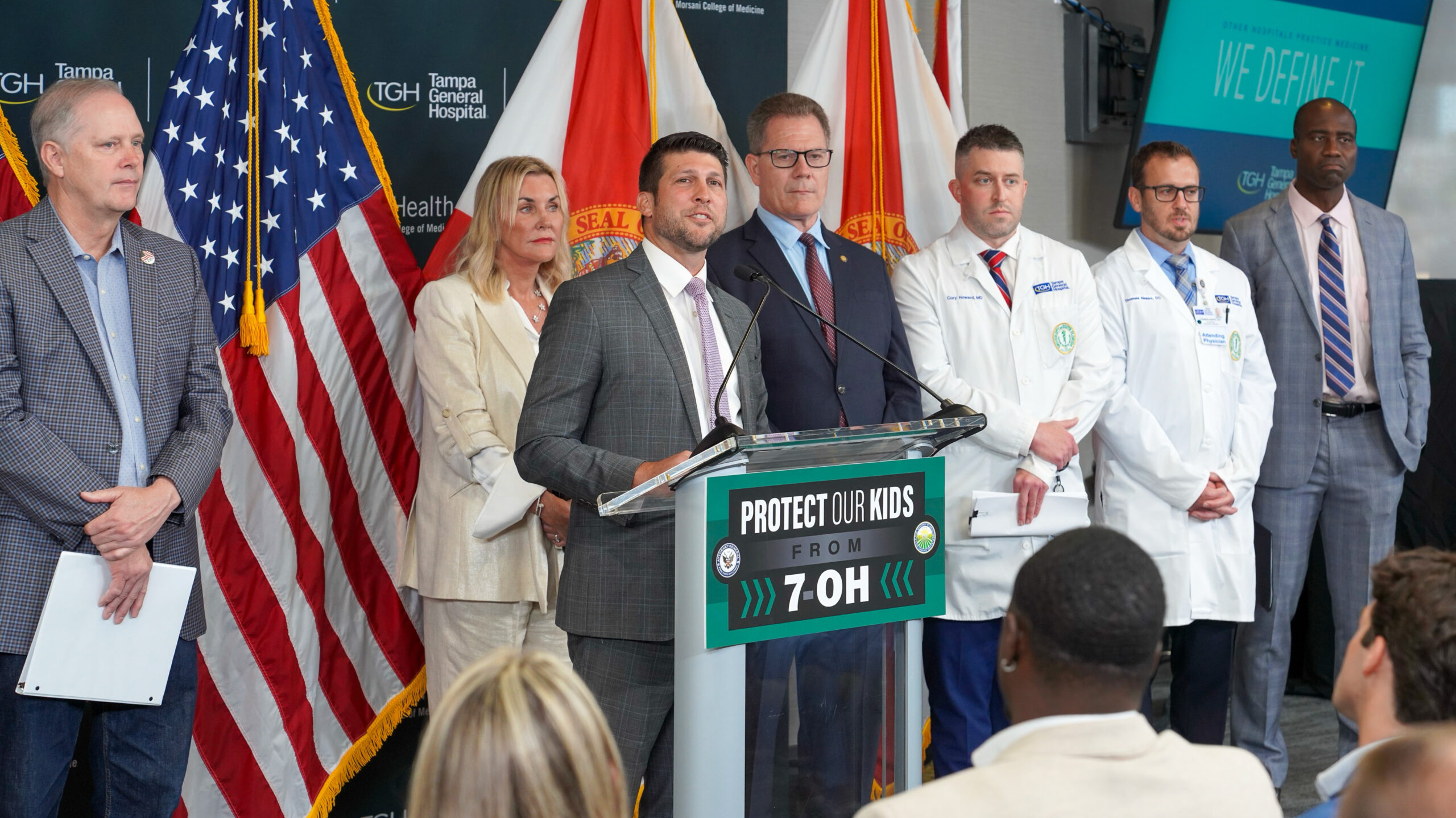
Attorney General James Uthmeier is adding more 7-OH-related products and chemicals to a list of banned substances in Florida.
“Just because something’s on a shelf in a store doesn’t mean it’s safe,” Uthmeier said in a news conference in Tampa. “If you violate our rule, we are going to make you pay for it. You could be looking at 30 years in prison.”
Uthmeier said he has signed an emergency rule expanding the number of banned substances. Those products contain chemicals that are derivatives of, or similar to, 7-OH, which is shorthand for hydroxymitragynine. Uthmeier invoked an executive order in August to ban the drug, which he said is an offshoot of the opioid crisis. The drug was readily available at smoke shops, vape stores, convenience stores and gas stations.
The additional products restricted under the expanded order include Hydroxy, 7Tabz and 7OHMZ. Additional chemicals that are being banned include 7-hydroxymitragynine, mitragynine pseudoindoxyl, 7-acetoxymitragynine, 9-hydroxycorynantheidine, 10-hydroxycorynantheidine, MGM-15 and MGM-16.
The provisions of the expanded executive order include a rule that no product may contain more than 1 milligram of the chemicals per gram. Any product containing any amount of 7-OH or its related compounds must also contain at least 100 times more regular mitragynine by mass. That criteria is so high that manufacturers won’t be able to meet it, thereby keeping the product off of store shelves.
The rule also mandates Schedule I placement, which enables felony-level arrests, prosecutions, product seizures and shutdowns of illegal manufacturers and sellers.
The chemical 7-OH is a derivative of the plant kratom, which is cultivated generally in Asian countries and has been drawing increasing attention as use of the substance is growing.
Agriculture Commissioner Wilton Simpson said his inspectors will be enforcing the expansion of the banned substances and they’ve already removed 23,000 packages of 7-OH since August.
Uthmeier also said he’s appealing to Florida lawmakers to toughen up laws in the state to restrict kratom products permanently.
The Florida Kratom Consumer Protection Act was approved by legislators this year and signed by Gov. Ron DeSantis. But Uthmeier said he wants the additional substances added.

Rep. Dean Black said he’s committed to adding the new elements to the bill he sponsored in the House.
“We face a true public health emergency. … People are dying and people’s lives are being ruined,” the Jacksonville Republican said.
The Kratom industry has pushed back on Florida’s targeting the products.
Holistic Alternative Recovery Trust (HART) officials said the decision to ban the drug in products was an overreaction in Florida.
“According to the FDA’s database, there are zero confirmed deaths linked to 7-OH alone, and just eight adverse events ever reported, even with over half a billion adult uses,” said Jeff Smith, National Policy Director for HART.
“If 7-OH were truly the threat being claimed, the data would show it. It doesn’t.”