
Politics
Jacksonville Bold for 10.8.25: Sam the man


A favorite son of Northeast Florida is on the verge of wielding the gavel in the Florida House.
Rep. Sam Garrison, an attorney from Clay County, will have his designation ceremony on Thursday, officially putting him on deck to be House Speaker during his last two years in Tallahassee.
We have an interview with him on Thursday morning on Florida Politics, and you won’t want to miss it, as much of it is relevant to people in the Greater Jacksonville area.
Like many in this generation of leadership, Garrison views the region as either rising or falling together.
And he’s going to make sure it rises during the zenith of his power.
Expect him to be a Speaker of the House who is assertive, intelligent, and thoughtful in his policy prescriptions.
But don’t expect him to try to use the job as a springboard for the next gig, the way some of his predecessors have.
“History tells you that people who focus on their next move instead of focusing on where they are is not a good strategy,” he said this week.
“So, my focus is 100 % on taking care of Clay County. That’s my first responsibility. And number two, making sure that I’m serving the members of my caucus in the role I’m in right now and then God willing as Speaker to the serving institution and then whatever comes after that will come after that,” he added.
“One thing I can tell you is I’m gonna be in Northeast Florida. I’m not going anywhere,” he said.
Bye-bye Bowling
City government is hanging the ultimate “help wanted” sign.
And the Donna Deegan administration will take its time finding a new chief administrative officer.
Karen Bowling is no longer with the organization as of Oct. 24, and the Mayor announced that they will fill the opening after the holidays, meaning Assistant CAO Kelli O’Leary and Chief of Staff Mike Weinstein will assume her responsibilities.
Some say there was acrimony. Some say that, given the increased scrutiny from the Governor and CFO, it may have been good timing for Bowling to leave.
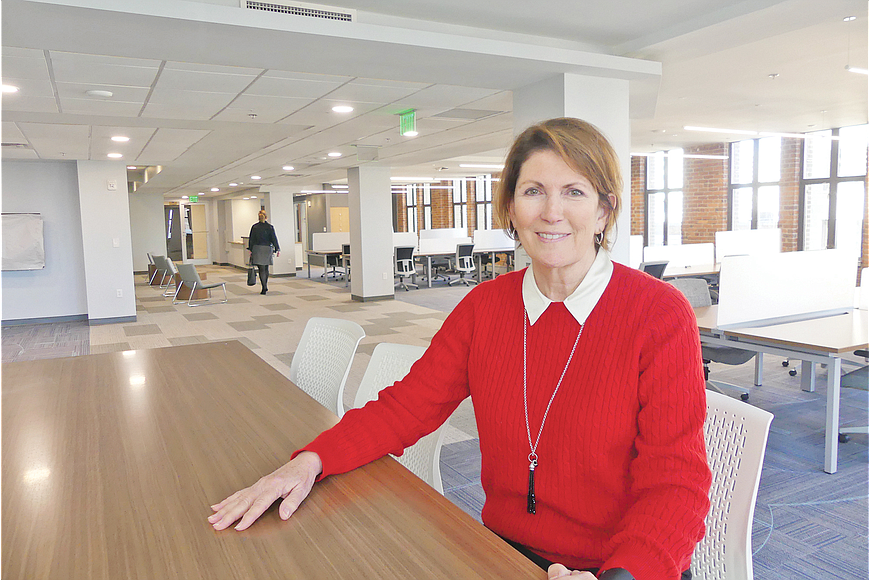
And it’s hard not to notice Republicans opposed to the Mayor’s agenda are saying nice things about Bowling of late.
Whatever the case, the answers will come out soon enough.
And that’s not important to the future anyway.
The eventual hire will say a lot about what the rest of Deegan’s first term looks like.
Those who followed the Lenny Curry administration remember the departure of CAO Sam Mousa, whose deep knowledge of city government would have been tougher to replace had the savvy and smart Brian Hughes not been waiting in the wings.
Does Deegan have a Brian Hughes?
It’s a different administration, so that it will be a different model.
And odds are O’Leary, who is known for her work ethic and dedication to policy over office politics, will get the gig if they fill Bowling’s position down the road.
Deegan lunched with O’Leary on Thursday, and they were having a conversation described as intense.
It makes sense that they’re taking their time and capitalizing on the traditional year-end lull in city business to facilitate the transition.
The budget is wrapped, storm season is all but over, and there is latitude to evaluate before making a move.
While some speculate that Bowling’s departure is related to a withdrawn job offer for Craig Shoup, who resigned his position with the Jacksonville Bar Association to become Neighborhoods Director, that’s not the only evidence of disenchantment we’ve heard.
Ultimately, Team Deegan (like every other political clique) has a right to expect absolute loyalty to its agenda.
And for those who don’t like it, the 2027 election offers an opportunity to change it.

Air Aaron
Rep. Aaron Bean’s new bill could keep you from being grounded.
The “Aviation Funding Stability Act of 2025” aims to ensure that air traffic controllers continue to receive pay even during a federal government shutdown.

The Bean Team calls the bill a “preemptive strike against chaos in the control tower, ensuring that the backbone of our aviation system doesn’t buckle under political gridlock.”
“We can’t afford to let a government shutdown disrupt the backbone of our aviation system,” Bean told Fox News Digital. “That’s why I introduced legislation to ensure our air traffic controllers are paid, and the FAA operates with no interruptions. It’s about protecting public safety and standing up for the aviation professionals who keep our country moving.”
Common ground
Amid a contentious dispute between the Jacksonville Aviation Authority (JAA) and the City Council, The Fiorentino Group played a pivotal role in brokering a resolution.
The conflict stemmed from City Council Vice President Nick Howland’s legislation to amend the JAA charter and a controversial $13 million budget transfer that the JAA considered interference. As the disagreement escalated, the government relations firm intervened to de-escalate the situation.

As reported this week by the Jacksonville Daily Record, The Fiorentino Group facilitated a crucial meeting between new JAA Board Chair David Hodges Jr. and Howland, providing a forum for direct negotiation. This brokered discussion led to a compromise: Howland dropped controversial proposals, and the JAA agreed to form a joint Aerospace Development Committee with the Council. This allowed an amended resolution focused on Cecil Airport to pass unanimously. The firm’s intervention was instrumental in transforming the public dispute into a collaborative partnership, establishing a unified path for the city’s aerospace growth.

Tweet, tweet

Locals only
The Jacksonville City Council is close to approving two local bills that the Duval Delegation will have to carry.
One bill will affect aviation; the other, education.
Howland’s 2025-0693 would, if passed by the whole Council on Oct. 14, express support for Local Bill J-2.
But as he said in Rules, the amended bill will have a different scope than his original proposal to change the name and constitution of the JAA.

“We have agreed with the airport to get rid of the name change and to get rid of that requirement for the Governor and the mayoral appointee being from the aerospace industry, (while) keeping the language in there that enumerates their role in keeping the requirement for bringing us to bring a plan. In turn, JA has agreed to set up an Economic Development Committee that’s going to consist of both JAA Board members and City Council members, with two charges. One is to bring an international route to Jax, and two is to drive Cecil Aerospace growth,” the Council Vice President said Monday.
Howland says the bill means “blue skies ahead” for Cecil.
They’re also ready to green-light a resolution seeking to give the Duval County School Board its own General Counsel.
School Board Chair Charlotte Joyce said the current setup, which has the city’s Office of General Counsel (OGC) screen hires, doesn’t make sense given a lack of qualified applicants with “education law experience” for the most recent opening.
Moreover, Joyce argues that every other district in Florida has attorneys selected by the Board.
Jacksonville, of course, is an exception because of the consolidation approved by voters in 1967 that gave Jacksonville’s City Government latitude over Duval County’s affairs.
Jacksonville General Counsel Michael Fackler cautioned that having an applicant report to the Board could be “difficult” for an attorney, and that he would prefer the School Board lawyer to report to him rather than the Board, to render a “correct legal opinion” rather than one driven by politics.
But the City Council wasn’t exactly enamored of Fackler, and his words didn’t sway the Committee that heard them.
St. Johns spending
One of the fastest-growing counties in Florida now has a budget for the 2025-2026 fiscal year that is designed to deal with its growing population.
The St. Johns County Commission approved a $1.8 billion annual budget on Sept. 30 and it’s already in effect. That’s an increase over the previous year’s budget, which was $1.75 billion.
More people are moving into St. Johns County every year. The county now has an estimated population of 346,186 people, representing a 3.91% increase over the past year, according to World Population Review.
St. Johns County Administrator Joy Andrews said a large portion of the spending plan is geared toward handling that increase in residents.
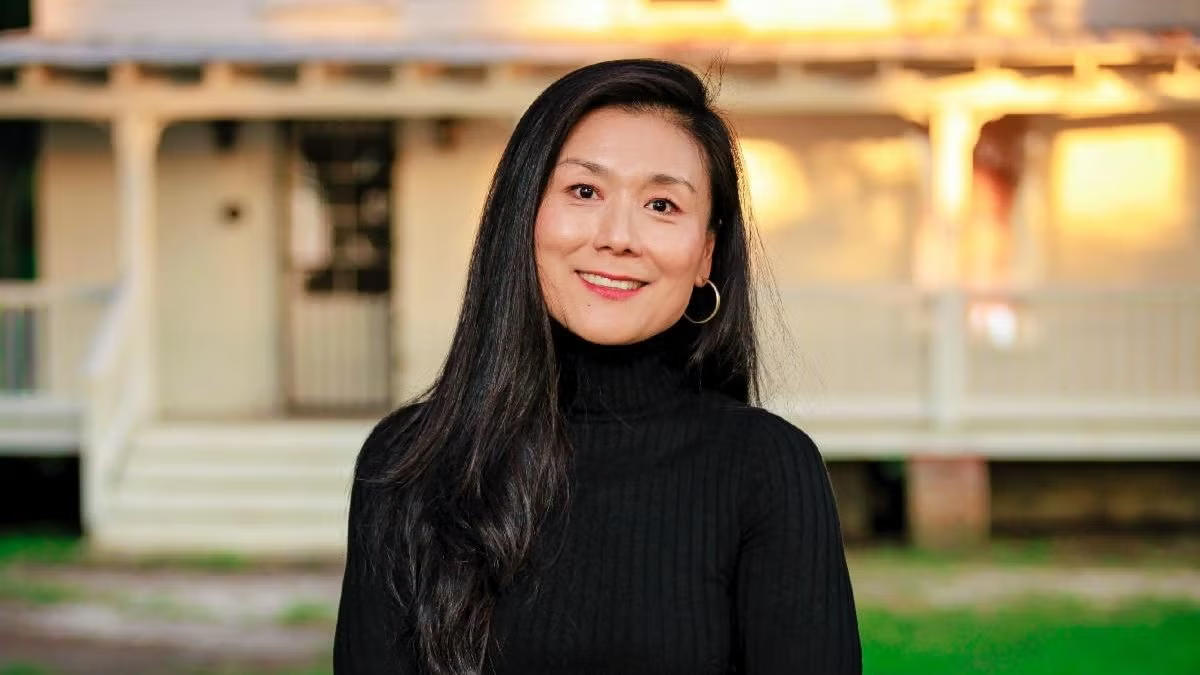
“This year’s budget delivers historic investments and a property tax reduction, with nearly $5 million in additional Fire Rescue funding to support public safety growth. This is one of the most thoughtful budgets we’ve produced — upholding the Board’s vision by striking the right balance between efficiency and forward-thinking growth,” Andrews said in a news release.
“Our department leadership and budget office worked hand in hand with me to prioritize projects and services that matter most to our community. And for the first time in our history, we made a decision to establish a $20-million Emergency Response Fund to strengthen our independence, agility, and ability to protect our residents and ensure we are ready to help the community recover.”
While the annual budget increased by about $50 million, county officials reduced general fund property taxes by $9.1 million.
Freeman files
A former President of the Jacksonville City Council is looking to succeed term-limited Wyman Duggan in House District 12.
“The people of Northeast Florida deserve a representative who will always put their values first,” Terrance Freeman said in a statement announcing his run. “I’m ready to stand in the fight for freedom, opportunity and prosperity — and I will never waver in that mission.”
Freeman took advantage of a break in City Council duties last week to finalize the long-expected move.
“As a lifelong conservative, I know what’s at stake for Florida families,” Freeman said. “President Trump and Gov. DeSantis need strong conservative allies fighting for us, and I am answering that call. I will always stand up for our values, our freedoms, and our hardworking families.”
Freeman begins his campaign with a considerable war chest in a district drawn to help Republicans.
His “For the Future We Want” committee has more than $200,000 in its bank account.
Early supporters of Freeman’s next move include the Jacksonville Jaguars, Dream Finders Homes, Associated Industries of Florida, Mori Hosseini’s ICI Homes Residential Holdings, bestbet, Vestcor and J.B. Coxwell Contracting.
Freeman, a senior project manager of Apprenticeship Programs at Miller Electric, was appointed to fill an unexpired term on the City Council by then-Gov. Rick Scott in 2018. He chose to run for an at-large seat the following year and was re-elected in 2023 with 65% of the vote against Libertarian Eric Parker.
HD 12 encompasses parts of Jacksonville’s Westside and Southside, crossing the St. Johns River. The district has a GOP plurality, with more than 47,000 Republicans, more than 38,000 Democrats and more than 25,000 independent voters.
Tweet, tweet:

Howland haul
Howland is well-positioned for a run for re-election or any other opportunity.
His political committee reported raising $208,458.46 through the end of September, with $84,350 raised in the third quarter of the year.
Notable Q3 Contributors include First Coast Energy LLP (Daily’s), which gave $25,000.

Additionally, Ted Baker and JWB each donated $5,000.
Fitzhugh Powell and Superior Construction contributed $2,500.
And Citizens for Building Florida’s Future, the political committee associated with House Speaker Pro Tempore Wyman Duggan, gave $1,000.
Howland, an at-large Republican, won a Special Election in 2021 and faced no opposition for his re-election in 2023.
Cop cash
At-large Republican candidate Deborah Wesley, a retired commander for the Jacksonville Sheriff’s Office, is starting off her unopposed campaign with solid fundraising from the people who know her best.
A Safer Jacksonville for All, a political committee associated with Sheriff T.K. Waters, contributed $15,000.
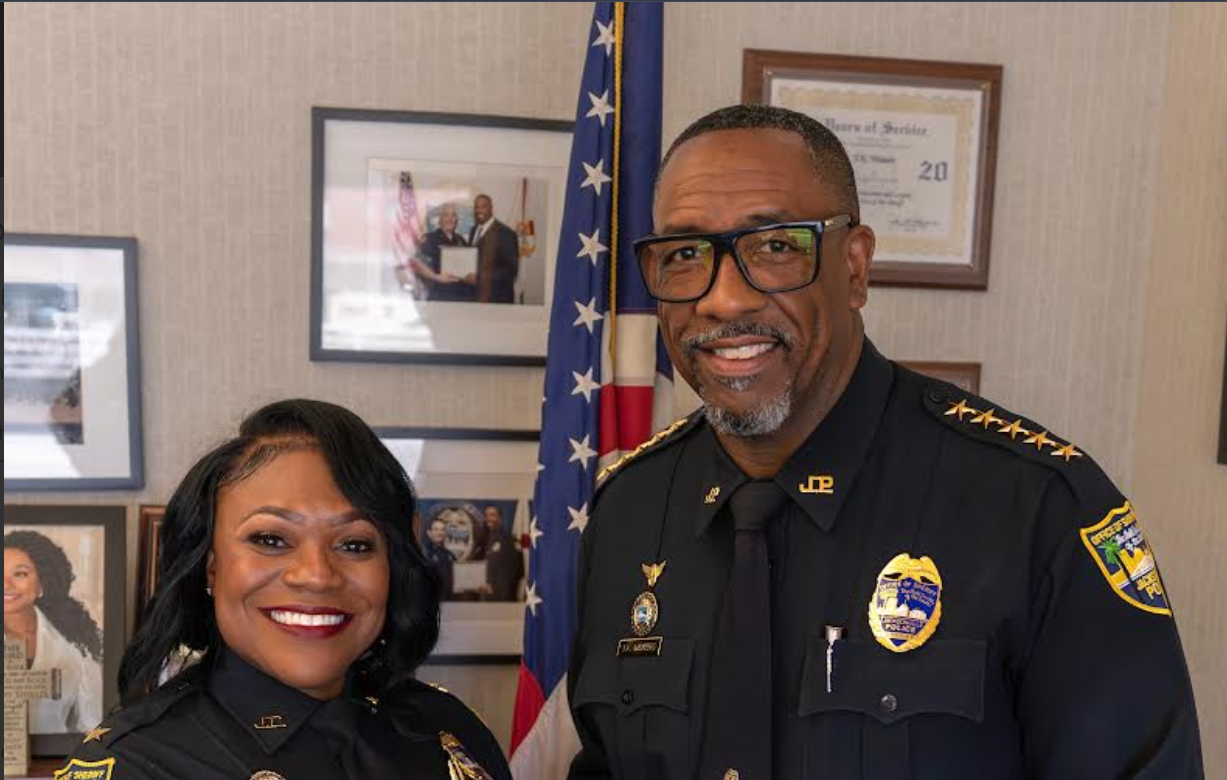
And the Fraternal Order of Police Lodge 530 chipped in $5,000.
Clay County Sheriff Michelle Cook also donated $1,000.
Wesley brought in a total of $85,588.
Of that, $23,000 went to her Building a Stronger Jacksonville political committee, and the rest was hard money.
Political committees associated with City Council President Kevin Carrico, Howland, and Joe Carlucci donated. And Carlucci also cut a personal check.
Other donors include the Fiorentino Group, bestbet, and the Orange Park Kennel Club.
St. Johns strikes out
The state of Florida has taken the rare step of rejecting a comprehensive growth plan from St. Johns County.
The plan, a strategic growth management proposal through the year 2050, details the county’s arrangements to deal with population and corresponding infrastructure and construction growth. It’s been required since the 1980s.
FloridaCommerce rejected the plan submitted this Summer.

“FloridaCommerce has identified a conflict,” said a memo sent to St. Johns County Commission Chair Krista Joseph Sept. 26. “These conflicts render the proposed comprehensive plan amendment null and void.”
Much of the problem with the planning document, according to James Stansbury, the Chief of Community Planning and Growth for FloridaCommerce, is construction requirements and stipulations following a hurricane. The Legislature modified those requirements in SB 180 this year.
The law aims to prevent municipalities from restricting construction during the recovery phase following a major disaster. The legislation arose after Hurricanes Helene and Milton, which struck Florida in 2024.
“St. Johns County’s proposed amendment is more restrictive or burdensome” than the revised state stipulations, Stansbury said in his letter.
The county could lose state funding for some projects if the comprehensive plan remains null and void. St. Johns County Administrator Andrews said staff will begin crafting revisions soon.
“Our next step will be to guide the St. Johns County Board of County Commissioners in considering clarifications and revisions while maintaining the goals of this comprehensive plan update. We remain committed to presenting this item to the Board for further consideration,” Andrews said.
Good grants
The University of North Florida (UNF) secured two federal grants totaling $2.8 million to enhance civics education and neuroscience research at its Southside Jacksonville campus.
The UNF Silverfield College of Education and Human Services was awarded a three-year grant worth $2.1 million from the U.S. Department of Education. The funding will be used to establish a Cultivating Comprehensive Civics Education Professional Development Program. The purpose of the program is to enhance civics education on the First Coast and beyond.
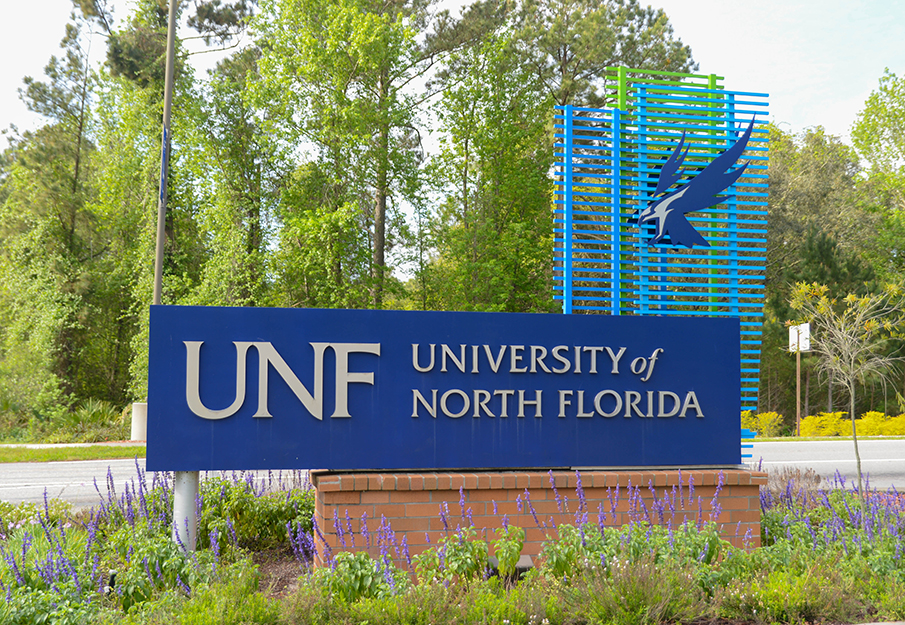
UNF will partner with Duval County Public Schools and the University of Central Florida’s Lou Frey Institute of Politics and Government to develop a regional reach for the program, involving approximately 90 civics teachers. Most of those teachers will come from “high-need schools” and participate in a series of professional learning opportunities over the course of a year.
In another federal grant, UNF received $740,000 in National Institutes of Health funding, which will be used to investigate neurodegenerative diseases, including Alzheimer’s, Parkinson’s, and Huntington’s. The research is designed to provide some breakthroughs in therapy.
UNF assistant professor Szymon Ciesielski, from the Department of Chemistry and Biochemistry, is overseeing a project that will investigate the “molecular machinery” of elements involved in these conditions.
Playoffs — or bust
There was a moment in Monday night’s Jaguars-Chiefs game where it looked like the Chiefs were going to do what they usually do: take control of a game and add another win to Kansas City’s record.
And then, they didn’t.
And then it happened again. And again.
In what may have been the biggest October win in Jaguars’ history, Jacksonville kept making the plays that the Chiefs usually make and came out of it with a 31-28 win.

The three key moments:
—In the second quarter, after Trevor Lawrence fumbled at the goal line, the Chiefs marched 97 yards for a touchdown to take a 14-0 lead. But the Jaguars responded with a 13-play drive that culminated in a Trevor Lawrence touchdown pass to Parker Washington. On the play, Kansas City safety Bryan Cook lifted his arms as the pass arrived under his left arm, where Washington hauled it in. The Jaguars were back in the game.
—In the third quarter, with the game tied at 14 and Kansas City on the Jaguars’ three-yard line, Devin Lloyd intercepted a Patrick Mahomes pass and ran it back 99 yards for a touchdown. It was just the second interception thrown by Mahomes this season and the most extended defensive play in the Jaguars’ history.
—Then, the coup de grâce. One of the most unlikely plays in Jaguars history. Trailing 28-24 with less than 30 seconds left, Lawrence was stepped on, fell, tried to get up, fell, got up, and then somehow ran into the endzone. Touchdown. Game.
The Jaguars showed grit. They didn’t back down. And after they got over the first 20 minutes of being too hyped up for a prime-time kickoff, they outplayed the Chiefs. Yes, there are areas to improve, but Monday night showed the Jaguars are for real.
Now at 4-1 for the season, the Jaguars share the best record in the NFL. That does not guarantee anything, but it sets up the team with a chance at a memorable season.
Here’s the list of 4-1 teams: the Buffalo Bills, Indianapolis Colts, Philadelphia Eagles, Tampa Bay Buccaneers, and San Francisco 49ers. And the Jaguars.
Jacksonville has already beaten the Niners and will have two chances at the Colts.
Here’s what comes next:
— On Sunday, the Jaguars host the Seattle Seahawks. It’s a short week, but the team gets the advantage of back-to-back home games. No travel.
— Then the Jaguars go to London to face the Los Angeles Rams. The Rams are a strong team, but the Jaguars have typically performed well in London.
— Then, after the bye week, road games at the Raiders and Texans reach the midway point of the season. It’s not a stretch to think that if the defense continues to make plays and the Jaguars can make modest improvements in the passing game, the team can be in contention in November and in a position to make the second half of the season one filled with meaningful games and playoff scenarios.
The Jaguars can be better. Much better. But Monday’s victory plotted the path for the season. It’s now playoffs or bust for the Jaguars.


For the first time in a decade, hunters armed with rifles and crossbows are fanning out across Florida’s swamps and flatwoods to legally hunt the Florida black bear, over the vocal opposition of critics.
The state-sanctioned hunt began Saturday, after drawing more than 160,000 applications for a far more limited number of hunting permits, including from opponents who are trying to reduce the number of bears killed in this year’s hunt, the state’s first since 2015.
The Florida Fish and Wildlife Conservation Commission awarded 172 bear hunt permits by random lottery for this year’s season, allowing hunters to kill one bear each in areas where the population is deemed large enough. At least 43 of the permits went to opponents of the hunt who never intend to use them, according to the Florida chapter of the Sierra Club, which encouraged critics to apply in the hopes of saving bears.
The Florida black bear population is considered one of the state’s conservation success stories, having grown from just several hundred bears in the 1970s to an estimated more than 4,000 today.
The 172 people who were awarded a permit through a random lottery will be able to kill one bear each during the 2025 season, which runs from Dec. 6 to Dec. 28. The permits are specific to one of the state’s four designated bear hunting zones, each of which have a hunting quota set by state officials based on the bear population in each region.
In order to participate, hunters must hold a valid hunting license and a bear harvest permit, which costs $100 for residents and $300 for nonresidents, plus fees. Applications for the permits cost $5 each.
The regulated hunt will help incentivize maintaining healthy bear populations, and help fund the work that is needed, according to Mark Barton of the Florida chapter of Backcountry Hunters and Anglers, an advocacy group that supported the hunt.
Having an annual hunt will help guarantee funding to “keep moving conservation for bears forward,” Barton said.
According to state wildlife officials, the bear population has grown enough to support a regulated hunt and warrant population management. The state agency sees hunting as an effective tool that is used to manage wildlife populations around the world, and allows the state to monetize conservation efforts through permit and application fees.
“While we have enough suitable bear habitat to support our current bear population levels, if the four largest subpopulations continue to grow at current rates, we will not have enough habitat at some point in the future,” reads a bear hunting guide published by the state wildlife commission.

___
Republished with permission of the Associated Press.


Tucker Wetmore’s Song ‘Proving Me Right’ is About Model Bryana Ferringer

‘Bachelor’ Winner Cassie Randolph Marries Brighton Reinhardt

Kanye West and Bianca Censori Travel to South Korea Together
-

 Politics8 years ago
Congress rolls out ‘Better Deal,’ new economic agenda
-
Entertainment8 years ago
New Season 8 Walking Dead trailer flashes forward in time
-
Politics8 years ago
Poll: Virginia governor’s race in dead heat
-
Entertainment8 years ago
The final 6 ‘Game of Thrones’ episodes might feel like a full season
-
Entertainment8 years ago
Meet Superman’s grandfather in new trailer for Krypton
-
Politics8 years ago
Illinois’ financial crisis could bring the state to a halt
-
Business8 years ago
6 Stunning new co-working spaces around the globe
-
Tech8 years ago
Hulu hires Google marketing veteran Kelly Campbell as CMO