
Politics
Jack Nicklaus wins $50M in defamation case against his former company


Golf legend Jack Nicklaus just scored one of the biggest wins of the latter half of his career — this time in court.
A Palm Beach County jury awarded the 85-year-old “Golden Bear” $50 million after finding that Nicklaus Companies, the firm he helped build, defamed him by spreading false claims that he secretly negotiated a $750 million deal to join the Saudi-backed LIV Golf League.
Jurors ruled that the company worked to publish falsehoods that damaged Nicklaus’ reputation and subjected him to “ridicule, hatred, mistrust, distrust or contempt.”
The verdict, first reported by Law360, closes a two-year feud between Nicklaus and his former partners, billionaire banker Howard Milstein and company executive Andrew O’Brien, who were cleared of personal liability in the case.
Defense lawyers insisted the case was a business dispute, not defamation, and said there was no proof the golfer suffered harm. The company has not indicated whether it will appeal.
The ruling caps a long-running and increasingly acrimonious partnership. In 2007, Nicklaus folded Golden Bear International into Nicklaus Companies in a $145 million deal financed by Milstein’s Emigrant Bank.
After stepping down as CEO in 2017, Nicklaus was bound by a five-year noncompete clause that barred him from designing golf courses or endorsing products independently.
As the clause expired in 2022, he sought arbitration to confirm his right to use his own name. Nicklaus Companies sued, accusing him of breaching agreements and of secretly negotiating with LIV Golf.
Last year, an arbiter in Florida ruled that Nicklaus was no longer bound by the noncompete and could again use his name, image and likeness, and design golf courses.
The Nicklaus name was also in the news in August, when Gary Nicklaus, Jack Nicklaus’ son, abruptly resigned from the Florida Fish and Wildlife Conservation Commission just before a high-stakes vote on reinstating a statewide black bear hunt.

Sources told Florida Politics the younger Nicklaus was uneasy about supporting a measure so symbolically linked to the family’s “Golden Bear” image. Gov. Ron DeSantis replaced him with businessman Joshua Kellam.
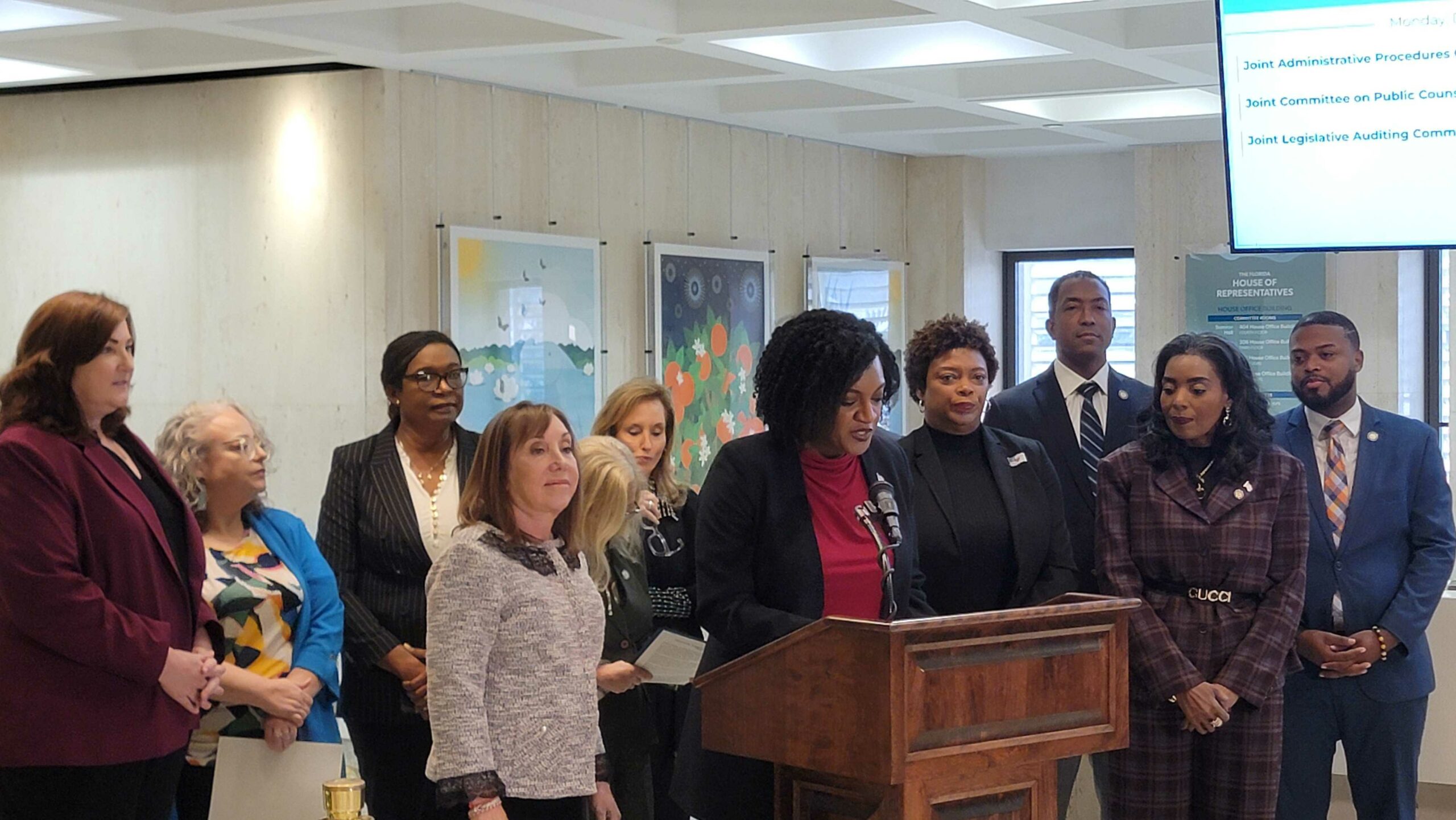
Senate and House Democrats unveiled what they described as the first three bills of a growing ‘Affordability Agenda’ they promise will lower housing costs for Floridians while cracking down on wasteful government spending.
More are on the way, according to Senate Democratic Leader Lori Berman, who introduced the legislation alongside House Democratic Leader Fentrice Driskell and nine others Tuesday.
“We constantly hear from people back home that affordability is the No. 1 issue facing Floridians right now. Costs are skyrocketing, and it’s getting harder to make ends meet,” Driskell said.
“That’s why Democrats are focused on real solutions that will improve the lives of Florida’s working families and our seniors. The ideas in our ‘Affordability Agenda’ would lower the cost of living, put money back in the pockets of working families and seniors who need it most, and give young people a real chance at some day owning a home.
The first proposal (SB 366, HB 319), which Florida Politics first detailed in November, would lay the foundation for a potential multistate insurance compact the Sunshine State could enter with other states.
Under the proposal, Florida and other participant states could share catastrophe risk, increase bargaining power with global reinsurers and, ultimately, stabilize their respective insurance markets, effectively spreading a collective safety net to spread the rising cost of disaster losses.
The legislation would compel Florida’s Office of Insurance Regulation to develop the compact with at least 14 other states by Dec. 31, 2027.
Boca Raton Rep. Kelly Skidmore, who is carrying the legislation with Palm Beach Sen. Mack Bernard, said policymakers in several states — including California, North Carolina and South Carolina — have expressed interest in joining.
The benefits could be substantial, Skidmore said, adding that Floridians already pay some of the highest premiums in the nation, and costs are expected to keep rising.
“The proposed legislation recognizes that no single state can bear these growing risks alone,” she said. “Families are struggling. Some can’t afford the cost of homeownership anymore. If we don’t tackle the risk that is driving this crisis, we will threaten that homeownership, economic growth and the stability of our entire insurance system.”

Another pair of twin bills (SB 756, HB 675) would augment the updated Live Local Act, which lawmakers first enacted in 2023 with unanimous support to ramp up affordable housing development and conversion.
Driskell and Tampa Sen. Tracie Davis, the Senate Democratic Leader-designate, are sponsoring the new measures, dubbed the “H.O.M.E. Act.” Among other things, it would require all incentives under Live Local to be used to build affordable housing, lower the price point for what can be considered affordable in a given area and eliminate documentary stamp taxes for first-time homebuyers who use the property as their primary residence.
On that last feature, there may be an opportunity for cross-aisle collaboration; St. Petersburg Republican Sen. Nick DiCeglie has filed a bill (SB 752) that would also enable first-time homesteaded homebuyers to skip the stamp tax.
“We’re hearing it everywhere — young people with new families, folks starting out in their careers — they’re getting squeezed out of the housing market,” Davis said, noting that just 1 in 5 people who buy a house, townhome or condo in Florida are first-time homeowners, according to Florida Realtors.
The national rate is 32%.
“For many, the biggest obstacle isn’t the monthly mortgage; it’s the money they have to pay up front, and the documentary stamp taxes can add nearly $4,300 at closing. For someone just starting out, that dollar amount is excessive and feels like it’s impossible,” Davis said. “The H.O.M.E. Act gives these buyers a real chance.”
Last and newest on the “Affordability Agenda” is SB 780 by Berman, which would require a sweeping review of state spending to identify fraud, waste, abuse of authority, mismanagement or misconduct.
The measure, effective July 1, 2026, would direct the Office of Program Policy Analysis and Government Accountability, the Auditor General and the Government Efficiency Task Force to jointly examine a wide range of state programs — from Hope Florida contracts, litigation costs, education materials and college expenditures like high per-student spending at New College of Florida to migration-related spending, like the Governor’s relocation flights and Alligator Alcatraz — and issue a findings report.
If the review uncovers misuse, the Attorney General must pursue recovery, and any recouped or “at-risk” funds must be transferred to the General Revenue Fund to create a new “Working Floridians” tax rebate program for households that receive the federal earned income tax credit.
“The biggest stories in Florida this year have all been about wasteful spending — a quarter of a billion dollars in no-bid contracts to Alligator Alcatraz, exorbitant per-student costs at New College of Florida, shady land deals that enrich political donors and, of course, the ongoing investigation into Hope Florida,” Berman said.
“Floridians shouldn’t be paying taxes to fund political stunts, sweetheart deals and high-paying jobs for politically connected friends.”
Skidmore called Republicans’ efforts to eliminate local property taxes or severely hamper the ability of localities to levy them a “fool’s gold narrative,” since all actual proposals so far exempt the elimination of taxes for police and schools.
“What (they’re) offering people is not the savings that they think they’re getting when you tell them you’re going to eliminate property taxes,” she said. “What we’re talking about is actual savings — money in your pocket, a reduction of your insurance, the ability to buy a house.”
Others participating in the presser included Sen. Barbara Sharief, House Democratic Leader-designate Christine Hunschofsky, and Reps. Rita Harris, Leonard Spencer, Allison Tant, Marie Woodson and RaShon Young.
Politics
SBA urges Florida businesses and nonprofits hit by April drought to apply for loan assistance

Politics
James Fishback is registered to vote in 2 states. Does that make him ineligible for Governor?
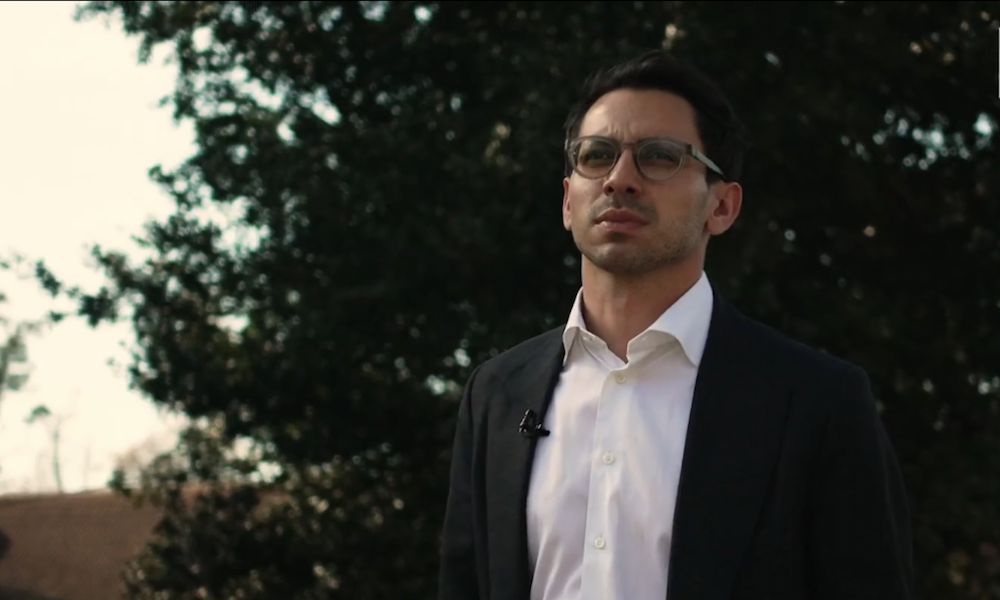
Gubernatorial candidate James Fishback has been registered to vote in two states since around 2020. While he never cast a ballot in both states in the same year, the issue raises questions about whether the Madison Republican meets eligibility requirements for Governor.
The 30-year-old has been registered to vote in Florida since 2012. He transferred his residence from Davie in Broward County to Madison County in 2023, according to the Madison County Supervisor of Elections Office.
But the D.C. Board of Elections confirms Fishback remains an active voter in Washington, where he registered in 2020.
That could complicate Fishback’s campaign for Governor, which he launched last month. Florida’s eligibility requirements for Governor require candidates to be registered to vote in Florida and to be residents of the state for at least seven years.
Of note, state law also requires a candidate for partisan office to be a registered member of the party for 365 days before an election. While Fishback is registered as a Republican in Florida, he is registered without party affiliation in Washington.
Fishback dismissed concerns about his eligibility to run for the GOP nomination for Governor.
“I’m a fourth generation Floridian and have lived here my entire life, and meet all of the constitutional requirements to serve as Governor if the voters entrust me with this awesome responsibility,” he said in a text to Florida Politics.
But despite being a Florida native, Fishback’s residency could be called into question. Fishback owns a property in Washington on 42nd Street, and records show he claimed a homestead exemption on it.
That’s notably a different address than the Davis Place residence where he is registered to vote. That property is owned by Aydee Fishback, according to Washington records, and Florida records show Jay Fishback as a primary owner of the Washington property.
James Fishback is the primary owner of a Pinkney Street home in Madison on property he purchased in 2022, according to Madison County property records. No homestead exemption is held on that property.

___
Jesse Scheckner of Florida Politics contributed to this report.


Democrats unveil ‘Affordability Agenda’ to lower housing costs, reduce government waste

Amazon robotaxi service Zoox to charge for rides in 2026, with ‘laser-focus’ on transporting people, not deliveries, says cofounder

A$AP Bari Involved in Wild Miami Beach Brawl Before Cops Arrive, on Video
-

 Politics8 years ago
Congress rolls out ‘Better Deal,’ new economic agenda
-
Entertainment8 years ago
New Season 8 Walking Dead trailer flashes forward in time
-
Politics8 years ago
Poll: Virginia governor’s race in dead heat
-
Entertainment8 years ago
The final 6 ‘Game of Thrones’ episodes might feel like a full season
-
Entertainment8 years ago
Meet Superman’s grandfather in new trailer for Krypton
-
Politics8 years ago
Illinois’ financial crisis could bring the state to a halt
-
Business8 years ago
6 Stunning new co-working spaces around the globe
-
Tech8 years ago
Hulu hires Google marketing veteran Kelly Campbell as CMO