Connect with us

Business

I’ve been researching generative AI for years, and I’m tired of the consciousness debate. Humans barely understand our own

Published

on


In 2022, a Google engineer claimed one of the company’s AIs was sentient. He lost his job, but the story stuck. For a brief moment, questions of machine consciousness spilled out of science fiction and into the headlines.

Now, in 2025, the debate has returned. As the release of GPT-5 was overshadowed by public nostalgia for GPT-4o, it was everyday users who began acting as if these systems were more than their makers intended. Into this moment stepped another tech giant: Mustafa Suleyman, CEO of Microsoft Research, declaring loud and clear on his blog that AI is not, and will never be, conscious.

At first glance, it sounds like common sense. Machines obviously aren’t conscious. Why not make that abundantly clear?

Because it isn’t true.

The hard fact is that we do not understand consciousness. Not in humans, not in animals, and not in machines. Theories abound, but the reality is that no one can explain exactly what consciousness is, let alone how to measure it. To state with certainty that AI can never be conscious is not science, it isn’t caution. It’s overconfidence, and in this case, a thinly veiled agenda. 

If AI can’t ever be conscious, then companies building it have nothing to answer for. No unsettling questions. No ethics debates. No pressure. Surely, it would be nice if we could claim with full confidence that the consciousness question is not relevant to AI. But convenience doesn’t make it true.

What troubles me most is the tone. These pronouncements aren’t just misleading, they’re also infantilizing. As if the public can’t handle complexity. It is as though we must be shielded from ambiguity, spoon-fed tidy certainties instead of being trusted with reality.

Yes, people falling in love with and marrying chatbots or preferring AI companions to human ones is concerning. It unveils a deeper pattern of loneliness and disconnection. This is a social and psychological challenge in its own right, and one we should take seriously. The rise of digital companions reveals how hungry people are for connection.

But the real issue isn’t that some people believe AI might be conscious. The deeper problem is our growing overreliance on technology in general—an addiction that stretches back long before the current debate on machine consciousness. From social media feeds to video games targeting children, technology has a long history of prioritizing engagement and fostering addiction, with no regard for the well-being of its users. 

But technological dysfunction won’t be solved by feeding people false assurances about what machines can or cannot be. If anything, denial only obscures the urgency of confronting our dependence head-on. 

We need to learn to live with uncertainty. Because uncertainty is the reality of this moment. 

Suleyman did add an important caveat: our attention should be on the beings we already know are conscious—humans, animals, the living world. On this point, I couldn’t agree more. But look at our record. Billions of animals endure extreme suffering in factory farms on a daily basis. Forests are flattened for profit, numerous species gone extinct. And in the age of AI, the use case most celebrated by investors is replacing human labor.

The pattern is clear. Again and again, we minimize the experiences of those who aren’t like us, those we would benefit from exploiting. We claim animals don’t suffer all that much or simply turn a blind eye. We treat nature as expendable. We routinely devalue people whose exploitation benefits our economic system. Now, we rush to declare that AI will never be conscious. Same playbook, new page.

So no, we shouldn’t blindly trust the builders of AI to tell us what is and isn’t conscious, any more than we should trust meat factories to tell us about the experience of cows. 

The reality is messier. AI may never be conscious. It may surprise us. We cannot say for certain. And we might not be able to tell whether it is conscious even if it does happen. And that is the point.

For a long time, I avoided this topic. Consciousness felt too slippery, too strange. But I’ve come to see that acknowledging our uncertainty is not a weakness. It is a strength.

Because in an era of false certainties, honesty about the unknown may be the most radical truth we have.

The opinions expressed in Fortune.com commentary pieces are solely the views of their authors and do not necessarily reflect the opinions and beliefs of Fortune.

Fortune Global Forum returns Oct. 26–27, 2025 in Riyadh. CEOs and global leaders will gather for a dynamic, invitation-only event shaping the future of business. Apply for an invitation.


Source link

Continue Reading

Business

Trump administration waives part of a Biden-era fine against Southwest Air for canceled flights

Published

on


The U.S. Department of Transportation is waiving part of a fine assessed against Southwest Airlines after the company canceled thousands of flights during a winter storm in 2022.

Under a 2023 settlement reached by the Biden administration, Southwest agreed to a $140 million civil penalty. The government said at the time that the penalty was the largest it had ever imposed on an airline for violating consumer protection laws.

Most of the money went toward compensation for travelers. But Southwest agreed to pay $35 million to the U.S. Treasury. Southwest made a $12 million payment in 2024 and a second $12 million payment earlier this year. But the Transportation Department issued an order Friday waiving the final $11 million payment, which was due Jan. 31, 2026.

The department said Southwest should get credit for significantly improving its on-time performance and investing in network operations.

“DOT believes that this approach is in the public interest as it incentivizes airlines to invest in improving their operations and resiliency, which benefits consumers directly,” the department said in a statement. “This credit structure allows for the benefits of the airline’s investment to be realized by the public, rather than resulting in a government monetary penalty.”

The fine stemmed from a winter storm in December 2022 that paralyzed Southwest’s operations in Denver and Chicago and then snowballed when a crew-rescheduling system couldn’t keep up with the chaos. Ultimately the airline canceled 17,000 flights and stranded more than 2 million travelers.

The Biden administration determined that Southwest had violated the law by failing to help customers who were stranded in airports and hotels, leaving many of them to scramble for other flights. Many who called the airline’s overwhelmed customer service center got busy signals or were stuck on hold for hours.

Even before the settlement, the nation’s fourth-biggest airline by revenue said the meltdown cost it more than $1.1 billion in refunds and reimbursements, extra costs and lost ticket sales over several months.


Source link

Continue Reading

Business

Trump slams Democratic congressman as disloyal for not switching parties after pardon

Published

on


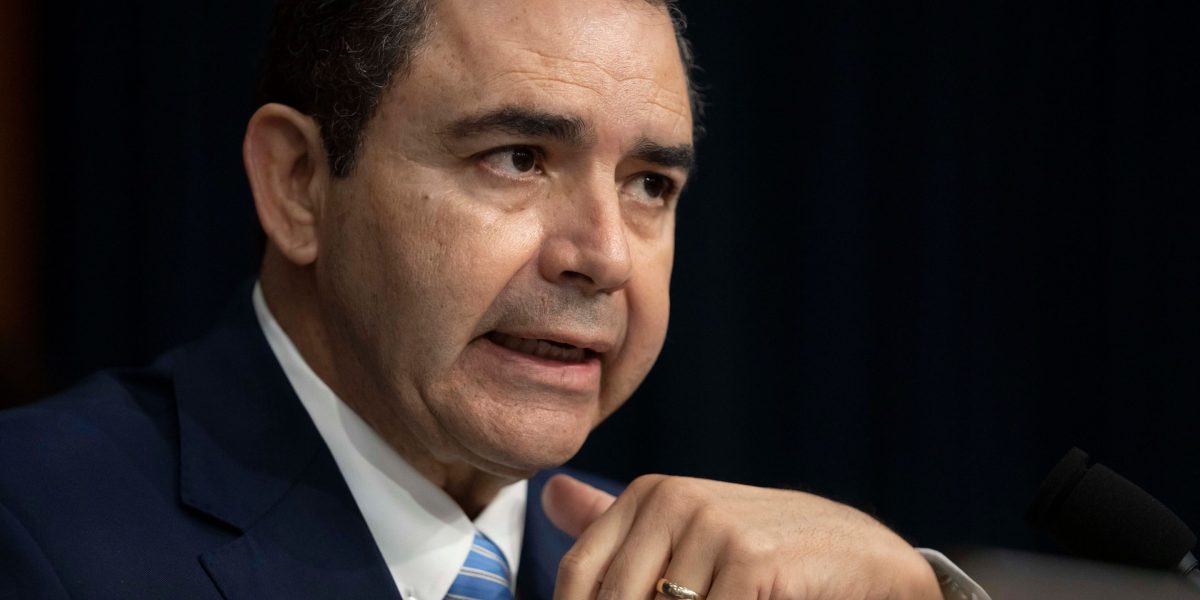
Trump blasted Cuellar for “Such a lack of LOYALTY,” suggesting the Republican president might have expected the clemency to bolster the GOP’s narrow House majority heading into the 2026 midterm elections.

Cuellar, in a television interview Sunday after Trump’s social media post, said he was a conservative Democrat willing to work with the administration “to see where we can find common ground.” The congressman said he had prayed for the president and the presidency at church that morning “because if the president succeeds, the country succeeds.”

Citing a fellow Texas politician, the late President Lyndon Johnson, Cuellar said he was an American, Texan and Democrat, in that order. “I think anybody that puts party before their country is doing a disservice to their country,” he told Fox News Channel’s “Sunday Morning Futures.”

Trump noted on his Truth Social platform that the Democratic President Joe Biden’s administration had brought the charges against Cuellar and that the congressman, by running once more as a Democrat, was continuing to work with “the same RADICAL LEFT” that wanted him and his wife in prison — “And probably still do!”

“Such a lack of LOYALTY, something that Texas Voters, and Henry’s daughters, will not like. Oh’ well, next time, no more Mr. Nice guy!” Trump said. Cuellar’s two daughters, Christina and Catherine, had sent Trump a letter in November asking that he pardon their parents.

Trump explained his pardon he announced Wednesday as a matter of stopping a “weaponized” prosecution. Cuellar was an outspoken critic of Biden’s immigration policy, a position that Trump saw as a key alignment with the lawmaker.

Cuellar said he has good relationships within his party. “I think the general Democrat Caucus and I, we get along. But they know that I’m an independent voice,” he said.

A party switch would have been an unexpected bonus for Republicans after the GOP-run Legislature redrew the state’s congressional districts this year at Trump’s behest. The Texas maneuver started a mid-decade gerrymandering scramble playing out across multiple states. Trump is trying to defend Republicans’ House majority and avoid a repeat of his first term, when Democrats dominated the House midterms and used a new majority to stymie the administration, launch investigations and twice impeach Trump.

Yet Cuellar’s South Texas district, which includes parts of metro San Antonio, was not one of the Democratic districts that Republicans changed substantially, and Cuellar believes he remains well-positioned to win reelection.

Federal authorities had charged Cuellar and his wife with accepting thousands of dollars in exchange for the congressman advancing the interests of an Azerbaijan-controlled energy company and a bank in Mexico. Cuellar was accused of agreeing to influence legislation favorable to Azerbaijan and deliver a pro-Azerbaijan speech on the floor of the U.S. House.

Cuellar has said he his wife were innocent. The couple’s trial had been set to begin in April.

In the Fox interview, Cuellar insisted that federal authorities tried to entrap him with “a sting operation to try to bribe me, and that failed.”

Cuellar still faces a House Ethics Committee investigation.


Source link

Continue Reading

Business

Jerome Powell faces a credibility issue as he tries to satisfy hawks and doves on a divided Fed

Published

on


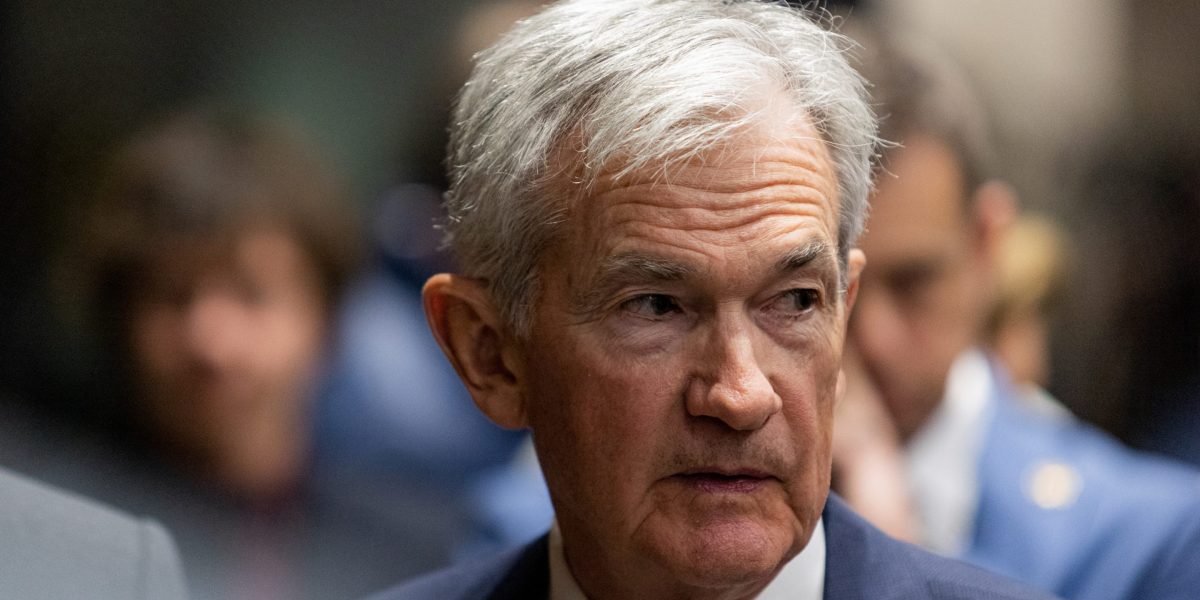
With the Federal Reserve split between increasingly hawkish and increasingly dovish policymakers, Chairman Jerome Powell is due to perform some serious log-rolling when the central bank meets this week.

Another rate cut is a near certainty after the Fed meeting ends on Wednesday, but the main question is what Powell will say about the prospects for more easing next month.

Wall Street expects a hawkish cut, meaning Powell is likely to avoid signaling a January cut to appease Fed hawks, after joining doves to lower rates this month.

“Chair Powell is facing the most divided committee in recent memory,” analysts at Bank of America said in a note on Friday. “Therefore, we think he will attempt to balance the expected rate cut with a hawkish stance at the press conference, just as he did in October.”

But at the same time, the Fed chief has also been insistent that policymakers are not on a pre-determined course and that rate moves depend on the data that come in.

As a result, BofA is doubtful that he can pull off a hawkish cut so easily, considering all the market-moving data that will come out between the two meetings, with some delayed due to the government shutdown.

The week after the Fed meeting, for example, jobs numbers for October and November, October retail sales, and the consumer price index for November will come out. And December readings for those indicators are likely to be released before the next meeting on Jan. 27-28.

“It will be difficult for Powell to send a credibly hawkish signal at the press conference,” analyst said.

BofA still sees a way for him to thread the needle. One option is for Powell to suggest that “significant further weakening” in the jobs data will be necessary to trigger a January cut.

Another option is to argue that 3.5%-3.75%—where benchmark rates would be if the Fed cuts again this week—isn’t restrictive after accounting for inflation, meaning the central bank is no longer weighing on the economy as much.

Similarly, JPMorgan chief U.S. economist Michael Feroli said he expects Powell to stress that after this week’s cut, rates will be close to neutral. So any additional easing would depend on meaningful deterioration in the labor market and not be predicated in risk management.

For now, Wall Street doesn’t expect a January cut, with 25% odds currently being priced in on CME Group’s FedWatch tool. But BofA thinks Powell will likely leave the door open for one.

“We wouldn’t be surprised if markets start pushing more aggressively for a Jan cut in the near term,” analysts predicted. “And the anticipation of this outcome might raise the probability of more dissents in Dec, since hawks might be inclined to dig their heels in instead of compromising.”


Source link

Continue Reading

Trending

Copyright © Miami Select.