
Politics
Israeli strike targets Hamas leaders in Qatar as they weigh Gaza ceasefire proposal
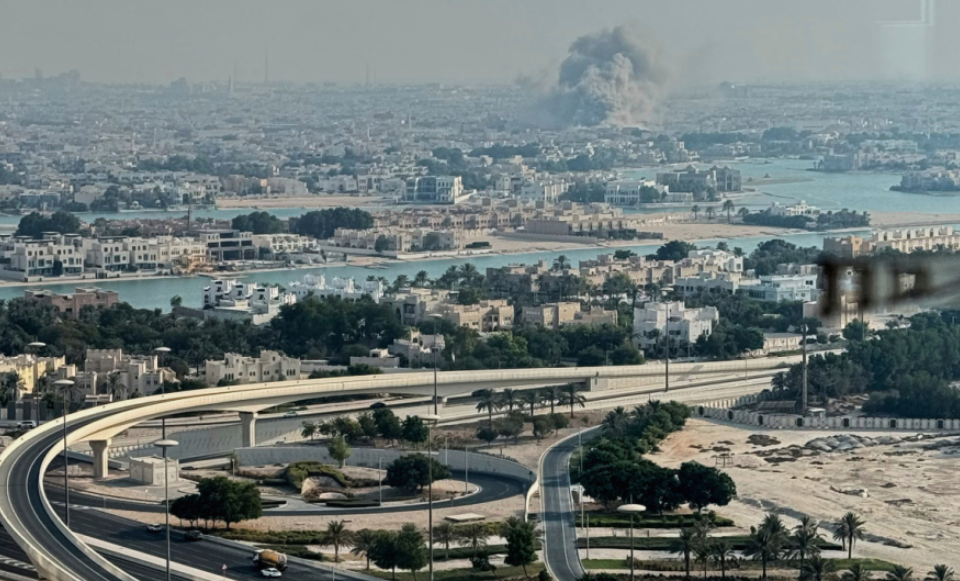
Israel struck the headquarters of Hamas’ political leadership in Qatar on Tuesday as the group’s top figures gathered to consider a U.S. proposal for a ceasefire in the Gaza Strip. The strike on the territory of a U.S. ally marked a stunning escalation and risked upending talks aimed at winding down the war and freeing hostages.
Qatar, an energy-rich Gulf nation hosting thousands of American troops, has served as a key mediator between Israel and Hamas throughout the 23-month-old war and even before. It condemned what it referred to as a “flagrant violation of all international laws and norms” as smoke rose over its capital, Doha.
Hamas said in a statement its top leaders survived the strike but five lower-level members were killed, including the son of Khalil al-Hayya — Hamas’ leader for Gaza and its top negotiator — and the head of al-Hayya’s office. Hamas, which has sometimes only confirmed the assassination of its leaders months later, offered no immediate proof that al-Hayya and other senior figures had survived.
A member of Qatar’s Internal Security Force was also killed and others were wounded, Qatar’s Interior Ministry said.
Hamas has survived numerous assassinations of top leaders and still shows cohesion in Gaza, despite having suffered major blows in Israel’s campaign, triggered by the militant group’s Oct. 7, 2023, attack on Israel.
The strike threatens to derail long-stalled ceasefire talks as more uncertain, as Israel gears up for a major offensive aimed at taking over Gaza City. That escalation has been met with heavy international condemnation and opposition within Israel from those who fear it will doom the remaining hostages.
U.N. Secretary General Antonio Guterres condemned the attack, saying “all parties must work towards achieving a permanent ceasefire, not destroying it.”
Israel had long threatened Hamas in Qatar
Surveillance footage aired by Al Jazeera showed the strike happened in Doha’s Diplomatic Quarter at a series of buildings that housed Hamas’ political wing. An Egyptian official said the strike came when a meeting by Hamas officials over the talks had been scheduled for the site. The official spoke on condition of anonymity because he wasn’t authorized to talk to reporters.
Israel has long threatened to strike Hamas leaders wherever they are. While it has often welcomed Qatar’s role as a mediator, alongside Egypt, it has also accused the Gulf nation of not putting enough pressure on the group.

In contrast to previous Israeli operations against senior militants abroad, Israeli Prime Minister Benjamin Netanyahu was quick to publicly claim the strike, saying: “Israel initiated it, Israel conducted it and Israel takes full responsibility.”
He said the decision was taken Monday after a shooting attack in Jerusalem that killed six people and an attack on Israeli forces in Gaza that killed four soldiers.
Israel alerted the U.S. ahead of time, according to an Israeli official, a White House official and another person familiar with the matter. The White House official would not say if Washington provided Israel with approval for carrying out the strike. Another U.S. official said the American military did not participate.
All four officials spoke on condition of anonymity because they were not authorized to comment publicly.
The Israeli military said it used “precise munitions and additional intelligence” in the strike, without elaborating. It was not immediately clear how it carried out the attack.
Hamas said the attack showed that Netanyahu and his government “do not want to reach any agreement and are deliberately seeking to thwart all opportunities and thwart international efforts.” It said it also held the United States responsible for the strike.
Qatar condemned what it referred to as a “cowardly Israeli attack” on Hamas’ political headquarters in Doha. Foreign Ministry spokesman Majed al-Ansari called it a “flagrant violation of all international laws and norms” and said Qatar “will not tolerate this reckless Israeli behavior.”
Egypt, another key mediator with Hamas, condemned the attack, saying it targeted Palestinian leaders who had met “to discuss ways to reach a ceasefire agreement.” It said the strike was a “direct assault” on Qatar’s sovereignty.
The main group representing families of the hostages expressed “deep concern and great fear” after the strike. “The prospect of their return now faces greater uncertainty than ever, with one thing absolutely certain — their time is running out,” the Hostages and Missing Families Forum said in a statement.
The U.S. embassy in Qatar briefly instituted a shelter-in-place order for its staff, but later lifted that.
Ceasefire negotiations in doubt
Earlier this week, U.S. President Donald Trump said he was giving his “last warning” to Hamas regarding a possible ceasefire, as the U.S. advanced a new proposal that Arab officials said included the immediate release of all the hostages.
A senior Hamas official called it a “humiliating surrender document,” but the militant group said it would discuss the proposal and respond within days.
The proposal, presented by Trump’s Middle East envoy, Steve Witkoff, calls for a negotiated end of the war and the withdrawal of Israeli forces from Gaza once the hostages are released and a ceasefire is established. That’s according to Egyptian and Hamas officials familiar with the talks, who spoke on condition of anonymity to discuss the closed-door discussions.
Hamas has said it will only release the remaining 48 hostages, around 20 of whom are believed to be alive, in exchange for Palestinian prisoners, a lasting ceasefire and a complete Israeli withdrawal from Gaza. Netanyahu has rejected those terms, saying the war will continue until all the hostages are returned and Hamas has been disarmed, with Israel maintaining open-ended security control over Gaza.
Mediators had previously focused on brokering a temporary ceasefire and the release of some hostages, with the two sides then holding talks on a more permanent truce. Witkoff walked away from those talks in July, after which Hamas accepted a proposal that mediators said was almost identical to an earlier one that Israel had approved.
International outrage
The war in Gaza has already left Israel increasingly isolated internationally, with even many of its Western allies calling for it to end the war and do more to address the humanitarian catastrophe in Gaza, parts of which are experiencing famine.
Abdullah bin Zayed Al Nahyan, the United Arab Emirates’ foreign minister, expressed “full solidarity with our dear Qatar” shortly after the attack.
The United Arab Emirates recently warned Israel that any move to annex the occupied West Bank would threaten the Abraham Accords, a landmark agreement brokered by Trump during his first term in which the two nations normalized relations.
Trump hopes to expand those accords to include regional heavyweight Saudi Arabia, but those prospects have dimmed as the war has ground on.
Saudi Crown Prince Mohammed bin Salman described the strike as a “criminal act and a flagrant violation of international law” in a phone call with Qatar’s ruler.
___
Republished with permission of The Associated Press.
Post Views: 0