
Fashion
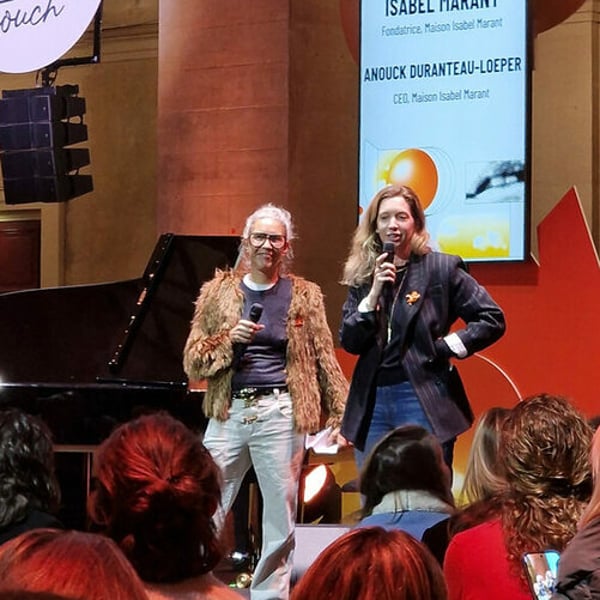
Isabel Marant discusses the courage it took to launch her brand at Paris event ‘We are French Touch’

Published
November 27, 2025
This Wednesday, the creative industries gathered at the Palais Brongniart in the heart of Paris. At the foot of its columns and beneath the paintings of the French city’s former stock exchange, the focus was on creativity, art, cinema, music, video games, and fashion- all viewed through the lens of entrepreneurship.
The 2025 edition of We Are French Touch, organised by Bpifrance, centred on the courage to create, to act, to drive projects forward, and to defend a cultural identity. This theme was explored through round-table discussions- notably on (Re)-made in France for fashion- workshops on export and the integration of AI solutions, and inspiring presentations by industry figures, creatives, musicians, as well as politicians, philosophers, doctors and, of course, entrepreneurs.
In these ten-minute talks, which allowed the large, youthful audience to digest ideas and skim across themes, discussions included collaborative bridges between fashion and artists- with a conversation between Danish designer Naja Munthe and Véra Kempf, co-founder of the digital art gallery Singulart- as well as a compelling talk by psychiatrist David Gourion, who argued that art should be part of the care pathway for people with depression.
On the fashion and luxury front, content creator Lays and Edouard Benadava, head of content and programming at The Independents, a group of creative and events agencies, presented the Watch Party initiative, which attracted several thousand people to the courtyard of La Caserne- a venue dedicated to the responsible fashion ecosystem in Paris’s 10th arrondissement- during the most recent Fashion Week. What began as an anti–fashion-system stance by the social-media critic evolved into a movement embraced by fashion enthusiasts and by players across the ecosystem who wanted to take part in these live streams- experienced like sporting fixtures and followed by a debate. There was courage in transforming a frustrated reaction and a naive initiative into a unifying, optimistic movement- one that looks set to continue in the seasons ahead.

Naivety was also a theme when Isabel Marant reflected on her journey alongside the brand’s managing director, Anouck Duranteau-Loeper. “I’ve needed a lot of courage throughout my career,” explained the designer, who launched the brand bearing her name thirty years ago and began her first project in the mid-1980s. “It took courage to create my own house on my own at 19… Although, at 19, it’s more a matter of carefree naivety. Just when you’re dreaming of creating all day long, you find yourself dealing with things you never expected, like accounting, bank loans, and chasing unpaid invoices.” For the designer, as she has gradually been able to rely on increasingly seasoned teams, courage has meant learning to trust and delegate and, in her creative role, getting back to work after each project. “We deliver four collections a year. It makes me feel like I’m taking my A-levels every four months. It’s exhausting and hugely instructive to tell myself each time, ‘I’ll bounce back.’ Sometimes it’s very hard to face the frustration of not achieving what you want to do with a collection. It’s also a driving force to go further the following season and keep moving forward.”
This progress has been made possible by nine years of working in tandem, and in trust, with Anouck Duranteau-Loeper. “As the head of a brand where the creative talent is present and is also the founder, the role is to ensure that this talent comes to light in the right places and in the best possible way,” she explains. “That means being the one to impose constraints- even, ultimately, the ‘killjoy.’ That’s where trust is essential. But courage is also about that trust. When Isabel tells me she believes in a project and that we really have to go for it, I listen, because she is the one who is supposed to have the vision. That’s what is specific to leadership in fashion. It’s a constant adjustment. It means putting your sense of strategic direction to the test against a determined creative talent- sometimes a little messy, and very present.”
Whether it’s organising innovative events, forging links between creative worlds or cultures, or making a fashion company succeed, the recipe seems above all to be having the courage to combine talents.
This article is an automatic translation.
Click here to read the original article.
Copyright © 2025 FashionNetwork.com All rights reserved.

Published
January 20, 2026
With fashion weeks having kicked off in earnest this month, the world’s top buyers are gathering their thoughts about what they expect affluent shoppers to snap up come AW26 collections arriving in-store and Simon Longland, director of fashion buying at London’s Harrods, is among them.
Just back from the Milan menswear shows, he highlighted the importance of timeless fashion.
“Milan menswear has always lived between two opposing forces: Fashion with a capital ‘F’, and quiet luxury rooted in sartorial tradition and timelessness,” he explained.
“This season, more than ever, the balance of the schedule leaned firmly towards the latter. The result was a Milan season defined by quality, cut, cloth and craft. There was a palpable sense that product integrity and the final customer were front and centre. Less noise, fewer theatrics—but a stronger, more coherent message around what modern luxury menswear looks like today: thoughtful, considered, and built to last.”
He hailed big names including Polo’s Purple Label, Zegna, Prada, Brioni and Dunhill both for the impact of the shows or presentations and the looks they included.

“This season, the strongest ‘shows’ were the ones that felt complete: a clear point of view, real product conviction, and a wardrobe that moves the customer forward,” he said. “Ralph Lauren’s return to Milan brought scale and theatre, but crucially it was backed by wearable, elevated classics that translate beautifully across Polo through Purple Label.
“Zegna delivered that modern luxury sweet spot—quiet confidence, investment dressing, and a proposition built on longevity and wardrobe building rather than novelty.
“And Prada was Prada in the best way: intellectually sharp, slightly disruptive, and refreshingly anti-‘power uniform’—a collection that challenged the idea of what contemporary menswear authority looks like.
Longland thought the best presentation was Brioni “because it understood the moment: craftsmanship, ease, and a sense of journey—luxury that doesn’t shout, it lasts”.
But he also liked Dunhill, calling it “a masterclass in mood and restraint—an incredibly precise take on British elegance, with the kind of tonal sophistication that customers immediately understand”.

As for the season’s top trends so far. In tailoring, he noted “a confident split: either slouchy, relaxed tailoring (softened shoulders, easier proportions), or clean, slim, sharply tailored lines for the customer who wants refinement without volume. Prada and the broader conversation around modern tailoring really underlined this shift”.
He also thought co-ords and tonal dressing were significant with “head-to-toe dressing in shades of one colour now a key styling language—particularly in neutrals and ‘quiet’ hues. It reads modern, premium, and effortless”.
Colour-wise, Longland called out the colours of nature: greens, greys, browns—earthy, mineral, and outdoors-referenced tones “that feel calm, grounded, and timeless”.
And as for materials, leather nd suede were crucial and could be found “everywhere in a more refined register—often softer, more tactile, and less overtly aggressive. It’s about texture, depth and longevity rather than statement”.
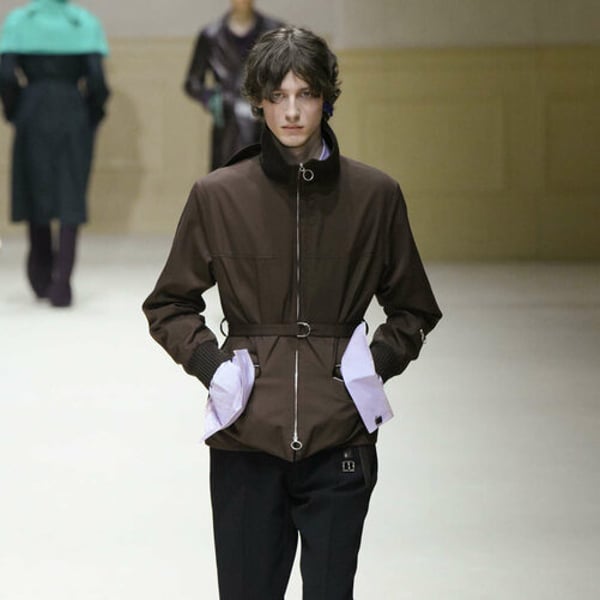
On the key item front, Longland’s backing bomber jackets that have “continued to evolve—less ‘street’, more luxury wardrobe essential: cleaner finishes, elevated fabrics, and styling that works over tailoring as easily as with casual trousers”.
And he sees a jacket or coat in “beautifully supple suede, ideally in chocolate brown or charcoal” as a “must-have” for the season. Why? “It perfectly encapsulates the season’s mood—luxurious yet understated, timeless yet modern, and endlessly versatile within a contemporary wardrobe”.
Copyright © 2026 FashionNetwork.com All rights reserved.


New tariffs will hit UK small clothing firms hard – report

Matalan’s Q3 and Christmas update shows return to sales growth

Harrods buying chief hails Milan menswear’s ‘thoughtful luxury’
-

 Politics8 years ago
Congress rolls out ‘Better Deal,’ new economic agenda
-
Entertainment9 years ago
New Season 8 Walking Dead trailer flashes forward in time
-
Politics9 years ago
Poll: Virginia governor’s race in dead heat
-
Politics8 years ago
Illinois’ financial crisis could bring the state to a halt
-
Entertainment8 years ago
The final 6 ‘Game of Thrones’ episodes might feel like a full season
-
Entertainment9 years ago
Meet Superman’s grandfather in new trailer for Krypton
-
Business9 years ago
6 Stunning new co-working spaces around the globe
-
Tech8 years ago
Hulu hires Google marketing veteran Kelly Campbell as CMO