
Politics
Is the Florida redistricting process delayed — or dead on arrival? Even Republicans aren’t sure
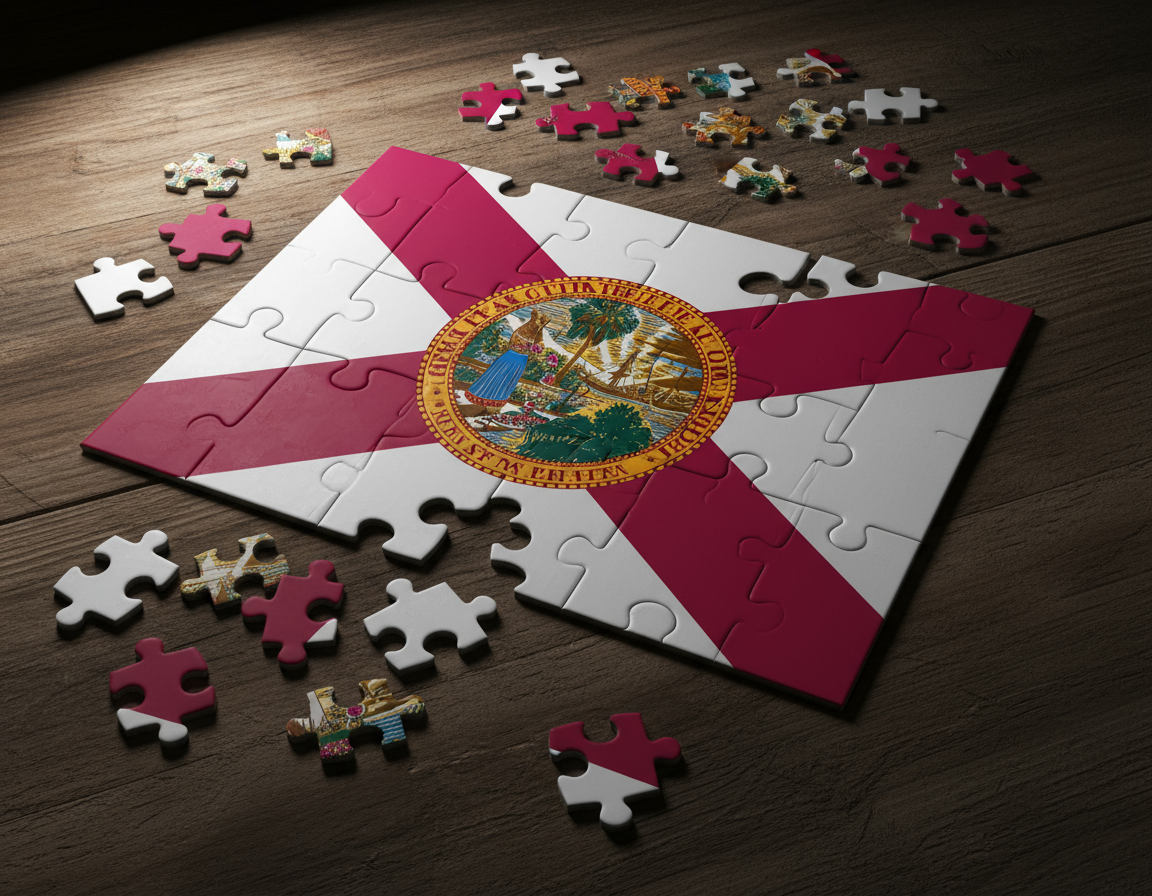
President Donald Trump’s White House has someone in mind to redraw Florida’s congressional districts. Rumors persist that Gov. Ron DeSantis already has someone in-house crafting lines. That could set up another power struggle between a lame-duck Governor and a President seeking to preserve power during the last half of his final term.
The on-again, off-again friction between Trump and DeSantis is just one more element of uncertainty in the timeline surrounding congressional redistricting in Florida, a topic that continues to hold the political world in suspense.
And as the calendar continues to advance, a larger question looms: Amid legal challenges and a dicey political environment, will it happen at all?
Conversations with nine political consultants in Florida, mostly Republicans, show keen interest but little agreement on what will, or should, happen with the state map between now and a planned late April Special Session.
What is clear from numerous conversations at the highest echelons of power in both Florida and Washington is that the White House still holds a desire to create a map even more friendly to Republicans.
Few people were willing to speak on the record about redistricting plans, but plenty offered background into various strategies.
One GOP consultant feels confident Republicans will net four seats at a minimum, so long as the process moves forward. Another GOP Campaign Manager says the entire process feels overtly unconstitutional and expects courts to stop it cold.
Most suspect that in a political environment where Republicans in Special Elections and off-year races routinely underperform Trump’s 2024 results, it may be unwise to toy with the map at all. Any change will force incumbents in safe seats to suddenly have to reach new voters in unfamiliar communities, further opening the door for potential Democratic upsets.
If there’s one overriding opinion about the process among Florida’s political class, many want Tallahassee to just get on with it.
“Redistricting is holding up many national-level donors from giving in many Florida races,” said GOP political consultant John Ashton. “Candidates running now have the added challenge of where to spend money now, most cannot afford to spend money to message voters that may not be able to vote for them in 90 days.”

But the decision isn’t up to them. It’s in the hands of state lawmakers who kept the process remarkably quiet and a Governor who feels anxious to improve on his own map drawn just four years ago.
Calendar questions
Nationwide talk of a mid-decade redistricting effort bubbled up immediately after Trump’s 2024 election win. It accelerated as Texas approved a map designed for the GOP to gain House seats, with California soon responding with a deep-blue redraw.
As of mid-February, six states already enacted new lines ahead of the Midterms, with four others deep in the process, according to the National Conference of State Legislatures.
But as the largest state that hasn’t already completed a redraw, the nation’s eyes are now trained on Florida. Still, despite rare agreement between DeSantis and Florida House Speaker Daniel Perez on an appetite for new lines, any hopes for a rapid resolution seemed dashed when the Governor called a Special Session starting April 20 dedicated to congressional redistricting.
Until that week, it’s likely that nothing about the process will be resolved.
But it also presents a timing issue. The Special Session is scheduled for what had been congressional qualifying week. But after DeSantis called for a Special Session, Secretary of State Cord Byrd ordered qualifying for U.S. House candidates to be moved to June, at the same time as state legislative candidates and most other county offices in Florida.
That’s consistent with how congressional qualifying works in redistricting years, and Byrd also eased other restrictions on the process consistent with standard practice when the map remains uncertain. Candidates attempting to qualify by petition can collect signatures from any voter in Florida, not just those in the district where they intend to run.
Some consultants said the decision to toy with the date is prudent, but others consider it a huge mistake jeopardizing the entire endeavor. One veteran Republican consultant said he would not advise any candidate working for him to presume those rules will stick.
If they do remain in place, candidates would enjoy another seven weeks to prepare should a new map be approved. But if, for instance, courts intervene and throw out Byrd’s rescheduling rationale, it could force a mad dash by campaigns to qualify for the ballot by noon on April 24.
Legal limbo
Indeed, a challenge before the Supreme Court questions whether DeSantis has the authority to declare 2026 a redistricting year. One Republican operative believes a map with more Republican seats would have been attainable, but thinks it should have passed during the Regular Session. Now, he thinks the courts have a reason to derail the process early.
Petitioners, represented by high-profiled Democratic election attorney Marc Elias’ law firm, argue in a brief to Justices that DeSantis cannot completely usurp the legislative process, dictating when and how lawmakers will convene to undertake a process required under state law just once a decade.
“The Governor’s proclamation not only dictated the time and subject matter of the special session, it also expressed the Governor’s views as to when and how congressional districts should be redrawn,” the brief states.
One Republican scoffed at the argument, noting that Governors often administratively reset qualifying rules and schedules, whether because of weather events like hurricanes or unexpected developments like a FedEx airplane crash that destroyed candidate paperwork in 2002.
But Christian Ulvert, a Democratic consultant in South Florida, suspects the courts will rule that the Governor had no authority to change standards set by statute on a whim. “I don’t think he can singlehandedly change that without an emergency or cause,” he said. “The law allows for a crisis or a challenge, but not just because Republicans are in trouble.”
Precedent-making beyond the Sunshine State
Regardless, DeSantis has argued that a delay in redistricting is the judicially cautious approach. He points to an as-yet undecided U.S. Supreme Court case, Louisiana v. Callais. The high court heard a rare second set of oral arguments on the long-delayed case, which could upend the way states consider race when drawing political boundaries.
In that court case, Republicans feel more confident that Justices hold a similar philosophy to the Governor. Court rulings over the last decade substantially pulled back from strict enforcement of protection of minority seats spawned by the Civil Rights Act of 1965. But even the conservative court has surprised the political world in rulings, such one last week striking down Trump’s tariff powers.
Regardless, it may be unlikely that any high court ruling goes into effect nationwide when states like Texas already have voters casting ballots in congressional races scheduled this year. Florida’s August Primaries remain some of the latest in the nation.
But there’s a chance the court may require any redistricting endeavors held this year to adhere to new case law, and DeSantis signaled that he wants to do so regardless.
Crawl out through the fallout
But what cartography do Tallahassee lawmakers want to assemble in the current political environment? The more time passes, and the more Democrats overperform in Special Elections, the less resolve many Republican consultants cling to about the upcoming Midterms.
A high-placed source in the White House tells Florida Politics they still want redistricting to happen, and have people in mind they want to make the maps.
DeSantis has said he has someone in mind as well, stating that when he called the Special Election, he wanted Alex Kelly, the FloridaCommerce Secretary and the mapmaker who generated Florida’s current congressional boundaries in 2022, back at the sketchpad.
Two Republican consultants believe maps already released online may have originated from DeSantis’ Office, though weren’t necessarily produced by Kelly. It would be no shock, they said, if DeSantis already has maps in drafting as everyone awaits court rulings. That might just be proactive thinking, considering the tight timeline.
OK, but what will the maps look like?
Even the most hawkish of GOP consultants say Florida’s Constitution — in particular, the Fair Districts measure passed by voters in 2010 but somewhat weakened by a Florida Supreme Court ruling last year — makes it much harder to ram through a partisan map than in an anything-goes state like Texas.
But there are avenues to maximize lines to GOP advantage. One consultant said he felt unconvinced Republicans could make gains in Florida this year, but 90 minutes with ChatGPT left him confident that under the right map, the GOP could net four to five seats in the Sunshine State, wiping out gains in a blue state like Virginia.
Where could that happen? The National Republican Campaign Committee already lists Democratic U.S. Reps. Jared Moskowitz of Parkland and Darren Soto of Kissimmee as vulnerable under current lines. A new map could make matters worse. But Republicans could also target U.S. Rep. Debbie Wasserman Schultz in Broward County, U.S. Rep. Kathy Castor of Hillsborough or, if particularly ambitious, U.S. Rep. Lois Frankel in a district that includes Trump as a constituent.
More devious, rumors abound around Capitol Hill about what lawmakers may be drawn effectively into the same seat. While Florida can’t impose district residency requirements on federal officeholders, it could pack the most Democrat-friendly parts of Soto’s seat with those represented by Democratic U.S. Rep. Maxwell Frost in Orlando, then let two Democratic incumbents muscle their way through the Primary season.
And considering DeSantis’ outspoken distaste for crafting minority seats, the possibility exists that districts represented by U.S. Reps. Sheila Cherfilus-McCormick and Frederica Wilson, long considered protected by the Voting Rights Act, could be blended into other seats as well. That puts uncertainty before every Democrat in Florida’s delegation.
Indeed, one Democratic political strategist in Florida sees such a move as almost inevitable. Especially after Virginia, California and blue states out-gerrymandered Texas and other red states in 2025, why wouldn’t Florida try and make up ground? And if Trump fears impeachment by a Democratic House, why not push for as many red seats as possible and risk it all?
But it’s that kind of thinking that gives a lot of Republican consultants heartburn as they prepare for an already challenging cycle, with little interest in giving up literal territory.
Betting the House
The far-right, pro-gerrymandering X account Erickson_68 currently has a map pinned at the top of its feed showing an aggressive map, leaving only two Democrat seats in South Florida and one in the Orlando area. It has been passed around by pro-Trump accounts. “Let’s get it done, Ron DeSantis,” the post reads.
But while it rates every Republican district as favoring Republicans by at least 11 percentage points, professional consultants question the math.
One said this cartography could force Republican incumbents like U.S. Rep. Brian Mast into districts Trump effectively won by just a percentage point. Right now, Mast hasn’t been targeted by the Democratic Congressional Campaign Committee (DCCC), and every major political prognosticator considers his seat safe Republican. But he does have one Democratic opponent sitting on almost $929,000 in available cash.
Whatever the lean of districts, a new map, like in any redistricting year, would force every GOP incumbent to seek re-election in a district they haven’t won before.
Ulvert suggests that’s a dangerous game. He pointed to a new CNN poll showing Trump’s approval among independents at 26% nationally.
“If in Florida it’s in the 30s, and two-thirds of Republicans are rejecting the Trump agenda, then a +10 Trump district is now a swing district,” Ulvert said. “That’s not a threat. It’s a fact.”
And some GOP consultants agree, saying this could put already targeted incumbents like U.S. Rep. Anna Paulina Luna in Pinellas County or U.S. Rep. María Elvira Salazar in Miami-Dade County at greater risk.
One consultant has issues besides partisan bent with the Erickson map as well. He points to South Florida’s lines in that proposal, which create three districts that effectively run coast to coast. One connects Fort Myers to Boca Raton. Another extends from Naples to nearly Fort Lauderdale.
Consider the seat held by U.S. Rep. Byron Donalds, who isn’t seeking re-election so he can run for Governor. That race has already attracted 15 candidates, all expecting a race based in Southwest Florida. A new map could turn that contest on its head.
It would also make it extremely challenging for any candidate who ultimately must campaign in distant and wildly different communities.
The shift may maximize Republican seats, but at the cost of any number of priorities typically prioritized in a redistricting process, like connecting communities of like interest and keeping existing cities and counties wholly contained within the same district.
Politics of the moment
While Florida’s Constitution forbids consideration of protecting or attacking incumbents, it also may be of note that the political landscape in Florida dramatically shifted in the last few months.
The DCCC, feeling increasingly excited about the Midterms, now lists four GOP incumbents as targets in Florida. Those include Luna, Salazar, Laurel Lee and Cory Mills.
But three GOP incumbents won’t return regardless. In addition to Donalds, two longtime incumbents, U.S. Reps. Vern Buchanan and Neal Dunn, announced they will not seek re-election this year, whatever the map looks like. That already has candidates in the Big Bend and greater Bradenton areas jockeying for position, all without knowing what the respective districts will look like.
U.S. Rep. Dan Webster recently visited Tallahassee — on personal business, his office confirms — and reportedly urged lawmakers not to consider new maps. The Clermont Republican has criticized the entire endeavor since last Summer.
“I’d like to stick with what I got here,” he told Florida Politics last August.
Other Representatives from both sides of the aisle, meanwhile, have said they try not to waste thought on redistricting, as it’s a process they can’t control from Washington. But all anxiously await developments.
In many districts, little appears to be happening, as incumbents sit on stockpiles of money and few challengers gather serious resources. But any change on the map will mean immediate questions where sitting members of Congress will run, and whether contenders will look for opportunities elsewhere, step up, or stand down.