Connect with us

Business

Is Powell’s Fed head independence dead? Trump outfoxes himself this time

Published

on


The only surprising quality regarding President Trump unleashing federal investigators to prepare potential prosecution criminal charges against the highly respected Federal Reserve Chairman Jay Powell — a Trump appointee himself — is that anyone is surprised by this news.

Financial markets initially dropped before rebounding as investors blew off Trump’s Justice Department move as the flailing bluster of a lame duck and a fissure opened in the GOP, with open concern about the sacred independence of the DOJ as well as of the Federal Reserve.

For example, prominent Republican Sen. Thom Tillis, of the Senate Banking Committee, asserted that “It is now the independence and credibility of the Department of Justice that are in question.”

Similarly, Republican Rep. French Hill, chairman of the House Financial Services committee, called this investigation “an unnecessary distraction that could undermine this Administration and sound monetary decisions.”

Even Trump’s own Treasury Secretary, Scott Bessent, challenged Trump on his “revenge probe” of Powell.

The sequential, dramatic waves of prosecutions against such officials as Trump’s former National Security Advisor John Bolton, former FBI chiefs James Comey and Christopher Wray, New York Attorney General Letitia James, former CIA chief John Brennan, Federal Reserve Governor Lisa Cook,  former Homeland Security official Miles Taylor, Sen. Adam Schiff, cybersecurity chief Christoper Krebs, and former special counsel Jack Smith, among others, is alarming. As Trump’s Truth Social messaging shows, he has personally directed such prosecutions, showing a weaponization of the judiciary against perceived political enemies. Some critics see this as the impulsive emotional fits of the crazed Queen of Hearts from Alice in Wonderland, screaming “off with their heads” regarding any who displease her. However, what is missed is that these moves are far more deliberate actions, part of a larger tactical pattern.

The charges against Powell — that he lied to Congress due to building renovation costs overruns — is ludicrous and such charges will surely be dismissed in court. The alleged 40% cost overruns may be true but they are not criminal. let alone reckless. The actual Fed renovations are costing $2.5 billion, which is 40% overbudget due to cost inflation, but Trump admitted last month that his own East Wing demolition and construction of a new White House ballroom has ballooned to 200% over budget. This is truly stunning as this project was only six months ago and Trump should know how to estimate construction accurately as a builder himself. 

These costs are not out of line, given that this is the first comprehensive renovation in the 90 years since the Marriner Eccles building was built in 1937.  By contrast, the nearby Hart, Russell, and Dirksen Senate Office buildings and the Cannon House Office building have continuously undergone massive renovations over the decades. 

Plus, regardless of the nature of these common cost overruns, not a penny of this is from U.S. taxpayer funds. The Fed is funding these renovations out of its own budget as the Fed is entirely operationally self-sufficient, funded primarily by its own investment income on the U.S. Treasury bonds it owns. 

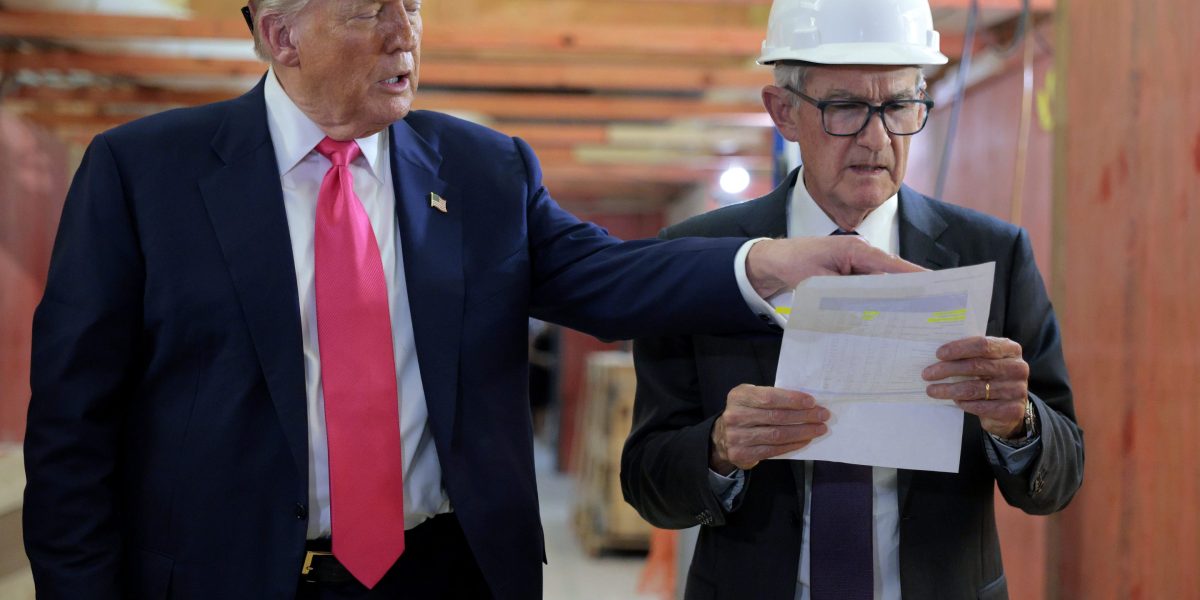
Trump’s attempted ambush of Powell on national TV this summer, during a tour of the construction site, backfired, with Powell correcting and embarrassing him. Trump’s false statement that the renovations had ballooned to $3.1 billion was shown to incorrectly include a separate, already-completed renovation of a different building.

On the surface, Trump is angry that the Federal Reserve is not cutting rates faster and further and that is how chairman Powell explains why he is being targeted as he complained: “This new threat is not about my testimony last June or about the renovation of the Federal Reserve buildings. … Those are pretexts. The threat of criminal charges is a consequence of the Federal Reserve setting interest rates based on our best assessment of what will serve the public, rather than following the preferences of the President.”

Fully 71% of the 200 CEOs at my recent Yale CEO Summit complained that Trump had already eroded the independence of the Federal Reserve via actions from his administration, and 81% stated that they prefer Governor Chris Waller as Powell’s prospective successor when the chairman’s term ends this spring, presuming he will fortify Fed independence. 

So, if this lawfare attack is not an impulsive tantrum, what is the strategic rationale? Like Trump’s false assertion this month that the attack on Venezuela was driven by the advance interest of U.S. oil producers, which they soundly denied, claiming Venezuela was “uninvestable,” this was more of Trump’s diversionary maneuvering. In my new book, Trump’s Ten Commandments (Simon & Schuster), I label this his “Wall of Sound” tactic to change the public narrative from his faltering polling with Gallup’s end of year national survey reporting only 36% of the nation approving and the Economist/YouGov  finding that 57% disapprove. Even over half of MAGA/Trump voters don’t support Trump on his handling of the Epstein files and affordability and healthcare. His ICE/immigration tactics have plummeted 30% in recent polling. 

But Trump has succeeded in his mission of getting every media outlet to drop their 24/7 hammering on his weaknesses on salient domestic policies. Plus, he is pulling three other levers in this Fed/Powell diversionary maneuver — he invokes his “hub & spoke” leadership model where there are no independent agencies of control, his crushing of adversaries with selective retribution, and his deft manipulation of the classic mass communication propaganda tool “sleeper effect” where a false message is repeated in an unrelenting determined way and eventually gets traction. 

These are four of the 10 tools in Trump’s tool kit that I label his “Ten Commandments.” He selects them deliberately and not truly impulsively despite his bravado. Trump is far from tone deaf or foolish. He is dumb as a fox, but even foxes, generally symbol of intelligence and slyness, become victims of their own presumed cleverness. 

The opinions expressed in Fortune.com commentary pieces are solely the views of their authors and do not necessarily reflect the opinions and beliefs of Fortune.

This story was originally featured on Fortune.com


Source link

Continue Reading

Business

‘Microshifting,’ an extreme form of hybrid work that breaks work into short blocks, is on the rise

Published

on


“Microshifting,” a more radical spin on hybrid work that slices the day into short, non‑continuous blocks of labor, is fast moving from fringe experiment to mainstream talking point in 2026. Advocates say this ultra‑flexible pattern is helping workers reconcile childcare, side hustles, and self‑care with demanding white‑collar roles, while critics warn it could entrench an “always on” culture under a different name.​

Microshifting describes a workday broken into multiple short, flexible “bursts” of focused effort, often around 45 to 90 minutes, separated by stretches of personal time, family duties, or rest. Rather than clocking a continuous 9‑to‑5, a worker might log on at dawn, disappear for school drop‑off or a gym class, and return for another block in the late morning before finishing tasks in the evening.​

The term was popularized by video‑conferencing firm Owl Labs, which defines microshifting as working “in short, non‑linear blocks based on personal energy, responsibilities, or productivity patterns.” Originating during the pandemic, when school closures and lockdowns shattered the traditional schedule, the model has since been embraced by parents, global teams, and gig‑economy workers trying to fit paid work into complex lives.​

Gustas Germanavicius, a Lithuanian ironman competitor and the CEO of InRento, described his approach to microshifting to Fortune in November 2025, likening it both to his physical fitness training and the time he spent studying with the Shaolin monks in China.

“Basically I work in marathons and sprints,” he said. “Two months I work, 24-7, seven days a week, then two weeks off. This two weeks off doesn’t mean that I’m fully offline, but I try to relax and put a lower gear.”

Day One Ventures founder Masha Bucher, an early backer of 12 unicorns and more than 30 exits, told Fortune people close to her absolutely “work seven days a week, from 6:00 or 7:00 am, with a break for sports until like midnight or 1:00 or 2:00 am.” Work to her Silicon Valley circuit is “flexible … I don’t remember when I was on vacation and what vacation is. I think when you do something you love, you don’t feel like you need vacation.”

From hybrid to ‘extreme’ flexibility

The rise of microshifting marks an escalation from earlier forms of hybrid work, which largely focused on where people worked rather than when. In many companies, employees are still required to appear in the office several days a week, but now increasingly negotiate the right to distribute those hours across an elongated day or even late evenings.​ Jones Lang LaSalle conducted a worldwide survey of its commercial real estate business and found a certain “non-complier” with traditional work is “empowered,” because of their special value to the business.

Employer data suggests appetite for this extreme flexibility is strong: Owl Labs’ survey found around 65% of workers are interested in microshifting, with interest especially high among managers, caregivers, and staff with side jobs. Younger workers, particularly Gen Z, are leaning into such non‑linear schedules to accommodate additional gig work, with more than a quarter reporting a second job or side hustle.​

Why workers are embracing it

Supporters argue the model aligns work with natural peaks of concentration and energy, rather than forcing productivity through afternoon slumps. Short, intense blocks are seen as a way to harness “deep work” while leaving time for exercise, school runs, or caring responsibilities that rarely fit neatly into a rigid office day—maybe even ironman training.

Mental health is another selling point: HR consultants say that when done intentionally, microshifting can reduce burnout and decision fatigue, giving workers permission to unplug between bursts. In output‑driven organizations, managers report performance has not dipped when staff are allowed to plan their own microshifts, provided they remain available for key meetings and high‑stakes in‑person commitments.​

Germanavicius, the ironman, stressed to Fortune he encourages people to take vacation and “don’t experience the burnout, because it’s very hard to recover,” including for himself. Referencing the valuable lesson he learned from the Shaolin monks that “practice makes tired,” he said he really works himself hard, and expects everyone else on his team to do so, but there’s a limit.

“The company must not be dependent on me,” he said. “If it’s dependent on me, then it means I’m doing a craftsmanship, not a business. The business needs to work for you, you shouldn’t work for the business.”

Labor experts warn schedule autonomy can morph into expectation, with employees quietly stretching their work across 14 or 16 waking hours to stay responsive in different time zones. Some large employers, especially in finance and government, remain wary, pushing a return to presence‑heavy office cultures and expressing concerns about coordination, accountability and surveillance in such dispersed patterns.​

Jones Lang LaSalle was clear in its survey around workforce trends: The next battlefield between workers and employers has already shifted from where to when. Work-life balance has overtaken salary as the leading priority for office workers globally (65%, up from 59% in 2022.), with employees especially looking for “management of time over place.”


Source link

Continue Reading

Business

‘Humans could go the way of horses’: Goldman calculated how bad the AI ‘job apocalypse’ will be

Published

on


In 1983, the Nobel Prize-winning economist Wassily Leontief asked whether technological change could become so profound that “humans could go the way of horses” when tractors replaced them in agriculture and transport in the early part of the 20th Century.* Might not computers replace the need for humans who can think the same way the combustion engine replaced the need for literal horsepower?

This week, two analysts at Goldman Sachs tried to answer that question in a research paper cheerfully titled, “How Concerned Should We Be About a Job Apocalypse?”

Quite, but not too much, is their conclusion.

Joseph Briggs and Sarah Dong estimate, based on Department of Labor job numbers, that 25% of all work hours could be automated by AI. Thus, “We expect that the AI transition will lead to a meaningful amount of labor displacement.”

AI won’t replace jobs in a uniform way, however. “Our baseline forecast for a 15% AI-driven labor productivity uplift and the historical relationship between technologically driven productivity gains and job loss implies that 6-7% of jobs will be displaced over the adoption period,” they said.

“We estimate a peak gross unemployment rate increase of around 0.6pp (corresponding to a 1 million increase in unemployed workers.”

That sounds bad, but there is good news.

Previous eras of technological change have resulted in the creation of a mass of new jobs that no one previously was able to imagine, the Goldman team said.

“Technological change is a main driver of long-run job growth via the creation of new occupations—only 40% of workers today are employed in occupations that existed 85 years ago—suggesting that AI will create new roles even as it renders others obsolete.”

“More than 6 million workers are currently employed in computer-related occupations that did not exist 30-40 years ago, while another 8-9 million are employed in roles enabled by the gig economy, e-commerce, content creation, or video games.” 

Fundstrat head of research Tom Lee recently made a similar comparison in an appearance on the Prof G Markets podcast with Scott Galloway and Ed Elson, comparing the current AI boom to the introduction of flash-frozen foods in the 1920s. Citing his firm’s research, he claimed this reduced farm labor from 40% of the U.S. workforce to 2%, but enough new jobs were created that the shift was overall positive.

“Let’s say there was a CNBC in 1920 and these economists were saying, ‘frozen food, if it comes along and it’s going to wipe out 95% of all farmers, this is going to wipe out the U.S. economy. The U.S. economy can’t survive frozen food … Instead it freed up time, right? And it created, it allowed people to be repurposed, and it created a completely new labor force.”

*Leontief originally wrote, “The role of humans as the most important factor of production is bound to diminish in the same way that the role of horses … was first diminished and then eliminated.” This has been truncated over time and is now widely attributed to him as, “Humans could go the way of horses.”

Join us at the Fortune Workplace Innovation Summit May 19–20, 2026, in Atlanta. The next era of workplace innovation is here—and the old playbook is being rewritten. At this exclusive, high-energy event, the world’s most innovative leaders will convene to explore how AI, humanity, and strategy converge to redefine, again, the future of work. Register now.


Source link

Continue Reading

Business

Meet the Nvidia billionaire giving away his wealth—His son’s cancer battle inspired a recent $100 million gift

Published

on


Billionaire Nvidia board member Tench Coxe and his wife Simone are donating $100 million to the University of Texas Medical Center in Austin. 

The donation, one of the largest gifts in the university’s history, was driven by the couple’s personal history and values aligning with the university’s goal of improving healthcare access in Central Texas, where they live.

The medical center will include a new hospital to treat complex and serious conditions and an expansion of the UT MD Anderson Cancer Center, according to a statement from the university. It is expected to open in 2030.

“I hope in 25 years that people will say that UT has one of the best medical centers in the world, and it’s benefiting the whole community,” Coxe said in a video. 

Coxe was managing director of Sutter Hill Ventures from 1989 to 2020, and joined the Nvidia board in 1993, an early supporter of Jensen Huang. Coxe is the third largest individual shareholder of Nvidia, behind founder Huang and board member and venture capitalist Mark Stevens, and has an estimated net worth of $7.7 billion, according to Forbes

The couple relocated to Austin from Silicon Valley in 2020, and Coxe is also a part-owner of Austin FC. They are also Democratic supporters, and each donated $1 million to Beto O’Rourke’s 2022 gubernatorial campaign against Gov. Greg Abbott. 

Investing in the future of healthcare 

The couple’s personal experiences also influenced their choice to donate to the University of Texas. Their six-year-old son successfully underwent treatment for Burkitt lymphoma at the Lucile Packard Children’s Hospital at Stanford Medicine in 2003, which inspired them to pay it forward, Simone said. They also saw the need for more healthcare infrastructure in their own community. 

“We have a close friend who had to travel to Houston [from Austin] for care she should have been able to get here at home,” Coxe said. As much as 25% of people in the region leave the area to seek care for serious medical needs, according to the university. 

A key part of the Coxes’ decision to donate was speaking with the dean of UT’s Dell Medical School, Claudia Lucchinetti, and hearing her vision to change the model of healthcare by integrating university research with a modern healthcare system. 

“Having spent my career backing strong leaders, meeting Claudia made it clear: Supporting the vision for the UT medical center is exactly the opportunity Austin needed,” Coxe said. The gift is unrestricted and the university says they will prioritize hiring world-class staff, construction, technology investments, and expanding access to healthcare. 

The couple typically gives quietly or anonymously. In September 2025, Coxe gifted 1 million Nvidia shares, valued at more than $168 million, to undisclosed recipients, Bloomberg reported.  

“One of the things that happens with bigger gifts is that it de-risks it a bit for some people,” Simone said. “Our approach to philanthropy is to invest and believe, knowing that there’s a risk and not everything’s going to be perfect. We hope by making this gift, we can help encourage others to take that same view.”

This story was originally featured on Fortune.com


Source link
Continue Reading

Trending

Copyright © Miami Select.