
Politics
Is one month enough for Trop site proposals?


A prominent development firm has asked St. Petersburg to extend its window for submitting Historic Gas Plant District redevelopment proposals. Some people are tired of waiting.
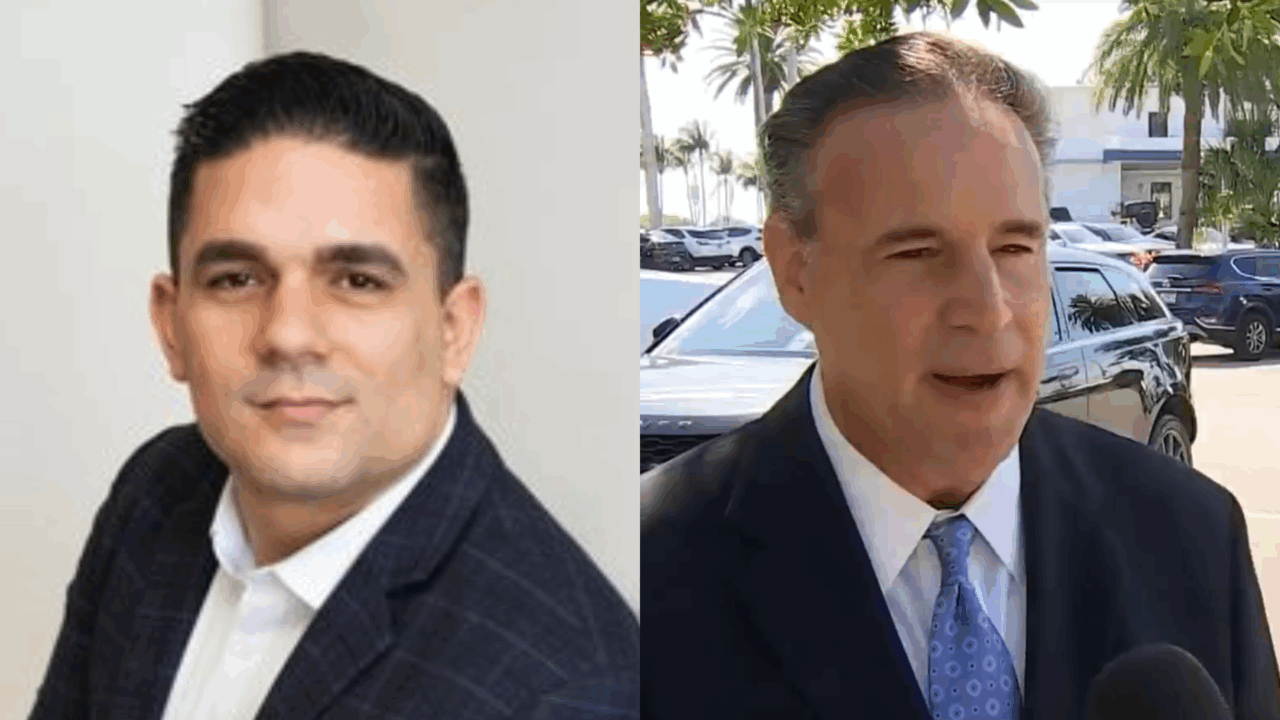
Mayor Ken Welch announced Tuesday that, starting in mid-November, he would officially welcome proposals to reimagine the area around Tropicana Field for 30 days. Troy Simpson, president of Delray Beach-based Kolter’s mixed-use division, emailed Council members and the city’s procurement department on Wednesday to request 90 days.
The receipt of two recent unsolicited proposals did not trigger the process, despite conflicting reports. State law requires local governments to provide at least 30 days’ notice before entering into “any contract to sell, lease, or otherwise transfer real property” within a Community Redevelopment Area.
Providing a much shorter window than the previous two Trop site requests for proposals (RFPs) sparked online discourse. Simpson echoed some of those sentiments in his brief email.
“A proposal for a project of this significance warrants more than 30 days to evaluate and prepare,” Simpson wrote. “As a consideration for St. Pete to attract a development team prepared to deliver a world-class project, we ask that (the) invitation window be extended.”
Kolter has built three luxury condo towers downtown: ONE St. Petersburg, Saltaire and Art House. City Council members unanimously approved a land use change Oct. 16 that allows the firm to build up to 776 housing units at St. Petersburg College’s Allstate campus.
‘Let’s move the needle’
Former Mayor Rick Kriseman opened a six-month RFP process in July 2020, eventually selecting Midtown Development. Welch provided a 90-day window when starting anew in September 2022.
The Tampa Bay Rays and global development firm Hines walked away from that $6.5 billion redevelopment deal in March after over two years of negotiations. ARK Investment Management, Ellison Development and Horus Construction submitted a $6.8 billion vision for a new, similarly-termed “world-class” project Oct. 3.
“From my standpoint, this land has been sitting and continues to sit,” Council Chair Copley Gerdes told the Catalyst. “Every day counts for the people who are counting on us to fulfill the promises on that piece of land.”

Tuesday’s announcement stated that the city is acting pursuant to Florida Statute 163.380, which regulates the disposal of property in a community redevelopment area acquired through eminent domain. An unsolicited proposal received in March did not trigger the same – or any – response.
“Public notice allowing an opportunity for competing or alternative proposals from private developers or other interested parties for the lease, purchase or development of all or a portion of the Historic Gas Plant District property” is not an RFP or a solicitation. It is a state requirement before selling the land.
“I understand that’s a hard timeline – thirty days is a short period of time in the development world,” Gerdes said. “But we’ve got a responsibility to move both intentionally and quickly.”
Welch has repeatedly pledged to do just that since the Rays walked away from the previous agreement. The self-described “child of the Gas Plant” witnessed the displacement of his and thousands of other Black families in the name of economic progress over 40 years ago.
“Honoring the promises made to our community, including the residents of the Historic Gas Plant District, has been a top priority of my administration, and we continue to explore ways to pursue impactful outcomes that reflect the needs and aspirations of our residents,” he said in the announcement.
The public notice period should — and seemingly has — put pressure on developers who have sat on the sidelines since the first RFP in July 2020, or since the previous deal died seven months ago.
They also have over 30 days to prepare a proposal. The mayoral administration provided a nearly month-long heads-up that it planned to issue the 30-day notice.
Gerdes reiterated his belief that the administration wants to ensure “there’s movement for some of the things that, I think, the community expects and has been promised.”
“Even if we can deliver on some of those sooner rather than later, let’s move the needle,” Gerdes added. “Because the needle hasn’t been moved in 40 years.”
Negotiations with a selected developer should move expeditiously, as there are no stadium agreements or associated funding sources to consider. Pinellas County and Major League Baseball are no longer involved.
“My expectation is that the city is able to move through negotiations faster, and the development is able to start sooner,” Gerdes said.
___
Mark Parker reports via St. Pete Catalyst; republished with permission.


For the first time in a decade, hunters armed with rifles and crossbows are fanning out across Florida’s swamps and flatwoods to legally hunt the Florida black bear, over the vocal opposition of critics.
The state-sanctioned hunt began Saturday, after drawing more than 160,000 applications for a far more limited number of hunting permits, including from opponents who are trying to reduce the number of bears killed in this year’s hunt, the state’s first since 2015.
The Florida Fish and Wildlife Conservation Commission awarded 172 bear hunt permits by random lottery for this year’s season, allowing hunters to kill one bear each in areas where the population is deemed large enough. At least 43 of the permits went to opponents of the hunt who never intend to use them, according to the Florida chapter of the Sierra Club, which encouraged critics to apply in the hopes of saving bears.
The Florida black bear population is considered one of the state’s conservation success stories, having grown from just several hundred bears in the 1970s to an estimated more than 4,000 today.
The 172 people who were awarded a permit through a random lottery will be able to kill one bear each during the 2025 season, which runs from Dec. 6 to Dec. 28. The permits are specific to one of the state’s four designated bear hunting zones, each of which have a hunting quota set by state officials based on the bear population in each region.
In order to participate, hunters must hold a valid hunting license and a bear harvest permit, which costs $100 for residents and $300 for nonresidents, plus fees. Applications for the permits cost $5 each.
The regulated hunt will help incentivize maintaining healthy bear populations, and help fund the work that is needed, according to Mark Barton of the Florida chapter of Backcountry Hunters and Anglers, an advocacy group that supported the hunt.
Having an annual hunt will help guarantee funding to “keep moving conservation for bears forward,” Barton said.
According to state wildlife officials, the bear population has grown enough to support a regulated hunt and warrant population management. The state agency sees hunting as an effective tool that is used to manage wildlife populations around the world, and allows the state to monetize conservation efforts through permit and application fees.
“While we have enough suitable bear habitat to support our current bear population levels, if the four largest subpopulations continue to grow at current rates, we will not have enough habitat at some point in the future,” reads a bear hunting guide published by the state wildlife commission.

___
Republished with permission of the Associated Press.


Tucker Wetmore’s Song ‘Proving Me Right’ is About Model Bryana Ferringer

‘Bachelor’ Winner Cassie Randolph Marries Brighton Reinhardt

Kanye West and Bianca Censori Travel to South Korea Together
-

 Politics8 years ago
Congress rolls out ‘Better Deal,’ new economic agenda
-
Entertainment8 years ago
New Season 8 Walking Dead trailer flashes forward in time
-
Politics8 years ago
Poll: Virginia governor’s race in dead heat
-
Entertainment8 years ago
The final 6 ‘Game of Thrones’ episodes might feel like a full season
-
Entertainment8 years ago
Meet Superman’s grandfather in new trailer for Krypton
-
Politics8 years ago
Illinois’ financial crisis could bring the state to a halt
-
Business8 years ago
6 Stunning new co-working spaces around the globe
-
Tech8 years ago
Hulu hires Google marketing veteran Kelly Campbell as CMO