Connect with us

Business

Is MAGA going Marxist and Maoist? Trump’s assault on free-market capitalism
Published

on


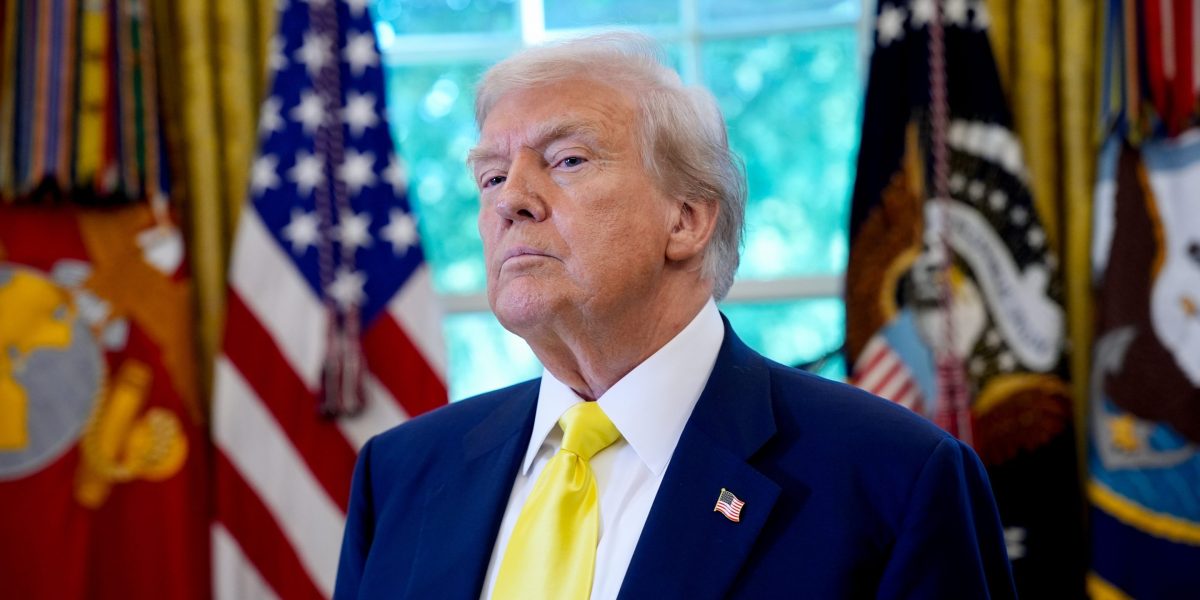
As many CEOs understandably grew horrified last month at the prospect that New York City, the capital of capitalism, is on the brink of going socialist with the mayoral momentum of the inexperienced candidate Zohran Mamdani, they were ignoring the greater assault on free market capitalism that has already overtaken the nation in the Republican Party. While we agree that Mamdani’s solutions to affordable housing and grocery prices threaten to undermine free markets by bowing to the appeal of populist anger, President Donald Trump has already begun doing so, but to suit his own grandiose political agenda instead. 

Unlike any leader of any free-market economy around the world, President Trump has seized control of private enterprise’s strategic decision-making and investment policies while invading corporate board rooms so that he may dictate leadership staffing, punish corporate critics, and demand public compliance with his political agenda. This is far more dangerous to capitalism than a city-run grocery store.

Many free-market economists and business leaders who have long worshipped the free-market ideals of Adam Smith, Friedrich Hayek, Ayn Rand, and Milton Friedman should be aware that their idols would be rolling in their graves right now, as rather than pursue standard laissez-faire conservative economic policies, MAGA has gone Marxist and even, increasingly, Maoist.

As Greg Ip warned this week in The Wall Street Journal, “The US marches toward state capitalism with American characteristics … President Trump is imitating [the] Chinese Communist Party by extending political control ever deeper into the economy.”  Ip pointed out that in the past, crisis-driven government bailouts of the banking and automotive sectors, such as TARP, were acute, targeted assistance, with brief and bipartisan rescue aims. Similarly, government incentives to drive investments in chips manufacturing, oil exploration, space exploration, internet development, agricultural vitality, cancer detection, disease treatment, and clean energy were not ownership deals with preferred companies or corporate cronies.  

Indeed, Ip’s warnings mirror our own, as we were the first to accurately, presciently warn—over a year ago—that many of Trump’s economic positions more closely resemble communism than capitalism, as part of what we called “the coming MAGA assault on capitalism.” It certainly looks like MAGA is going Marxist if not even Maoist, especially across Trump’s vicious personal targeting of individual business leaders; government crackdown on business freedom of expression; weaponization of government powers; apparent extortion of businesses; and insertion of government into an unprecedented, outsized role in private sector strategic investment, capital flows and business decision-making.

Marxism and Maoism were both, of course, expressions of the communist theory that spilled forth from Karl Marx’s pen in the 19th century, brought to life in the brutal one-party states of the Soviet Union and the People’s Republic of China under its leader Mao Zedong, before it evolved into “capitalism with Chinese characteristics” starting in the 1970s, around the time of President Richard Nixon’s fateful visit to Beijing.

Both Marxism and Maoism claimed to champion “ordinary people” against corrupt or exploitative elites, while both targeted intellectuals, bureaucrats, and traditionalists, and purged institutions to enforce ideological purity, especially during Stalin’s “Great Terror” and Mao’s “Cultural Revolution.” Both centralized leadership to the point of creating a cult of personality, demanding intense loyalty and the glorification of the sole figure who could fix the country’s problems. Both prized loyalty over expertise, sidelining critics and dissenters in favor of a tightly controlled political narrative. Sound familiar?

The essence of market capitalism is that owners—shareholders and the management they appoint share in the profits. These deals give share of profits to government in return for favors. Friedman said that federal government should never own anything—that it should not run a surplus because it would have funds to invest in the private sector. What strategic decision-making rights would the government have in such deals, then?

Assaults targeting individual business leaders

Trump has a long history of targeting individual CEOs in highly vicious, personal terms for perceived offenses. This week, Trump called for the firing of Goldman Sachs’ renowned economist Jan Hatzius who accurately called the 2008 financial crisis over the economist’s concern regarding the tariff overhand on the US economy. He also attacked a top-performing financier, David Solomon, the non-partisan CEO of Goldman Sachs, telling him to quit and just be a disk jockey. (Solomon has a famous side hustle as an electronic dance music DJ, known as DJ D-Sol.)

Just last week, many semiconductor industry observers expressed tremendous discomfort with Trump’s attacks on Lip-Bu Tan, the CEO of Intel, and Trump’s calls for his immediate recognition. Even those who are genuinely concerned by Tan’s documented history of CCP ties and his continuing investments in China, would have preferred that Trump express his views in a more subtle fashion which recognizes the widespread entanglements of the Chinese Communist Party in the largest Chinese businesses. Roughly one-third of the Chinese economy is controlled by CCP-owned enterprises with actual CCP monitors in their boardrooms. Instead of calling this out, the Trump administration appears to want to match such corporate oversight itself.

Virtually any CEO doing business in China works with companies and schools that have ties to People’s Liberation Army of China, given China’s own authoritarian command economy.  There has been great concern that such prominent Chinese businesses as Huawei, Aviation Industry Corporation of China (AVIC), China Telecom, China Mobile, and Hikvision have close ties to the PLA. Many state-owned enterprises with which most western enterprises do business even have militias with ties to the PLA. While this is concerning across political parties, how can President Trump justifying singling out Intel alone?

Trump has similarly publicly called out and humiliated leading CEOs ranging from Jamie Dimon of JPMorgan to Brian Moynihan of Bank of America to Doug McMillon of Walmart to Tim Cook of Apple to Matt Levatich of Harley-Davidson, among many others, when they speak the truth about issues ranging from trade policies to HR practices to diplomacy to environmental sustainability. 

The unwarranted attack on Brian Moynihan and Bank of America—that they previously denied him as a customer—was particularly alarming as President Trump’s four bankruptcies were reasonable concerns when major banks were approached about lending to him. Bewilderingly, Deutsche Bank’s private wealth unit loaned Trump $48 million—following his default on a $640 million loan from Deutsche Bank’s commercial unit. Now regulators are being told by the Trump Administration to withdraw reputation risk as criteria for reviewing prudent banking practices.

Suppressing business freedom of expression in favor of political obedience

The political right used to complain about the “political correctness of the left.” Similarly, Trump’s history of cracking down on businesses for exercising their freedom of expression resembles the purges of Maoist China far more than American democratic norms.

For example, when Merck CEO Ken Frazier resigned from Trump’s Manufacturing Councils in protest over Trump’s infamous response to the Charlottesville rally, claiming there were “fine people” on both sides, Trump lashed out at Frazier, mocking him by saying he’d now have “more time to lower ripoff drug prices”. Similarly, Trump has repeatedly attacked Jeff Bezos, claiming that Amazon was “stealing” from the US Postal Service in the aftermath of critical coverage by the Bezos-owned Washington Post.

Trump FTC Chairman Andrew Ferguson has publicly challenged woke ideology as a part of his antitrust remit, arguing that “In 2020, if you had a view on masks that was inconsistent with how big tech felt about masks, you weren’t allowed to talk about it. If you had a view on vaccines, couldn’t talk about it. But it wasn’t just big tech censorship. That was a huge problem. Consumers couldn’t go into a store without having political messages pushed in their face. And I’m sitting in 2020 working in the Senate going, gosh, if companies feel like they can alienate half their consumer base without suffering any real competitive consequences, we probably have a competition problem.”

Similarly, Trump FCC Chair Brendan Carr has argued that he would use DEI as a basis to block mergers, declaring that “if there are businesses out there that are still promoting invidious forms of DEI discrimination, I really don’t see a path forward where the FCC could reach the conclusion that approving the transaction is going to be in the public interest.”

Accordingly, to complete it acquisition of Paramount/CBS, David Ellison’s Skydance had to ensure review of its news reporting “to address bias and restore fact-based reporting” with a bias monitor as well as racial hiring practices which met the FCC’s standards under Carr.

Seizing control of strategic investment and private enterprise decision-making

Akin to Mao Zedong directing business decisions as a part of his wildly disastrous Great Leap Forward central economic planning initiative, Trump has plunged the US government headfirst into an unprecedented active role in directing private business decision-making and capital flows. Last month, he ordered Coca-Cola CEO James Quincey to replace cane sugar with other sweeteners that the firm uses, despite the lack of scientific evidence supporting such a move and despite the fact that the CEO of Coca-Cola is accountable to his board and shareholders, not Donald Trump.

This even extends to the US government directly receiving equity stakes, golden shares, and royalties from business revenues, sometimes as a part of complicated negotiations with the US government and giving off the appearance, whether warranted or not, of drug deals. For example, leading chipmakers Nvidia and AMD were just forced to surrender 15% of the revenue flows from their sales to China to the U.S. government, apparently as a concession to be able to continue selling in that market.

Similarly, as a precondition to approving the dangerous takeover of US Steel by the Japanese, Trump extracted a “golden share” for the U.S. government with effective veto power over certain corporate decisions. Likewise, in his first term, Trump attacked Harley-Davidson for supposedly moving factories overseas when in reality 100% of its beloved motorcycles sold in the U.S. are actually made in the U.S. Out of sheer political spite, Trump proclaimed that American bikers should buy from Harley’s foreign competitors, ranting that Harley had “surrendered” and “betrayed” America while threatening “they will be taxed like never before.”

Likewise, Trump wrongly accused Ford of robbing Detroit of jobs when it relocated an engine plant from Europe to Mexico, fortifying its North American supply chain. When one of us personally corrected Trump on that, he replied, “I don’t care, it’s working.” At the same time, the home appliances firm Carrier had a parallel experience with Trump-bashing them, despite being located in Mike Pence’s home state of Indiana.

Political weaponization of government powers 

Trump targeted AT&T with a drawn-out antitrust suit as well as numerous personal taunts when it tried to merge with Time Warner, hoping to pressure CNN to become more friendly in its coverage. In stark contrast, Trump pal Rupert Murdoch received the white-gloves treatment through antitrust when he sold 21st Century Fox at around the same time, despite arguably more genuine antitrust concerns.

In fact, Trump antitrust chief Makan Delrahim expressed support for the AT&T-Time Warner combination as an academic but flipped 180 degrees to appease Trump once in office, holding up the deal for two years. Likewise, before his first term ran out, Trump personally drove a proposed deal that would have secured TikTok for his longtime supporter and friend Larry Ellison at Oracle, unusually inserting himself into every detail of the negotiation process.

The appearance of extortion and bribery

As prominent media commentators such as Oliver Darcy and Matt Belloni point out, some of Trump’s demands resemble extortion. There was the payment of $16 million to the Trump Presidential Library from CBS News’ 60 Minutes over the standard editing of an interview with Kamala Harris last summer. This occurred over the objections of its executive producer (who resigned in protest), and while FCC approval was pending of Paramount’s acquisition by Skydance.

This was followed by the cancellation of the modern “King of Comedy,” Stephen Colbert, whose revered late show suddenly had its deal abruptly canceled on the eve of Trump’s FCC merger approval, seemingly over its satirical criticism of the Trump administration. The explanation that the show was too expensive and lost money raised many eyebrows, particularly given the lack of attempts to trim the 200-person production staff.

Similar lawsuits initiated by Trump in office against private businesses give off a similar appearance of extortion and bribery, whether justified or not. These include Trump’s $100 million lawsuit against The Wall Street Journal for reporting about a letter Trump wrote to Jeffrey Epstein for his 50th birthday; and Disney/ABC’s $15 million payment to the Trump Presidential Library to settle defamation claims against George Stephanopoulos.

Across each of these five dimensions, one can’t help but think MAGA is going Marxist or full Maoist. Adam Smith’s salute to the “invisible hand” of free markets in favor of the fist of government appears to be losing out in the Trump administration. as these unprecedented policies with no parallel in American history share much more in common with Karl Marx and Mao Zedong than Adam Smith and Ayn Rand. Many now wonder why the Business Roundtable remains missing in action, insulating itself with turgid knowledge, subtracting white papers and passive forums, piously genuflecting to President Trump’s assaults on free-market capitalism that make New York’s Mamdani look like John D. Rockefeller.

The Marxist-style oppression of free enterprise was echoed in assaults on the nation’s top law firms and universities through authoritarian blitzkriegs to suppress constitutionally protected American ideals of freedom of expression, a cornerstone of capitalism. Harvard University, like 60 other universities, has been threatened with a cutoff of foreign-born students and vital federal research funds under the false pretext of antisemitism, despite the Anti-Defamation League giving Harvard passing grades on its tests for antisemitism. Paul Weiss is one of many major law firms that the Trump administration threatened with having its security clearance and federal building access denied, merely by offering to represent independent citizen voices attacked by Trump for noncompliance with his thought police and MAGA political correctness. We have spoken in admiration of the hundreds of universities and law firms that have now unified to stop these totalitarian White House edicts. The legal and academic community remembered what the Business Roundtable and genuine traditional economic conservatives have forgotten, which was Benjamin Franklin’s admonition that “we must all hang together or surely we will hang separately.”

The authors would like to thank Steven Tian and Stephen Henriques from the Yale Chief Executive Leadership Institute for their research.

The opinions expressed in Fortune.com commentary pieces are solely the views of their authors and do not necessarily reflect the opinions and beliefs of Fortune.


Source link

Continue Reading

Business

US vaccine advisers end decades-long recommendation for all babies to get hepatitis B shot at birth

Published

on


A federal vaccine advisory committee voted on Friday to end the longstanding recommendation that all U.S. babies get the hepatitis B vaccine on the day they’re born.

A loud chorus of medical and public health leaders decried the actions of the panel, whose current members were all appointed by U.S. Health Secretary Robert F. Kennedy Jr. — a leading anti-vaccine activist before this year becoming the nation’s top health official.

“This is the group that can’t shoot straight,” said Dr. William Schaffner, a Vanderbilt University vaccine expert who for decades has been involved with the Advisory Committee on Immunization Practices and its workgroups.

Several medical societies and state health departments said they would continue to recommend them. While people may have to check their policies, the trade group AHIP, formerly known as America’s Health Insurance Plans, said its members still will cover the birth dose of the hepatitis B vaccine.

For decades, the government has advised that all babies be vaccinated against the liver infection right after birth. The shots are widely considered to be a public health success for preventing thousands of illnesses.

But Kennedy’s advisory committee decided to recommend the birth dose only for babies whose mothers test positive, and in cases where the mom wasn’t tested.

For other babies, it will be up to the parents and their doctors to decide if a birth dose is appropriate. The committee voted 8-3 to suggest that when a family elects to wait, then the vaccination series should begin when the child is 2 months old.

President Donald Trump posted a message late Friday calling the vote a “very good decision.”

The acting director of the Centers for Disease Control and Prevention, Jim O’Neill, is expected to decide later whether to accept the committee’s recommendation.

The decision marks a return to a health strategy abandoned more than three decades ago

Asked why the newly-appointed committee moved quickly to reexamine the recommendation, committee member Vicky Pebsworth on Thursday cited “pressure from stakeholder groups,” without naming them.

Committee members said the risk of infection for most babies is very low and that earlier research that found the shots were safe for infants was inadequate.

They also worried that in many cases, doctors and nurses don’t have full conversations with parents about the pros and cons of the birth-dose vaccination.

The committee members voiced interest in hearing the input from public health and medical professionals, but chose to ignore the experts’ repeated pleas to leave the recommendations alone.

The committee gives advice to the director of the Centers for Disease Control and Prevention on how approved vaccines should be used. CDC directors almost always adopted the committee’s recommendations, which were widely heeded by doctors and guide vaccination programs. But the agency currently has no director, leaving acting director O’Neill to decide.

In June, Kennedy fired the entire 17-member panel earlier this year and replaced it with a group that includes several anti-vaccine voices.

Hepatitis B and delaying birth doses

Hepatitis B is a serious liver infection that, for most people, lasts less than six months. But for some, especially infants and children, it can become a long-lasting problem that can lead to liver failure, liver cancer and scarring called cirrhosis.

In adults, the virus is spread through sex or through sharing needles during injection drug use. But it can also be passed from an infected mother to a baby.

In 1991, the committee recommended an initial dose of hepatitis B vaccine at birth. Experts say quick immunization is crucial to prevent infection from taking root. And, indeed, cases in children have plummeted.

Still, several members of Kennedy’s committee voiced discomfort with vaccinating all newborns. They argued that past safety studies of the vaccine in newborns were limited and it’s possible that larger, long-term studies could uncover a problem with the birth dose.

But two members said they saw no documented evidence of harm from the birth doses and suggested concern was based on speculation.

Three panel members asked about the scientific basis for saying that the first dose could be delayed for two months for many babies.

“This is unconscionable,” said committee member Dr. Joseph Hibbeln, who repeatedly voiced opposition to the proposal during the sometimes-heated two-day meeting.

The committee’s chair, Dr. Kirk Milhoan, said two months was chosen as a point where infants had matured beyond the neonatal stage. Hibbeln countered that there was no data presented that two months is an appropriate cut-off.

Dr. Cody Meissner also questioned a second proposal — which passed 6-4 — that said parents consider talking to pediatricians about blood tests meant to measure whether hep B shots have created protective antibodies.

Such testing is not standard pediatric practice after vaccination. Proponents said it could be a new way to see if fewer shots are adequate.

A CDC hepatitis expert, Adam Langer, said results could vary from child to child and would be an erratic way to assess if fewer doses work. He also noted there’s no good evidence that three shots pose harm to kids.

Meissner attacked the proposal, saying the language “is kind of making things up.”

Health experts say this could ‘make America sicker’

Health experts have noted Kennedy’s hand-picked committee is focused on the pros and cons of shots for the individual getting vaccinated, and has turned away from seeing vaccinations as a way to stop the spread of preventable diseases among the public.

The second proposal “is right at the center of this paradox,” said committee member Dr. Robert Malone.

Some observers criticized the meeting, noting recent changes in how they are conducted. CDC scientists no longer present vaccine safety and effectiveness data to the committee. Instead, people who have been prominent voices in anti-vaccine circles were given those slots.

The committee “is no longer a legitimate scientific body,” said Elizabeth Jacobs, a member of Defend Public Health, an advocacy group of researchers and others that has opposed Trump administration health policies. She described the meeting this week as “an epidemiological crime scene.”

Republican Sen. Bill Cassidy, a liver doctor who chairs the Senate health committee, called the committee’s vote on the hepatitis B vaccine “a mistake.”

“This makes America sicker,” he said, in a post on social media.

The committee heard a 90-minute presentation from Aaron Siri, a lawyer who has worked with Kennedy on vaccine litigation. He ended by saying that he believes there should no ACIP vaccine recommendations at all.

In a lengthy response, Meissner said, “What you have said is a terrible, terrible distortion of all the facts.” He ended by saying Siri should not have been invited.

The meeting’s organizers said they invited Siri as well as a few vaccine researchers — who have been vocal defenders of immunizations — to discuss the vaccine schedule. They named two: Dr. Peter Hotez, who said he declined, and Dr. Paul Offit, who said he didn’t remember being asked but would have declined anyway.

Hotez, of the Texas Children’s Hospital in Houston, declined to present before the group “because ACIP appears to have shifted its mission away from science and evidence-based medicine,” he said in an email to The Associated Press.


Source link

Continue Reading

Business

Jamie Dimon on AI: ‘maybe one day we’ll be working less hard but having wonderful lives’

Published

on


JPMorgan Chase CEO Jamie Dimon reiterated a nuanced and overall upbeat view about the effect of artificial intelligence on the economy.

In an interview with Fox News’ Sunday Morning Futures, the head of the world’s biggest bank acknowledged businesses have been cautious about hiring lately but said it’s not related to AI and doubted that the technology will dramatically reduce jobs in the next year.

“For the most part, AI is going to do great stuff for mankind, like tractors did, like fertilizers did, like vaccines did,” he said. “You know maybe one day we’ll be working less hard but having wonderful lives.”

Dimon added that AI still needs proper regulation to mitigate the downside risks, just like other innovations throughout history.

He also repeated his earlier warning that AI will eliminate jobs, but urged people to focus on uniquely human skills like critical thinking, emotional intelligence, and communication.

If AI sweeps through the economy so quickly that workers can’t adapt to new roles in time, Dimon suggested the public sector and private sector have roles to play.

“We—government and we the companies, society—should look at how do we phase it in a way that we don’t damage a lot of people,” he explained. “We should have done a little bit more on trade assistance years ago when you had a town that got damaged by the closure of a plant. And that you can do: you can retrain people, relocate people, income assistance, early retirement.”

Meanwhile, AI is also creating jobs in the near term as new infrastructure requires more construction and fiber optics, he pointed out.

The comments were his latest on AI in recent months. In November, Dimon predicted AI will help the developed world transition to a shorter workweek of just three and a half days sometime in the next 20-40 years.

And at the Fortune Most Powerful Women Summit in October, he said governments and companies must plan for an AI future to avoid a social backlash.

“It will eliminate jobs. People should stop sticking their heads in the sand,” he warned.


Source link

Continue Reading

Business

This pastor fills up arenas by not sugarcoating the Bible

Published

on


After Atlanta pastor Philip Anthony Mitchell stopped dwelling on growing his congregation about three years ago, its attendance surged. Now, lines packed with young adults snake outside 2819 Church, some arriving as early as 5:30 a.m. to secure a spot for Sunday worship.

Christian rap and contemporary music blast like a block party as volunteers cheer into megaphones for around 6,000 weekly churchgoers — up from less than 200 in 2023, the church reports. Inside the sanctuary, the atmosphere turns serious. Many drawn to 2819’s riveting worship are hungry for Mitchell’s animated intensity and signature preaching: No sugarcoating the Bible.

After spirited prayers and songs leave many crying, Mitchell ambles onstage in his all-black uniform, sometimes in quiet contemplation or tears, before launching into a fiery sermon. His messages, unpolished and laden with challenges to revere God and live better, often spread quickly online. A recent prayer event drew far more people than State Farm Arena could handle, with many flying in.

Crying, shouting, storming across the platform and punching the air, Mitchell preaches with his whole body — and an urgency to bring people to faith before they die or what he calls Jesus’ impending return to Earth.

“It is life or death for me,” Mitchell told The Associated Press, comparing preaching to the front lines of war. “There are souls that are hanging in the balance. … I think about the fact that in that room somebody might hear the Gospel, and that might be their last opportunity.”

The church — whose name references Matthew 28:19, a Bible verse commanding believers to go “make disciples of all the nations” — is nondenominational and theologically conservative, with beliefs opposing abortion and in support of marriage only between a man and a woman.

The congregation’s growth has attracted people of many races and ages, but it’s predominantly young Black adults. Their youth is notable since Americans ages 18 to 24 are less likely than older adults to identify as Christian or attend religious services regularly, according to Pew Research Center.

Sharp sermons and moving worship

Warren Bird, an expert on fast-growing churches, believes the right leader is key to a church’s growth — along with God’s help — and described Mitchell as “speaking a language” that connects with young people who other pastors haven’t reached.

Churchgoers say Mitchell’s message resonates because he carefully walks them through scripture and talks candidly about his spiritual transformation, including his past dealing drugs, paying for abortions and attempting suicide.

“I’m still a little rough around the edges, right? I still got a little hood in me,” said Mitchell, who still speaks with a regional New York accent.

Many at 2819 want more than motivational speeches and say Mitchell’s sermons are counterweights to the feel-good American preaching he criticizes.

“I’m preaching without watering that down, without filtering out things that we think might be too controversial,” said Mitchell, who wants people to mature spiritually and insists they can’t deal with sin and its consequences without Jesus.

“I think that there is a generation that is gravitating towards that authenticity and truth,” he said. “As a result of that, we are seeing lives being radically transformed.”

Christian podcaster Megan Ashley said she brought a friend to 2819 who had stepped away from her faith, and Mitchell had an impact. The friend told Ashley, “When he speaks, I believe him.”

The tougher messages might hurt some people’s feelings, said Donovan Logan, 23.

“But that’s what it’s supposed to do. If you don’t come to church and want to change, then that’s not the church you’re supposed to be going to,” Logan said.

Elijah McCord, 22, said Mitchell’s sermons about sin touch on what’s happening around him in Atlanta, and Mitchell’s story shows that “there’s life in what God has commanded.” He also values Mitchell’s pleadings to wait until marriage to have sex.

“He biblically talks about sin and repentance and how there’s actually hope in the Gospel,” McCord said.

Churchgoers say 2819’s draw goes beyond Mitchell. It’s the entire worship experience.

Passing the dancing greeters, the Sunday crowd enters the dark auditorium. It’s permeated with prayer and bold instrumental music before the service, which 2819 calls a gathering, officially begins, with hands already lifted amid shouts of praise. Tissue boxes sit at the end of aisles, ready to aid those moved to tears.

“The worship is crazy. The Holy Spirit is just there. Like, tangible presence. You feel it!” said Desirae Dominguez, 24.

Mitchell feels ‘ill-equipped’ to lead 2819

Mitchell spent 10 years preaching, racking up unfruitful notes from church growth conferences, and eventually started struggling with depression. During that time, he took a transformative trip to Israel where he said encounters with God and other Christians changed him. Then, in 2023, he changed the church’s name to 2819.

Mitchell, who has spent three years preaching just from the Book of Matthew alone, said God told him to preach without bringing prepared notes onstage. Although he attended Bible college, he sometimes doubts himself because of his past.

“I shed a lot of tears because I feel often ill-equipped, undeserving,” said Mitchell. “I would not have called me if I was God to steward something like this, and sometimes I don’t know why my preaching is reaching (people). … I’m still shocked myself.”

When preparing to preach, “I’m thinking about the brokenness of the people in the room, the troubled marriages, the one who is suicidal. I’m thinking about the young lady who’s battling crippling insecurities and don’t know that she has a father up there that loves her more than any man she’s going to find down here.”

When not preaching, Mitchell’s demeanor is quieter. He and his staff are “here to serve,” he often says.

His large online platform exposes him and sometimes his family to public critique, pushback, and even threats. Some accuse him of self-righteousness or say he’s too harsh. He also issued a public apology earlier this year for comments in a sermon about obeying authority that were seen as dismissive of police brutality.

At times, he says he is deeply affected by criticism and said he repents for some of what critics decried. But Mitchell also finds solace in better understanding Jesus by enduring it.

Staff constantly adjusts for growth

The church recently moved into its own building, having outgrown the charter school where they held the services, and added a third one. On the first two Sundays at the new location, they added an impromptu fourth gathering because so many people came.

The staff faced similar conundrums at Access, the church’s October prayer event that drew an estimated 40,000 people. State Farm Arena was filled to capacity, as was an overflow space in a nearby convention center, leaving thousands outside, the church reported.

“We’re constantly tinkering. We’re constantly fixing things,” said Tatjuana Phillips, 2819’s ministries director.

Logistical challenges, such as packed parking lots and swamped staff, are common at fast-growing churches, said Bird, the church growth expert.

Despite its size, the church encourages community through its small groups, called “squads,” that give about 1,700 people a place to discuss sermons and support each other’s personal growth. Staff also engage with about 75,000 people weekly who watch gatherings online.

The long lines also yield friendships. Ashley Grimes, 35, said that’s where she’s “met so many brothers and sisters in Christ that I now get to do life with.”

Many of those new friends can be found shuffling into the church’s auditorium on Sundays while volunteers, called servant leaders, pray over each seat before Mitchell preaches.

On a recent Sunday, Mitchell told the crowd that they can turn to Jesus regardless of what they’ve done. It worked for him. God, he said, “used failure to transform my life.”


Source link

Continue Reading

Trending

Copyright © Miami Select.