Connect with us

Business

iRobot cofounder Colin Angle: Roomba-maker’s biggest reason for failure was Chinese competitors

Published

on


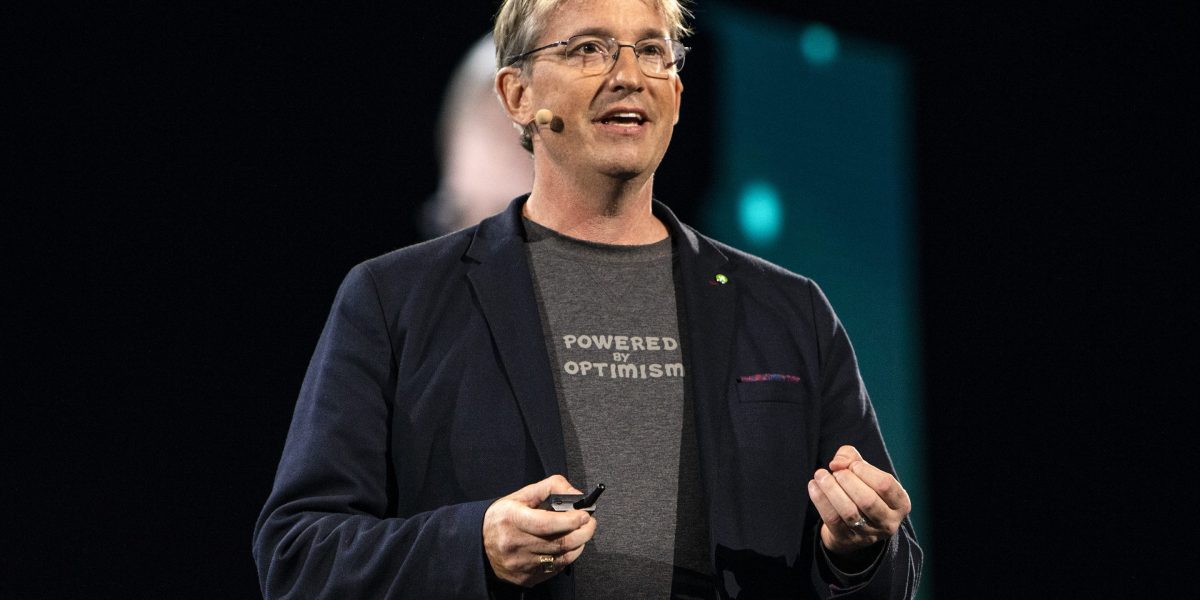
After Roomba-maker iRobot filed for Chapter 11 bankruptcy last week, founder and former CEO Colin Angle did not shy away from sharing what went wrong. 

Angle, who co-founded iRobot in 1990 alongside other members of MIT’s Artificial Intelligence Lab, said in a recent episode of The New York Times “Hard Fork” podcast that one of the core problems with remaining competitive in its market was growing Chinese competition. 

“It’s certainly the advent of this new type of competitor, the Chinese fast follower who had access to the Chinese marketplace, which I Robot effectively did not,” Angle said. “I also think that the marketplace was not a level playing field.”

Roomba became a household name—and appliance—in numerous American homes after the vacuuming robot hit the market in 2002, a pioneer in the household robotics sector. The 2018 self-emptying Roomba i7+ vacuum was even able to tidy dust and detritus from specific rooms using mapping technology. The company reached its peak revenue in 2021 at nearly $1.6 billion. Now, following its bankruptcy filing, iRobot will be acquired by the China-based Picea Robotics, its primary manufacturer and lender.

Despite the Roomba’s initial success, it began losing market share to its Chinese rivals, a death knell for the company, according to Angle. 

“For a small period of time, iRobot was the meeting manufacturer of vacuuming robots in China,” he said. “Then it stopped, because China decided that this was a market of interest, and they were going to ensure that Chinese companies were advantaged to succeed there.”

Angle noted that China, “for various pragmatic and political reasons, gave a protected market to cut your teeth on for the competition,” such as the China-based Roborock, which put iRobot at a disadvantage in the massive Chinese market. (Roborock has since become the world’s largest robot vacuum brand.) 

China has implemented a series of incentives for consumers to buy domestic products, including an up-to 20% discount on certain tech appliances, in an effort to boost spending following a prolonged pandemic-era lull. The Central Committee of the Chinese People’s Congress announced in October a renewed focus on bolstering domestic consumption, calling for support of Chinese businesses.

Picea Robotics, for its part, has dominated the robotic vacuums space, and it reports partnerships with Shark and Anker, in addition to iRobot.

“It’s a cage match, and it certainly got hard, and it got increasingly competitive,” Angle said. 

iRobot did not immediately respond to Fortune’s request for comment.

Obstacles in iRobot’s path

Increased competition from China may be why iRobot lost key international market share, but Angle said Amazon’s failed bid to acquire the company only hurt it.

In 2022, Amazon announced a deal to buy iRobot for $1.7 billion, what would have been its fourth-largest acquisition ever at the time. However, regulators thwarted the deal, with the European Union and U.S. Federal Trade Commission arguing Amazon could engage in anticompetitive practices by delisting competitors on its platform, or increasing advertising costs that would stymie innovation in the sector. Amazon and iRobot decided in January 2024 to abandon the deal.

To Angle, the failed acquisition hurt more than just iRobot, but rather the consumer and entire industry of household robotics.

“The tragedy of the blocking of the transaction is we did it to ourselves,” he said. “And the net result, which I have argued, was done with eyes wide open, was putting the consumer robot industry in a box, gift wrapping it and handing it to someone else.”

iRobot had other failures, such as a wet-mopping feature that lagged behind competitors and never really materialized, according to Angle, but regulator scrutiny of the proposed Amazon acquisition inhibited the American robotics sectors from being nurtured, he argued.

Amazon did not respond to Fortune’s request for comment.

“If nothing else, the tragedy of the events of the Amazon attempted acquisition of iRobot to serve as a lesson as we think about an industry which honestly could be 1,000 times larger than robot vacuuming,” Angle said.


Source link

Continue Reading

Business

‘That really stuck’: Here’s how a 1970s campaign to sell Kentucky Fried Chicken with a bottle of wine became a Japanese Christmas tradition

Published

on


Christmas is a Christian holiday that observes the birth of Jesus. But did you know that the earliest followers of Jesus did not annually commemorate his birth? Or that Santa Claus is inspired by the acts of kindness of a fourth-century Christian saint? And have you heard about the modern-day Japanese tradition of eating Kentucky Fried Chicken on Christmas?

Since the early 20th century, Christmas has evolved from a religious holiday to a hugely popular cultural holiday observed by Christian and secular people across the globe who gather with families, exchange gifts and cards and decorate Christmas trees.

Here’s a look at the history, beliefs and the evolution of Christmas:

Origins and early history of Christmas

Early followers of Jesus did not annually commemorate his birth but instead focused on commemorating their belief in his resurrection at Easter.

The story of the birth of Jesus appears only in two of the four Gospels of the New Testament: Matthew and Luke. They provide different details, though both say Jesus was born in Bethlehem.

The exact day, month and even year of Jesus’s birth are unknown, said Christine Shepardson, a professor at the University of Tennessee who studies early Christianity.

The tradition of celebrating Jesus’ birth on Dec. 25, she said, only emerged in the fourth century.

“It’s hard to overemphasize how important the fourth century is for constructing Christianity as we experience it in our world today,” Shepardson said. It was then, under Emperor Constantine, that Christians began the practice of gathering at churches instead of meeting at homes.

Some theories say the date coincides with existing pagan winter solstice festivals, including the Roman celebration of Sol Invictus, or the “Unconquered Sun,” on Dec 25.

While most Christians celebrate Christmas on Dec. 25, some Eastern Orthodox traditions celebrate the holy day on Jan. 7. That’s because they follow the ancient Julian calendar, which runs 13 days behind the Gregorian calendar, used by Catholic and Protestant churches as well as by much of the secular world.

Rowdy medieval celebrations

For centuries, especially during the Middle Ages, Christmas was associated with rowdy street celebrations of feasting and drinking, and for many Christians, it “was not in good standing as a holiday,” said Thomas Ruys Smith, a professor of American literature and culture at the University of East Anglia in England.

“Puritans,” he said, “were not fond of Christmas.”

But in the 19th century, he said, Christmas became “respectable” with “the domestic celebration that we understand today — one centered around the home, the family, children, gift-giving.”

The roots of modern-day Christmas can be traced back to Germany. In the late 19th century, there are accounts of Christmas trees and gift-giving that, according to Smith, later spread to Britain and America, helping to revitalize Christmas on both sides of the Atlantic.

Christmas became further popularized with the publication of “A Christmas Carol” by Charles Dickens in 1843, and the writings of Washington Irving, who was a fan of St. Nicholas and helped popularize the celebration of Christmas in America.

The first Rockefeller Center Christmas tree was put up by workers in 1931 to raise spirits during the Great Depression. The tradition stuck as the first tree-lighting ceremony was held in 1933 and remains one of New York City’s most popular holiday attractions.

America’s secular Santa is inspired by a Christian saint

St. Nicholas was a fourth-century Christian bishop from the Mediterranean port city of Myra (in modern-day Turkey). His acts of generosity inspired the secular Santa Claus legend.

The legends surrounding jolly old St. Nicholas — celebrated annually on Dec. 6 — go way beyond delivering candy and toys to children. He is believed to have interceded on behalf of wrongly condemned prisoners and miraculously saved sailors from storms.

Devotion to St. Nicholas spread during the Middle Ages across Europe and he became a favorite subject for medieval artists and liturgical plays. He is the patron saint of sailors and children, as well as of Greece, Russia and New York.

Devotion to St. Nicholas seems to have faded after the 16th century Protestant Reformation, except in the Netherlands, where his legend remained as Sinterklaas. In the 17th century, Dutch Protestants who settled in New York brought the Sinterklaas tradition with them.

Eventually, St. Nicholas morphed into the secular Santa Claus.

It’s not just Santa who delivers the gifts

In the U.K., it’s Father Christmas; in Greece and Cyprus, St. Basil (who arrives on New Year’s Eve). In some parts of Italy, it’s St. Lucy (earlier in December) and in other Italian regions, Befana, a witch-like figure, who brings presents on the Epiphany on Jan. 6.

Instead of a friendly Santa Claus, children in Iceland enjoy favors from 13 mischievous troll brothers, called the Yule Lads. They come down from their mountain cave 13 days before Christmas, according to folklore.

Christian traditions of Christmas

One of the oldest traditions around Christmas is bringing greenery — holly, ivy or evergreen trees — into homes. But determining whether it’s a Christian tradition is harder. “For many people, the evergreen can symbolize Christ’s promise of eternal life and his return from death,” Smith said. “So, you can interpret that evergreen tradition within the Christian concept.”

The decorating of evergreen trees is a German custom that began in the 16th century, said Maria Kennedy, a professor at Rutgers University—New Brunswick’s Department of American Studies. It was later popularized in England and America.

“Mistletoe, an evergreen shrub, was used in celebrations dating back to the ancient Druids — Celtic religious leaders — some 2,000 years ago,” Kennedy writes in The Surprising History of Christmas Traditions.

“Mistletoe represented immortality because it continued to grow in the darkest time of the year and bore white berries when everything else had died.”

Other traditions include Christmas services and Nativity scenes at homes and churches. More recently, Nativity scenes — when erected on public property in the U.S. — have triggered legal battles over the question of the separation of church and state.

Christmas caroling, Kennedy writes, can also be traced back to European traditions, where people would go from home to home during the darkest time of the year to renew relationships within their communities and give wishes for good luck, health and wealth for the forthcoming year.

“They would recite poetry, sing and sometimes perform a skit. The idea was that these acts would bring about good fortune to influence a future harvest,” Kennedy writes.

Kentucky Fried Chicken for Christmas in Japan

Among the many Christmas traditions that have been adopted and localized globally, there’s one that involves KFC.

In 1974, KFC launched a Christmas campaign where they began to sell fried chicken with a bottle of wine so it could be used for a Christmas party.

KFC says the idea for the campaign came from an employee who overheard a foreign customer at one of its Tokyo restaurants saying that since he couldn’t get turkey in Japan, he’d have to celebrate Christmas with Kentucky Fried Chicken.

“That really stuck,” Smith said. “And still today, you have to order your KFC months in advance to make sure that you’re going to get it at Christmas Day.”

___

Associated Press religion coverage receives support through the AP’s collaboration with The Conversation US, with funding from Lilly Endowment Inc. The AP is solely responsible for this content.


Source link

Continue Reading

Business

Trump team triples bonus to $3,000 for migrants who self-deport

Published

on


The Trump administration is offering undocumented migrants $3,000 and paid travel if they agree to leave the US voluntarily before the end of the year, its latest effort to escalate mass deportations and slash enforcement costs.

Undocumented migrants who self-deport using the CBP Home app will have their travel arranged and paid for by the Department of Homeland Security and will qualify for forgiveness of any civil fines or penalties for failing to leave the US, according to the department. The $3,000 stipend is triple the $1,000 payout the department unveiled in May.

The policy announcement is part of a holiday-season campaign aimed at speeding up deportations. One post on the Homeland Security Department’s X account warned people living illegally in the US that they are “GOING HO HO HOME.” 

“Illegal aliens should take advantage of this gift and self-deport because if they don’t, we will find them, we will arrest them, and they will never return,” Homeland Security Secretary Kristi Noem said in a statement.

Since January 2025, 1.9 million undocumented migrants have voluntarily self-deported and tens of thousands of them have used CBP Home, according to Noem. Those figures could not be independently verified. The app was created during the Biden administration for migrants to schedule asylum interviews but President Donald Trump’s team re-branded it and transformed its purpose.

Officials have called the program a more efficient alternative to costly arrests and removals. Even the increased bonus payments would save money for the government, which estimated the average cost to arrest, detain, and remove a migrant at roughly $17,000 per person.

DHS didn’t immediately respond to a request for comment on how that calculus changes with the increased stipend.

Immigration lawyers and activists have raised doubts about the Trump administration’s claim that migrants who leave voluntarily may be able to return legally. Bloomberg previously reported that in many cases, people who have lived in the US without legal status face automatic bans that can last years, for which waivers are not typically granted.

The stipend increase comes as non-voluntary arrests and deportations haven’t met the administration’s early target of 1 million. Since taking office, the Trump administration has deported more than 261,000 people, according to US Immigration and Customs Enforcement data.

During that same period, ICE arrested more than 285,000 foreigners accused of being in the country illegally or of being deportable.

Officials have also taken steps to narrow legal immigration pathways. It announced that it will re-review the cases of all refugees resettled under former President Joe Biden and freeze their green card applications, and will consider among “significant negative factors” a country’s inclusion on the president’s vast travel ban. 

The administration has also expanded its travel ban, which initially covered nationals of 19 countries, to those hailing from more than 30 countries. 


Source link

Continue Reading

Business

Bank of America’s Moynihan says AI’s economic benefit is ‘kicking in more’

Published

on


Bank of America Corp. Chief Executive Officer Brian Moynihan said that artificial intelligence is starting to have a bigger impact on the US economy.

“The AI investment’s been building during the year and is probably a bigger contributor next year and the years beyond,” Moynihan said Monday in a Bloomberg Television interview. “AI is kicking in more and more, and so it’s not all attributable to AI, but that’s having a marginal impact that’s pretty strong.”

Moynihan, who has led the bank for nearly 15 years, said the firm is predicting a strong economy for the US next year, with expected growth of 2.4%, up from about 2% in 2025. While the labor market has started to get softer, it appears that it’s more of a normalization for jobs, Moynihan said.

AI companies including OpenAI have been pulling in billions of dollars of funds in recent months as investors are eager to bet on the industry. But executives such as Amazon.com Inc. founder Jeff Bezos have warned that AI spending is an “industrial bubble” that could lead to lost investment, but will ultimately help society.

Moynihan said his bank sees relatively limited risk to the economy — including the impact on consumers and job losses — if the AI industry became too overheated and had to pull back, given that the sector is composed of a narrow group of companies.

“As a lender we look at the leverage on these projects and make sure we’re comfortable with that and the duration of the contract by the person who’s going to commit to use the data center,” Moynihan said.

The bank itself is also using artificial intelligence, he said in the interview. The company launched Erica, its agent bot, in 2018. Now, Erica can answer 700 questions, up from 200, Moynihan said.

Read More: Nvidia Looks Past DeepSeek and Tariffs for AI’s Next Chapter

“We’ll be applying more and more of automated intelligence — or augmented intelligence, as we call it, with a person using AI, using that to be more effective — and that’ll affect all the businesses,” Moynihan said.


Source link

Continue Reading

Trending

Copyright © Miami Select.