Business
Ireland courts U.S. companies as taoiseach brings deals to Trump on St. Patrick’s Day
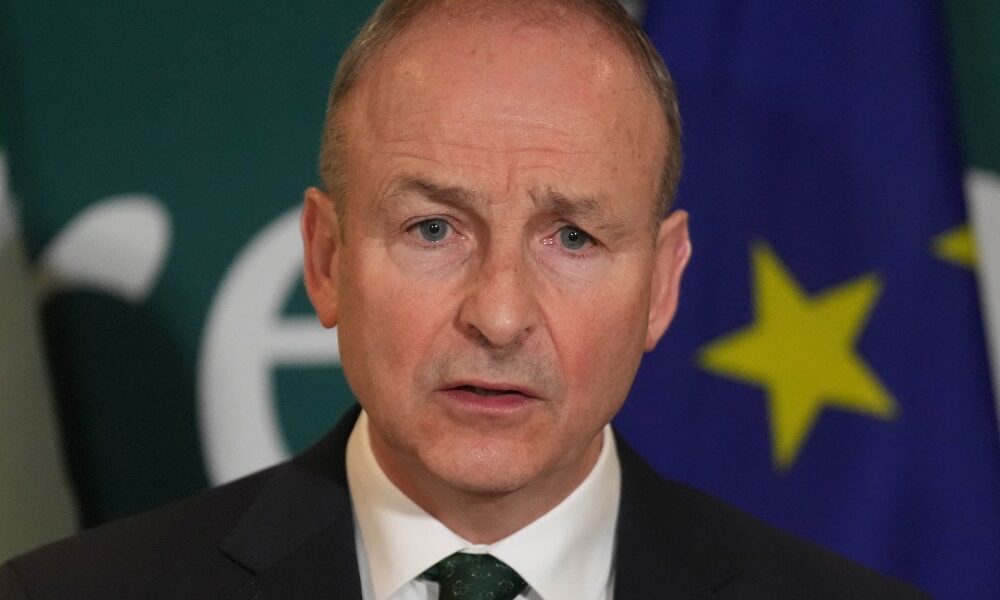
Ireland’s Prime Minister, or Taoiseach, Micheál Martin is expected to unveil more than $6 billion in deals Wednesday when he meets with U.S. President Donald Trump in Washington. But the usual St. Patrick’s Day festivities will no doubt be dampened by the Iran war and lingering tensions over trade, tariffs, and Irish policies that the White House has called a “tax scam” for U.S. companies.
Few understand the challenges better than Michael Lohan. As CEO of IDA Ireland, the nation’s foreign direct investment agency, Lohan is charged with attracting companies to a country that has long relied heavily on U.S. capital and companies. “You know, Ireland is closer to Boston today than Berlin,” says Lohan, repeating a long-held trope about its economic similarities to the U.S. in terms of taxes, talent, and ease of doing business. (Technically, Boston is almost three times as far as Berlin.) “Last year was a record year for FDI investment in Ireland—against the backdrop of everything that was happening—and 65% of that investment came from U.S. multinationals.”
That flow of capital is not viewed as a good thing by Trump, who accused Ireland of “taking our pharmaceutical companies” during last year’s St. Patrick’s Day meeting. While his pressure on U.S. companies to double down at home is being heard–U.S. FDI to Ireland dropped 20% in 2024 to $467 billion–America remains the country’s largest investor. Lohan’s job is to attract more of that capital by “telling the story of Ireland” as a place to get talent, agility and easy access to the 27 member states of the European Union.
Pharma-fueled trade surplus
Ireland has proven to be a desirable place to book profits and pay taxes. The country’s 12.5% corporate income tax rate, and prior tax benefits for companies like Apple, have generated both investment and unwanted attention. Among other things, Apple and Microsoft’s intellectual-property rights are held in Irish subsidiaries that collect royalties from elsewhere. Pharmaceutical companies like Eli Lilly manufacture key ingredients of blockbuster drugs like Mounjaro and Zepbound on the emerald isle for the same reason, shipping those drugs to U.S. consumers and booking the revenue in Ireland.
Ireland’s budget watchdog says three U.S. companies accounted for almost half of the country’s corporate tax revenues last year. Although unnamed in the report, they’re known to be Apple, Lilly, and Microsoft. Lilly, for one, paid $6.6 billion in tax to Ireland in 2025, about double what it paid in the U.S.—a country with 65 times the population and the bulk of its customers. With 4,000 employees in Ireland, Lilly’s workforce is also less than a fifth the size of its U.S. operations. Pharmaceutical sales helped Ireland’s exports of goods to the U.S. grow 52% last year to about $132 billion, more than doubling the goods trade surplus to $114.2 billion. (Trade in services between the two countries is essentially the opposite, with Ireland buying more than it sells.)
One man’s trade surplus is another man’s trade deficit, especially if that man is Donald Trump. The U.S. President has paid particular attention to physical goods when it comes to trade flows, and has called out Big Pharma for rising drug costs. Even with the U.S. now at war, Ireland’s reputation as a corporate tax haven is unlikely to escape attention during the White House visit.
That may be why the prime minister, much like his IDA emissary Lohan, has shifted the emphasis from inbound investment to money flowing the other way. Lohan talks about how Ireland invested a historic $389 billion in the U.S. in 2024, making it America’s fifth largest source of FDI. On a per-capita basis, the nation of 5.4 million claims to be number one. “The U.S. continues to be the most innovative economy in the world. It continues to be where capital is readily available and supportive,” says Lohan. “None of those things have really changed.”
What has changed, of course, is Trump’s focus on “America First,” which is why Martin is expected to present $6.1 billion in new Irish investments to the U.S. alongside the traditional bowl of shamrocks. While nurturing European alliances is also not a priority for the White House, Trump’s calls for NATO and Europe to step up in protecting the Iran-controlled Strait of Hormuz could occupy much of Martin’s discussions with Trump. Ireland will begin a six-month stint in holding the presidency of the Council of the European Union in July, which will give it a central role in E.U. decision making.
Martin may want to talk trade this time as the war with Iran is an issue that few leaders want to tackle in public, especially during a White House press conference. IDA’s Lohan is also not oblivious to the fact that consumer sentiment in Ireland is decidedly mixed when it comes to Trump, tariffs, and the tech giants that have raised the cost of housing while putting pressure on the energy grid at home. And Europe’s approach to tech innovation is decidedly different than what’s coming out of D.C.
“We want to push the innovation and technology agenda, but we have to do it safely and ethically,” said Lohan. And that applies to all potential investors, including China.
“We want to see a fair, level playing pitch between China and its counterparts, with Ireland being part of that,” he said. “But I do think we can’t turn our back on what is a very significant economy where there is a significant amount of innovation.”