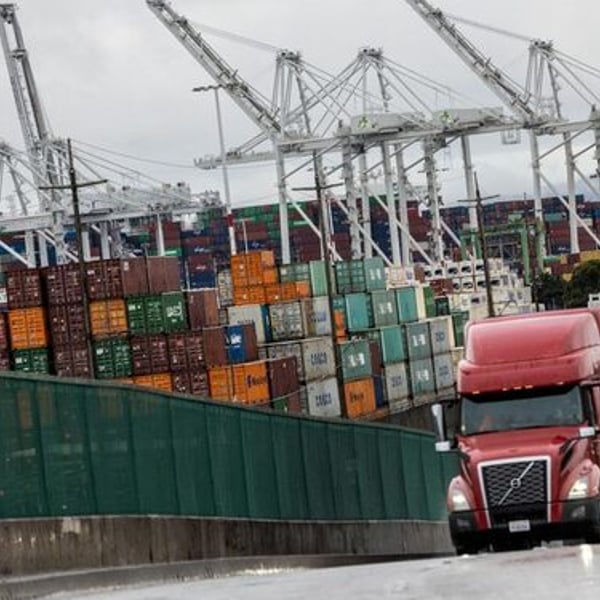
Global investors are heading into U.S. President Donald Trump‘s Wednesday deadline for trade tariffs palpably unexcited and prepared for a range of benign scenarios that they believe are already priced in.
Reuters
Just days before the end of a 90-day pause he announced on his April 2 “Liberation Day” tariffs, Trump said the first batch of letters outlining the tariff levels they would face on exports to the United States would be sent to 12 countries on Monday.
Investors who have been tracking this date for months expect more details to emerge in the coming days and protracted uncertainty too, anticipating Trump will not be able to complete deals with all of America’s trading partners in the coming week.
And they are not overly concerned.
“The market has gotten much more comfortable, more sanguine, when it comes to tariff news,” said Jeff Blazek, co-chief investment officer of multi-asset at Neuberger Berman in New York.
“The markets think that there is enough ‘squishiness’ in the deadlines – absent any major surprise – to not be too unsettled by more tariff news and believe that the worst-case scenarios are off the table now.”
Both the tariff levels and effective dates have become moving targets. Trump said on Friday that tariffs ranging up to 70% could go into effect on August 1, levels far higher than the 10%-50% range he announced in April.
So far, the U.S. administration has a limited deal with Britain and an in-principle agreement with Vietnam.
Deals that had been anticipated with India and Japan have failed to materialize, and there have been setbacks in talks with the European Union.
World stocks are meanwhile at record highs, up 11% since April 2. They fell 14% in three trading sessions after that announcement but have since rallied 24%.
“If Liberation Day was the earthquake, the tariff letters will be the aftershocks. They won’t quite have the same impact on markets even if they are higher than the earlier 10%,” said Rong Ren Goh, a portfolio manager in the fixed income team at Eastspring Investments in Singapore.
“This financial system is so inundated with liquidity that it is hard to cash up or delever at the risk of lagging the markets, with April serving as a painful reminder for many who derisked and were then forced to chase the relentless recovery in the subsequent weeks.”
Investors have also been distracted by weeks of wrangling in Congress over Trump’s massive tax and spending package, which he signed into law on Friday.
Stock markets have celebrated the passage of the bill, which makes Trump’s 2017 tax cuts permanent, while bond investors are wary the measures could add more than $3 trillion to the nation’s $36.2 trillion debt.
The S&P 500 and Nasdaq indexes closed at record highs on Friday, notching a third week of gains. Europe’s STOXX 600 benchmark is up 9% in three months.
But the risks of tariff-related inflation have weighed on U.S.
Treasuries and the dollar, and jostled expectations for Federal Reserve policy. Rate futures show traders no longer expect a Fed rate cut this month and are pricing in a total of just two quarter-point reductions by year-end.
The dollar has suffered a knock to its haven reputation from the dithering on tariffs. The dollar index, which reflects the U.S. currency’s performance against a basket of six others, has had its worst first half of the year since 1973, declining some 11%. It has fallen by 6.6% since April 2 alone.
“The markets are discounting a return to tariff levels of 35%, 40% or higher, and anticipating an across-the-board level of 10% or so,” said John Pantekidis, chief investment officer at TwinFocus in Boston.
Pantekidis is cautiously optimistic about the outlook for U.S. stocks this year, but the one variable he is watching closely is interest rate levels.
For now he expects to see interest rates dip in the second half, “but if the bond market worries about the impact of the bill and rates go up, that’s a different scenario.”
New York–based fashion brand Guizio is expanding its retail footprint with the opening of its second store, at Aventura Mall in Miami, this month.
Guizio expands retail footprint with Miami store opening. – Guizio
Designed in collaboration with Brandi Howe, the new Miami store reflects the brand’s refined aesthetic and contemporary edge, while introducing elements inspired by Miami’s vibrant energy.
It opens with a robust assortment of womenswear, along with an exclusive, limited-edition Puma sneaker available only at the Miami location.
“Opening a Guizio store in Aventura Mall is such a special moment for me,” said Danielle Guizio, founder and designer. “It allows us to connect with our community here and share the brand’s energy in a new way. Bringing our world to Miami felt like a natural next step in growing Guizio, and we’re so excited for what’s ahead.”
Guizio founded her namesake womenswear label in 2014 and continues to offer ready-to-wear collections that celebrate the modern-day woman.
Through her collections, woven knits, structured suiting, and signature corsets are emboldened with asymmetrical details, purposeful cut-outs, ruching and custom hardware. The label has become a favorite among talent such as Sabrina Carpenter, Olivia Rodrigo, Rosalia, and more.
The opening follows the success of the brand’s SoHo flagship in New York, which opened in September 2024.
In October, this was not necessarily the frontrunner in the race to take over the IKKS Group. The French premium ready-to-wear specialist, owner of the eponymous brand as well as One Step and I.Code, attracted around a dozen bidders after being placed in receivership at the start of autumn, including the respective owners of The Kooples, Pimkie, Morgan and Caroll.
But in the home stretch, the duo of Michaël Benabou, co-founder of VeePee (then called Vente Privée) and head of the investment company Financière Saint James, and Santiago Cucci, a specialist in premium ready-to-wear and former head of the Levi’s and Dockers brands, who for a time supported the leadership of Dutch label G-Star, strengthened their bid. The entrepreneur, a sports enthusiast who knows the case well, having taken over as chairman of the HoldIKKS holding company last year, knows that competitions are decided right up to the last minute. Despite the loss of almost half the workforce, their offer, which safeguards 546 jobs and includes 119 directly operated stores, won the backing of the group’s works council (CSE) and was formally approved by the Paris Court for Economic Activities.
A few hours after the decision was made official, Cucci outlined his roadmap for IKKS to FashionNetwork.com.
Santiago Cucci headed Levi’s in the United States and set a new tone at Dockers – Archive Dockers
FashionNetwork.com: What was your reaction to the announcement of the court’s decision?
Santiago Cucci: We’re delighted to be taking over this iconic brand. I think it’s a brand that touches the hearts of the French. We all have a history with IKKS, whether from our younger years or through our children, often tied to festive moments. This means there’s a whole generation entering adulthood already very familiar with the brand and feeling positively towards it. That’s the capital we’re taking on today. And this affinity extends well beyond end consumers: of the 118 affiliates we contacted, 116 said yes.
FNW: Because beyond the 119 directly operated stores, you had to convince partners to come on board…
SC: Whether with affiliates, suppliers we had to renegotiate with, or across the entire value chain through to consumers, I believe the whole ecosystem still holds the brand in very high regard. Our job now is to make the brand desirable, using digital tools that deliver a strong and seamless customer experience.
FNW: You’re keeping 546 jobs, many of them in stores. What are the next steps, particularly on the social front?
SC: As we’re taking over the company, on Monday I’ll be in Saint-Macaire to meet the employees who are part of the project. We’ll be putting together a new management team across most functions over the next few weeks. I would like to thank the management team, who have done their utmost to steer the company through difficult conditions in recent years. In our takeover plan, we have committed to investing 700,000 euros to acquire the brand’s assets and inventories, and 700,000 euros to contribute to the PSE. Matters concerning those who are leaving will be handled by the court-appointed liquidator. However, we intend to rehire a few people to help secure the path forward over the coming months.
FNW: In your plan, a number of activities were to be discontinued. Where are you going to focus your efforts?
SC: We’re refocusing on IKKS’s adult business. We’re putting the junior business on hold. Even though that’s the brand’s roots, in France the leading player in the junior market is the second-hand segment. We have to accept that reality. But those consumers who were juniors are now adults and already have a relationship with the brand. At the same time, the group had been managing I.Code and One Step. It’s time to refocus on the flagship and discontinue the two brands and childrenswear. It’s important to note that the junior segment accounts for 82% of IKKS’s losses.
The IKKS Junior line will be put on hold – IKKS
=
FNW: Does this mean that you think the adult part of IKKS, the core on which you’re refocusing, could be profitable fairly quickly?
SC: You’re right. As early as the first year—2026, which will be a transitional year—we have a profitable business model, with reinvestment back into the company.
FNW: Alongside the buyout, you announced a 16 million euro investment package. What are your investment priorities?
SC: We’ve budgeted almost 17 million euros to get the supply chain engine up and running again. It’s a real machine. We’re going to invest in boosting the brand’s desirability, and in IT infrastructure that is from another era, which we’ll upgrade in the first quarter. In my experience, I’ve always been quick to transform companies.
FNW: What will you bring over from your experience at Levi’s and Dockers? What do you think is essential to the successful evolution of a brand?
SC: We’re going to clarify the brand’s identity and values. We’ll enhance the customer experience, particularly by engaging more meaningfully with our community and relying a little less on promotions alone. To do this, we’ll invest in infrastructure and in our go-to-market. We’ll invest in production capabilities so we can be more flexible and hold inventory that matches market needs. We want to be less dependent on promotional periods.
FNW: Is the idea also to reduce the share of revenue coming from markdowns?
SC: You have to be clear about prices. You can’t set a price and then run permanent promotions afterwards. So we’re going to bring more clarity for consumers to the pricing structure, especially at the start of the season. By the way, the design team has done a great job, which is why we’re keeping them on. Now we’re going to make this offer more visible, with a pricing structure that has to be logical. Encouragingly, the results for this reworked adult offer are positive.
This article is an automatic translation. Click here to read the original article.
Launched in 2006 in Copenhagen, Danish menswear brand NN.07, founded by Victor Lindh and Ulrik Pedersen, is taking on the American market. After opening a store in Soho last year, the sustainable, minimalist, and timeless Danish wardrobe will be coming to a new store in Los Angeles in 2026. CEO Anders Rahr explains the brand’s ambitions to FashionNetwork.com.
Anders Rahr, CEO at NN.07 – DR
FashionNetwork: When did the brand enter the U.S. market, and how well is it received by the Californian public today? Anders Rahr: We’ve had a U.S. presence through wholesale for several years, and 2024 marked a more strategic step forward with the opening of our first retail store in Soho, New York. California has grown into one of our most engaged regions – both online and through retail partners. There’s a strong appreciation there for well-crafted, versatile pieces. People are really connecting with our timeless – yet expressive – take on menswear, and our focus on everyday wearability.
FNW: You have stores in New York, Copenhagen, and London. Are you considering other openings in the U.S.? A.R: Opening in Soho was a milestone for us. It’s our first physical space in the U.S. – in a city where we’ve experienced a consistent demand. The store gives us a chance to offer the full NN.07 experience: the product, the atmosphere, and the details that define us. We’re currently searching for the right location in Los Angeles and are aiming to open there in the second half of 2026. As with all our stores, it will be a thoughtful step, relevant for the city and built for a long-term presence.
FNW: What other developments does the brand have in mind for the American market? A.R: The U.S. is a key growth market for us. We have a team on the ground and local warehousing in place to support that growth. Wholesale remains a vital part of our model – we work with around 600 stockists globally – including strong U.S. retailers. However, the number of stockists is secondary to the relationship we have – we grow through partnerships that share our values on brand, quality, and how the consumer is served. We’re also looking with interest at other key cities in the U.S. for future retail opportunities, guided by where we see strong engagement. At the same time, we’re widening our partnerships with some of the country’s leading retailers to deepen our presence.
NN.07 Soho store – DR
FNW: Your brand will soon celebrate its 20th anniversary. How has it evolved over the last 20 years and how do you explain its current international success? A.R: NN.07 has always been grounded in timeless design and quality craftsmanship. Over time, we’ve grown – first across Europe and now globally – by staying consistent and building deep relationships with partners and consumers. It all comes from that clarity: we focus on doing a few things really well. Our focus remains on the product – creating the future classics. Garments that hold up, that people come back to, and that speak to a considered way of dressing. What’s ahead feels even more exciting than what’s behind.
FNW: Other Scandinavian brands are also doing well in California, such as Toteme, Anine Bing, and Ganni. How do you explain this new interest in Scandinavian brands in the American market? A.R: There’s a growing interest in brands that offer both quality and a clear point of view on timeless design. For us, it’s less about where you come from and more about the mindset you bring. Scandinavian design culture values purpose, restraint, and longevity – and when it comes to us, we have built on that with a design language that feels richer and more globally attuned. That balance seems to resonate in the US. We focus on creating garments that feel personal, adaptable, and made to last – pieces that are meant to be lived in.
FNW: Are there any other international developments planned in other markets? A.R: Yes, and our international approach is a city-by-city thinking. We have just opened dedicated space at Galeries Lafayette in Paris, and Harrods in London. We’re also preparing for further expansion of selective retail and wholesale in key cities across Europe and North America where we already have a loyal following and long-term potential.
NN.O7 winter collection – NN.07
FNW: Have you partnered with anyone in particular to accelerate your new developments? A.R: We’ve been fortunate to build strong partnerships – both with leading retailers and experienced talent. Across markets, we work closely with people who understand both our brand and the local landscape – whether that’s through retail, distribution, or strategic collaborations. In the U.S., we’ve brought on Justin Berkowitz (former men’s fashion director of Bloomingdale’s) as strategic partner to drive our retail expansion. His perspective and background in American menswear are a real asset as we grow.
FNW: How do you approach sustainability? Do you still limit production volume? A.R: For us, responsibility isn’t marketing – it’s a way of working. It guides how we design, what we produce, and the partners we work with. Building a strong brand also means building a better one. We make garments that are built to last – in both quality and style. That means designing with purpose, reducing waste and carbon impact, moving to plastic-free packaging, and choosing long-term suppliers we trust. We don’t have all the answers, but we stay transparent and committed to progress.