
Politics
Investing in Florida’s future — how state colleges power economic growth


As Florida continues to grow and flourish, the state stands at a pivotal moment for its future. Florida’s state colleges play a critical role in that growth, driving economic mobility, strengthening communities, and fueling the state’s economic engine.
A recent Lightcast report, “The Economic Value of the Florida College System,” issued in October by the Association of Florida Colleges, offers clear evidence that the “Great 28” state colleges are not only educating students and upskilling today’s workforce — they are powering Florida’s prosperity. An investment in the Florida College System (FCS) truly pays dividends for the state.
In fiscal year 2023–24, the Florida College System generated $56.7 billion in added income to Florida’s economy, representing roughly 3.7% of the state’s total gross product. FCS colleges supported 640,484 jobs statewide, meaning one in 24 Florida jobs is connected to a state college, its students, or its alumni.
These figures are not abstract. They represent real livelihoods, thriving small businesses, strong regional economies, and communities positioned to grow and prosper.
For students, an FCS education is a smart and life-changing investment. The Lightcast analysis shows that for every dollar students invest in tuition, fees, and forgone income, they receive $6.30 in lifetime earnings — a 21.2% average annual rate of return that outperforms many traditional investments. Collectively, students enrolled in 2023–24 will earn $14.5 billion more over their lifetimes than they would have without attending a state college.
Taxpayers also see substantial returns. Every $1 invested in the Florida College System yields $2.40 in added tax revenue and reduced public spending over students’ working lives. A more skilled workforce lowers demand for social services, generating $13.30 in social savings for every dollar invested during the same period.
At its core, the Florida College System is about building human capital. FCS institutions offer associate and bachelor’s degrees, workforce certificates, skills-based training, continuing education, and professional development — delivered both in person and online — and tailored to meet Florida’s evolving economic needs. Alumni contribute to industries ranging from advanced manufacturing and health care to technology, education, and the skilled trades. The $51 billion in added income generated by alumni underscores the lasting value of an FCS education.
As Chair of the FCS Council of Presidents and President of Seminole State College, I view Florida’s state colleges as far more than postsecondary institutions. They create pathways to economic mobility, strengthen community resilience, and support long-term prosperity statewide. The Council appreciates Gov. Ron DeSantis’ budget recommendation of $1.9 billion for the Florida College System, which will have a significant impact when reinvested in students and communities.
The Lightcast report confirms what has long been evident: investing in the Florida College System is one of the most cost-effective investments Florida can make. Every dollar invested delivers measurable benefits to students, taxpayers, communities, and the broader economy.
As Florida attracts new residents, expands industries, and navigates global economic challenges, the Florida College System stands ready — educating today’s workforce, preparing for tomorrow’s opportunities, and powering the state’s future success. When Florida invests in the Florida College System, it invests in itself.

___
Dr. Georgia Lorenz is president of Seminole State College and Chair of the Florida College System Council of Presidents.
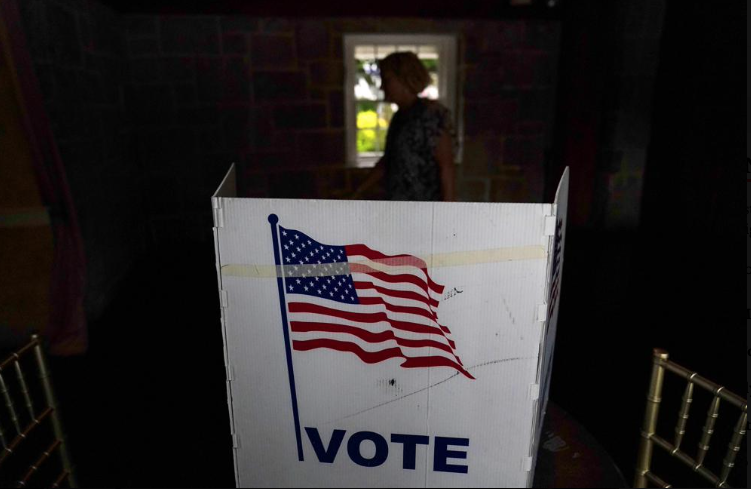
Voters in House District 87 head to the polls on Tuesday to choose Democratic and Republican nominees in a Special Primary Election that has been in the works for many months.
The coastal Palm Beach County district has been without representation since August, when Republican Rep. Mike Caruso resigned to assume the role of Palm Beach County Clerk and Comptroller. The prolonged vacancy — and Gov. Ron DeSantis’ delay in calling a Special Election — became a central issue in the race itself.
DeSantis ultimately set a Jan. 13 Primary and a March 24 Special General Election, meaning the District will not hold a vote in Tallahassee during the 2026 Legislative Session. That reality has loomed over the contest, particularly on the Democratic side, where one candidate sought to force the Governor’s hand through the courts.
Two Democrats and two Republicans are competing Tuesday for their respective party nominations in a district that has leaned Republican in recent cycles but that Democrats view as competitive, particularly under Special Election conditions.
On the Democratic side, the Primary pits Emily Gregory against Laura Levites.
Gregory, a Jupiter-based small-business owner and public health professional, has been the most visible Democrat in the race since the vacancy occurred. She drew attention in October when she filed a lawsuit seeking to compel DeSantis to call a Special Election, arguing that HD 87 voters were being denied representation as lawmakers prepared to convene in Tallahassee.
The lawsuit was ultimately rendered moot by the Governor’s executive order setting election dates.
Gregory has focused on public education funding, health care access and property insurance costs. She entered the final stretch of the Primary with a clear fundraising advantage on the Democratic side. Gregory raised more than $101,000 through Jan. 8 and spent nearly $49,000, both outpacing her opponent.
Levites, a Lake Worth Beach resident and first-time candidate, has pitched herself as a community advocate and political outsider. Her campaign has focused heavily on cost-of-living pressures, such as property insurance premiums and housing affordability. Levites has also leaned into environmental issues and local infrastructure concerns, including flooding and traffic congestion.
Levites has run a lower-dollar campaign, adding no campaign contributions and loaning her campaign just $450.

The Republican Primary has arguably drawn more attention, with Jon Maples facing Gretchen Miller Feng.
Maples, a Palm Beach Gardens financial planner, entered the race early and quickly consolidated support from Republican leadership. He secured backing from the Florida House Republican Campaign Committee and a slate of GOP lawmakers, and later landed an endorsement from former President Donald Trump — a significant asset in a Republican Primary, even in a coastal district with a more moderate reputation.
Maples has run as a reliable conservative aligned with Trump-era priorities, emphasizing fiscal restraint, opposition to tax increases, and a pro-business climate.
With party support behind him, Maples has built the largest war chest in the Republican field, raising more than $278,000 between his campaign account and his political committee, Friends of Jon Maples, plus adding another $14,000 in candidate loans. He has spent nearly $157,00 as of Jan. 8.
Feng, a paralegal and regulatory consultant from West Palm Beach, has cast herself as an outsider running against party insiders. She has focused her campaign on affordability, opposition to unchecked growth and outrage over the district being unrepresented during the 2026 Session. Feng has not matched Maples’ fundraising, raising just over $12,000 in total and spending nearly $11,000.
HD 87 runs up the coast of Palm Beach County, spanning Palm Beach Gardens, Jupiter, Juno Beach and Hypoluxo.


Down Arrow Button Icon

Ace Turtle launches Lee and Wrangler stores in Gujarat, India

Andrew Fay joins Greenberg Traurig’s Tallahassee office
-

 Politics8 years ago
Congress rolls out ‘Better Deal,’ new economic agenda
-
Entertainment8 years ago
New Season 8 Walking Dead trailer flashes forward in time
-
Politics8 years ago
Poll: Virginia governor’s race in dead heat
-
Politics8 years ago
Illinois’ financial crisis could bring the state to a halt
-
Entertainment8 years ago
The final 6 ‘Game of Thrones’ episodes might feel like a full season
-
Entertainment8 years ago
Meet Superman’s grandfather in new trailer for Krypton
-
Business8 years ago
6 Stunning new co-working spaces around the globe
-
Tech8 years ago
Hulu hires Google marketing veteran Kelly Campbell as CMO