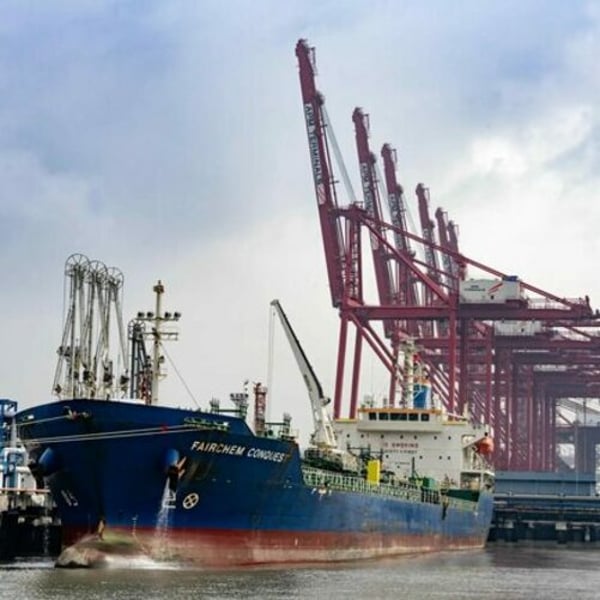
About a decade ago, the Indian government quietly turned protectionist. But now, there are some signs of a rethink — particularly on insidious non-tariff barriers that had hurt not just foreign companies, but consumers and exporters.
Bloomberg
After Prime Minister Narendra Modi took office, the finance ministers he appointed tended to raise tariff rates marginally every year, reversing a decades-long trend toward greater openness. That became increasingly difficult to do under the radar, given protests from various trading partners. And so new regulations that targeted imports were introduced: Quality Control Orders, or QCOs. Over the last month, however, some of these rules have unexpectedly been withdrawn.
The idea behind them was deceptively simple. The government argued that, since it was facing a flood of imports from China, it needed to ensure that these were of sufficient quality to meet Indian standards. Importers should thus demonstrate that every shipment they brought in qualified under domestic rules.
In effect, this led to a free-for-all. In barely more than a year, 800 or so new rules were issued, and the minister in charge suggested he wanted to take the number up to 2,500. Bureaucrats in multiple ministries were encouraged to come up with arbitrary definitions for products, and apply unpredictable and novel standards to each of these.
This caused chaos in the real world. Shippers sometimes didn’t know which particular set of rules applied to a particular batch of imports — and neither did port officials. Compliance costs went through the roof, especially for smaller companies.
Every now and then, politicians have to relearn a basic lesson: The state can’t be trusted to regulate with a light touch. If officials are given an interventionist inch, they will take a dirigiste mile. That’s what happened with QCOs: Outsiders struggled to see whether there was a coherent pattern to how these barriers were being put up and why. And if the bureaucrats in charge knew, they weren’t telling.
For India’s trade partners — including the US and the European Union, both of which are trying to close a deal with New Delhi — regulations like these are exhausting. They raise the bar for what any agreement would require, and they make it seem like Indian official-dom is unreliable and uncommitted to giving foreign companies a level playing field. Multinational executives struggle to justify an India strategy to their boards and shareholders when unexpected policy shifts make the entire market look riskier than it is.
The government, which fears nothing more than appearing weak, tends not to reverse course on policies — even when there’s ample evidence they’re going wrong. That’s why its both a surprise and a relief that some of these protectionist regulations are now being rolled back.
That’s partly thanks to a committee under Rajiv Gauba, who until recently was India’s top bureaucrat. Charged with identifying how domestic producers could continue to thrive in an age defined by President Donald Trump’s tariffs, Gauba appears to have zeroed in on the new quality norms as a big part of the problem. Several ministries have now started rolling back their directives; the steel ministry, for example, has already withdrawn more than one-third of its 151 QCOs.
The focus is, for now, on intermediate inputs like minerals and polymers. An inability to import these raised costs for small producers in sectors such as textiles — precisely those that are also likely to suffer if the 50% tariffs that Trump imposed in India stay in place.
But it shouldn’t stop there. The rollbacks should be extended to the things normal people buy as well. India’s citizens also need advocates in New Delhi. Gauba may have fought back against protectionist companies and officials on behalf of thousands of smaller businesses, but someone should do the same for consumers. That’s a politician’s job: Keeping an eye on what their voters are buying, and ensuring that those stay affordable.
Some officials still defend their over-reach, arguing that people need to be protected against sub-standard products. Let’s take them at their word. If the government is really concerned about China’s lax regulatory environment, it can instead impose specific conditions — for example, that goods that had cleared the far more stringent quality checks in the EU or Japan would be exempt from any future QCOs.
It certainly needs to be more transparent about which particular goods are being regulated, and why — and allow time for public consultation and for importers to prepare. The arbitrariness, unfairness, and unpredictability of this regulatory regime is even more disturbing than its existence.
Politicians should remember that nobody in the country was blaming them for the availability of the occasional sub-standard product. But they will certainly blame New Delhi if ham-fisted trade barriers raise prices. Nobody in the world is as cost-sensitive as an Indian e-commerce addict, and there are hundreds of millions of us.
Catimini: a name that resonates across France’s childrenswear market. And it is poised for a revival. On January 20, French baby and childrenswear specialist CWF announced the acquisition of Catimini.
CWF takes over Catimini to position it in the premium segment – Catimini
After several turbulent seasons under the ID Kids umbrella, marked by a drastic reduction in its store network from 2023 and a suspension of operations in 2024, Catimini is changing hands. The northern French group had taken over Catimini, along with several other brands from the beleaguered Kidiliz group, in 2020 but failed to restore the brand’s profitability; despite 18 million euros in revenue (per filed accounts) in 2021 and 2022, it posted multi-million-euro losses.
In formalising the deal, without disclosing the amount, Children Worldwide Fashion said it had brought the brand’s founders, Paul and Monique Salmon, who launched the label in 1972, on board.
“Catimini was born of a free and creative vision of children’s fashion. Seeing it join CWF, in Vendée, where it took root, is an obvious choice. We share the same values of know-how, high standards and respect for the brand’s DNA, and I have no doubt about the teams’ ability to embody its codes, gestures and soul,” said Paul Salmon, who is supporting this handover, in a press release.
For CWF, the stakes are high: to restore the lustre of a house that has defined the creative wardrobe of generations of children, while integrating it into the logistical and commercial set-up that has enabled it to establish itself as a strong player on the global children’s luxury stage.
The Les Herbiers-based group built its reputation managing luxury licences (from Givenchy to Marc Jacobs and, more recently, Boss), and is now accelerating the development of its own brands. Alongside Billieblush, Catimini becomes its new in-house standard-bearer. Repositioned in the premium segment, the brand will draw on the group’s expertise as it seeks to reclaim its place in the market by reconnecting with the strongest elements of its DNA, with joyful, graphic fashion in which its signature red is set to play an important role.
CWF is also announcing a first collection for spring/summer 2027, comprising 150 styles for ages 2-14, including accessories, footwear and a gift offering for babies. This comprehensive proposition should quickly find its place within the Kids around network, the group’s multibrand concept, which already boasts 85 stores in 29 countries. The French market accounts for more than a third of the group’s revenue, with CWF Fashion reporting 210 million euros in 2024, according to filed accounts.
To mark this new chapter, CWF intends to make a statement. The group will unveil the first looks of this “new” Catimini on March 11, at a special catwalk show at the Palais de Tokyo in Paris. A deliberate choice of venue, as the site hosts numerous fashion shows during fashion weeks. A symbol of CWF’s determination to bring its premium expertise to Catimini across the board.
This article is an automatic translation. Click here to read the original article.
Nike Inc.’s top executive in Greater China, Angela Dong, is stepping down as the sportswear company looks to reverse a sales decline in the market.
Angela Dong – Nike
Dong will leave Nike on March 31, the company said in a statement. She’ll be replaced by Cathy Sparks who was previously leading the Asia Pacific and Latin America division. Nike also announced changes for the leadership of the Europe Middle East and Africa division.
The leadership changes suggest Nike is looking at a new strategy for Greater China. Chief Executive Officer Elliott Hill has recaptured some of Nike’s momentum since taking over, but China remains a key challenge, with sales plunging 17% in the latest quarter.
He said in December that China is “at the top” of the company’s list of priorities, and stressed the company needs to move faster.
Nike shares fell less than 1% in extended trading in New York. The stock fell 16% last year, the fourth consecutive annual decline.
Maybelline New York has named Chinese boy group Teens in Times (TNT) as its newest brand ambassadors and global partners.
Maybelline names Teens in Times (TNT)asbrand ambassadors and global partners. – Maybelline New York
In this role, TNT will front upcoming campaigns in China while also participating in broader brand initiatives, underscoring the universal appeal of Maybelline New York’s hero product lines beyond regional markets.
The appointment comes as Maybelline New York continues to accelerate its digital-first, youth-focused strategy on a global scale.
By welcoming TNT into the brand’s ambassador roster, Maybelline aims to inspire a new generation of beauty consumers to embrace individuality through high-performance, trend-setting products.
“Known for their exceptional talent, relentless work ethic, and authentic connection with their audience, TNT embodies the core values of Maybelline New York: self-expression, confidence, and the courage to “make it happen,”” the cosmetics company said in a statement.