Indian exporters are anxiously eyeing the possible reintroduction of Donald Trump‘s punishing tariffs next week, though many hold out hope for a last-minute reprieve.
AFP
The US president’s April 2 “Liberation Day” announcement of swingeing levies on dozens of key trading partners sent shockwaves through capitals before he announced a pause for negotiations, which ends next Wednesday.
New Delhi and Washington have been locked in multiple rounds of talks, with hopes for an interim pact to avert the 26 percent “reciprocal” tolls meted out to India.
The tariffs, which came on top of 10 percent levies across the board for every country, were imposed for what the White House says are unfair US trade deficits.
While India — the world’s most populous country — is not a manufacturing powerhouse, it still ran up a $45.7 billion trade surplus with the United States last year.
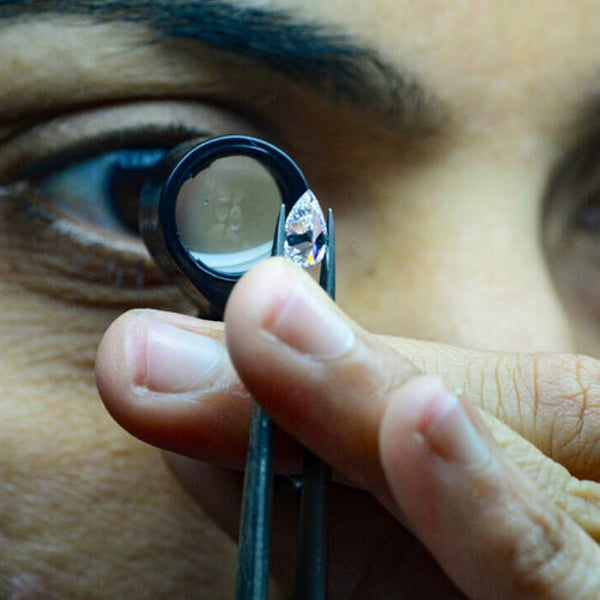
And now some of its most labour-intensive exports, including electronics, gems and jewellery and shrimp, are under threat.
Exporters are “optimistic” that India may be able to carve out a bilateral agreement on the “trade side at least”, Ajay Sahai, Director General of the Federation of Indian Export Organisations, told AFP.
But he added that it was “quite a fluid situation”, suggesting one outcome could see the deadline extended, given that India is “constructively engaged” with Washington.
“The feedback which I am getting suggests positive developments either way — and we are hopeful,” he added.
India’s seafood industry is seeing “some amount of anxiety”, but also “more reason for hope”, said KN Raghavan, Secretary General, Seafood Exporters Association of India.
He did not give details, but said a “solution appears to be in the anvil”.
US officials have been upbeat about the prospect of an agreement.
Trump on Tuesday raised the possibility of an agreement, saying it is “going to be a different kind of a deal”.
“It’s going to be a deal where we’re able to go in and compete,” he added. “Right now, India doesn’t accept anybody in. I think India is going to do that, and if they do that, we’re going to have a deal for much less tariffs.”
His Commerce Secretary Howard Lutnick said last month that a pact could be expected in the “not too distant future”.
However, Indian media reports on Tuesday, quoting unnamed sources, struck a more neutral tone, saying negotiators were still working to resolve key differences that had cropped up during talks.
An Indian commerce ministry official told AFP that New Delhi’s unmet demands included relief from separate sectoral tariffs on steel and aluminium as well a greater access for labour-intensive exports including textiles and footwear.
They have also spoken of disagreements over Washington’s push to have India open up its agriculture sector and allow freer trade of American farm produce.
Finance Minister Nirmala Sitharaman has said she was eager for a deal.
“I’d love to have an agreement, a big, good, beautiful one; why not?” she told India’s Financial Express newspaper, in an interview printed on Monday.
Sitharaman, however, added that “agriculture and dairy” are the “very big red lines”.
Experts believe a smaller agreement is still possible ahead of the deadline.
“The more likely outcome is a limited trade pact,” said Ajay Srivastava of Global Trade Research Initiative, a New Delhi-based think-tank in a recent note.
Srivastava said that under such a deal, India could cut tariffs on a range of industrial goods and offer limited access for US agricultural produce — in return for Trump dropping the 26 percent levies.
But he also warned that talks “may collapse” if Washington “continues to insist on opening India’s core agriculture sectors or allowing entry of GMO (genetically modified organism) products”.
And seafood exporters remain on edge as talks go down to the wire.
“Currently, exporters believe they can manage with a 10 percent tariff, as it can be absorbed. But if it goes back up to 25 percent to 30 percent levels, we could see American buyers finding alternative sources,” Raghavan said.
“They will find some other cheaper source,” he added.
The demerger of Unilever‘s ice cream division, to be named ‘The Magnum Ice Cream Company,’ which had been delayed in recent months by the US government shutdown, will finally go ahead on Saturday, the British group announced.
Reuters
Unilever said in a statement on Friday that the admission of the new entity’s shares to listing and trading in Amsterdam, London, and New York, as well as the commencement of trading… is expected to take place on Monday, December 8.
The longest federal government shutdown in US history, from October 1 to November 12, fully or partially affected many parts of the federal government, including the securities regulator, after weeks without an agreement between Donald Trump‘s Republicans and the Democratic opposition.
Unilever, which had previously aimed to complete the demerger by mid-November, warned in October that the US securities regulator (SEC) was “not in a position to declare effective” the registration of the new company’s shares. However, the group said it was “determined to implement in 2025” the separation of a division that also includes the Ben & Jerry’s and Cornetto brands, and which will have its primary listing in Amsterdam.
“The registration statement” for the shares in the US “became effective on Thursday, December 4,” Unilever said in its statement. Known for Dove soaps, Axe deodorants and Knorr soups, the group reported a slight decline in third-quarter sales at the end of October, but beat market expectations.
Under pressure from investors, including the activist fund Trian of US billionaire Nelson Peltz, to improve performance, the group last year unveiled a strategic plan to focus on 30 power brands. It then announced the demerger of its ice cream division and, to boost margins, launched a cost-saving plan involving 7,500 job cuts, nearly 6% of the workforce. Unilever’s shares on the London Stock Exchange were steady on Friday shortly after the market opened, at 4,429 pence.
This article is an automatic translation. Click here to read the original article.
Burberry has named a new chief operating and supply chain officer as well as a new chief customer officer. They’re both key roles at the recovering luxury giant and both are being promoted from within.
Matteo Calonaci becomes chief operating and supply chain officer, moving from his role as senior vice-president of strategy and transformation at the firm.
In his new role, he’ll be oversee supply chain and planning, strategy and transformation, and data and analytics. He succeeds Klaus Bierbrauer, who’s currently Burberry supply chain and industrial officer. Bierbrauer will be leaving the company following its winter show and a transition period.
Matteo Calonaci – Burberry
Meanwhile, Johnattan Leon steps up as chief customer officer. He’s currently currently Burberry’s senior vice-president of commercial and chief of staff. In his new role he’ll be leading Burberry’s customer, client engagement, customer service and retail excellence teams, while also overseeing its digital, outlet and commercial operations.
Both Calonaci and Leon will join the executive committee, reporting to Company CEO Joshua Schulman.
JohnattanLeon – Burberry
Schulman said of the two execs that the appointments “reflect the exceptional talent and leadership we have at Burberry. Both Matteo and Johnattan have been instrumental in strengthening our focus on executional excellence and elevating our customer experience. Their deep understanding of our business, our people, and our customers gives me full confidence that their leadership will help drive [our strategy] Burberry Forward”.
Traditional and occasion wear designer Puneet Gupta has stepped into the world of fine jewellery with the launch of ‘Deco Luméaura,’ a collection designed to blend heritage and contemporary aesthetics while taking inspiration from the dramatic landscapes of Ladakh.
Hints of Ladakh’s heritage can be seen in this sculptural evening bag – Puneet Gupta
“For me, Deco Luméaura is an exploration of transformation- of material, of story, of self,” said Puneet Gupta in a press release. “True luxury isn’t perfect; it is intentional. Every piece is crafted to be lived with and passed on.”
The jewellery collection features cocktail rings, bangles, chokers, necklaces, and statement evening bags made in recycled brass and finished with 24 carat gold. The stones used have been kept natural to highlight their imperfect and unique forms and each piece in the collection has been hammered, polished, and engraved by hand.
An eclectic mix of jewels from the collection – Puneet Gupta
Designed to function as wearable art pieces, the colourful jewellery echoes the geometry of Art Deco while incorporating distinctly South Asian imagery such as camels, butterflies, and tassels. Gupta divides his time between his stores in Hyderabad and Delhi and aims to bring Indian artistry to a global audience while crafting a dialogue between designer and artisan.