Connect with us

Fashion

India: A promising yet challenging market for French luxury

Published

on


By

AFP

Published


November 16, 2025

Is India the new El Dorado for French luxury brands? For two decades, the most prestigious brands have dreamed of India, but the world’s most populous country is still a long way from meeting their expectations.

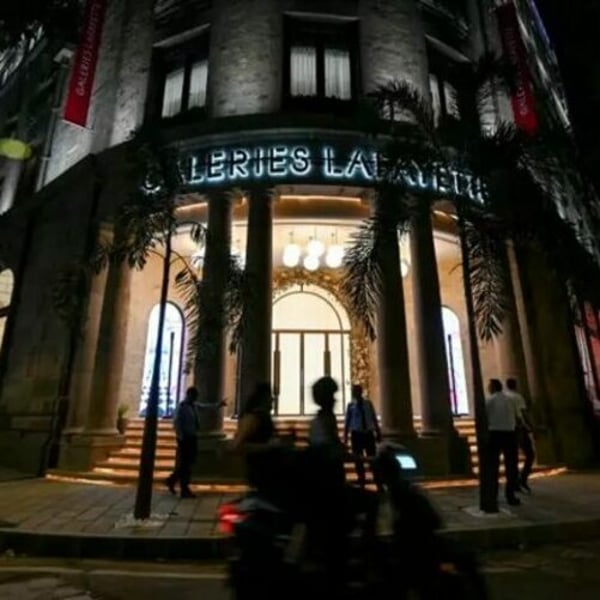
Pedestrians walk past the Galeries Lafayette store in Bombay on 15 October 2025. – Punit Paranjpe / AFP/Archives

“It’s a promising market, but a complicated one,” said Bénédicte Epinay, general delegate of the Comité Colbert, which represents the sector and brings together 85 French companies.

The opening on Sunday of Galeries Lafayette’s first Indian store in the western megacity of Bombay is “an important step that will bring a breath of the West,” she said.

Of the 280 luxury and designer brands spread over 9,000 m² and five floors, the majority are foreign.

This balance is likely to shift, said Philippe Pedone, director of international development at Galeries Lafayette, at the inauguration of the store, developed in partnership with India’s Aditya Birla Group.

Nicolas Houzé, chairman of the group’s management board, added that the historic chain aims to open “a second department store in New Delhi” by 2029-2030, with an initial target of “annual sales of 20 million euros”.

With its 1.4 billion inhabitants, the potential of the Indian market is immense.

Every year, tens of thousands of new millionaires flaunt their success behind the wheel of a Lamborghini or with a Rolex on their wrist.

The growth is dizzying: according to Estelle David, Director for South Asia at Business France, the luxury market, valued at 10 billion euros in 2024, is set to triple by 2030.

“When a luxury house is interested in a new country, it looks at the number of wealthy people and the rise of a middle class. India ticks all the boxes,” explained the general delegate of the Comité Colbert.

But the reality is more complex. High taxes, regulatory constraints, limited quality infrastructure and a strong cultural identity make for daunting obstacles.

‘Infinitesimal’

Contacted by AFP, the French luxury giants declined to comment. According to experts, this silence reflects the “very few positive things” they have to say about this “complicated” market.

“They have very little data to show that they are making a profit” and “achieving a return on investment,” pointed out Ashok Som, professor at ESSEC.

In the early 2000s, the major houses considered India their next growth driver after China. But a quarter of a century on, the market remains “infinitesimal,” explains Epinay: most brands have between one and three stores there, compared with 100 to 400 in China.

In her view, the only thing these two powers have in common is “the number of inhabitants”. India lacks the same “social, linguistic and territorial homogeneity”, she pointed out.

“Most still don’t understand this market,” that of a “poor country with a largely agrarian economy,” added Som. China, by contrast, had “shopping malls everywhere” by the end of the 1990s, he notes, and a “wealthy class eager for Western products.”

Today, the world’s fifth-largest economy has just six high-end shopping malls.

‘We have to adapt’

Further major obstacles include high customs duties, non-tariff barriers and heavy bureaucracy.

As a result, it often makes sense for an Indian consumer to make a return trip to Dubai, costing around 300 euros, to buy a bag from a French luxury brand for 30% to 40% less than in Bombay or New Delhi.

A glimmer of hope: India and the European Union (EU) have pledged to conclude by the end of the year a free-trade agreement that has been under negotiation for years. “This will give this market a real boost,” said Epinay.

But to appeal to Indian consumers, “you have to adapt to the culture, tastes and consumption patterns,” stressed Ms David.

Although the major foreign ready-to-wear brands have stores in megacities such as New Delhi, Bombay and Bangalore, “Western silhouettes” remain in the minority across the country.

While men have largely abandoned their “kurtas” (long, loose-fitting shirts), women continue to wear “saris”, rectangles of shimmering fabric. To win them over, brands such as Louboutin, Dior, Chanel and Bulgari are already collaborating with designers, brands, Bollywood stars and local influencers, according to market insiders.

But “why would you want to buy something from abroad that’s trying to be Indian?” asked Sonal Ahuja, a 39-year-old human resources manager met in a Bombay shopping mall.

French brands are also banking on e-commerce and India’s 900 million internet users.

With over 35 million people, the diaspora could also help convert Indian customers. Many of those who return to the country bring Western lifestyles back with them.

This article is an automatic translation.
Click here to read the original article.

Copyright © 2025 AFP. All rights reserved. All information displayed in this section (dispatches, photographs, logos) are protected by intellectual property rights owned by Agence France-Presse. As a consequence you may not copy, reproduce, modify, transmit, publish, display or in any way commercially exploit any of the contents of this section without the prior written consent of Agence France-Presses.


Source link

Continue Reading

Fashion

Cosmetics giant Unilever finalises business demerger

Published

on


By

AFP

Published


December 5, 2025

The demerger of Unilever‘s ice cream division, to be named ‘The Magnum Ice Cream Company,’ which had been delayed in recent months by the US government shutdown, will finally go ahead on Saturday, the British group announced.

Reuters

Unilever said in a statement on Friday that the admission of the new entity’s shares to listing and trading in Amsterdam, London, and New York, as well as the commencement of trading… is expected to take place on Monday, December 8.

The longest federal government shutdown in US history, from October 1 to November 12, fully or partially affected many parts of the federal government, including the securities regulator, after weeks without an agreement between Donald Trump‘s Republicans and the Democratic opposition.

Unilever, which had previously aimed to complete the demerger by mid-November, warned in October that the US securities regulator (SEC) was “not in a position to declare effective” the registration of the new company’s shares. However, the group said it was “determined to implement in 2025” the separation of a division that also includes the Ben & Jerry’s and Cornetto brands, and which will have its primary listing in Amsterdam.

“The registration statement” for the shares in the US “became effective on Thursday, December 4,” Unilever said in its statement. Known for Dove soaps, Axe deodorants and Knorr soups, the group reported a slight decline in third-quarter sales at the end of October, but beat market expectations.

Under pressure from investors, including the activist fund Trian of US billionaire Nelson Peltz, to improve performance, the group last year unveiled a strategic plan to focus on 30 power brands. It then announced the demerger of its ice cream division and, to boost margins, launched a cost-saving plan involving 7,500 job cuts, nearly 6% of the workforce. Unilever’s shares on the London Stock Exchange were steady on Friday shortly after the market opened, at 4,429 pence.
 

This article is an automatic translation.
Click here to read the original article.
Copyright © 2025 AFP. All rights reserved. All information displayed in this section (dispatches, photographs, logos) are protected by intellectual property rights owned by Agence France-Presse. As a consequence you may not copy, reproduce, modify, transmit, publish, display or in any way commercially exploit any of the contents of this section without the prior written consent of Agence France-Presses.


Source link

Continue Reading

Fashion

Burberry elevates two SVPs to supply chain and customer exec roles

Published

on


Published


December 5, 2025

Burberry has named a new chief operating and supply chain officer as well as a new chief customer officer. They’re both key roles at the recovering luxury giant and both are being promoted from within.

Burberry – Spring-Summer2026 – Womenswear – Royaume-Uni – Londres – ©Launchmetrics/spotlight

Matteo Calonaci becomes chief operating and supply chain officer, moving from his role as senior vice-president of strategy and transformation at the firm. 

In his new role, he’ll be oversee supply chain and planning, strategy and transformation, and data and analytics. He succeeds Klaus Bierbrauer, who’s currently Burberry supply chain and industrial officer. Bierbrauer will be leaving the company following its winter show and a transition period.

Matteo Calonaci - Burberry
Matteo Calonaci – Burberry

Meanwhile, Johnattan Leon steps up as chief customer officer. He’s currently currently Burberry’s senior vice-president of commercial and chief of staff. In his new role he’ll be leading Burberry’s customer, client engagement, customer service and retail excellence teams, while also overseeing its digital, outlet and commercial operations.

Both Calonaci and Leon will join the executive committee, reporting to Company CEO Joshua Schulman.

JohnattanLeon - Burberry
JohnattanLeon – Burberry

Schulman said of the two execs that the appointments “reflect the exceptional talent and leadership we have at Burberry. Both Matteo and Johnattan have been instrumental in strengthening our focus on executional excellence and elevating our customer experience. Their deep understanding of our business, our people, and our customers gives me full confidence that their leadership will help drive [our strategy] Burberry Forward”.

Copyright © 2025 FashionNetwork.com All rights reserved.


Source link

Continue Reading

Fashion

Puneet Gupta steps into fine jewellery

Published

on


Published


December 5, 2025

Traditional and occasion wear designer Puneet Gupta has stepped into the world of fine jewellery with the launch of ‘Deco Luméaura,’ a collection designed to blend heritage and contemporary aesthetics while taking inspiration from the dramatic landscapes of Ladakh.

Hints of Ladakh’s heritage can be seen in this sculptural evening bag – Puneet Gupta

 
“For me, Deco Luméaura is an exploration of transformation- of material, of story, of self,” said Puneet Gupta in a press release. “True luxury isn’t perfect; it is intentional. Every piece is crafted to be lived with and passed on.”

The jewellery collection features cocktail rings, bangles, chokers, necklaces, and statement evening bags made in recycled brass and finished with 24 carat gold. The stones used have been kept natural to highlight their imperfect and unique forms and each piece in the collection has been hammered, polished, and engraved by hand.

An eclectic mix of jewels from the collection
An eclectic mix of jewels from the collection – Puneet Gupta

 
Designed to function as wearable art pieces, the colourful jewellery echoes the geometry of Art Deco while incorporating distinctly South Asian imagery such as camels, butterflies, and tassels. Gupta divides his time between his stores in Hyderabad and Delhi and aims to bring Indian artistry to a global audience while crafting a dialogue between designer and artisan.

Copyright © 2025 FashionNetwork.com All rights reserved.


Source link

Continue Reading

Trending

Copyright © Miami Select.