Connect with us

Fashion

In China, global companies struggle as home-grown brands steal thunder

Published

on


By

Reuters

Published


October 17, 2025

For many companies, business in China has changed for the long term as a fragile economy and sluggish consumer demand are forcing executives to rethink their brand strategy and compete with rising home-grown rivals.

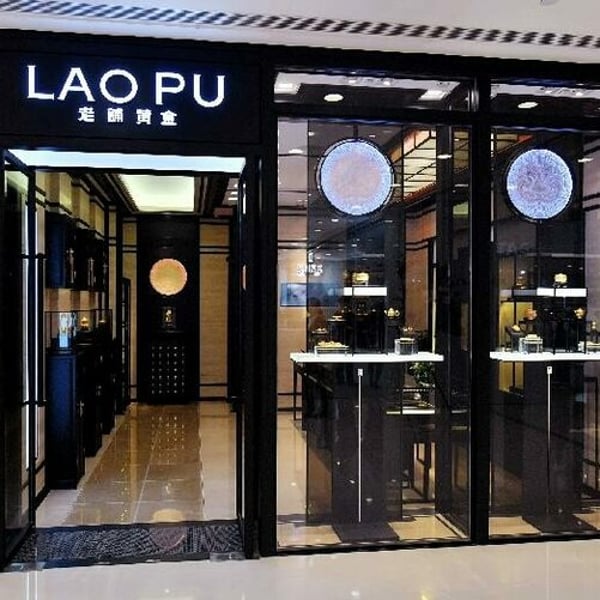
A Laopu Gold jewellery store – Bloomberg

From Uniqlo owner Fast Retailing to furniture giant IKEA, global companies have soured on China’s outlook, with some withdrawing earnings guidance and others resigned to a new “normalisation.”

Their gloomy guidance illustrates how China’s market, overshadowed by a trade war, fierce price competition, rising nationalism and cost-conscious consumers, is becoming a major drag for many businesses already pressured by higher US tariffs.

“We need to find smarter ways of producing so the prices become even more competitive, and we need to learn to be even more relevant for the Chinese market,” said Jon Abrahamsson Ring, CEO of IKEA franchisor Inter IKEA, adding that consumer confidence in China remained a challenge.

A shift in spending patterns is also hurting global retailers, with frugal consumers flocking to online platforms such as Alibaba‘s Taobao for discounted prices.

At Uniqlo owner Fast Retailing, sales and profit fell in China, its largest market with 900 stores, even as its North America revenue rose 24%.

Nike reported a sales drop for the fifth quarter in the Greater China market, amid stiff competition from domestic brands including Anta and Li Ning. It recently sent US basketball stars LeBron James and Ja Morant to China to lure consumers.

Some firms appear to be holding up, most notably in luxury in China, which accounts for roughly a third of global sales. LVMH reported better-than-expected third-quarter sales underpinned by improved Chinese demand, saying shoppers responded well to new store experiences, like the ship-shaped Louis Vuitton boutique in Shanghai.

“What we see is whenever we are bringing an initiative or an innovation or a new retail disruption initiative, it creates immediately… interest and excitement and consumers respond very quickly,” LVMH CFO Cecile Cabanis said.

China’s persistent deflationary pressures support the case for more policy measures as weak demand and trade tensions drag on the $19 trillion economy. Chinese GDP growth and retail sales data on Monday plus a string of earnings from global companies will provide investors with more insight into the health of the world’s second-largest economy.

Adding to the mounting challenges for global brands is the fast rise of cheaper home-grown alternatives for almost everything from cars to coffee and fashion.

The market share of Chinese cosmetics brands is expected to exceed that of foreign brands for the first time in 2025, reaching 50.4%, according to Frost & Sullivan. Urban Revivo, known as China’s Zara rival, is among a growing cohort of domestic firms looking to expand overseas.

Another star is jewellery retailer Laopu Gold, often called the “Hermes of gold”, whose shares have soared 214% this year. It draws deeply from Chinese cultural heritage and has proven a hit with consumers. Frost & Sullivan says 77.3% of Laopu’s customers also shop at Louis Vuitton, Hermès, Cartier, Bulgari and Tiffany & Co.

© Thomson Reuters 2025 All rights reserved.


Source link

Continue Reading

Fashion

Cribbs Mall highlights importance of fashion line-up to attract Gen Z visitors

Published

on


Published


December 12, 2025

The closure of some fashion-focused stores post-pandemic (think Arcadia’s brand, for instance) had a big impact on the overall fashion offer at major malls. And while many are getting back on track with fashion, or adjusting their balance toward other categories, M&G Real Estate’s Cribbs Mall in Bristol has offered up evidence this week of just how important the super-category is to its footfall and sales.

Cribbs Mall

In an update designed to show how vibrant business is at Cribbs, it said the growing fashion offer at the centre has driven a 13% rise in GenZ visitors. That comes as the West Country retail destination has welcomed AllSaints and Animal to its line-up this year.

Of course, it’s not just about fashion as the mall has also evolved its F&B offering with the arrivals of Pizza Express and Honest Burger, both popular with Gen Z.

Overall, the new arrivals and investment by current occupiers have resulted in a 10% increase in footfall across all age groups and an 8% rise in sales, “surpassing industry benchmarks”.

Cribbs, which is managed by Sovereign Centros by CBRE, said 36% of total spend this year has come from young shoppers – outperforming the regional mall average of 30%.

As mentioned, Gen Z visitors are up 13% year on year in 2025, becoming its fastest growing demographic.

The Gen Z-friendly tenant line-up there includes Mango, H&M, and River Island and those recent arrivals AllSaints and Animal also score with this demographic, the latter selecting Cribbs for its first shopping centre destination.

Major names have also been investing in new shop fits, including M&S, Boots, Superdrug, River Island, and H&M creating flagship stores, “which act as showrooms, helping to draw in shoppers of all ages”. 

The importance of the mall to the region is underlined by the fact that Topshop selected the John Lewis at Cribbs as one of only four destinations for its new pop-up concept.

And the expectation is that developments across the Cribbs Causeway area should drive the Gen Z shopper mix at the mall even higher. 

It’s already the nearest major shopping destination for over 6.2 million people but the neighbouring Brabazon Development will boost that as it’s set to deliver 6,500 homes. Importantly as far as Gen Z is concerned, it will also deliver 2,000 student rooms and a 19,500-capacity arena, all within walking distance.

Copyright © 2025 FashionNetwork.com All rights reserved.


Source link

Continue Reading

Fashion

Pacsun debuts curated resale shop

Published

on


Published


December 12, 2025

Pacsun launched on Thursday a curated resale shop, introducing PS Vintage Powered by Springy, a dedicated collection of thousands of one-of-a-kind vintage pieces for men and women. 

Pacsun debuts curated resale shop, introducing PS Vintage Powered by Springy. – Pacsun

The collection is now available online with an in-store rollout planned at 15 Pacsun locations nationwide beginning in January 2026.

The assortment was hand-selected in collaboration with Springy, an established authority in online secondhand retail, and with direct input from Gen Z through Pacsun’s Youth Advisory Council.

“Vintage shopping has become central to our community, and with this launch, we wanted to make that experience authentic and accessible,” said Richard Cox, chief merchandising officer of Pacsun. “Guided by strong consumer listening, our trend-driven curation delivers on the style our consumers love while reflecting the sustainability they value.”

The collection includes graphic tees, hoodies, denim, jackets and other apparel, each piece sourced by Springy and tagged by size, year and category. Pacsun curated the lineup around themes central to the brand—fashion, art, culture, sports and music. Meanwhile, the women’s offering includes nostalgic labels, vintage music tees and holiday-themed graphic sweatshirts that lean into the ongoing Y2K revival seen across TikTok. 

Copyright © 2025 FashionNetwork.com All rights reserved.


Source link

Continue Reading

Fashion

Historic perfume house Satinine returns with single-brand boutique in Milan

Published

on


Published


December 12, 2025

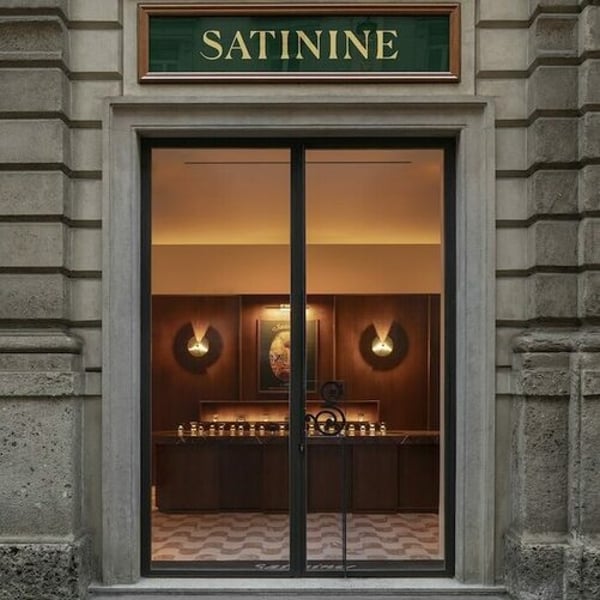
Founded in 1883 in Milan, Satinine is a perfumery laboratory that blends art and science in the creation of fragrances deeply rooted in Italy’s botanical heritage. Today, the Milanese brand has announced its return to its home city with the opening of a 70-square-metre boutique at Via Giuseppe Mengoni 4, just a short walk from Piazza Duomo.

Satinine returns to Milan – ©Tiziano Ercoli e Riccardo Giancola

Satinine’s founder was Lorenzo Usellini, a native of Arona on Lake Maggiore, who moved to Milan to handle the import and distribution of toiletries. After the First World War, Usellini began composing fragrances, and the “Satinine Officina Odoraria” was born—an enterprise that grew thanks to the artistic and creative input of his three sons in a family with a pronounced artistic streak; one of Usellini’s sons would go on to become a respected painter.

“Each essence is the result of a sophisticated balance between nature and science, memory and innovation, art and formula,” Usellini said of his creations.

In the 1930s, Satinine created perfumes that gained international popularity, most notably “Orchidea Nera” (a women’s fragrance) and “Caccia alla Volpe” (a men’s fragrance), presented in precious flacons that became icons of the Italian olfactory landscape, produced by Vetrerie Bormioli. The company’s name combines “Satin”—the fabric, a symbol of tactile elegance, lustre and sensuality—with the suffix “-ine”, which evokes the company’s precision and chemical/botanical leaning.

“Today we have a trove of 150 items from Satinine’s past to draw inspiration from, including perfume bottles and other materials, which stand out in a display case inside our store,” Galletti, the entrepreneur and fragrance enthusiast who relaunched this historic brand by co-founding Profumieri Milano S.r.l. with Ridgely Cinquegrana, former president of Loewe, tells FashionNetwork.com.

“I worked with him in the past in London on the development of Fornasetti Profumi,” Galletti added. “We stayed in touch, and he was keen to realise a project that would be meaningful in the perfumery world. We didn’t want to launch a brand with no history. As someone who knows the history of perfume, I decided to invest in the relaunch of Satinine.”

Satinine in Milan
Satinine in Milan – E.P. – FashionNetwork.com

“Historic perfumery was wiped out in the 1950s by the advent of fragrances from designer brands,” Galletti continued. “Satinine too began focusing on licensing and, over time, produced fragrances for brands such as Ferrari, Bottega Veneta and Borsalino. Milan had hundreds of perfumeries—single-brand houses with in-house production—and they were swept away by a public that wanted designer-label scents. The only ones to hold firm were the French, who continued to champion their historic production. In doing so, we lost an immensely important cultural heritage,” says the entrepreneur. “In 2005, Satinine went bankrupt; it was acquired by a Rome-based company, but essentially disappeared from the market. In 2024, we at Profumieri Milano reacquired it.”

The company has also opened a laboratory with in-house production, where it manufactures for other brands—mainly bespoke products for designers or hotel chains—while Satinine has now also debuted in home fragrances. Its perfumes retail between €120 and €180.

Satinine in Milan
Satinine in Milan – E.P. – FashionNetwork.com

Satinine’s new Milan shop, called Officina, is designed by Mara Bragagnolo and reinterprets the city’s architectural and perfumery traditions through a contemporary lens, drawing inspiration from the entrance halls of historic buildings as places of welcome and intimacy. Organised into distinct spaces—the porter’s lodge, the sensory room and the curatorial area—the shop creates a journey intended to transform the discovery of fragrances into a shared ritual.

The interiors combine modernist rigour and textural warmth through local materials such as Lombard terracotta, glazed ceramic and cathedral glass, in dialogue with oak panelling, Cardinal marble and satin-finished steel details. Each element is bespoke, crafted by local artisans, while soft lighting, curated by Martina Frattura, envelops the space with a “satin” glow.

Satinine in Milan
Satinine in Milan – ©Tiziano Ercoli e Riccardo Giancola

Amid this atmosphere, the shop’s official opening saw the debut of a new collection of ten Satinine fragrances developed in the in-house laboratory, using natural ingredients from Italian cultivars, with the stated aim of championing independent auteur perfumery, distinct from the conventions of the French school. Also new is the brand’s perfume bottle, designed by Franz Degano, whose design draws on the elegance of the 1930s.

Satinine’s retail ambitions now include international openings. “We would love to open in London, but we also like the idea of having a shop in Japan or South Korea,” concluded Galletti.

This article is an automatic translation.
Click here to read the original article.

Copyright © 2025 FashionNetwork.com All rights reserved.



Source link

Continue Reading

Trending

Copyright © Miami Select.