Connect with us

Business

In 2025 so far, 40% of VC exit value stems from AI, according to PitchBook

Published

on


It’s all happening in AI (and, yes, that’s a Simon and Garfunkel reference). 

And if that’s an exaggeration, it barely feels like one: In Q3, AI amounted to 39.5% of deal count, a record, according to PitchBook. AI is sending U.S. dealmaking trends up, as PitchBook estimates that deal count is up about 8% this year, marking the third most active year of the last decade. And when it comes to deal value, the numbers are even more dominant: By Q3 2025, 64.3% of deal value in the U.S. has tracked to AI. Now, the definition of “AI” is pretty broad, but a now undeniable reality has taken hold. 

“I think AI has basically become the foundation of VC,” said Kyle Stanford, PitchBook director of U.S. venture research, via email. “It provides a wholly new way for companies to solve challenges, and it is being integrated into every part of the economy. It is still the easy and fast deployment that can drive hyper scaling that VC has looked to for outsized returns. As mentioned above, it’s not a singular technology or subset of companies within a broader industry; it is becoming part of everything.”

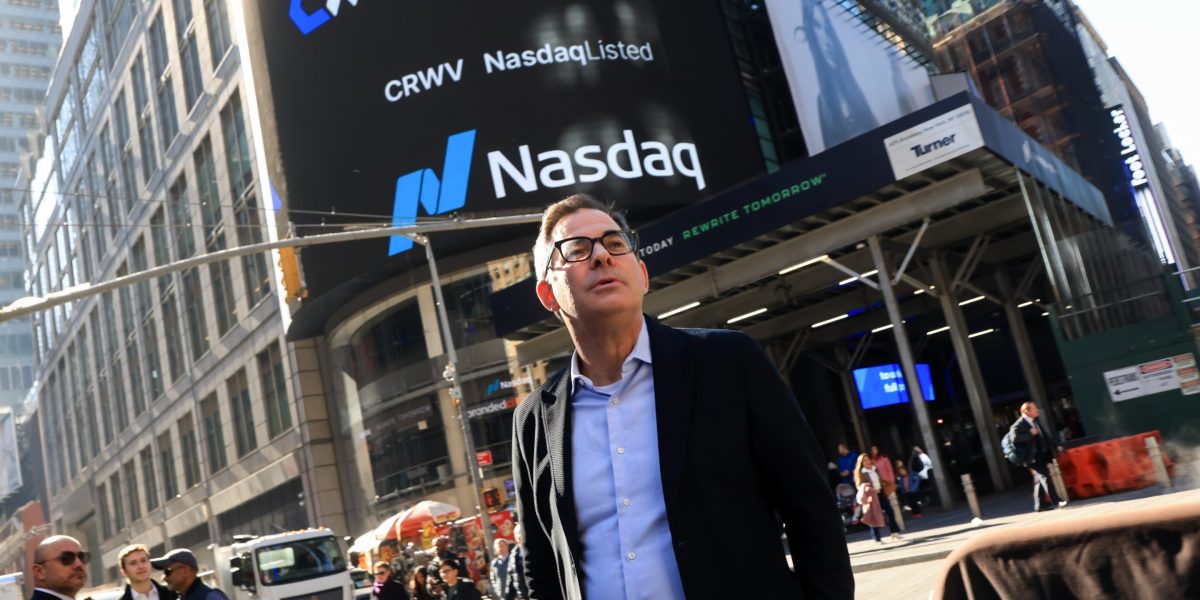
This follows through to the much-discussed and long-suffering VC exit environment: In 2025 so far, 40% of the exit deal value also traces back to AI, among them CoreWeave’s IPO. PitchBook says 2025 has seen a record 317 AI exits. But the environment for IPOs and M&A remains dicey, according to PitchBook’s Stanford.

“Exit value is interesting because you have a few strong IPOs, and then quite a few IPOs that maybe got higher billing for the year because of the overall lack of exits,” he told Fortune. “I don’t think many share my view on the IPO market, but I question its real strength given the relatively small pipeline…Many of the IPOs have been crypto firms or companies that might be considered atypical for the overall VC-backed inventory. I do think that the extended period staying private (over the past three years) will lead to some very strong companies listing next year.”

Whether such an over-reliance on AI is healthy for the VC industry is an open question. And of course, intertwined in that question is the ongoing debate du jour: Are we in a bubble? If we are, what does that even mean?

Stanford says he believes the conversation around a bubble should be nuanced. “This hype cycle, or bubble, might drive more tail events,” he said. “The multiples being given to some companies are very high, which might be concerning, but if this is truly the technological shift it is being billed as, then companies shouldn’t be priced in a normal way.”

A thought to this end from Brent Hill, managing partner at Origin Ventures, which just raised a $140 million sixth fund: “The U.S. economy has gone through five major economic eras: agrarian, industrial, information, digital—and now, of course, we’re living in the fifth and maybe most consequential with the artificial intelligence economy.” This ongoing phase will be massive, Hill reckons, noting that “we think that over the next ten years, we’ll see a dramatic impact in the productivity of the U.S. economy that will add somewhere between $2 trillion and $4 trillion to domestic GDP.”

There remains, of course, the question of how unprecedented VC’s all-in reliance on AI really is. We see lots of corollaries to the dotcom bubble, perhaps—but venture was a far smaller, less mature industry then. Karen Page, general partner at B Capital, thinks it’s worth considering the cloud boom.

“Cloud was a fundamental shift—a different way to own your data, to run your data,” she said. “But even so, AI is a different way to access your data. So, this is still leaps and bounds more of a transition.”

There was always, during cloud hype, a sense that brakes were getting pumped. Not so in AI: “There is no fear around AI,” Page said. “There is, instead of fear, a desire to jump in and move fast. So, it’s very different.” 

All in all, she and I ultimately settled on the word “unprecedented.”

See you tomorrow,

Allie Garfinkle
X:
@agarfinks
Email: alexandra.garfinkle@fortune.com
Submit a deal for the Term Sheet newsletter here.

Joey Abrams curated the deals section of today’s newsletter. Subscribe here.

Venture Deals

Base Power, an Austin, Texas-based energy provider, raised $1 billion in Series C funding. Addition led the round and was joined by Trust Ventures, Valor Equity Partners, Thrive Capital, and others.

Phagos, a Suresnes, France-based developer of a sustainable alternative to antibiotics, raised $30 million in Series A funding from CapAgro, Hoxton Ventures, CapHorn, Demeter, and others.

Coinflow, a Chicago, Ill.-based global payments platform, raised $25 million in Series A funding. Pantera Capital led the round and was joined by CMT Digital, Coinbase Ventures, and others.

Quilter, a Los Angeles, Calif.-based company using AI to build an autonomous PCB layout, raised $25 million in Series B funding. Index Ventures led the round.

Glue, a San Francisco-based agentic team chat platform, raised $20 million in Series A funding. Abstract Ventures led the round and was joined by Chapter One, Goldcrest Capital, and Craft Ventures.

Realm.Security, a Boston, Mass.-based security data pipeline, raised $15 million in Series A funding. Jump Capital led the round and was joined by Glasswing Ventures and Accomplice.

Attuned Intelligence, an Orlando, Fla.-based developer of AI-powered call center agents for hospitals, raised $13 million in seed funding. Radical Ventures and Threshold Ventures led the round.

AiPrise, a San Francisco-based operating system for global compliance, raised $12.5 million in Series A funding. Headline led the round and was joined by Sixthirty and Correlation

Everyset, a Los Angeles, Calif.-based background performer platform for film and television, raised $9 million in funding. Crosslink Capital and Haven Ventures led the round.

Cyberwave, a Milan, Italy-based company developing an operating layer between AI agents and real-world machines, raised €7 million ($8.1 million) in funding. United Ventures led the round and was joined by The TechShop and others.

Asterix Food, a Tel Aviv, Israel-based developer of technology using plant cells to produce animal proteins. CPT Capital led the round and was joined by Grok Ventures, ReGen Ventures, and SOSV.

Dragonfly, a London, U.K.-based software discovery platform, raised $3.5 million in pre-seed funding. Episode 1 led the round and was joined by Dreamcraft, Portfolio Ventures, and angel investors.

OraLiva, a New York City-based developer of AI-assisted oral cancer detection technology, raised $2 million in seed funding. Dr. Preetpal Sidhu led the round and was joined by DCVC, RTP Angel Fund, and the NYU Innovation Venture Fund.

Private Equity

Mainsail Partners invested $36 million in Flyntlok, an Anchorage, Alaska-based heavy equipment dealer management system. 

Brenton Point Capital Partners acquired a majority stake in Bobcat of Connecticut, an East Hartford, Conn.-based chain of Bobcat and other industrial equipment dealerships. Financial terms were not disclosed.

Integrity Landscape Corporation, a portfolio company of Seacoast Capital, acquired Serpico Landscaping, a Hayward, Calif.-based exterior landscaping company. Financial terms were not disclosed. 

Mountaingate Capital acquired a majority stake in Walker Sands, a Chicago, Ill.-based business-to-business growth services agency. Financial terms were not disclosed.

Wall Street Prep, a portfolio company of The Riverside Company, acquired Financial Edge, a London, U.K.-based provider of new hire training for financial institutions, and Euromoney Learning, a London, U.K.-based catalog of courses for mid-career finance professionals. Financial terms were not disclosed.

People

Plural, a London, U.K.-based venture capital firm, hired Pierre-Dimitri Gore-Coty as partner. He formerly served as SVP of Delivery at Uber.

Rockbridge Growth Equity, a Detroit, Mich.-based private equity firm, hired Tony Pulice as partner. He was previously with Huron Capital Partners.


Source link

Continue Reading

Business

Young people are ‘growing up fluent in AI’ and it’s helping them stand apart from older peers

Published

on


Gen Z, and younger generations, are getting a bad rap. The rise of ChatGPT and other AI tools have brought on complaints that students and young employees rely too much on AI to do everything from completing homework to writing emails. 

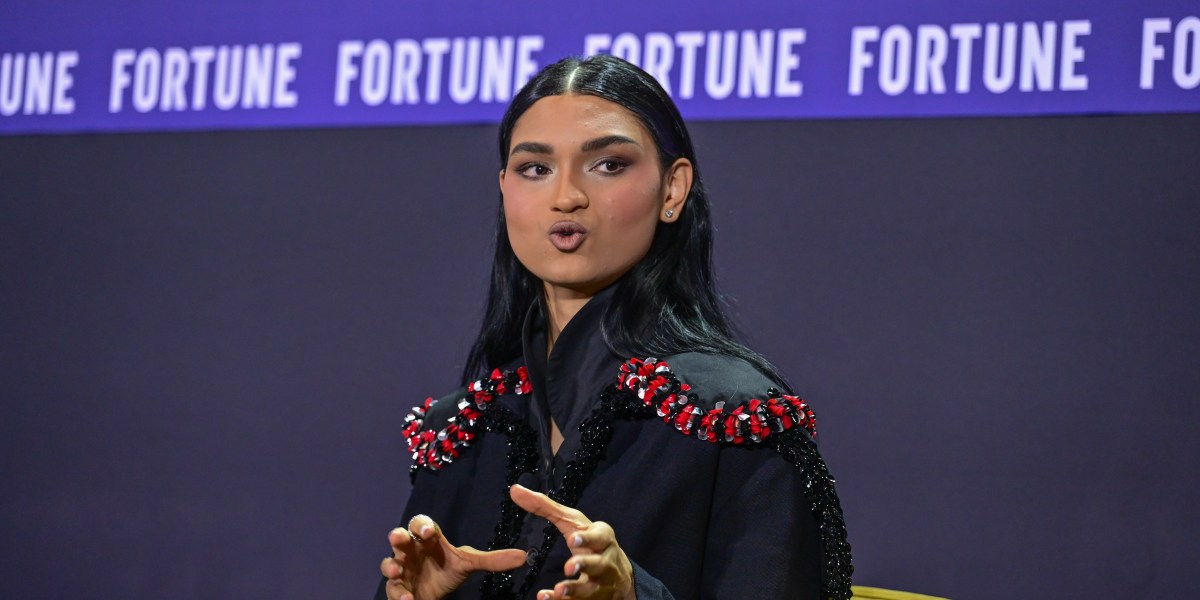
Yet Kiara Nirghin, a Stanford technologist and Gen Z entrepreneur, sees Gen-Z’s comfort with AI as an asset. “The younger generation isn’t adopting AI, we’re growing up fluent in AI,” she said at Fortune Brainstorm AI conference in San Francisco on Tuesday. 

Nirghin, who co-founded Chima, a U.S.-based applied AI research lab, explained that young entrepreneurs see coding as something to be done alongside AI agents, rather than done alone and from scratch. 

AI “fundamentally changes how you write, how you take tests, [and] how you apply to jobs or different applications—because it’s not from the ground up. It’s actually being able to do that with different models or agents, side by side,” Nirghin said. AI fluency sets Gen Z individuals apart from their older peers, allowing them to pioneer use cases and applications of AI that have yet to be unlocked, she explained. 

Some experts have argued that AI has eroded our critical thinking abilities. A 2025 study by researchers from MIT’s Media Lab found that users of ChatGPT “consistently underperformed at neural, linguistic, and behavioral levels.”

But Nirghin argued that this isn’t always true.“ The biggest misconception is that young people are using AI to not think things through, [but] I think that really intelligent Gen Z individuals are using it to think even deeper,” she said.

The entrepreneur pointed to how running complex research reports through AI could generate insights they may not have thought of otherwise—hence allowing users to get a fresh perspective.

Moving with the AI models

AI isn’t just for the young, however, and Nirghin stressed the technology’s ability to help workers at all levels of their careers. “We’re [only] at the beginning. It is only going to get faster, more advanced and more intelligent each and every model from here on out,” said Nirghin. 

She likened AI anxiety to climate anxiety—in that it stems from humanity’s fear of not moving fast enough to stay ahead of the game.

“In the past couple of weeks, [there’s] been two model releases that have engulfed the benchmarks in such an enormous way that pretty much everything you’ve ever used AI for can now just be 10x-ed,” Nirghin explained.

And to avoid being left behind, workers can familiarize themselves with “main model players” like ChatGPT and Gemini, and learn to use them as co-pilots and tools in everyday life. By continuously using the newest AI models, users will be more comfortable with the new technology, and thus lose their anxiety, she said. 

“The models right now are as dumb as they are ever going to be, [and] a couple months down the line, we are going to be in a very different landscape. Being able to be really comfortable with that, and having your core tools that you use and get comfortable with is really important.”


Source link

Continue Reading

Business

Mario Gabelli signals support for Paramount in Warner fight

Published

on


Money manager Mario Gabelli said it’s “highly likely” he will tender his clients’ Warner Bros. Discovery Inc. shares to Paramount Skydance Corp. in an effort to spark a bidding war for the film and TV company. 

In an interview, Gabelli said Paramount will ultimately have to increase its $30-a-share bid for Warner Bros. and that Netflix Inc. will also likely counter with a higher offer. Saying he supports the Paramount tender is a way of signaling he prefers more competition for the company.

“We’re in the early rounds,” Gabelli said. “Round five of a nine-round challenge.”

Warner Bros. shares were up 3.8% to $28.26 at the close in New York on Tuesday.

The longtime media investor attended Paramount’s presentation at a UBS conference on Tuesday and walked away impressed. Management “did a very good job” addressing potential regulatory challenges including at the state level, he said.

Gabelli’s firm and funds hold almost 5.7 million Warner Bros. shares, according to data compiled by Bloomberg, worth about $160 million based on Tuesday’s closing price. He also owns shares in Paramount and Netflix.

Warner Bros. agreed last week to sell its streaming and studios businesses, including HBO, to Netflix for $27.75 a share in cash and stock. Paramount on Monday went public with an all-cash tender offer for Warner Bros. and has been looking to convince investors its bid is better.

Gabelli plans to tender because the “terms of trade favor Paramount,” including an all-cash proposal that doesn’t rely on publicly traded stock or the spinoff of Warner Bros.’ cable networks, as Netflix’s offer does. 

Gabelli wouldn’t say which company was a better fit for Warner Bros.

“I don’t like to endorse things,” he said. “That’s why you play that card (a tender offer). It’s Texas hold ’em.”

On Tuesday, Gabelli’s company said in a regulatory filing it purchased more shares of the cinema and hotel company Marcus Corp.

Movie theater chains, which have been battered by tepid ticket sales and the threat of cutbacks in Hollywood releases, are a buy, Gabelli said. Paramount winning Warner Bros. would be “clearly better” for theaters because management believes in traditional film releases. 


Source link

Continue Reading

Business

Pluck eyebrows. Avoid surveillance cameras: Luigi Mangione’s to-do list as he tried to avoid arrest revealed in court

Published

on


Pluck eyebrows. Buy less conspicuous shoes. Take a bus or a train west toward Cincinnati and St. Louis. Move around late at night. Stay away from surveillance cameras.

A to-do list and travel plans found during Luigi Mangione’s arrest and revealed in court this week shed new light on the steps he may have taken — or planned to take — to avoid capture after UnitedHealthcare CEO Brian Thompson’s killing last year.

“Keep momentum, FBI slower overnight,” said one note. “Change hat, shoes, pluck eyebrows,” said another.

The notes, including a hand-drawn map and tactics for surviving on the lam, were shown on Monday at a pretrial hearing as Mangione’s bid to prevent prosecutors from using evidence seized during his Dec. 9, 2024, arrest at a McDonald’s in Altoona, Pennsylvania.

Excerpts of body-worn camera footage of the arrest, previously unseen by the press or the public, were released on Tuesday.

Police said they discovered the notes in Mangione’s backpack, along with a 9 mm handgun that prosecutors said matches the one used to kill Thompson five days earlier; a loaded gun magazine and silencer; and a notebook in similar handwriting which he purportedly described his intent to “wack” a health insurance executive.

Mangione’s lawyers haven’t disputed the authenticity of the notes or the provenance of the gun, pocket knife, fake ID, driver’s license, passport, credit cards, AirPods, protein bar, travel toothpaste, flash drives and other items seized from him and his backpack.

But they argue that anything found in the bag should be barred because police didn’t have a search warrant and lacked the grounds to justify a warrantless search. Prosecutors contend the search was legal — officers said they were checking for a bomb — and that police eventually obtained a warrant.

The notes, along with other evidence highlighted at the pretrial hearing, underscore that Mangione’s stop in Altoona, a city of about 44,000 people about 230 miles (370 kilometers) west of Manhattan, was only meant to be temporary.

One note said to check for “red eyes” from Pittsburgh to Columbus, Ohio or part way to Cincinnati (“get off early,” it reads). The map drawn below shows lines linking those cities, as well as other possible destinations, including Detroit, Indianapolis and St. Louis.

Thompson, 50, was killed as he walked to a Manhattan hotel for his company’s investor conference on Dec. 4, 2024. Surveillance video showed a masked gunman shooting him from behind and then fleeing the area. Over the next hours and days, police released photos of a suspect — first showing him in a mask and hooded coat and then his face and thick eyebrows.

Mangione, 27, has pleaded not guilty to state and federal murder charges. The pretrial hearing, which resumes for a sixth day on Thursday, applies only to the state case. His lawyers are making a similar push to exclude the evidence from his federal case, where prosecutors are seeking the death penalty.

Among the notes revealed this week was one with a heading “12/5” and a starred entry that said: “buy black shoes (white stripes too distinctive).”

Another, also written in to-do list style, suggested spending more than three hours away from surveillance cameras and using different modes of transportation to “Break CAM continuity” and avoid tracking. Below that, it said: “check reports for current situation,” a possible reference to news reports about the search for Thompson’s killer.

According to prosecutors, Mangione fled to Newark, New Jersey, immediately after the shooting and took a train to Philadelphia. Among the evidence shown at the pretrial hearing was a Philadelphia transit pass purchased at 1:06 p.m. — a little more than six hours after the shooting — and a ticket for a Greyhound bus, booked under the name Sam Dawson, leaving Philadelphia at 6:30 p.m. and arriving in Pittsburgh at 11:55 p.m.

A note with the heading “12/8” lists a number of tasks, including an apparent trip to Best Buy to purchase a digital camera and accessories, “hot meal + water bottles,” and “trash bag(s).” Under “12/9,” the day of Mangione’s arrest, the note lists tasks including “Sheetz,” an Altoona-based convenience store chain, “masks” and “AAA bats.” Under “Future TO DO,” it listed “intel checkin” and “survival kit.”

Mangione had a Sheetz hoagie in his backpack when he was arrested, along with a loaf of Italian bread from a local deli, according to police officers testifying Monday and Tuesday. It had been raining, and the bag and items inside it were wet, the officers said. They were heard on body-worn camera footage played in court theorizing that Mangione had gotten soaked walking from the city’s bus station.

Police responded to the McDonald’s after a manager called 911 to relay concerns from customers who thought that Mangione, eating breakfast in a back corner, resembled the man wanted for killing Thompson. On the call, played in court, the manager could be heard saying that because Mangione was wearing a medical mask, she could only see his eyebrows and that she searched online for a photo of the suspect for comparison.

Altoona Police Officer Stephen Fox testified on Tuesday that Mangione, the Ivy League-educated scion of a wealthy Maryland family, expressed concern for the 911 caller’s wellbeing. Fox said Mangione asked if police had planned on releasing her name, which they didn’t. The officer recalled him saying: “It would be bad for her” and “there would be a lot of people that would be upset.”

At another point, Fox said, a shackled Mangione stumbled while trying to keep up with the brisk-moving officer. Fox said he apologized and said, “I forgot you were shackled.”

He said Mangione responded: “It’s OK, I’m going to have to get used to it.”


Source link

Continue Reading

Trending

Copyright © Miami Select.
