
Politics
Immigrant advocacy group backs Sheriffs’ call for reform, opposes expanded enforcement deals
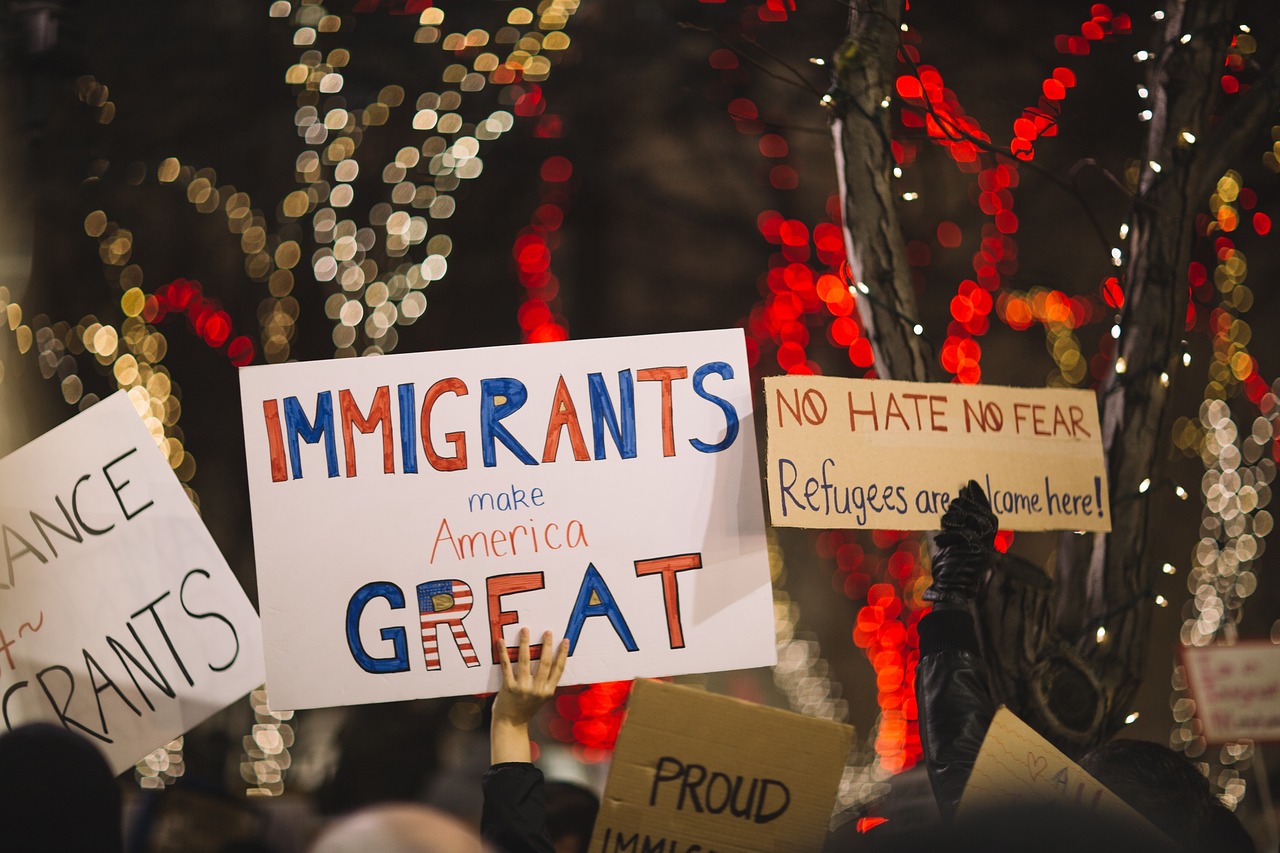
A statewide immigrant advocacy group is backing Florida Sheriffs who recently called for a more nuanced approach to immigration enforcement.
In a letter published this week, the We Are Florida Coalition expressed support for comments made during a recent State Immigration Enforcement Council meeting, where several Sheriffs urged policymakers to move beyond sweeping deportation strategies.
The coalition, organized by the Florida Immigrant Coalition and comprising more than 50 community organizations, faith groups and advocacy networks, said the Sheriffs’ remarks reflect the need for “protection-based solutions grounded in human dignity,” including opportunities for undocumented immigrants to regularize their status.
The Thursday letter comes 10 days after the most recent meeting of the Council — a body created by state leaders to guide Florida’s aggressive immigration enforcement policies — where Polk County Sheriff Grady Judd and others suggested deportation efforts should prioritize criminals while recognizing that many undocumented immigrants are otherwise law-abiding.
“Some came here inappropriately only to do better for themselves and their family,” Judd, who chairs the panel, said on March 16 while also stressing that law enforcement continues to support federal immigration authorities.
At the meeting, the Sheriffs agreed to jointly draft a letter to President Donald Trump, U.S. House Speaker Mike Johnson and U.S. Senate Majority Leader John Thune seeking better guidelines for local immigration enforcement.
Judd later clarified that Florida Sheriffs still “wholeheartedly support” U.S. Immigration and Customs Enforcement and Trump’s mass deportation policies targeting criminals and those with removal orders.
Still, he and other Sheriffs emphasized the practical limitations of deporting millions of people and called on Congress to establish clearer guidelines.
“What we suggested yesterday is there needs to be a path forward for those that are in this country. They came here illegally, they violated the federal law, but it’s a civil violation,” Judd said at a press conference two days after the meeting.
“They’re not creating problems. Their children are in school. They need to be required to speak English through a program. There needs to be evidence of positive community integration into our society, but those people who are adding to the American dream … we need to find a path for them.”

Their comments drew swift pushback from Gov. Ron DeSantis and Attorney General James Uthmeier, who argued that immigration laws must be enforced uniformly, regardless of whether an individual has a prior criminal record.
DeSantis warned against any shift away from strict enforcement, saying undocumented immigrants can pose risks even without a criminal history and that softening policy would undermine the Trump administration.
“It’s incoherent, and it’s not what the President ran on,” DeSantis said March 19. “Asking him to go back on his campaign policies — I would not advise that to be done.”
In its letter, We Are Florida framed the Sheriffs’ comments as an important opening for a broader conversation about immigration policy in a state that has positioned itself in recent years as a national leader and innovator in enforcement and anti-immigration activism.
The coalition also used its letter to strongly oppose the expansion of 287(g) agreements, which allow local law enforcement agencies to partner with federal immigration authorities to carry out immigration enforcement functions.
Such agreements, the group said, are not universally required and can expose local governments to legal risks while undermining trust between police and immigrant communities.
“Public safety depends on trust,” said Tessa Petit, Executive Director of the Florida Immigrant Coalition. “When immigrant families fear that any interaction with local police could lead to deportation, entire communities become less safe.”
The coalition argued 287(g) programs can lead to racial profiling, discourage crime reporting and divert resources away from core public safety duties. Instead, it said, state leaders should pursue policies that respect local autonomy, uphold civil rights and create a pathway for undocumented immigrants who are contributing to their communities.
“We commend the Council for opening the door to conversation,” the letter concluded. “We stand ready to work collaboratively toward solutions that are lawful and humane.”
Members of the State Immigration Enforcement Council include Judd, Sheriffs Bob Gualtieri of Pinellas County, T.K. Waters of Jacksonville, Bill Prummell of Charlotte County and Police Chiefs Charles Broadway of Kissimmee, Ciro Dominguez of Naples, Robert Bage of Fort Walton and Doug Goerke of St. Cloud.
They were appointed by DeSantis, Attorney General James Uthmeier, CFO Blaise Ingoglia and Agriculture Commissioner Wilton Simpson — who sit on a new State Board on Immigration which the State Immigration Enforcement Council advises — and Senate President Ben Albritton and House Speaker Daniel Perez.