Connect with us

Business

IMF chief Kristalina Georgieva dismisses impact of Trump trade war: ‘Trade is like water, you put in an obstacle, it goes around it’

Published

on


The escalating trade clash between the U.S. and China has investors on edge, fearing it could mark the beginning of the end for global cooperation as we know it. On Friday, President Donald Trump called China’s new export controls “extraordinarily aggressive” and “hostile”; he threatened a retaliatory 100% tariff. (He later sought to deescalate the situation, calming U.S. markets.)

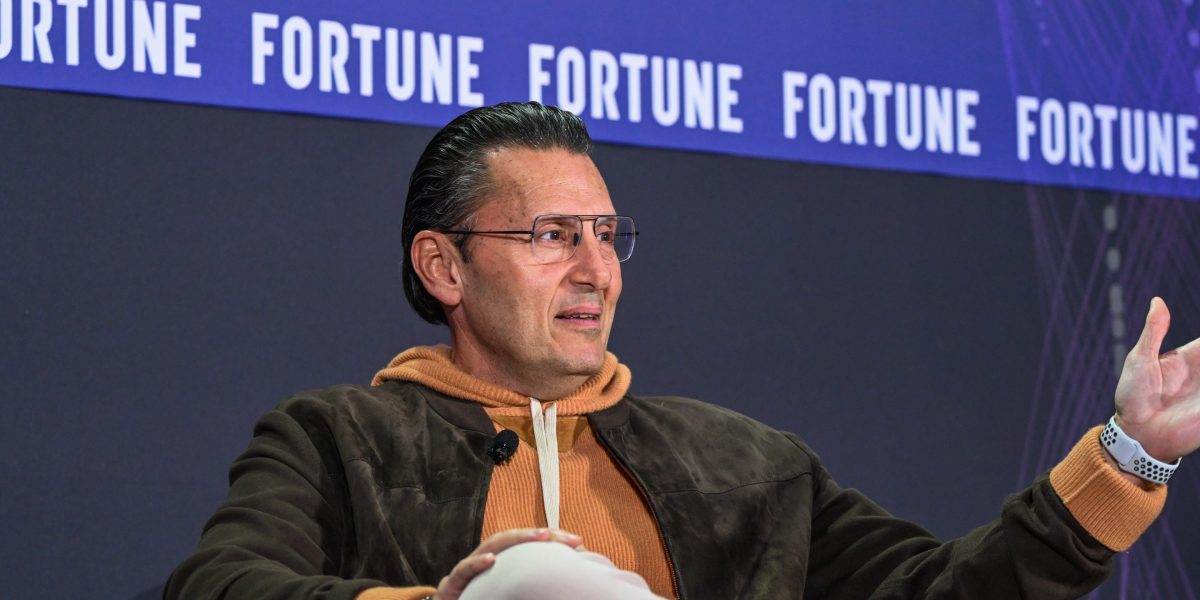
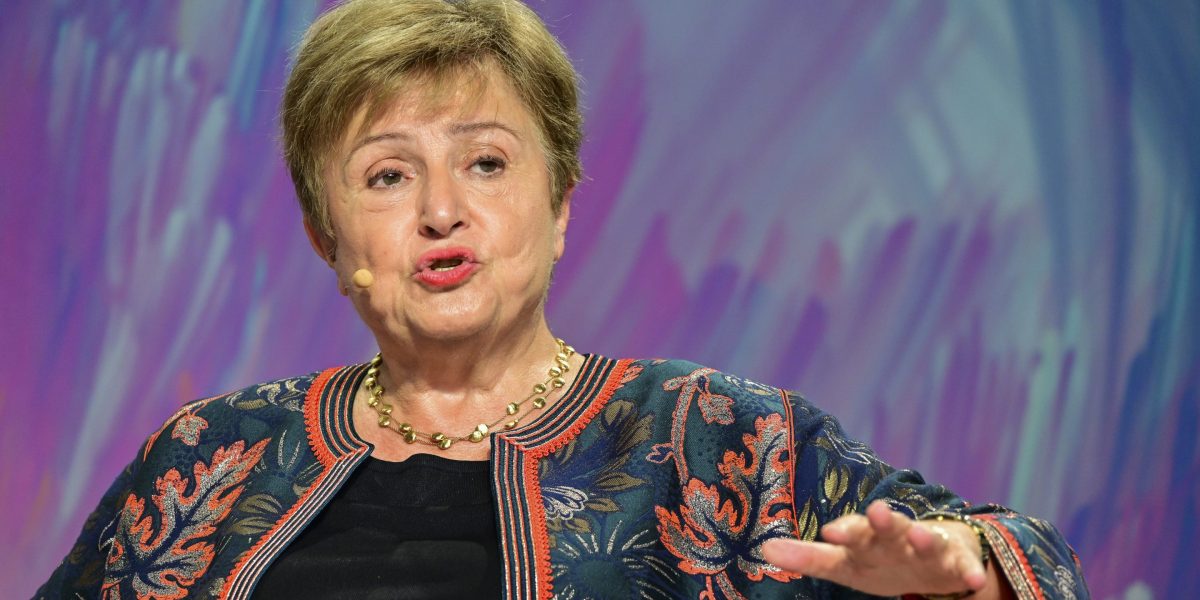
For Kristalina Georgieva, head of the International Monetary Fund, it’s just another day in the office. Speaking at Fortune’s Most Powerful Women 2025 summit in Washington, D.C., she downplayed any fears of a trade war.

“Frankly, this thing that trade is dead is completely overstated,” Georgieva told Fortune’s Diane Brady. “Trade is like water. You put [up an] obstacle, it goes around it.”

And while Georgieva recognizes the world is becoming “foggier” and full of uncertainty, one of the biggest challenges comes from getting buy-in that cooperation is better than division: “We are in this one big boat. It is a rough sea. We better row together.”

Luckily, many countries already subscribe to this philosophy. She pointed out that following the onset of U.S. tariffs earlier this year, 188 out of the IMF’s 191 member states did not choose to retaliate. Instead, they’ve turned to regional partners for trade. Southeast Asia and the Gulf region are two examples she cited.

Even China has benefited from diversifying its trade portfolio: overall exports rose 8.3% in September—the highest total this year—thanks to strong trade growth with the European Union. Chinese shipments to the U.S. fell 27% in September, marking half a year of double-digit trade declines, according to data released by the General Administration of Customs. 

But for business leaders, there’s a growing opportunity to be a grounding voice as long as they are willing to “buckle up,” Georgieva added.

“Good news for the world. The private sector is more agile, more adaptable,” she said. “Over the last years, we have seen in many countries where there was [a] big state presence in the economy—including because of IMF urging them to pull back—more private sector initiative. And in this time of strong winds, [business leaders] are an anchor of stability because you adapt, you just keep doing it.”

For female business leaders, in particular, she reiterated the need to always be thinking about worst case scenarios—and be ready to adapt to them.

“Think of the unthinkable so you’re ready when the unthinkable comes,” Georgieva said. “Because we know from COVID, we know from the war in Europe, it will come, and we women are so strong and resilient, and we can face it.”

Fortune Global Forum returns Oct. 26–27, 2025 in Riyadh. CEOs and global leaders will gather for a dynamic, invitation-only event shaping the future of business. Apply for an invitation.


Source link

Continue Reading

Business

Federal investigation underway after Nevada’s safety regulator dropped violations against Boring Co.

Published

on


Hello, Term Sheeters. It’s Jessica Mathews, filling in for Allie this morning and giving you a little update on the latest happenings in Las Vegas.

A few weeks ago, I filled you in on our latest reporting on Elon Musk’s $5.6 billion tunneling startup, the Boring Company. You may recall that Nevada’s state safety regulator had issued three “willful” citations against Boring Company, after a training drill during which two firefighters suffered burns at a Boring site. The citations prompted Boring Co. President Steve Davis to call up a former Tesla policy guy who now works in Nevada Governor Joe Lombardo’s office. Within 24 hours of that phone call, Boring executives had set up a meeting with senior regulators in the state, and the citations had been withdrawn. 

The withdrawal of the citations (which Nevada OSHA maintains was due to the violations not meeting legal requirements) was never documented in OSHA’s case file, and a public record that had referenced the meeting was altered. (State officials and regulators say that no supervisor ever gave direction to delete the record of the meeting.) 

A few weeks after all that transpired, Boring Company was caught illegally dumping wastewater into manholes around Las Vegas. One Boring manager was specifically called out in documents, as he apparently “feigned compliance” with county inspectors, only to start dumping the waste again as soon as he thought inspectors had left the site.

Both of these stories have caused somewhat of an uproar in Las Vegas. Residents have been asking their representatives about it at town halls and meetings. And Nevada Congresswoman Dina Titus sent a demand letter to Governor Lombardo, urging him to hold Elon Musk’s tunneling company accountable, make the company’s meetings with Nevada OSHA public, and answer a series of questions about how the investigation was handled. 

Now, as I reported this week, federal OSHA has opened an investigation into Nevada’s state OSHA plan. Federal OSHA received what’s called a “CASPA” complaint, a Complaint About State Plan Administration, after our story, and the agency decided it warranted a federal review. 

These investigations are a big deal and are meant to evaluate whether a state plan is at least as effective as federal OSHA—a requirement under U.S. law. The last time Nevada OSHA received this level of federal (and public) scrutiny was in 2008, when the Las Vegas Sun reported on the high death rate among construction workers at the Las Vegas Strip amid lax enforcement of regulations at Nevada OSHA. Federal regulators launched a “special study” into Nevada OSHA the following year, which found “a number of serious concerns” in the program and led to corrections in oversight and changes to its program.

We’ll be closely tracking the findings of this investigation once federal OSHA finishes its review.

Until then, thanks for following along. 

Jessica Mathews
X:
@jessicakmathews
Email: jessica.mathews@fortune.com

Submit a deal for the Term Sheet newsletter here.

Joey Abrams curated the deals section of today’s newsletter. Subscribe here.

VENTURE DEALS

Radiant, an El Segundo, Calif.-based developer of a portable nuclear microreactor designed to replace diesel generators, raised $300 million in Series D funding. Draper Associates and Boost VC led the round and were joined by others.

Ben, a London, U.K.-based employee benefits platform, raised $27.5 million in funding. Mercia Ventures led the round and was joined by existing investors Atomico, Cherry Ventures, DN Capital, and others.

Ankar, a London, U.K.-based AI-powered operating system for patents, raised $20 million in Series A funding. Atomico led the round and was joined by Index Ventures, Norrsken and Daphni.

HEN Technologies, a Hayward, Calif.-based developer of intelligent fire defense technology, raised $20 million in Series A funding. O’Neil Strategic Capital led the round and was joined by NSFO, Tanas Capital, and Z21 Ventures.

Arcads.ai, a San Francisco-based AI-powered platform designed for generating marketing videos, raised $16 million in seed funding. Eurazeo led the round and was joined by Alpha Intelligence Capital and others.

Clarity Pediatrics, a San Francisco-based telehealth platform for pediatric chronic care, raised $14.5 million in Series A funding. Jackson Square Ventures led the round and was joined by City Light Capital, MassMutual Catalyst Fund II, GingerBread Capital, and others.

Wearlinq, a San Francisco-based developer of a wireless cardiac monitor, raised $14 million in Series A funding. AIX Ventures led the round and was joined by SpringTide, Berkeley Catalyst Fund, Lightscape Partners, Amino Capital, and others.

Roamless, a San Francisco-based global mobile network operator, raised $12 million in Series A funding from Shorooq, Revo Capital, Finberg, and JIMCO.

AIR, a New York City-based AI-powered credit intelligence platform, raised $6.1 million in seed funding. Work-Bench Ventures and Lerer Hippeau led the round.

PRIVATE EQUITY

GI Partners agreed to acquire Netwatch, a Lake Forest, Calif.-based provider of AI-powered security services. Financial terms were not disclosed. 

Initial Group, backed by TPG, acquired Silver Tribe Media, a Los Angeles, Calif. and New York City-based platform for building YouTube and podcast businesses. Financial terms were not disclosed.

ProSites, backed by Rockbridge Growth Equity, acquired GeniusVets, a San Diego, Calif.-based veterinary marketing and engagement company. Financial terms were not disclosed.

StayTerra, backed by Garnett Station Partners and Bessemer Venture Partners, acquired a majority stake in Cape & Coast Premier Properties, a Cape San Blas, Fla.-based luxury vacation rental management company. Financial terms were not disclosed.

TA Associates acquired a majority stake in PairSoft, a Miami, Fla.-based provider of procure-to-pay automation and payment solutions. Financial terms were not disclosed.

Wateralia, backed by Ambienta, acquired Aquatec, a Victoria, Australia-based water and wastewater management company. Financial terms were not disclosed.

EXITS

IFS agreed to acquire Softeon, a Reston, Va.-based warehouse management software company, from Warburg Pincus. Financial terms were not disclosed.

TJC acquired Lindsay Precast, a Gainesville, Fla.-based manufacturer of prefabricated concrete and steel products, from MiddleGround Capital. Financial terms were not disclosed.

IPOS

Andersen Group, a San Francisco-based tax and financial advisory firm, raised $176 million in an offering of 11 million shares priced at $16 on the New York Stock Exchange.

FUNDS + FUNDS OF FUNDS

Highland Rim Capital, a Nashville, Tenn.-based private equity firm, raised $208 million for its debut fund focused on manufacturing, distribution, and business service companies. 

PEOPLE

Autotech Ventures, a Menlo Park, Calif.-based venture capital firm, hired Mike Abbott as a venture partner. Formerly, he was with General Motors. The firm also promoted David Le to operating partner.

General Atlantic, a New York City-based private equity firm, promoted Cornelia Gomez, Hilary Lindemann, Ryan McGrath, Ben Newman, Sudeep Poddar, and Varun Talukdar.



Source link

Continue Reading

Business

Intuit CEO says Gen Z is staving off recession by putting it on plastic: ‘Credit card balances are up 36-37%, but they still have jobs’

Published

on


A runaway affordability crisis is pushing Gen Z consumers to rack up their credit card balances to an all-time high.

As Intuit CEO, Sasan Goodarzi has a wealth of data at his disposal to piece together an outlook for America’s economy. The global financial technology company owns personal finance brands including TurboTax, QuickBooks, and Credit Karma. Goodarzi says while the job market is “still strong” Gen Z is still struggling with credit-card debt.

“Credit scores are lower than they’ve ever been, particularly with Gen Z,” Goodarzi told Editorial Director Andrew Nusca at Fortune Brainstorm AI last week. Credit balances across the board are also the highest they’ve been, Goodarzi added, but Gen Z are disproportionately hurting in this category, too.

“[Gen Z] credit card balances are up 36-37%,” Goodarzi added. But there’s one silver lining: “They still have jobs,” Goodarzi said. “And that’s what’s really keeping things together.”

When looking at median pay adjusted for inflation, Gen Z is faring better than previous generations at their age, according to a Pew Research Center report in 2024. But their purchasing power is lower than previous young generations as inflation continues to eat away at their paychecks. 

Despite inflation slowing since its pandemic spike, headline inflation ticked up to 3% in September, well above the Fed’s target rate of 2%, according to the Bureau of Labor Statistics.

A large portion of Gen Z resides in the lower half of the economy, with their median income totaling less than $50,000 in more than half of cities, according to a recent SmartAsset report. That’s lower than the median household income in 91% of cities SmartAsset surveyed last year.

In total, millennials and Gen Z, those born in 1981 or later, account for just 10.7% of America’s wealth, according to SmartAsset.

As inflation continues to drive up essential costs in grocery prices and energy bills, a K-shaped economy has emerged, with many Gen Zers stuck in the bottom half. Wealthier Americans who own financial and property assets have survived elevated inflation, while Americans with less financial means have been struck by sticker shock and rising energy prices. This has led to a downward trend in economic activity from low-income earners and an upward trend in assets owned by the wealthy, creating a “K” shape.

But it’s not just Gen Z experiencing the pinch.

“Everybody is being watchful about what they buy, what they don’t buy” and prices, Intuit’s Goodarzi said.

This story was originally featured on Fortune.com


Source link

Continue Reading

Business

Down Arrow Button Icon

Published

on


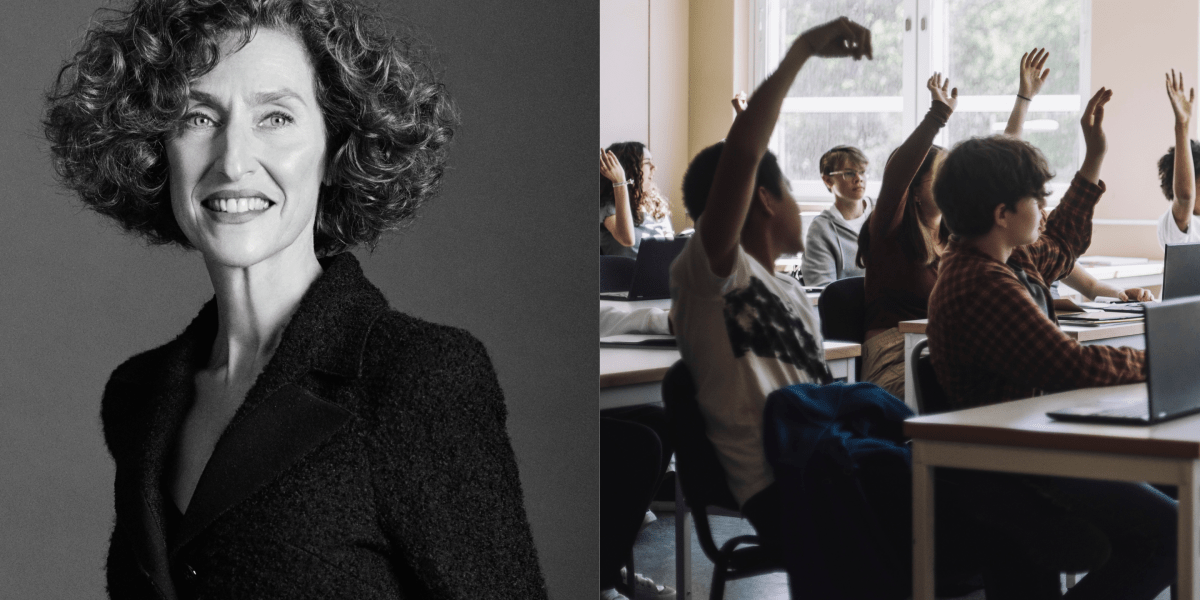
Claire Isnard can trace her 40‑year career—including 17 years at fashion house Chanel—back to one bad exam. Had she passed, she’d likely still be in a classroom, grading essays on Italian literature.

Looking back, in her first-ever sit-down interview ahead of her retirement, Isnard says she feels like she’s come full circle. Despite having zero HR qualifications, she wound up as Chanel’s chief people and chief organization officer. “When you draw my story back, the first compelling and meaningful thing that would end up spread across everything I’ve done is helping people become who they didn’t think they can become,” she told Fortune.

“For me, teaching was not about the speciality of French or Italian, it was about helping those young people—especially the ones who were having difficulty unleashing their skill set and couldn’t find themselves internally, I could help them become larger, bigger than what they thought,” she said. “And I loved it very much.”

At the time, Isnard took that career plan “very, very seriously” and was giving language lessons to teenagers in both Italy and France while studying, which made the final exam failure that would have cemented a lifelong academic career all the more confusing.

“Not only I failed,” Isnard said, “but I didn’t know what I wanted to do. I had no clear path ahead of me. I had no clear goal.” 

With no plan B, she went back to school and threw herself into student forums and networking events. It led to a chance encounter that would drag her from the classroom into consulting—and eventually, right into Chanel’s corner office.

Gen Z: Failure might be your lucky break—but not if you don’t get out

40 years later, Isnard still remembers how crushing that first experience of failure was—but she refuses to let younger generations see similar setbacks as the end of the story.

Now, the lesson she reminds her millennial children (who are 30 and 33) is that failure is simply “a roadblock on the road, not the end of the road.” 

“It hurts, it’s very uncomfortable,” Isnard said. “It can be very frustrating because you worked hard. Although it may not feel like it in the moment, this pause could be a blessing in disguise.”

Isnard recommends using failure as an opportunity to reassess the direction you’re going down—as well as whether you’re even enjoying it. 

“There is a signal here that either you’ve not worked enough—if you really want to do it again, work harder, and you will get it—or maybe there was something that was not for you,” she said. “Look at what you enjoyed in doing that, but also look at the thing you don’t enjoy, and go where your passion is… I’m really convinced that we cannot be good at something we don’t like doing.”

Of course, passion alone is not enough to land a big break after a failure. It doesn’t matter how much you love talking about luxury brands or coding—if you don’t get out of your comfort zone and show them, no one will know. That’s why Isnard recommends Gen Zers simply get out into the world.

“If you stay in your room, or behind your computer, you just don’t get those moments of connection that spark a different conversation, or open your mind to possibility, or let you meet someone who finds something interesting in you,” she said. 

She would know. Just one “lucky” conversation with the founder of a boutique consultancy at a student forum turned into a two-decade career in the industry, including climbing up Aon Hewitt’s ranks (formerly known as Hewitt Associates) to managing director.

“I was present in all forums, in all networks, where I could meet people that I would not meet otherwise, and it was a series of encounters that brought me to the woman who hired me,” she said. “So I really believe in connection. I really believe in going outside of your comfort zone—open that door, be curious, meet with people, enter the conversation.”

Isnard says you don’t need a slick five-year plan, or even a full-to-the-brim contacts book—just the courage to start up conversation in a room full of strangers. 

“Everyone knows someone,” she said. “So I didn’t hesitate to say, I’m hungry for work and I would like to do something that has to do with writing, thinking and being helpful to others.”

The brutally honest answer that got her poached by Chanel

Being courageous worked out in Isnard’s favour when Chanel was a client of hers. Soon after the company had hired its first-ever global CEO, Maureen Shekels, she directly asked Isnard one tough-to-answer question: Do I have what I need to act as a global CEO?

The answer, Isnard gave her, was brutally honest: No. 

For eight years, she had partnered with the fashion brand on “different, strategic problems.” And that proximity became vital when its new boss asked her to carry out a no‑nonsense diagnosis of her leadership and how to bring the luxury brand out of an outdated, fragmented structure.

“So we designed together a global model for the future,” Isnard said. “It’s easier for a consultant to tell [the harsh truth] because you have objectivity, you don’t have the emotion of being inside. I was not losing anything; I was helping my client to see through what she needed for the future.”

But what Isnard perhaps didn’t expect was to get poached by the CEO herself, just two years later in 2008: “I was very surprised, because I’ve never been an HR in my life before,” Isnard recalled, before adding she didn’t think twice before accepting despite feeling a mixture of honoured, intimidated, and frankly, a bit scared.

“I had to move with my family to New York from France,” she said. “I had to learn how to be an insider—I knew everybody, all the leaders, but from the outside. I had to build a team. There was no global team in HR. I had to do everything from scratch.”

Despite her lack of formal HR credentials, Chanel’s global footprint has expanded dramatically over the past two decades. Today, the brand operates in roughly 70 countries worldwide with over 600 boutiques. Under Isnard’s watch, its workforce has more than tripled, growing to 38,400 employees worldwide.

“It’s another story of someone placing trust in you,” she added. “Take risk, pivot, but do it with people you trust—who trust you too. And check that you have the passion for what is to come.” 

What comes after Chanel’s corner office?

Now, as she prepares to step down after over 17 years as Chanel’s chief people and organization officer, Isnard faces a familiar uncertainty—the same feeling she had after that first failed exam. Only this time, she’s looking forward to it.

“The next chapter for me is to be invented, which is also back to the first conversation, how will I take risk—or not? Am I going to meet with other people? It’s all about the new possibilities that will unfold.” 

The outgoing exec, who says she’s been reflecting on what her purpose is and will take some more time to ponder, already knows she wants to “continue being contributive,” even in retirement. 

“The worst is if you feel lost and you feel abandoned. But I think the other worst is that you get another kind of frenetic, but it has no meaning. It’s just a bunch of activities for the sake of not being by yourself. These are the things that I want to absolutely avoid,” she said.

In the end, she hints she may just go back to where it all began: In teaching, some way or another.


Source link

Continue Reading

Trending

Copyright © Miami Select.