Connect with us

Business

Ikea’s incoming CEO started his career as a store manager—he recalls working at 5 a.m. in the loading area and eating hotdogs with the founder

Published

on


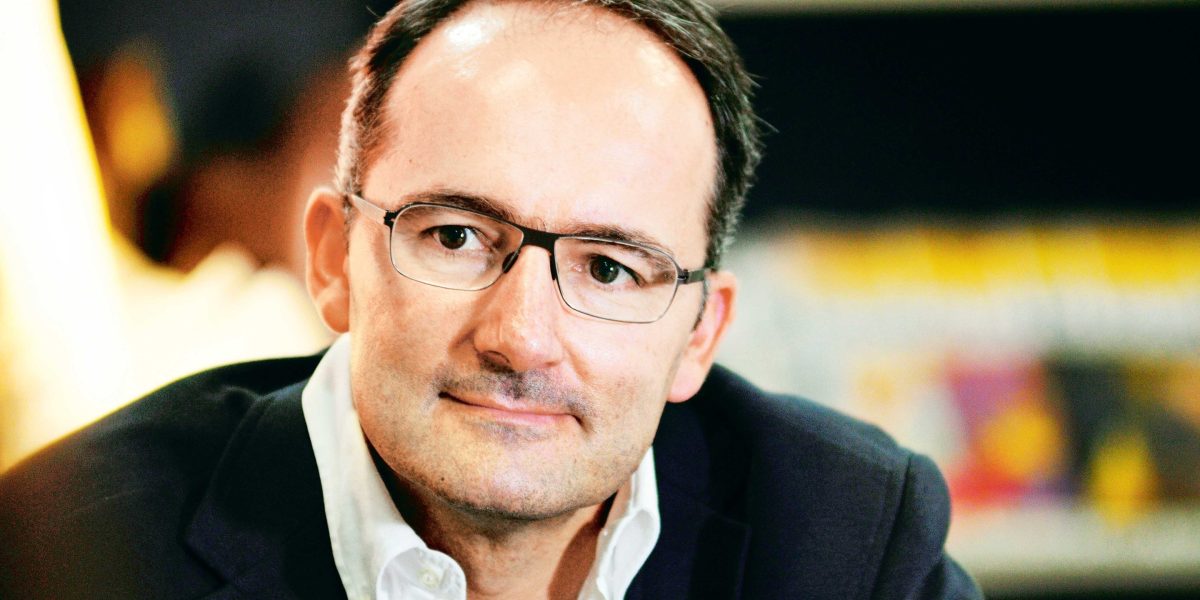
Staying loyal to one company for decades feels like a career strategy of the past—but it’s paid off for Ikea’s incoming CEO Juvencio Maeztu, who stuck with the company for 25 years. He started off as a store manager in his early 30s—and has slowly worked his way up to the coveted throne of the global retail titan. 

“I feel deeply grateful, humble and responsible for the trust and confidence placed in me. Working with [outgoing CEO] Jesper Brodin for the past seven years has been a true privilege,” Maeztu wrote in a recent LinkedIn post. “The future excites me. We have a strong foundation, a clear direction, and nearly 170,000 amazing colleagues around the world.”

This November Maeztu will ascend to Ikea’s helm, joining an exclusive cohort of leaders who stuck it out and scaled the ranks of their businesses to the CEO spot. And it includes the Ikea CEO he’s replacing, Brodin, who has served 30 years at the company and worked his way up from being his boss’ assistant. Walmart leader Doug McMillon similarly dedicated 30 years of his life rising from a warehouse worker to the most powerful job at the $765 billion business. 

Just like Brodin and McMillon, Maeztu’s start at the furniture giant that reeled in $52.6 billion in total sales last year was far from glamorous. However, in those moments on the shop floor, he often got to rub shoulders with the late Ikea founder Ingvar Kamprad. 

“I have been dozens of times with Ingvar on the shop floor starting at five in the morning in the loading area and finishing at 10 in the evening with a hot dog,” Maeztu told the Financial Times. “The important thing is that we all carry Ingvar’s spirit, and this I feel very loyal to.”

After staying committed for a decade, he finally reached the C-suite in 2012—and in just a few short months, he will have summited the company’s corporate hierarchy. 

Fortune reached out to Ikea for comment.

Maeztu’s career trajectory: climbing the ranks from store manager to CEO

From his 25 years of service at Ikea, Maeztu knows the ins-and-outs of the brand that will be essential in helping him lead the retail giant. The 57-year-old Ikea devotee is the first non-Swede to lead the European retail giant—a leadership leap that showcases that Maeztu is the right fit to helm the company. He earned the top spot due to his “purpose-driven, entrepreneurial leadership” and extensive store experience—garnered through decades of leading Ikea’s international locations, the business says.

Maeztu started off as the manager of the Alcorcon store in Madrid in 2001, also directing the Ikea Sevilla location in 2003. While his salary in the role isn’t widely reported, store managers in Spain generally make around €22,000 to €35,000 (about $25,000 to $40,000) annually, according to an analysis from Glassdoor. 

Maeztu then transitioned into a more administrative role as the country HR manager for both Spain and Portugal—a position that was close to home, as the incoming CEO was raised in the Spanish city of Cádiz. After a brief stint in leading those workforces, he switched back to a managerial position for London’s flagship Wembley store in 2009. Just a few short years later, he would finally break into the C-suite.

Maeztu has been shadowing Ikea’s current CEO Jesper Brodin for 7 years

In 2012, Maeztu became the CEO of Ikea India, leading the establishment of operations in the country for six years. At this point, he had worked across four countries and two continents, building a name for himself as a diversified leader. Then, the next big break came when he became deputy CEO and CFO of Ikea and its franchisee holding company: Ingka Group

For the past seven years, he’s worked alongside 56-year-old Brodin in navigating the affordable furniture chain through the storms of COVID-19 lockdown and rising international tensions.

“We’ve been riding through quite some storms together—pandemic, geopolitical issues, war, etcetera,” Brodin told Reuters. “So in a way I feel proud of the things we have achieved but also super confident that the Ikea house is in good order and we’ll be able to take off for the future with Juvencio.”

Maeztu will now become Ingka’s chief executive, leading around 500 Ikea stores across 31 countries—encompassing about 80% of the retail brand. To prepare for the position, he’s setting out on a “listening tour” of its large locations around the world, starting off in Asia. His success story is one for the books, and his next feat will be helping turn around the company’s weaker net profit and revenue from last year. 

“I am fully determined to make Ikea grow and to really be relevant for many millions more consumers around the world,” Maeztu told Reuters.

Introducing the 2025 Fortune Global 500, the definitive ranking of the biggest companies in the world. Explore this year’s list.


Source link

Continue Reading

Business

The workforce is becoming AI-native. Leadership has to evolve

Published

on


One of the most insightful conversations I have had recently about artificial intelligence was not with policymakers or peers. It was with a group of Nokia early-careers talents in their early 20s. What stood out was their impatience. They wanted to move faster in using AI to strengthen their innovation capabilities. 

That makes perfect sense. This generation began university when ChatGPT launched in 2022. They now account for roughly half of all ChatGPT usage, applying it to everything from research to better decision-making in knowledge-intensive work. 

Some people worry that AI-driven hiring slowdowns are disproportionately impacting younger workers. Yet the greater opportunity lies in a new generation of AI-native professionals entering the workforce equipped for how technology is transforming roles, teams, and leadership.

Better human connectivity 

One of the first tangible benefits of generative AI is that it allows individual contributors to take on tasks once handled by managers. Research by Harvard Business School found that access to Copilot increased employee productivity by 5% in core tasks. As productivity rises and hierarchies flatten, early-career employees using AI are empowered to focus on outcomes, learn faster, and contribute at a higher level.

Yet personal productivity is not the real measure of progress. What matters most is how well teams perform together. Individual AI gains only create business impact when they align with team goals and that requires greater transparency, alignment, and accountability.

At Nokia, we ensure that everyone has clear, measurable goals that support their teams’ objectives. Leaders need to be open about their goals to their managers and to their reports. And everyone means everyone. Me included. That way goals are not only about recognition and reward. They become an ongoing dialogue between leaders and their teams. It’s how we’re building a continuous learning culture that thrives on feedback and agility, both essential in the AI era. 

Humans empowered with AI, not humans versus AI

AI’s true power lies in augmenting human skills. Every role has a core purpose – whether in strategy, creativity, or technical problem-solving – and AI helps people focus on that. 

During the COVID-19 pandemic, more than 60 chatbots were deployed in 30 countries to handle routine public health queries, freeing up healthcare workers to focus on critical patient care. Most health services never looked back. 

The same pattern applies inside companies. Some of the routine tasks given to new hires are drudge work and not a learning experience. AI gives us a chance to rethink the onboarding, training, and career development process.

Take an early-career engineer. Onboarding can be a slow process of documentation and waiting for reviews. AI can act as an always-on coach that gives quick guidance and helps people ramp up. Mentors then spend less time on the basics and more time helping engineers solve real problems. Engineers can also have smart agents testing their designs, ideas, and simulating potential outcomes. In this way, AI strengthens, rather than substitutes, the human connection between junior engineers and their mentors and helps unlock potential faster.

Encourage experimentation and entrepreneurship 

During two decades of the Internet Supercycle (1998-2018), start-ups created trillions of dollars in economic value and roughly half of all new jobs in OECD countries

As AI lowers the barriers to launching and scaling ventures, established companies must find new ways to encourage experimentation, nurture innovation through rapid iterations, and give employees the chance to commercialize and scale their ideas.

There is a generational shift that increases the urgency: more than 60% of Gen Z Europeans hope to start their own businesses within five years, according to one survey. To secure this talent, large organizations must provide the attributes that make entrepreneurship attractive. Empowering people with agility, autonomy, and faster decision-making creates an edge in attracting and keeping top talent.

At Nokia, our Technology and AI Organization is designed to strengthen innovation capabilities, encourage entrepreneurial thinking, and give teams the support to turn ideas into real outcomes.

More coaching, less managing 

Sporting analogies are often overused in business as the two worlds don’t perfectly align, yet the evolution of leadership in elite football offers useful lessons. Traditionally, managers oversaw everything on and off the pitch. Today, head coaches focus on building the right team and culture to win. 

Luis Enrique, the manager of Paris-St. Germain football club, last season’s UEFA Champion’s League winner, exemplifies this shift. He transformed a team of stars into a star team, while also evolving his coaching style, elevating both individual and collective potential.

Of course, CEOs must switch between both roles (as I said, the worlds don’t perfectly align) – setting vision and strategy while also cultivating the right team and culture to succeed. AI can help leaders do both with more focus. It gives us quicker insight into what is working, what is not, and where teams need support.

I have been testing these tools with my own leadership team. We are using generative AI to help us evaluate our decisions and to understand how we work together. It has revealed patterns we might have missed, and it has helped us get to the real issues faster. It does not replace judgment or experience. It supports them.

Yet the core of leadership does not change. AI cannot build trust. It cannot set expectations. It cannot create a culture that learns, improves, and takes responsibility. That still comes from people. And in a world shaped by AI, the leaders who succeed will be the ones who coach, who listen, and who help teams move faster with confidence.

Nokia’s technology connects intelligence around the world. Inside the company, connecting intelligence is about how people work together. It means giving teams the tools, support and culture they need to grow and perform with confidence. Connecting intelligence is how teams win.

The opinions expressed in Fortune.com commentary pieces are solely the views of their authors and do not necessarily reflect the opinions and beliefs of Fortune.


Source link

Continue Reading

Business

Procurement execs often don’t understand the value of good design, experts say

Published

on


Behind every intricately designed hotel or restaurant is a symbiotic collaboration between designer and maker.

But in reality, firms want to build more with less—and even though visions are created by designers, they don’t always get to see them to fruition. Instead, intermediaries may be placed in charge of procurements and overseeing the financial costs of executing designs.

“The process is not often as linear as we [designers] would like it to be, and at times we even get slightly cut out, and something comes out on the other side that wasn’t really what we were expecting,” said Tina Norden, a partner and principal at design firm Conran and Partners, at the Fortune Brainstorm Design forum in Macau on Dec. 2.

“To have a better quality product, communication is very much needed,” added Daisuke Hironaka, the CEO of Stellar Works, a furniture company based in Shanghai. 

Yet those tasked with procurement are often “money people” who may not value good design—instead forsaking it to cut costs. More education on the business value of quality design is needed, Norden argued.

When one builds something, she said, there are both capital investment and a lifecycle cost. “If you’re spending a bit more money on good quality furniture, flooring, whatever it might be, arguably, it should last a lot longer, and so it’s much better value.”

Investing in well-designed products is also better for the environment, Norden added, as they don’t have to be replaced as quickly.

Attempts to cut costs may also backfire in the long run, said Hironaka, as business owners may have to foot higher maintenance bills if products are of poor design and make.

AI in interior and furniture design

Though designers have largely been slow adopters of AI, some luminaries like Daisuke are attempting to integrate it into their team’s workflow.

AI can help accelerate the process of designing bespoke furniture, Daisuke explained, especially for large-scale projects like hotels. 

A team may take a month to 45 days to create drawings for 200 pieces of custom-made furniture, the designer said, but AI can speed up this process. “We designed a lot in the past, and if AI can use these archives, study [them] and help to do the engineering, that makes it more helpful for designers.” 

Yet designers can rest easy as AI won’t ever be able to replace the human touch they bring, Norden said. 

“There is something about the human touch, and about understanding how we like to use our spaces, how we enjoy space, how we perceive spaces, that will always be there—but AI should be something that can assist us [in] getting to that point quicker.”

She added that creatives can instead view AI as a tool for tasks that are time-consuming but “don’t need ultimate creativity,” like researching and three-dimensionalizing designs.

“As designers, we like to procrastinate and think about things for a very long time to get them just right, [but] we can get some help in doing things faster.”


Source link

Continue Reading

Business

Binance has been proudly nomadic for years. A new announcement suggests it’s chosen an HQ

Published

on


For years, Binance has dodged questions about where it plans to establish a corporate headquarters. On Monday, the world’s largest crypto exchange made an announcement that indicates it has chosen a location: Abu Dhabi, the capital of the United Arab Emirates.

In its announcement, Binance reported that it has secured three global financial licenses within Abu Dhabi Global Market, a special economic zone inside the Emirati city. The licenses regulate three different prongs of the exchange’s business: its exchange, clearinghouse, and broker dealer services. The three regulated entities are named Nest Exchange Limited, Nest Clearing and Custody Limited, and Nest Trading Limited, respectively.

Richard Teng, the co-CEO of Binance, declined to say whether Abu Dhabi is now Binance’s global headquarters. “But for all intents and purposes, if you look at the regulatory sphere, I think the global regulators are more concerned of where we are regulated on a global basis,” he said, adding that Abu Dhabi Global Market is where his crypto exchange’s “global platform” will be governed.

A company spokesperson declined to add more to Teng’s comments, but did not deny Fortune’s assertion that Binance appears to have chosen Abu Dhabai as its headquarters.

Corporate governance

The Abu Dhabi announcement suggests that Binance, which has for years taken pride in branding itself as a company with no fixed location, is bowing to the practical considerations that go with being a major financial firm—and the corporate governance obligations that entails.

When Changpeng Zhao, the cofounder and former CEO of Binance, launched the company in 2017, he initially established the exchange in Hong Kong. But, weeks after he registered Binance in the city, China banned cryptocurrency trading, and Zhao moved his nascent trading platform. Binance has since been itinerant. “Wherever I sit is going to be the Binance office,” Zhao said in 2020.

The location of a company’s headquarters impacts its tax obligations and what regulations it needs to follow. In 2023, after Binance reached a landmark $4.3 billion settlement with the U.S. Department of Justice, Zhao stepped down as CEO and pleaded guilty to failing to implement an effective anti-money laundering program.

Teng took over and promised to implement the corporate structures—like a board of directors—that are the norm for companies of Binance’s size. Teng, who now shares the CEO role with the newly appointed Yi He, oversaw the appointment of Binance’s first board in April 2024. And he’s repeatedly telegraphed that his crypto exchange is focused on regulatory compliance.

Binance already has a strong footprint in the Emirates. It has a crypto license in Dubai, received a $2 billion investment from an Emirati venture fund in March, and, that same month, said it employed 1,000 employees in the country. 


Source link

Continue Reading

Trending

Copyright © Miami Select.