
Politics
Ignoring public’s concerns, House committee passes bill targeting ‘harmful’ books at schools
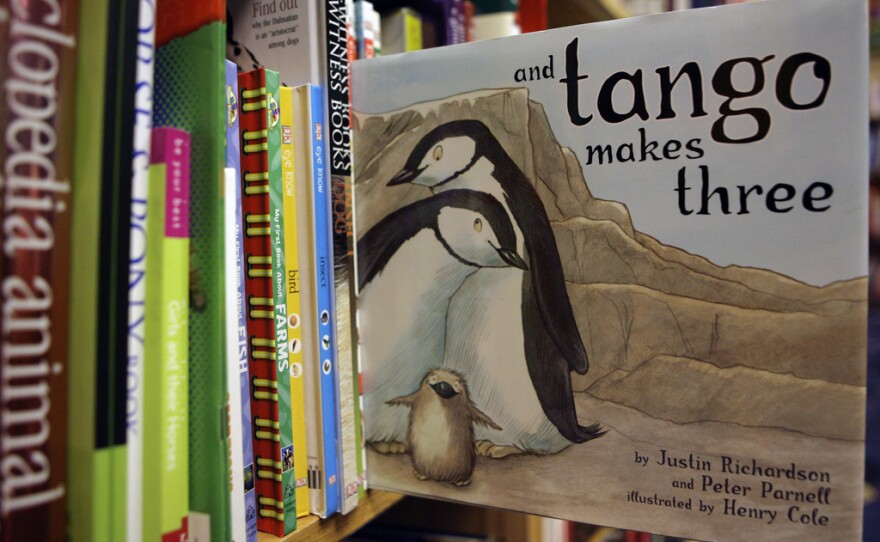
As the public overwhelmingly spoke out against a bill targeting books deemed “harmful to children” in public school libraries, one Democrat allied with Republicans to advance the legislation through its final committee stop.
With a 16-5 vote, the House Education and Employment Committee OK’d HB 1119 sponsored by Rep. Doug Bankson. The bill is now ready for the House floor.
Rep. Kim Daniels, a Jacksonville Democrat who has a history of siding with Republicans on social issues, voted in favor of the bill.
“I’m going to speak for my heart,” Daniels said. “I have no problem voting for this bill because I talked with several people in my district that elected me to office. I am a pastor. And there are some things that simply should be kept from the ear gates and the eye gates of our children.”
HB 1119 would prohibit the consideration of literary, artistic, political or scientific value if the material is deemed otherwise harmful for minors.
“This bill solely addresses materials in public schools or school libraries for children that contain obscenity or in more common terms blatant pornographic and sexually explicit content,” Bankson said.
Bankson, an Apopka Republican, sponsored similar legislation in the 2025 Legislative Session but it died in the Senate.
In 2023, the Legislature passed a bill that made it easier for adults to challenge books to remove them from school libraries. Critics charged that the law went too far as districts lost classic books because of a small minority’s outrage.
During Tuesday’s hearing, Democratic Rep. Rita Harris said she worried “Forever” by Judy Blume and “The Perks of Being a Wallflower” by Stephen Chbosky — coming-of-age teen classics — would be casualties under Bankson’s bill.
“Parents can’t be simply put on the sideline,” Bankson challenged back.

Under his bill, the definition of “harmful to minors” is “any reproduction, imitation, characterization, description, exhibition, presentation, or representation, of whatever kind or form, depicting nudity, sexual conduct, or sexual excitement when it: A. Predominantly appeals to prurient, shameful, or morbid interest; and B. Is patently offensive to prevailing standards in the adult community as a whole with respect to what is suitable material or conduct for minors.”
School districts would be required to conduct audits and reporting under the bill or else risk losing their state funding.
A long line of public high school students, parents and advocates spoke out in a debate that lasted nearly two hours. Nearly all were against HB 1119 and voiced their frustrations at what they said were lawmakers waging culture wars.
“I’m kind of disgusted that we’re talking about book banning when we should be talking about affordable housing, hunger, and health care,” said Debbie Deland of the Florida National Organization for Women. “But onto book banning. Censorship is non-American.”
Hillsborough County Public Schools Brennan Baryza argued if teenagers want to access something pornographic, they can already do so – online.
“I’m in opposition to this bill because books with significant literary value like ‘I know Why the Cage Bird Sings’ and ‘The Kite Runner’ can be banned based on what other people consider harmful without any consideration for what has importance or value,” he said.
But Republicans and the lone Democrat were not swayed by the bill’s vocal public opposition.
Rep. Dana Trabulsy, a Fort Pierce Republican, insisted the bill had merits because there are still inappropriate books in school libraries.
“I’m no prude but I was shocked at some of the content,” she said when she said she researched books available. “We are not trying to silence anybody or erase anybody, but we are just saying that these are not appropriate books for children to have in school paid for by state dollars.”
After the vote Kara Gross, Interim Political Director of the ACLU of Florida, sent out a statement criticizing the bill.
“A free state does not ban books or censor materials based on viewpoint,” she said. “HB 1119 is an overly broad censorship bill that raises serious First Amendment concerns.”